McIlroy's Open Collapses: Seven Strokes Gone in Rollercoaster 72
Rory McIlroy's erratic opening 72 at the Open reveals a strategic alignment crisis that sabotages his championship ambitions.
The opening round of the Open Championship is a tactical examination that strips away pretense, and for Rory McIlroy, it exposed a fundamental strategic misalignment that has shadowed his major championship pursuits for over a decade.
Posting an opening 72 — leaving him seven shots adrift of the early leaders — is not merely a poor scorecard. It is a damning indictment of a competitor whose inability to manage a Championship links golf course remains the primary obstacle between him and the one trophy that completes his legacy.
McIlroy's own assessment was characteristically blunt, yet revealing in its blunt vulnerability. Too many stupid mistakes prevented him from making the strong start necessary to contend on a layout that punishes strategic hesitation with merciless precision.
The Anatomy of Self-Destruction
What unfolds when a golfer of McIlroy's calibre compiles a round best described as rollercoaster is not a story of swing mechanics or putting yips. It is a case study in course management dysfunction — a recurring tactical failure that transforms his immense physical gifts into a liability rather than an asset.
Links golf operates on principles alien to the parkland layouts where McIlroy won four majors in his youth. The ground game demands patience. It requires the imagination to visualise trajectories through evolving wind corridors. It insists on positioning over power. And crucially, it penalises the instinct to impose one's physical dominance upon terrain designed to humble such ambitions.
McIlroy remains, at his core, a golfer who wins by overwhelming venues. His U.S. Open triumph at Congressional and his PGA Championship victories at Kiawah Island and Valhalla were exercises in brute force applied with surgical precision. When the golf course demands subjugation of the ego, McIlroy's strategic framework resists.
That resistance manifested in the round's defining characteristic: volatility. The number 72 conceals as much as it reveals. The round reportedly featured stretches of serene brilliance interrupted by catastrophic errors — the telltale signature of a golfer at war with himself, unable to commit to a conservative posture when his instinct screams for aggression.
The Tactical Shift: When Patience Becomes Panic
The critical inflection point in any over-par major round arrives not on the tee of the first hole but in the moments between mistakes. A golfer seven shots off the pace after eighteen holes has rarely simply been outplayed; he has participated in his own dismantling through a sequence of decisions that compound upon themselves.
McIlroy's error pattern suggests something more corrosive than poor execution. When he described his mistakes as stupid, he was acknowledging a recurring failure to accept the mathematically correct strategic play in favour of physically ambitious alternatives. Each penalty compounded into another miscalculation, creating a feedback loop where frustration bred recklessness and recklessness bred further frustration.
This is not a new phenomenon. His collapse at the 2011 Masters — blowing a four-shot final-round lead — has often been mischaracterised as a putting failure. Tactical analysis reveals a golfer who refused to adjust his offensive posture when circumstances screamed for defensive discipline. That same philosophical tension resurfaced in this opening 72.
"Too many stupid mistakes."
The quote is remarkable not for its content but for its tone. Here is a man whose self-awareness extends to identifying his errors with clinical accuracy, yet whose competitive instinct overrides the strategic correction in the moment of decision. The stupid mistakes are not random occurrences. They are the inevitable output of a strategic framework that fails to account for the cognitive cost of links golf's relentless demands.
What the Numbers Reveal
The seven-shot deficit after a single round carries implications far beyond simple arithmetic:
- 72 — the opening-round score itself, placing McIlroy outside the top echelon
- 7 shots — the gap to the lead, requiring a minimum of three-under-par recovery rounds across the remaining 54 holes
- 2014 — the year McIlroy last won the Open Championship, his solitary triumph in the event
- 31 majors — the drought since his PGA Championship victory at Valhalla in 2014
These metrics construct a quantitative portrait of a golfer whose conversion rate in major championships has collapsed. The margin for error when beginning seven strokes back is effectively zero. It demands not merely brilliance over the remaining three rounds but sustained excellence without interruption — a requirement that contradicts the very volatility that produced the deficit.
What makes the task genuinely forbidding is the nature of the competition ahead. The leaders, by establishing their advantage, have demonstrated an ability to navigate conditions McIlroy fumbled repeatedly. The chase requires overtaking golfers playing with the confidence of early advantage on a layout that rewards such conviction.
The Historical Echo
McIlroy's struggle evokes a broader pattern among generational talents who conquered every major challenge except the one that demands they subvert their natural dominance. Phil Mickelson required years to master links golf before his 2013 breakthrough. Tom Kite famously ground out a U.S. Open at Pebble Beach by accepting limitations his talent seemed to reject. Even Arnold Palmer adapted his aggressive instincts to win two Open Championships in the early 1960s.
The distinction is critical: those golfers eventually aligned their tactical approach with the venue's demands. McIlroy's post-round comments suggest he remains trapped in the recognition phase — identifying errors without installing the systematic correction that prevents their recurrence.
His solitary Open Championship triumph at Royal Liverpool in 2014 was itself an exercise in tactical compromise. He won not through overwhelming but through patience, resisting the urge to attack when conditions counseled caution. Yet a decade later, he continues to berate himself for the mistakes that stem from his failure to embrace that same discipline consistently.
The Path Forward — If One Exists
The challenge facing McIlroy across the remaining 54 holes is not purely technical. It is psychological — demanding an embrace of strategic conservatism that feels alien to a golfer whose entire identity was built upon dominating through aggression.
Recovery requires more than low scores. It demands a complete ideological surrender to the principle that par on a Championship links is never a failure. Each round must begin with acceptance: the golf course cannot be overpowered, only navigated. Every shot must be evaluated not by its potential reward but by the severity of its worst-case outcome. The driver must remain in the bag when a long iron offers acceptable risk. The pin must be ignored when the safe quadrant of the green provides the sensible play.
None of this is new advice. None of it has been consistently applied. The Open Championship has always been the tournament that punishes golfers who refuse to learn its lessons on its own terms, and McIlroy's opening 72 has once again placed him at the intersection of self-awareness and strategic inability.
Whether the remaining three rounds produce a historic recovery or another major disappointment, the verdict on McIlroy's opening performance is already written in his own words. His mistakes were indeed stupid — which is to say, they were self-inflicted, repetitive, and strategically inexcusable.
The question now is not whether McIlroy possesses the physical tools to contend at links golf's highest level — the answer remains an obvious yes — but whether he can finally install the tactical software to match the hardware. Seven shots is a substantial deficit, yet against the most persistent obstacle in his career, the greater gap may be the one between his understanding and his application.
The Open Championship has issued its familiar verdict, and McIlroy must decide whether the remaining 54 holes become a monument to his stubbornness or to his growth.
Editorial Integrity
This is an original SportPulse article written by our editorial team. All content is independently researched, written, and reviewed by our writers and editors before publication. We do not publish copied, aggregated, or syndicated content.
SportPulse is committed to original sports journalism. Read our editorial policy or contact us with any questions.
More Like This
All long-reads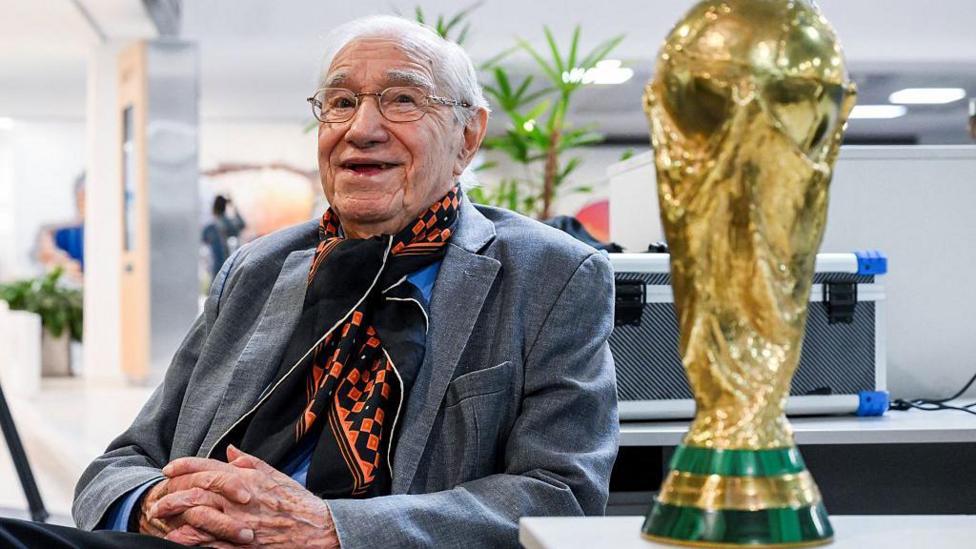
The 91-Year-Old Witness: Macaya Marquez and His 18th World Cup
From Pelé at 17 to Messi's coronation, Enrique Macaya Marquez has documented every World Cup since 1958.
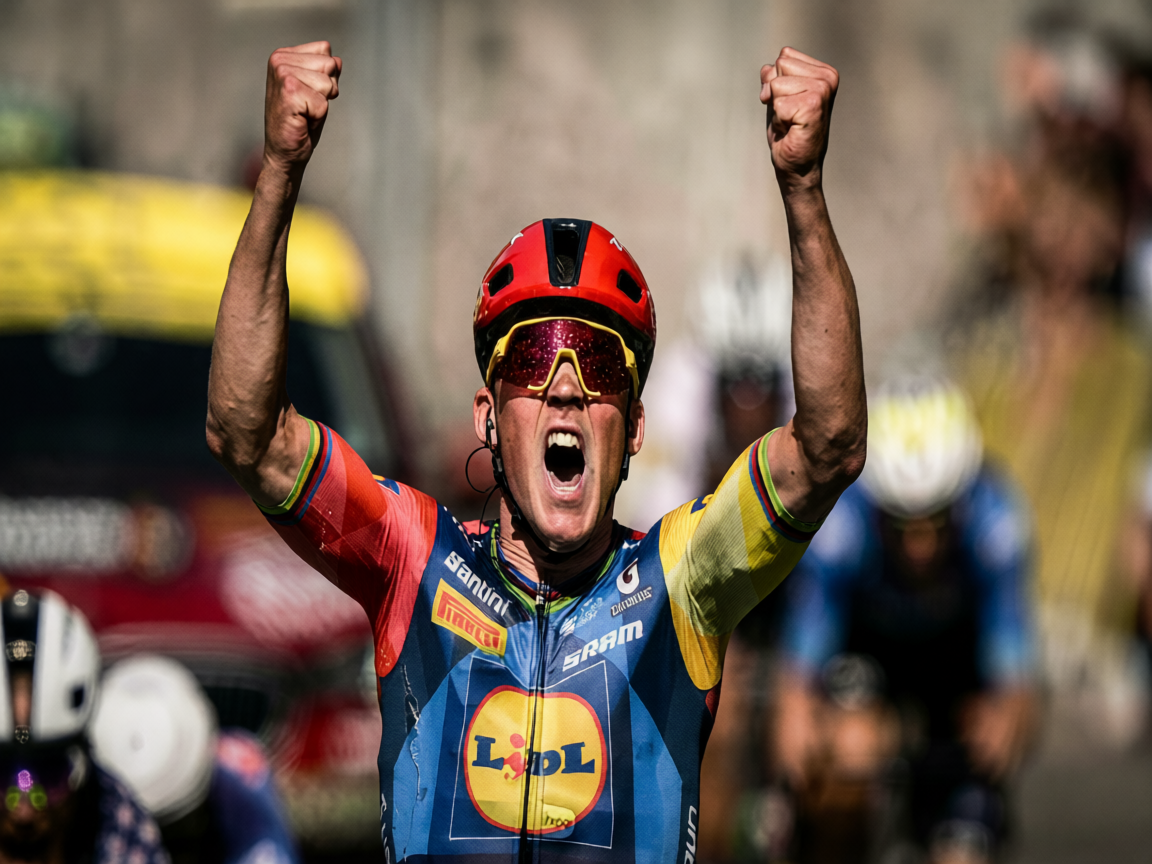
Pedersen’s Sprint Shatters Tour Heat, Pogacar Loses Yellow
Mads Pedersen exploits brutal conditions to claim Stage 4, stripping Tadej Pogacar of the race lead.
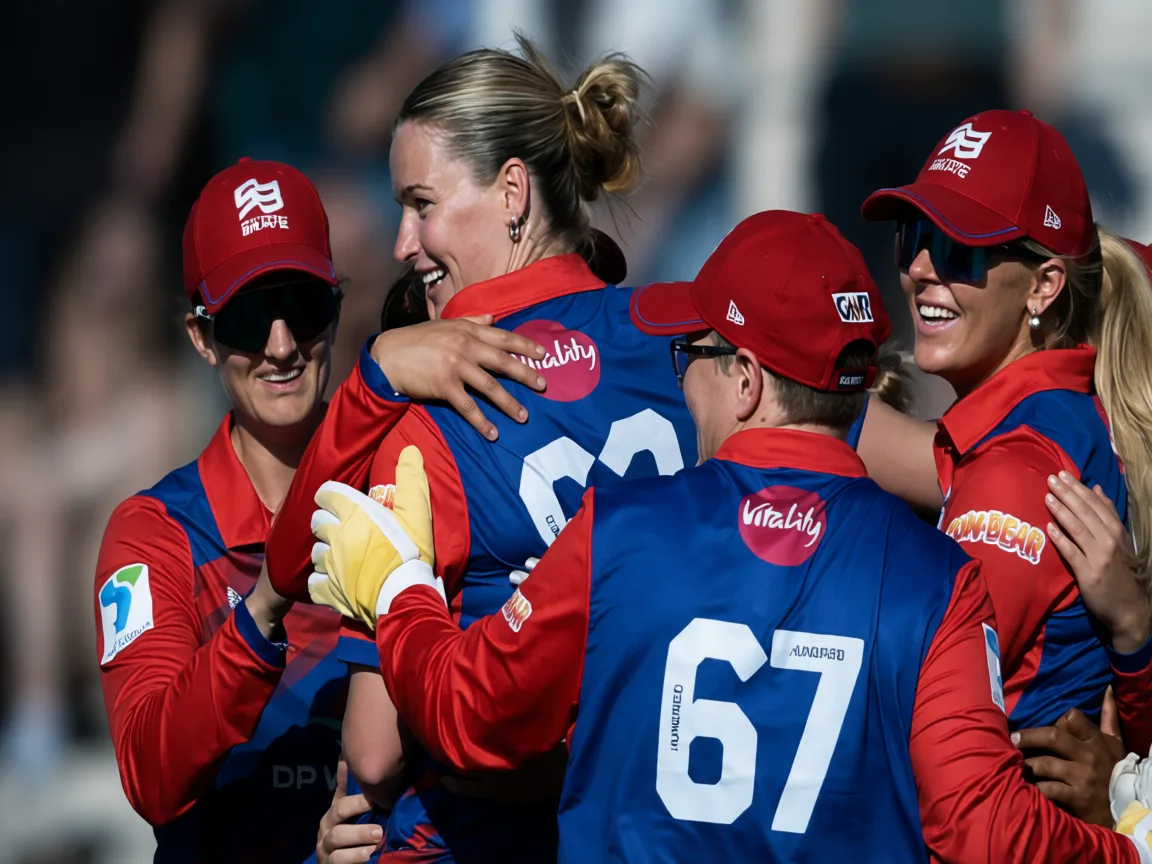
Bell's Ice-Cold Nerve Seals Last-Ball Thriller for Southern Brave
Lauren Bell holds her nerve on the final delivery as Southern Brave edge MI London to stay unbeaten in The Hundred.