McLaren Refuse to Rule Out Verstappen Swoop
Zak Brown leaves the door ajar for Max Verstappen as Red Bull's internal turmoil fuels intense silly season speculation in Austria.
The Styrian mountains provide a picturesque backdrop for the Austrian Grand Prix, but beneath the pristine circuit surface at the Red Bull Ring, the foundations of the Formula 1 driver market are shifting violently. Spare tires and brake dust fill the paddock air, yet the dominant conversation has nothing to do with tire degeneration or downforce configurations. The focus is squarely on personnel. Silly season is accelerating at full throttle, and the most explosive rumor centers on the sport's undisputed apex predator: Max Verstappen.
Verstappen remains contractually bound to Red Bull Racing until the conclusion of the 2028 season. In standard circumstances, a long-term commitment of that magnitude would extinguish any transfer speculation immediately. However, the internal power struggles that have plagued the Milton Keynes outfit since early 2024 have rendered standard operating procedures obsolete. The departure of Adrian Newey, the investigation into Christian Horner, and the shifting balance of power within the team have created enough friction to make a premature split plausible.
The McLaren Position
Zak Brown, McLaren Racing's CEO, addressed the media in Austria with the calculated precision of a seasoned paddock operator. When presented with the prospect of pursuing Verstappen, Brown notably refused to slam the door shut. His stance was deliberate, leaving a trace of plausible deniability mixed with undeniable intent. The presence of Verstappen on the open market represents a paradigm shift. Brown understands that acknowledging interest publicly can destabilize a rival while energizing your own garage.
McLaren occupies a fascinating position in this strategic matrix. The Woking-based squad has clawed its way back to competitive relevance through meticulous technical restructuring, currently deploying a highly efficient low-drag chassis philosophy. Lando Norris and Oscar Piastri form arguably the most potent young driver pairing on the grid. Brown has consistently emphasized the stability of this lineup as the cornerstone of their 2024 championship assault. Yet, rules of engagement change entirely when a triple world champion becomes available.
The Red Bull Fractures
To understand the Verstappen noise, one must examine the structural integrity of Red Bull Racing. The team built its dominance on an unbreakable triangle: Christian Horner's corporate management, Helmut Marko's driver development ruthlessness, and Adrian Newey's aerocratic genius. Two vertices of that triangle are now compromised. Newey is departing for pastures new. Marko's future has hovered in limbo amid internal political skirmishes. The power dynamic has shifted heavily toward the corporate side of the operation.
Strategy Breakdown: The Exit Clause Dynamics
For all the paddock chatter, Verstappen cannot simply walk away from a binding agreement. The contract contains specific performance and behavioral clauses, a standard practice for high-value F1 deals. Should Red Bull fail to provide a car capable of fighting for the championship by a certain cut-off point, or should the internal environment breach specific behavioral parameters, Clause 3.2 mechanisms could theoretically be triggered. This is the leverage point Brown is monitoring. The strategy wall at McLaren is not tracking lap times here; they are tracking organizational stability metrics in Milton Keynes.
Verstappen's father, Jos, has been overtly critical of the current Red Bull hierarchy, publicly suggesting that the team risks tearing itself apart. When a driver's inner circle begins deploying psychological warfare against their own employer, the probability of an early contract termination escalates from theoretical to practical. Brown's comments are designed to stoke those embers, reminding Verstappen's camp that alternate landing spots exist.
The Mathematics of a Superstar Acquisition
Acquiring Verstappen requires navigating severe financial and regulatory hurdles. The $140 million cost cap limits operational spending, but driver salaries fall outside this restriction. A Verstappen deal would likely command an annual retainer exceeding $50 million, demanding resources that only a manufacturer-backed outfit or a massively scaled independent team can sustain. Brown's acumen lies in leveraging the McLaren Group's broader commercial partnerships to absorb such an investment.
On the technical side, integrating Verstappen forces a complete reconfiguration of the car's setup philosophy. The current MCL38 is built around specific mechanical and aerodynamicPreferences that suit Norris's smooth, precision-based driving style and Piastri's inherently balanced approach. Verstappen famously demands a pointy, oversteer-prone front end, requiring a completely different aero map and suspension geometry. The engineering cost of tailoring a championship-winning car to a single superstar often compromises the development trajectory for the second driver.
The Current Championship Stakes
Amid the geopolitical maneuvering, the 2024 season continues to deliver weekly consequences. Red Bull'srecent form has shown microscopic vulnerabilities. The gap at the front is narrowing as McLaren and Mercedes close the development rate. The constructors' standings paint a picture of an empire facing coordinated resistance.
- Red Bull Racing — 330 points
- Ferrari — 285 points (gap of 45 points)
- McLaren — 236 points (gap of 94 points)
- Mercedes — 164 points (gap of 166 points)
McLaren has methodically eroded Ferrari's advantage for second in the constructors' championship. The MCL38 excels in low-drag configurations, making circuits like Austria and Monza strong hunting grounds. Norris has accumulated 4 podiums in the last 6 races, converting 2 pole positions into consistent high-value point hauls. Piastri's recent contract extension through 2028 further solidifies the team's operational baseline.
The Mercedes Factor
Toto Wolff has been far more vocal in his pursuit, openly courting Verstappen as the successor to Lewis Hamilton's soon-to-be-vacated throne. The Mercedes project offers immediate appeal: works engine status, championship-proven infrastructure, and a clear number-one designation waiting in Brackley. The W15 platform has struggled with unpredictable aerodynamic performance, but the 2026 regulation reset offers a clean-sheet opportunity that aligns perfectly with Verstappen's potential free agency timeline.
Brown's position contrasts with Wolff's aggressive pursuit. The McLaren boss treats Verstappen as a strategic option rather than an existential necessity. This cooler approach protects the psychological equilibrium of Norris and Piastri, neither of whom need to read daily headlines about their potential replacement. Brown's restraint also avoids driving up the eventual transfer fee. If Red Bull senses desperation, the financial demands will skyrocket.
The Ripple Effect on the Paddock
The Verstappen saga distorts the entire driver market. Half the grid remains out of contract at the end of 2024, and nearly every manager is operating in a holding pattern. If Verstappen commits to Red Bull, the status quo rapidly stabilizes. If he triggers an exit, a sequence of high-profile seat swaps will cascade through the paddock. Carlos Sainz, currently delivering standout performances for Ferrari, finds his negotiations indefinitely paused as teams wait for the Verstappen domino to fall first.
What Comes Next
The Austrian Grand Prix represents more than a home race for Red Bull. It serves as a public barometer of their internal cohesion. A dominant weekend on their own soil mitigates the narrative of decline. Any hint of strategic malfunction or intra-team friction adds fuel to the departure rumors. Brown and his counterparts will watch the Red Bull pit wall as closely as the on-track action.
For McLaren, the immediate priority is extracting maximum points from a circuit layout that favors their low-drag efficiency. The DRS zones at the Red Bull Ring are long and highly effective, potentially neutralizing the straight-line speed advantage Red Bull historically holds here. Tire degradation on the C5 compound will dictate the strategic split between one-stop and two-stop protocols. Securing a podium keeps the pressure on Ferrari and sends a broader message: McLaren is a destination capable of competing at the highest level, with or without Verstappen in the equation.
Editorial Integrity
This is an original SportPulse article written by our editorial team. All content is independently researched, written, and reviewed by our writers and editors before publication. We do not publish copied, aggregated, or syndicated content.
SportPulse is committed to original sports journalism. Read our editorial policy or contact us with any questions.
More Like This
All f1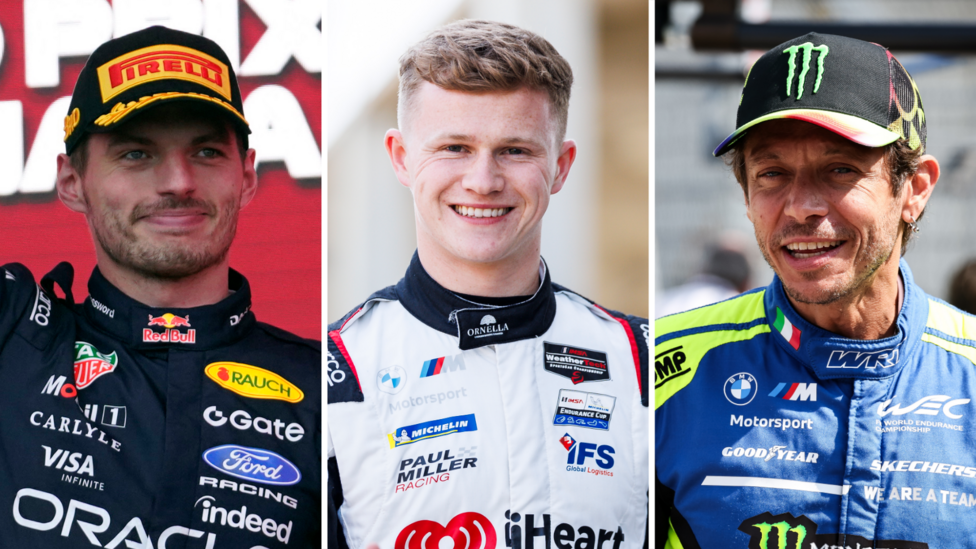
From Verstappen's Rival to Rossi's Teammate: Dan Harper's Extraordinary Path to Le Mans
Northern Irish driver Dan Harper bridges F1 royalty and MotoGP legend as he prepares for his Le Mans 24 Hours debut.

Câmara Conquers Chaos in Spa-Francorchamps F2 Thriller
Rafael Câmara fought back through red flag chaos to claim a dramatic F2 Feature Race victory at Spa-Francorchamps.
McLaren's Rear Wing Gambit: What Piastri's Friday Reveal Means
McLaren's experimental rear wing test at the Austrian GP signals aggressive development heading into the season's critical stretch.