The Metamorphosis of Messi: From Explosive Winger to Tempo Maestro
Lionel Messi's sixth World Cup beckons, but the player who arrives is tactically unrecognizable from the teenager who debuted in 2006.
A Sixth Act for the Greatest?
When a 19-year-old Lionel Messi came off the bench against Serbia and Montenegro in Gelsenkirchen on June 16, 2006, he became Argentina's youngest-ever World Cup player. He scored, he assisted, and he ran. He ran endlessly, tearing into channels with that low centre of gravity and bewildering acceleration that defenders simply could not solve. Fast forward nearly two decades, and the man preparing for a record-equalling sixth World Cup at age 39 is a fundamentally different footballer. Not diminished, but transformed.
Guillem Balague's assessment captures the paradox at the heart of Messi's later career: a player who barely sprints but still dictates the geometry of entire matches. This is not a story of decline. It is a story of tactical reinvention so complete that it demands us to rethink what dominance looks like on a football pitch.
The Three Eras: A Tactical Timeline
To understand where Messi is heading at the 2026 World Cup, one must map the tactical chapters of his career with precision.
Era One: The Explosive Interior Winger (2004-2012)
Under Frank Rijkaard and then Pep Guardiola, Messi operated as a right-sided forward in Barcelona's fluid 4-3-3. Guardiola's genius was tactical clarity: Messi received the ball in the right half-space, with Dani Alves overlapping to stretch the defensive line horizontally. His role was penetration. He carried the ball at frightening speed, averaging 4.8 successful dribbles per 90 minutes during the 2010-11 season, a figure that remains historically elite.
At this stage, Messi was a vertical threat first and a creator second. His pressing numbers were substantial too, regularly triggering Barcelona's high press from the right channel as part of Guardiola's 6-second rule. He was, in pure positional terms, a wide forward who scored like a centre-forward.
Era Two: The False Nine and Central Architect (2012-2019)
The pivotal tactical shift came in February 2013, though Guardiola had first deployed Messi as a false nine against Real Madrid in May 2009. By the time Luis Enrique took charge and Messi turned 27, the Argentine was no longer a winger by any definition. He occupied the right half-space centrally, drifting between opposition midfield and defensive lines in a role that defied conventional positional labels.
His heat maps migrated dramatically to the centre circle. His defensive output dropped. But his creative numbers exploded: 20+ assists in La Liga in consecutive seasons, chance creation metrics that broke statistical models. He was no longer running past players; he was running the entire attacking phase of play. Barcelona's 4-3-3 was now Messi-centric in a way no system had ever been built around a single player, with Sergio Busquets and Ivan Rakitić essentially functioning as his support infrastructure.
Era Three: The Walking Orchestrator (2020-Present)
The Paris Saint-Germain years and the move to Inter Miami have completed the transformation. Messi now operates in what tactical analysts call a free eight or advanced playmaker role, often within Lionel Scaloni's flexible 4-3-3 or 4-4-2 for Argentina. His sprint distance per match has dropped by roughly 40 percent compared to his Barcelona peak, yet his influence has arguably deepened.
The numbers tell a striking story. At the 2022 World Cup, Messi covered the lowest average distance per match of any outfield Argentina player who started all seven games, yet he contributed seven goals and three assists. He completed the tournament as its most decisive attacker while appearing to walk through large stretches of play.
How Scaloni Built Around Stillness
Argentina's 2022 World Cup triumph was, at its tactical core, an exercise in system design around a player who no longer defended. Scaloni constructed a pressing structure that effectively shielded Messi from defensive responsibility. Rodrigo De Paul, Enzo Fernández, and Alexis Mac Allister formed an industrious midfield triangle that covered the ground Messi did not. The wing-backs, Nahuel Molina and Nicolás Tagliafico or Marcos Acuña, provided the width that Messi once supplied from the flanks.
"We don't ask Leo to press. We ask the team to create the conditions where Leo receives the ball in the zones where he can hurt the opponent. Everything else is our responsibility." — Lionel Scaloni, post-match, 2022 World Cup Final
This was not accommodation. It was architecture. Scaloni understood that Messi's walking was not laziness but positional intelligence. By conserving energy in defensive phases, Messi could deliver match-altering moments in transition and in the final third with sharpness that his 35-year-old legs should not have possessed.
The Data Behind the Evolution
The statistical arc of Messi's career tells the story of reinvention more clearly than any scouting report.
- Dribbles per 90 (2010-11): 4.8 | Dribbles per 90 (2023-24): 1.6
- Pressing actions per 90 (2010-11): 22.3 | Pressing actions per 90 (2023-24): 6.1
- Key passes per 90 (2010-11): 2.4 | Key passes per 90 (2023-24): 3.7
- Expected assists per 90 (2015-16): 0.31 | Expected assists per 90 (2023-24): 0.29
- Progressive passes per 90 (2010-11): 5.2 | Progressive passes per 90 (2023-24): 7.1
The direction of travel is unmistakable. Messi has traded ball-carrying for ball-playing, individual penetration for collective orchestration. His progressive passing numbers have actually increased as his dribbling has declined, suggesting a conscious tactical recalibration rather than simple physical erosion.
Tactical Shift: The 2022 Final as Blueprint
The 2022 World Cup Final remains the definitive evidence of Messi's evolved tactical identity. For 80 minutes, Argentina controlled France through a system that compressed the pitch centrally and denied Kylian Mbappé space on the counter. Messi scored the opener from the penalty spot and appeared to have sealed the tournament before France's dramatic late comeback.
What was remarkable was Messi's positioning throughout. He occupied a zone between Aurélien Tchouaméni and Adrien Rabiot, sitting in the space that France's midfield needed to transition through. He was not pressing them. He was blocking passing lanes through presence alone, an old forward's trick that required zero sprinting but maximum tactical awareness. When Argentina needed to retake control after Mbappé's equalisers, it was Messi's calm distribution in extra time that steadied the ship, culminating in his second goal.
The lesson for Scaloni heading into 2026 is clear: the system works when the midfield compensates for Messi's mobility deficit, and when the tactical structure channels play through zones where his vision and technique remain unrivalled.
The 2026 Question: Can the System Sustain?
Here is the uncomfortable truth that Argentine football must confront. At 39 years old, Messi will be the oldest outfield player at the 2026 World Cup if selected. The MLS schedule, while less physically demanding than European competition, offers nothing close to the intensity required to maintain sharpness against elite international sides.
Scaloni's squad has also evolved since Qatar. Fernández, Mac Allister, and Julián Álvarez are now established at elite European clubs, and the emergence of Valentín Carboni and Alejandro Garnacho offers genuine pace and verticality that Argentina can deploy even if Messi's minutes must be carefully managed.
The tactical question is not whether Messi can still influence matches. At the Copa América 2024, even while managing fitness issues, his ability to unlock defences with a single pass remained intact. The question is whether Scaloni can build a two-phase system: one that controls matches with Messi orchestrating, and another that accelerates play through direct runners when the veteran is rested or substituted.
A Legacy Beyond Numbers
What makes Messi's evolution so tactically fascinating is that it mirrors a broader trend in elite football. The sport's greatest players have always adapted their games as physical attributes decline. Andrea Pirlo moved from trequartista to deep-lying regista. Ryan Giggs converted from flying winger to central midfielder. Zinedine Zidane reduced his dribbling frequency in his final seasons while increasing his passing authority.
Messi's case is simply the most dramatic version of this arc because the starting point was so extreme. No player in modern football history combined explosive dribbling, elite finishing, and creative vision at the level of peak Messi. That he has traded the first of those three for even greater mastery of the other two is a testament to football intelligence that transcends physicality.
Looking Ahead: The Group Stage Calculus
The 2026 World Cup draw will determine how Scaloni can manage Messi's workload. If Argentina land in a favourable group, the coach can afford to use Messi as a second-half impact substitute in early matches, preserving him for the knockout rounds where his experience and composure become invaluable. A difficult group, however, would force Scaloni to start Messi from match one, raising the spectre of fatigue in the latter stages.
The tactical evolution of Lionel Messi is not a story that ends in Miami. It is a story that continues on the grandest stage of all, one final time, with a player who has proven that the mind can outpace the legs when the system is built to let it.
Editorial Integrity
This is an original SportPulse article written by our editorial team. All content is independently researched, written, and reviewed by our writers and editors before publication. We do not publish copied, aggregated, or syndicated content.
SportPulse is committed to original sports journalism. Read our editorial policy or contact us with any questions.
More Like This
All football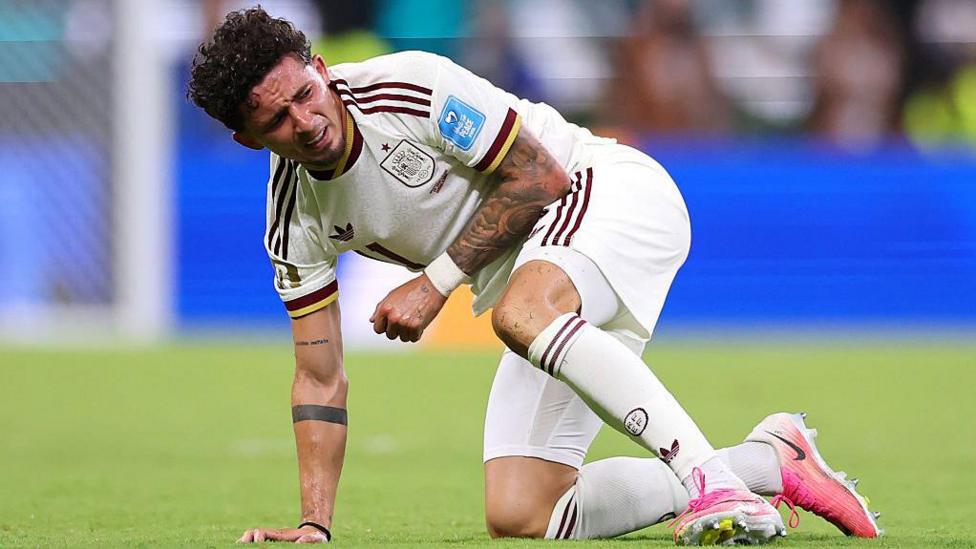
Pino Collarbone Blow Rocks Spain World Cup Hopes
Yeremy Pino's suspected broken collarbone threatens to end his World Cup and derail Spain's tactical width.
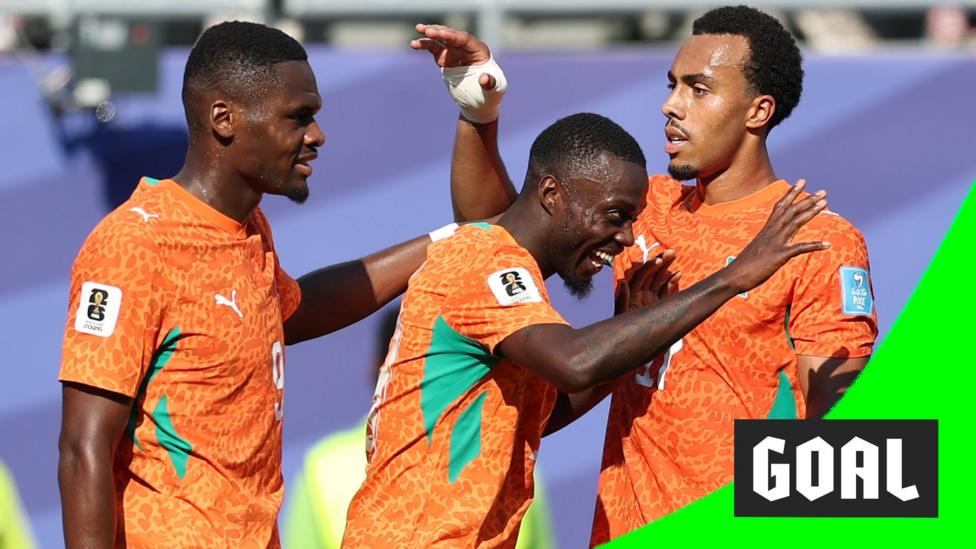
Pepe's Brace Dismantles Curacao as Ivory Coast Cruise in Philadelphia
Nicolas Pepe scores twice as Ivory Coast assert Group E dominance over outmatched Curacao at Philadelphia Stadium.
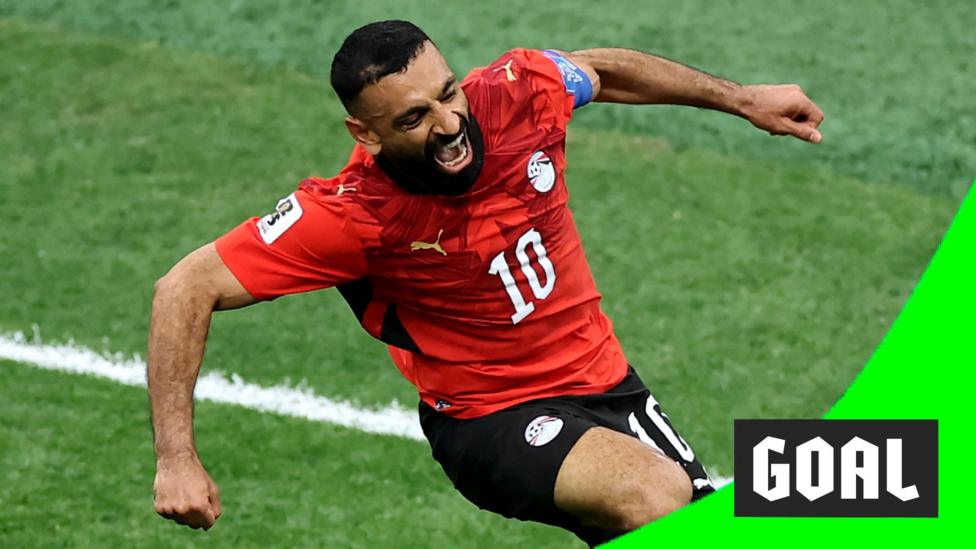
Salah Marches Into History as Egypt's Record Looms
Mohamed Salah edges closer to Egypt's all-time scoring record, reinforcing his legacy as the Pharaohs' generational talisman.