Michail Antonio: The Demons Behind West Ham's Record Goalscorer
West Ham's record Premier League scorer opens up on trauma, therapy, a near-fatal crash, and where it all went wrong.
"I Never Thought I Needed Therapy"
There is a version of Michail Antonio that the cameras always captured. The chest-thumping celebrations. The infectious grin after another headed goal. The man who drove a Lamborghini to training and made no apologies for it. The player who clawed his way from non-league football to become West Ham United's all-time leading Premier League goalscorer, surpassing even Paolo Di Canio in the record books.
Then there is the version Antonio is only now beginning to describe. The one carrying demons he spent years refusing to name.
"I never thought I needed therapy. I was always a happy person. But I had so many demons."
The 36-year-old opened up in a raw, wide-ranging conversation about the darker architecture of a professional football career, the moment that nearly killed him, and the institutional indifference that defines the sport he has given everything to.
The Crash That Changed Everything
December 2024. Driving home from training at Rush Green. A Ferrari. A wreck. And Michail Antonio crawling from the wreckage with a broken leg and the rest of his life rearranged.
The images that circulated in the aftermath were jarring. The crumpled supercar looked like a coffin. The football world collectively exhaled when word spread that Antonio had survived. Within days, the conversation moved on. Fixtures resumed. Other headlines replaced it. That is football's rhythm. It does not pause for gratitude.
Antonio, however, has not moved on. Not entirely. The crash sits at the center of a much larger reckoning with how the sport treats the human beings inside its machinery.
He knows the fragility of what happened. A few degrees of steering angle, a few miles per hour of speed differential, and the conversation we are having now does not exist. Instead, there is a broken leg and a man who has spent the months since reconsidering almost everything.
The Quote That Says It All
"In football, no one really cares about you as long as you perform."
It is the kind of line that sounds cynical until you realize it is simply honest. Antonio is not bitter. He is clear-eyed. He has spent over a decade in Premier League dressing rooms, negotiating contracts, navigating boardroom politics, and watching how quickly loyalty evaporates when the goals dry up.
He has earned the right to say it.
Antonio arrived at West Ham in 2015 from Nottingham Forest for a reported £7 million. At the time, he was a converted winger, a late bloomer who had bounced through Reading, Sheffield Wednesday, and Colchester United on loan before finding his footing. Before all of that, there was Tooting & Mitcham United in non-league football, the kind of starting point that most Premier League careers never survive, let alone emerge from.
He survived. More than that, he thrived.
68 Premier League goals across his West Ham career. More than Di Canio. More than Carlton Cole. More than Tony Cottee in the top-flight era. He did it through sheer physical force, relentless pressing, and a willingness to play wherever the manager needed him. Striker. Winger. Wing-back. Antonio did not ask questions. He delivered.
Where It Went Wrong at West Ham
Antonio does not shy away from discussing the club's trajectory. And the trajectory has been ugly.
West Ham won the Europa Conference League in June 2023, beating Fiorentina in Prague. It was the club's first major European trophy in decades. Jarrod Bowen scored the winner in the 90th minute. David Moyes hoisted the silverware. The London Stadium, for once, felt like it belonged to the badge on the shirt rather than the concrete it was built from.
Then everything unraveled.
Declan Rice left for Arsenal that same summer for a British record fee of £105 million. Moyes stayed for one more season, limping to a ninth-place finish before departing. Julen Lopetegui was appointed and struggled to impose any coherent identity. Results cratered. The dressing room fractured. The ownership's transfer strategy appeared confused at best, incoherent at worst.
Antonio watched it happen from inside the building. He does not name names in the interview, but the subtext is unmistakable. The institutional dysfunction is not something he can fix with a goal or a tackle. It runs deeper.
Behind the Deal: The Human Cost of Decline
There is a financial dimension to West Ham's collapse that rarely gets discussed in human terms. When Rice left, the club received a historic transfer fee. But the reinvestment was scattered. Players were signed without a clear tactical framework. Managers were hired without alignment to a long-term vision.
Antonio, as the squad's longest-serving player, became a living barometer of that dysfunction. His body broke down. His minutes decreased. The relationship between player and institution frayed.
And yet he kept showing up. Kept scoring. Kept being the emotional heartbeat of a club that, by his own admission, often treated him as disposable.
The Therapy Conversation
Antonio's disclosure about therapy arrives at a critical moment in football's ongoing relationship with mental health. The sport has made strides. Campaigns exist. Captains wear armbands. Players speak at conferences.
But the infrastructure remains thin.
Antonio admitting he did not think he needed help is not an indictment of his character. It is an indictment of a culture that teaches men, particularly Black men in elite sport, that vulnerability is weakness. That the happy exterior is sufficient. That performance is currency, and currency is all that matters.
He is not the first Premier League player to speak this way. But he is one of the few who has combined it with such an honest accounting of what the sport actually gives back.
"In football, no one really cares about you as long as you perform."
Read that line again. Then consider that Antonio scored West Ham's first-ever Premier League hat-trick against Norwich City in 2021. That he played through injuries that would have sidelined most players for weeks. That he gave the club the best years of his career.
And ask yourself whether the sport deserved that devotion.
What Comes Next
At 36, Antonio is in the final act of his playing career. The broken leg from the crash is healing, but the timeline for a full return remains uncertain. Whether he plays again in the Premier League is an open question.
What is not in question is his legacy. He is West Ham's record scorer in the competition. He is a Europa Conference League winner. He is a man who came from Tooting & Mitcham and built something extraordinary through willpower and talent.
The demons he describes are not gone. Therapy is not a cure. It is a process. But the fact that Antonio is speaking publicly, honestly, and without self-pity suggests something important about where he is heading.
Football may not care about him as a person. But the people who watched him play, who celebrated his goals, who saw a man refuse to be defined by where he started, they might care more than the sport ever allowed him to believe.
The chapters he says are still to write may prove to be the most important ones of all. Not because of what he does on a pitch. Because of what he chooses to say off it.
Editorial Integrity
This is an original SportPulse article written by our editorial team. All content is independently researched, written, and reviewed by our writers and editors before publication. We do not publish copied, aggregated, or syndicated content.
SportPulse is committed to original sports journalism. Read our editorial policy or contact us with any questions.
More Like This
All football
Tuchel's England Are Peaking at the Perfect Time for World Cup Glory
Thomas Tuchel has built the most complete England side since 1966, and the numbers suggest a World Cup is within reach.
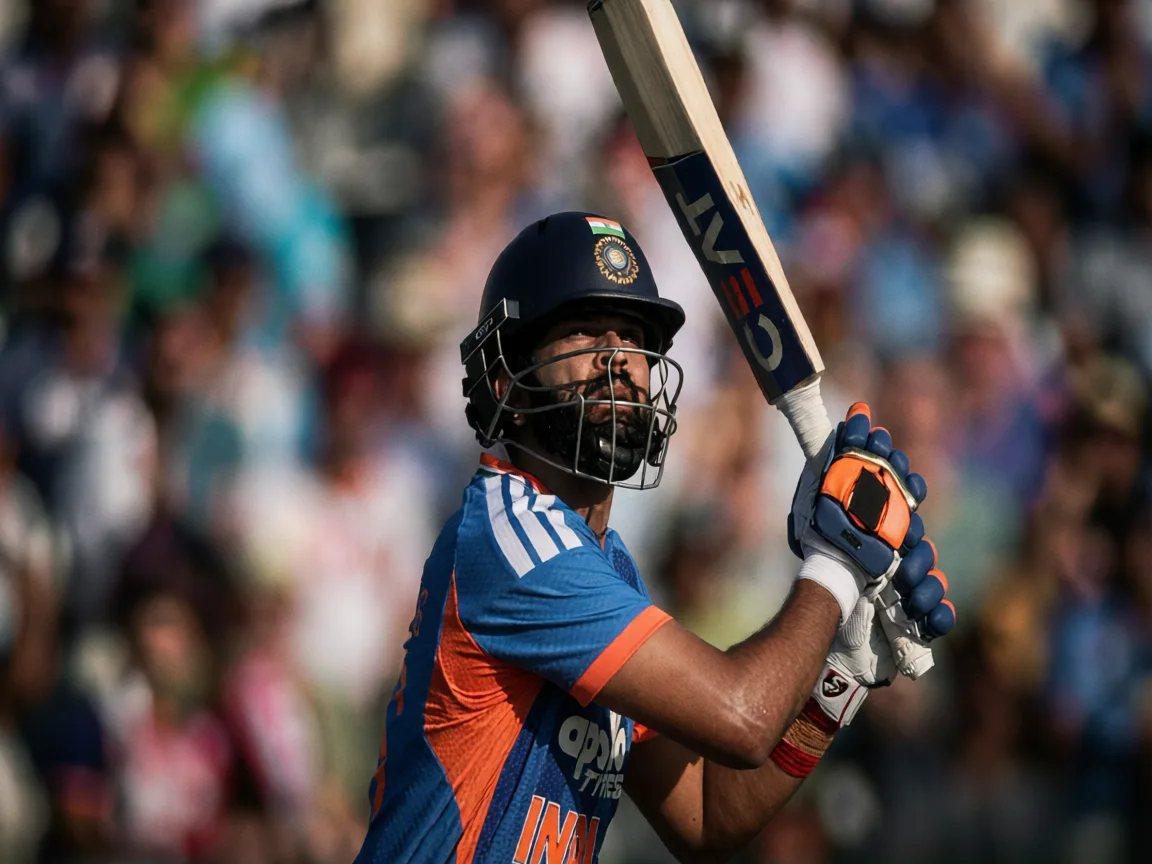
Iyer's 98 Not Out Anchors India Fightback in Rain-Affected Bristol Thriller
Shreyas Iyer's composed 98 not out under wet conditions gives India a fighting 167-7 against England in the series-leveling Bristol T20.

Ramsey Takes the Oxford Dugout: A Gamble Rooted in Footballing Pedigree
Former Arsenal midfielder Aaron Ramsey enters management at Oxford United, bringing Wenger-era principles to League One's tactical landscape.