Millwall Bet on Dykes: One-Year Deal Targets Championship Hold-Up Play
Neil Harris adds Scotland striker Lyndon Dykes on a free, pursuing a physical focal point to anchor Millwall's Championship survival push.
A One-Year Bet on Championship-Proven Hold-Up Play
Millwall have signed Scotland striker Lyndon Dykes on a one-year deal after his contract at Charlton Athletic expired. No transfer fee changed hands. At 28, the Australian-born Scottish international arrives at The Den on single-season terms: experienced enough to contribute immediately, affordable enough to justify without a long commitment, and mobile enough to operate as a lone striker in a 4-2-3-1.
Harris's System Requires a Specific Number Nine
Neil Harris, in his second spell at the club, has oscillated between a 4-3-3 and a 4-2-3-1 that relies on central strikers who can occupy two centre-backs simultaneously. The system asks the number nine to pin defenders, win first contacts from direct play, and create second-ball opportunities for advancing midfield runners. It is a functional Championship setup, not an aesthetically driven one.
Dykes fits the brief. At 6ft 2in, he offers aerial presence in both boxes, an asset for a side that has historically ranked among the Championship's most productive from set-piece situations. His off-the-ball work without possession suits a mid-block approach: closing passing lanes toward full-backs, forcing play into congested central zones, and triggering presses once opponents commit to lateral passes. He is a connector striker rather than a pure finisher, linking play between deep midfielders and wider attackers.
From Ball Retention at Charlton to Direct Channelling at The Den
Charlton deployed Dykes in a system that prioritised ball retention and structured build-up from deeper areas. Under Nathan Jones at The Valley, the Scottish forward was asked to combine in the half-spaces, drop into midfield to receive lay-offs, and participate in sequences rather than simply functioning as a terminal target. Millwall's approach will require a recalibration of positional instinct.
At The Den, the instruction shifts toward vertical channelling. Dykes will occupy penalty-area positions with greater frequency, stay centrally positioned to compete for aerial service, and perform traditional target duties in a 4-2-3-1. The adjustment requires less involvement in build-up phases and greater specialisation in winning the initial contact, protecting possession under pressure, and feeding supporting runners into areas vacated by his hold-up work.
The transition affects how Millwall construct their attacking phases. With a reliable target available, wide players can attempt earlier entries into the final third, confident that supply toward the central area will be contested and retained. That shifts the rhythm of Harris's attacking play, which has occasionally lacked a settled focal point capable of making direct service effective.
29 senior Scotland caps under Steve Clarke involved a similar functional role: occupying defenders, creating operating space for supporting attackers, and carrying the ball into width when central channels became blocked. That familiarity with a disciplined, system-led setup should ease adaptation to Harris's requirements.
The question is match sharpness, not fitness baseline. After a season at Charlton where injuries affected his availability in the second half of the campaign, Dykes will need a full pre-season to rebuild the physical resilience required for a Championship schedule. Millwall's medical assessment during the signing process would have factored in his appearance record and physical output data from last term before committing.
Goal Output: The Unanswered Question
Millwall's attacking profile last season lacked a consistent reference point. The No. 9 position rotated through several options without any single player establishing dominance. Adding Dykes gives Harris a first-choice option whose attributes are clear: physical presence in aerial duels, capacity to link play through central areas, and experience of operating against Championship defenders who match or exceed his physical profile.
What the signing does not resolve is goal output. Dykes has scored freely at League One level, but in the Championship his return has been modest. He reached seven goals in a single campaign at QPR, a figure that does not address goalscoring deficiency on its own. His tactical role at Millwall will be about creating opportunities for others rather than providing the primary finishing threat. If the system functions as designed, his value will be measured in secondary attacking metrics: aerials won, fouls drawn in advanced areas, and the quality of possession retention after direct entries into the final third.
A one-year deal for a player coming off a League One season carries inherent evaluation risk. The step up in physical tempo and defensive organisation between the third and second tiers is significant. Centre-backs at Championship level defend more proactively, read aerial service better, and close pressing triggers more aggressively. Dykes has prior Championship experience with QPR, but recreating that performance level after a season lower in the EFL structure requires adjustment time.
Competing Forward Options in Pre-Season
Harris will assess Dykes alongside existing forward options during pre-season, evaluating combinations rather than simply identifying a starter. The question is whether Dykes becomes the standalone target in a 4-2-3-1 or operates within a partnership that maximises his capacity to create for others.
If Millwall pair him with a more mobile forward in a 4-4-2 or a 3-5-2, the tactical geometry changes. Dykes as the deeper-lying target allows a strike partner to attack the space he creates, with the system functioning through his hold-up play rather than around it. That option gives Harris flexibility he has sought, particularly against opponents who defend deeply at The Den.
Dykes will join his new teammates for the start of pre-season training, giving Harris a full preparation window to assess his physical readiness and integrate him into the tactical framework. The one-year deal provides outcome flexibility: if the move succeeds, discussions over an extension follow; if it fails, the financial commitment remains contained.
The opening Championship fixtures will reveal how Harris intends to use him. A start against a ball-dominant opponent would signal an intent to use Dykes as an outlet for direct service, exploiting transition moments. A substitute appearance against a deeper-defending side would indicate a role as a second-half presence when the game state demands more physical punishment of tiring defenders.
Editorial Integrity
This is an original SportPulse article written by our editorial team. All content is independently researched, written, and reviewed by our writers and editors before publication. We do not publish copied, aggregated, or syndicated content.
SportPulse is committed to original sports journalism. Read our editorial policy or contact us with any questions.
More Like This
All football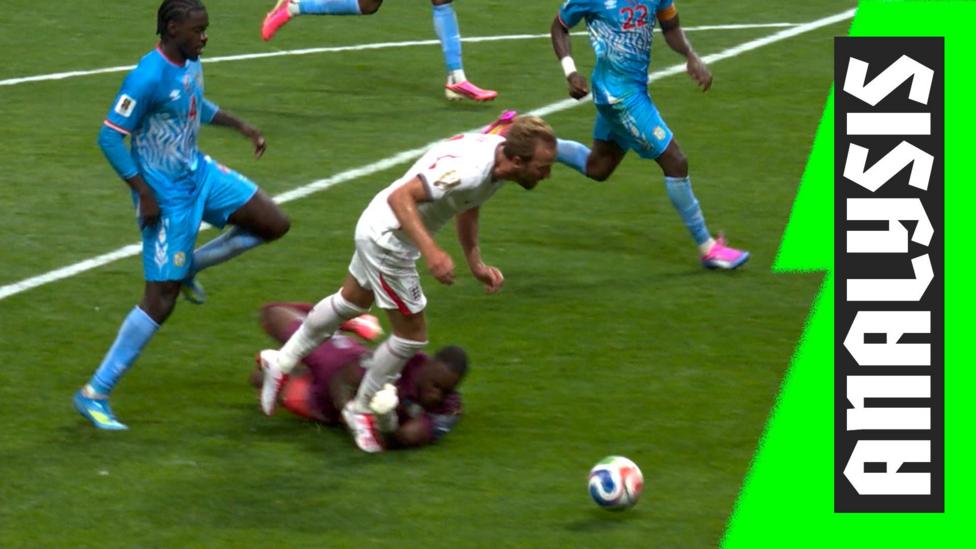
Kane's Penalty Claim Sparks Fiery Pundit Split
Richards, Hart, Rooney, and Cann clash over whether Kane was denied a clear penalty against DR Congo.

World Cup Mystery Star No 31: The Clues, The Legacy, The Answer
Step into the daily World Cup puzzle ritual and unpack the story behind mystery star No 31 — past, glory, and identity.

World Cup Group Stage Reaches Boiling Point: Your Questions Answered
The biggest World Cup ever hits the group stage finale, and SportPulse correspondents break down the chaos.