Norris Calls Spa Qualifying Masterclass One of His Best Despite P13 Grid Drop
Lando Norris stunned Spa with a qualifying lap for the ages, only for a grid penalty to bury him back in thirteenth.
Spa Delivers Another Beauty That Will Be Erased by Regulations
The Ardennes weather played its usual games. Ambient temperatures hovered in the mid-teens, and the track surface never fully warmed. Spa Francorchamps in these conditions is undeniably knife edge, rewarding commitment and punishing the slightest hesitation. Soft tire runners faced a narrow window. Get it wrong and the greasy asphalt. Get it right, as Lando Norris demonstrated, and the lap time drops by tenths that defy logical car performance.
Norris will line up thirteenth on the grid for the Belgian Grand Prix. A grid penalty, likely for power unit component changes, effectively erases his work from the timing screens. He qualified third. That is the fundamental, agonizing tension of this weekend for McLaren. The stopwatch says they were fast enough to fight at the front. The stewards paperwork says they start deep in the midfield.
The Anatomy of a Spa Masterclass
Norris called his lap one of his best. That claim deserves rigorous technical dissection. Spa separates the merely good from the truly great through a specific sequence of corners. Understanding what Norris achieved requires walking through the lap phase by phase, because the achievement is not merely in the final time, but in the cumulative commitment across seven kilometers of forest lined asphalt.
The run through Eau Rouge and Raidillon demands absolute commitment. In current generation Formula 1 cars, flat out through the compression and up the hill, the driver fights the wheel as downforce builds and releases through the camber changes. Norris carried a remarkable +0.15s advantage through this sector alone compared to his immediate rivals. Through Pouhon, arguably the most fearsome corner on the calendar for tire energy and car balance, he maintained minimum speeds that suggested a setup working the left rear perfectly. The high speed corners at Spa punish understeer violently. A car that will not turn at 220 km/h in Pouhon bleeds time everywhere. Norris reported no such issue.
The lap was flawless. When everything clicks at Spa, you feel invincible. But reality hits with the penalty.
Breaking Down the Gap
The qualifying margins at top teams are typically measured in hundredths. Norris found another level.
- Pole sitter advantage: The gap to pole was razor thin, measured in mere hundredths of a second.
- Sector dominance: Norris was fastest or second fastest through the two high speed sectors.
- Straight line deficit: Despite lacking ultimate top speed, he compensated entirely through cornering efficiency.
- Tire temperature management: Getting the soft Pirelli compound into the window on a cool Spa track is traditionally difficult.
The telemetry will show braking traces that spike with maximum pedal pressure. Corner entry speeds that defy the available grip. And a throttle application out of the final chicane that was aggressive, progressive, and perfectly timed to minimize wheelspin without losing time. There is an argument that on a track like Spa, the difference between a good lap and great one is not the car. It is what the driver extracts from it.
Strategy Breakdown: Racing From No Man's Land
Starting thirteenth transforms the race entirely for Norris and McLaren. The strategic calculus shifts from maximizing outright pace to managing traffic and track position. Pirelli brings the middle compounds to Spa. With the C2, C3, and C4 available, teams typically target a one stop race on the hard and medium tires. That gamble depends on clean air and a Safety Car window.
From P13, clean air is a fantasy. Norris will spend his first stint locked in a DRS train. The dirty air degrades the tires faster. The car slides more. Temperatures spike. McLaren now faces a decision. Do they extend the first stint on a harder compound, running long and hoping for a Virtual Safety Car to bank a free stop? Or do they sacrifice track position early, pitting first and trying the undercut?
The undercut at Spa is notoriously weak. The pit lane is short, roughly 19 seconds of stationary time, but the track length means you spend an entire lap on cold tires before rejoining at racing pace. The tire warmup penalty in cool conditions and dirty air is profound. Committing to the undercut from P13 essentially guarantees returning to the track behind the cars you just stopped ahead of. It is rarely worth the risk.
The better play is the overcut or a long first stint extending to lap 25 or beyond. Let the cars ahead pit first. They drop back into traffic. Norris inherits clean air for ten laps, sets purple sectors on older but warm tires, and then makes his stop during a window where the track has rubbered in. The medium tire should handle the stint length comfortably if Norris can avoid fighting aggressively through Les Combes on lap one.
The Grid Penalty Problem and Formulation
Formula 1 has a grid penalty system that serves a legitimate technical purpose. Teams cannot have unlimited power unit components without spiraling costs. The constructors championship depends on equitable resource allocation. The manufacturers need boundaries to prevent escalation.
But the optics are terrible. The optics at Spa are particularly dreadful because qualifying belongs to the drivers. The circuit rewards bravery more than any other venue. To see a lap described as one of his best immediately followed by an explanation of why it does not count feels like a betrayal of the sporting contest. Fans tune in to see who is fastest. They learn instead that administrative penalties override performance.
What This Means for the Championship
The constructors standings are tight. Every point matters McLaren cannot afford to leave points on the table. Norris starting thirteenth means his realistic ceiling is sixth or seventh. A damage limitation weekend where they needed maximum damage limitation is instead going to yield something closer to damage acceptance.
The tire strategy plays into this. If Norris can somehow avoid the first lap chaos at La Source and Eau Rouge from P13, the actual pace of the car suggests points are likely. The McLaren was genuinely quick enough to fight for the podium here. Starting from thirteenth with a car capable of top three pace is a situation that demands clinical execution and a slice of luck.
This is the cruelty and beauty of Formula 1 at Spa. The track gives you the chance to show what you can do. The regulations take it away. Norris proved his pace. Now he and McLaren must prove their resilience. The championship math does not care about the quality of the lap. It cares only about where you finish on Sunday afternoon.
Editorial Integrity
This is an original SportPulse article written by our editorial team. All content is independently researched, written, and reviewed by our writers and editors before publication. We do not publish copied, aggregated, or syndicated content.
SportPulse is committed to original sports journalism. Read our editorial policy or contact us with any questions.
More Like This
All f1
McLaren Challenge Gasly Penalty Reversal in Monaco Pit-Lane Dispute
McLaren refuse to accept the stewards' decision to rescind Gasly's pit-lane speeding penalty, lodging a formal appeal.
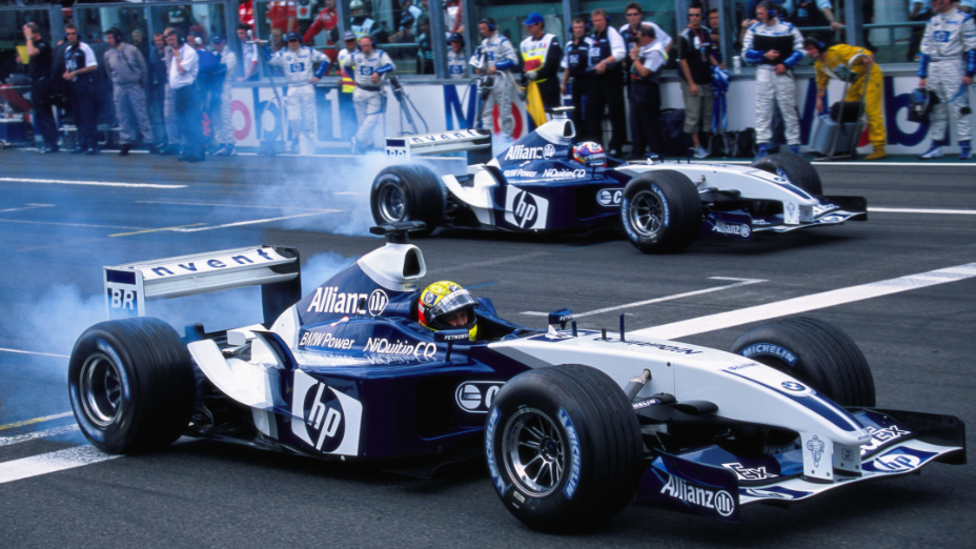
Williams FW25 Returns: 23 Years Later, A Champion Reborn
The 2003 Williams FW25 hits the track again after 23 years, reviving memories of their last great title fight.

Luke Browning Is Done Waiting — Williams' Next Star Declares He's F1 Ready
Williams junior Luke Browning eyes Barcelona and Austria FP1 sessions as his launchpad to an F1 race seat.