Norway vs England: World Cup Quarter-Final Becomes a Survival Test
England face Norway in a World Cup quarter-final played inside a cauldron of 42-degree heat and 71 percent humidity.
A Quarter-Final in the Furnace
England are about to walk into the most unforgiving conditions of their World Cup campaign. The quarter-final clash against Norway kicks off at 5pm EDT (10pm BST, 7am AEST), and the stadium has already become a story in itself.
The raw temperature sits at 33 degrees Celsius. The real-feel figure, the number that actually impacts human bodies running at maximum exertion, is 42 degrees Celsius. Layer on 71 percent humidity, and you have the recipe for a physiological crisis disguised as a football match.
This is not conventional tournament football. This is extreme-sport territory masquerading as a World Cup knockout game.
The Brutal Arithmetic of Extreme Heat
Normal metabolic function during intense exercise already pushes core body temperatures toward dangerous thresholds. A human brain cannot survive sustained core temperatures above 40-41 degrees Celsius. Now, picture elite athletes sprinting, changing direction, and grappling for 90 minutes or more in air that already feels like 42 degrees, with humidity so thick it hampers basic evaporation. Sweat cannot evaporate efficiently when ambient humidity exceeds 60 percent. The body's primary cooling mechanism simply fails.
Players will lose fluid at an astonishing rate. A professional footballer can shed between two and three liters of sweat during a standard-temperature match. Under these precise conditions, that figure could approach four to five liters without aggressive intervention. Cramping, cognitive decline, and catastrophic exhaustion are the adaptively engineered fail-safes of the human body pushed past its limits. Every single team will be managing this reality.
Cooling Breaks and Tactical Chess
FIFA protocols mandate cooling breaks when the Wet Bulb Globe Temperature crosses critical thresholds. Expect mandatory pauses around the 30th and 75th minutes. These breaks will serve as tactical resets, fundamentally altering the rhythm of a knockout match that demands continuous momentum.
Managers will be forced into substitutions earlier than planned. A新鲜 outfielder introduced at 70 minutes brings more than pace and fresh legs. They bring a thermodynamic advantage. Their core temperature starts lower, their cardiovascular system has not been laboring through an environmental furnace for an hour. Expect both coaching staffs to weaponize their benches specifically for the heat, not merely for tactical mismatches or fatigue in the conventional sense.
The dynamics of play itself must shift. Pressing triggers decrease. Sprints become rationed like precious commodities. Tactical fouling might increase to slow tempo and allow discrete, localized recovery. Neither side can afford a track meet.
Norway's Northern Resilience Against England's Squad Depth
Norway's squad is populated predominantly by players operating in Northern European leagues, or accounts of similar cold-weather climates. Their domestic footballing culture was not constructed in this kind of environment. They are perhaps unaccustomed to this level of relentless, unyielding solar intensity.
England, however, boast something that might tip the scales. Their squad depth, built and tested through the grueling Premier League intensity, is profound. When the game breaks down and legs begin to fail at 60 minutes, the Three Lions have the proven quality to introduce game-changers. England's strategy must be measured survival first, then surgical execution.
England must avoid falling into the trap of early, aggressive pressing. The impulse to suffocate Norway from the opening whistle could be self-sabotage. The heat punishes wasted movement exponentially.VO2max efficiency plummets as dehydration sets in. Utilizing possession to both control the game and force Norway to chase shadows in the heat is the smartest probable tactical profile.
The Inner Workings
During the pre-match warm-ups, the atmosphere inside the stadium bowl was oppressive even for observers stationary in the shade. Myself and colleagues from the press corps set up in the media section, sat at our seats for five minutes, and were all dripping in sweat. That is before a single competitive pass has been struck.
Imagine playing in this. The intensity of the preparation alone strips players of crucial hydration reserves before the referee's whistle. Water stations positioned around the pitch perimeter will resemble medical outposts more than casual refreshment stops. Physiotherapists and sports scientists from both federations will be the most active staff members on the touchline. Their preparation over the last 48 hours will matter more than any tactical whiteboard session.
"The conditions are brutal, simple as that. We've trained in heat before, but this is something else. We have to be smart, we have to be patient, and we have to trust the plan for 90 minutes or more."
That sentiment will echo through both dressing rooms. It is not an excuse. It is the fundamental tactical parameter of this match.
Tactical Adjustments and Fluid Intake
The modifications extend beyond mere player rotation. Both teams must aggressively adjust their fluid intake protocols. Pre-match hydration loading is now critical. IV drips, controversial but increasingly common in modern sports science, might privately feature in pre-game rituals despite regulatory hurdles.
High-sugar electrolyte solutions will be the norm. Every single dead ball situation presents a brief hydration window. Clubs will employ dedicated hydration coaches to monitor player weight loss during the match. A player losing more than two percent body mass in fluid faces a measurable, proven drop in cognitive function and decision-making capacity.
In a knockout quarter-final decided by single moments, a delayed neural pathway can be the difference between advancing and going home.
What It Means
The winner of this match does not just advance to a World Cup semi-final. They survive a physiological minefield.
The implications extend beyond a single result. Player welfare questions will erupt once again. FIFA's scheduling choices and venue selections will be scrutinized under an even harsher lens than the sun itself. If this match devolves into a war of attrition decided by who collapses last rather than who plays best, the sport faces uncomfortable existential conversations.
For England, advancement cements their growing pedigree. Surviving these conditions and still executing a tactical gameplan rubber-stamps a maturity that previous generations lacked.
For Norway, a victory becomes one of the great modern footballing upsets. It would immediately crown their golden generation as authentic world-class contenders.
The heat does not care about reputations. It does not respect historical dominance. It treats every human body equally. 90 minutes in a 42-degree cauldron will physically strip both teams to their bare essence. For the players and the backroom staff tasked with keeping them functional, the stakes transcend silverware. This match is a test of survival under the most fundamental physical pressures the sport allows.
Editorial Integrity
This is an original SportPulse article written by our editorial team. All content is independently researched, written, and reviewed by our writers and editors before publication. We do not publish copied, aggregated, or syndicated content.
SportPulse is committed to original sports journalism. Read our editorial policy or contact us with any questions.
More Like This
All football
Transfer Radar: United Eye Baleba, Arsenal Circle Konsa, Greenwood's Madrid Link
Three moves that could reshape the Premier League's power structure are taking shape this summer.

Brighton Land Struijk in £20m Defensive Coup From Leeds
Brighton secure Leeds centre-back Pascal Struijk for around £20m, adding Premier League pedigree to Fabian Hürzeler's evolving backline.
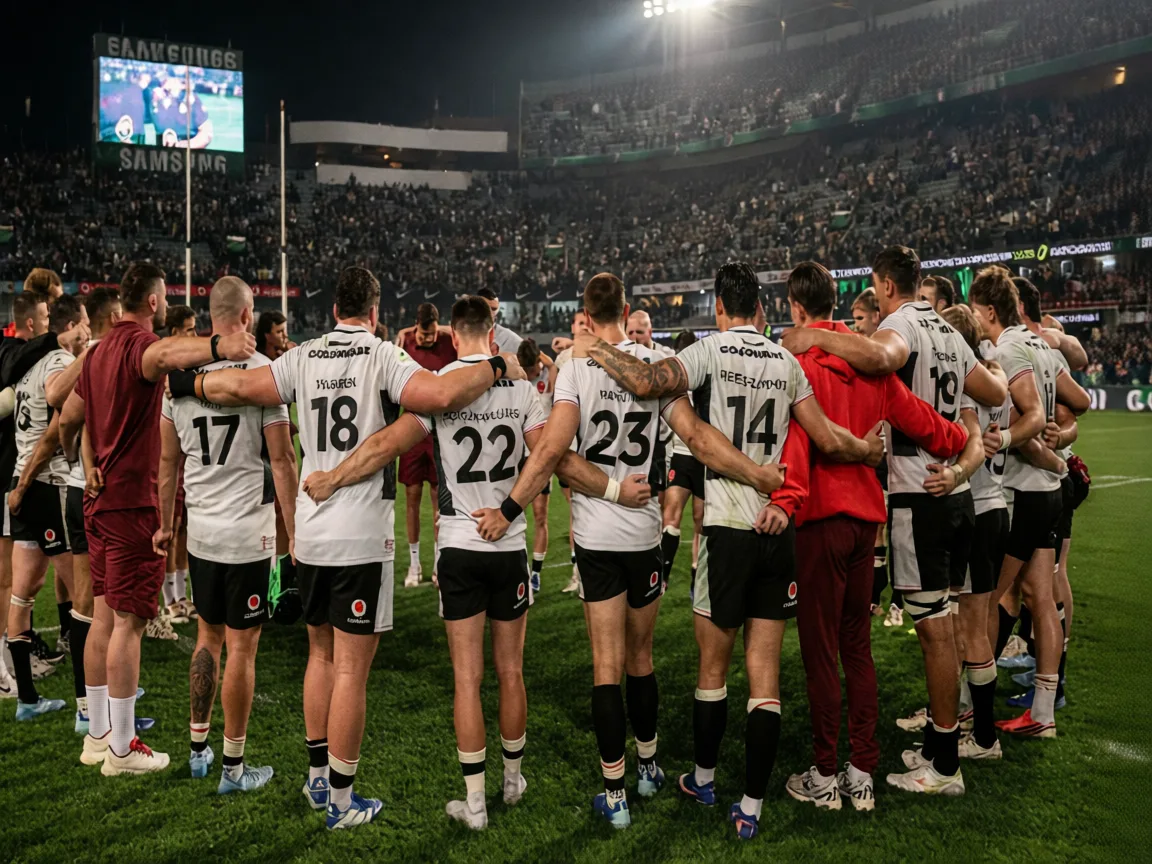
Tandy's Wales Hit Rock Bottom in Durban
Three wins, nine defeats. Steve Tandy's first season ends in Durban wreckage with Wales cricket at its lowest ebb.