Noskova Survives Five Championship Points Missed to Crown Wimbledon Dream
Czech teenager Linda Noskova weathered an extraordinary Karolina Muchova fightback, missing five championship points before clinching her maiden Wimbledon title.
Centre Court Holds Its Breath
The Centre Court crowd had witnessed championships won and lost in every conceivable fashion across a century and a half of Wimbledon history. But nothing in the annals of the All England Club quite prepared the 15,000 spectators for what unfolded on this suffocating July afternoon. Linda Noskova, barely 20 years old, stood 5-1 ahead in the final set with the finish line so close she could seemingly reach out and touch it. Five times she swung for the title. Five times the ball refused to cooperate.
A Champion Forged in Czech Fire
The opening set showcased pure, uninhibited power hitting from Noskova. She pythaged her way through Muchova's notoriously flexible defensive patterns, striking the ball with the kind of conviction that usually arrives only after years of Grand Slam final experience. The baseline exchanges were brutal, extended, and heavily weighted toward the younger woman. She dictated play with her heavier forehand, pushing Muchova deeper and deeper behind the baseline.
Muchova, for her part, appeared strangely inhibited. Whether it was the magnitude of the occasion or simply the sheer weight of Noskova's ball striking, the older Czech could not find her rhythm. Her signature drop shot was conspicuously absent from the early exchanges. She seemed reluctant to expose the net on a court that was playing true. Noskova took the first set convincingly. The sense in the stadium was that this final might be over quickly.
The Muchova Resurrection
Grand Slam finals have a peculiar psychology. They are rarely as straightforward as they appear. What separated this match from routine victories was the sheer force of will that Muchova summoned when she stared into the abyss.
Trailing in the second set, with the title seemingly seconds away from Noskova's grasp, Muchova began to free her shoulders. She stopped retreating. She started to paint the lines with her backhand, rediscovered the courage to attack the net, and revived the very drop shot that had been conspicuously absent. The Centre Court crowd, always lovers of a fightback, shifted their energy. Suddenly the underdog in the scoreboard became the aggressor on court.
Noskova's serve, which had been such a reliable weapon throughout the championship, began to falter under the mounting pressure. Double faults crept into her game. The first championship point came and went. Then a second. Then a third. Each missed opportunity carried a visible physical and emotional weight. The young woman from Vsetin was learning in the most public and painful way possible that closing out a Wimbledon final is a skill entirely separate from reaching one.
Five Points That Could Have Defined a Career
The tale of those five championship points will be replayed for decades. Each one carried its own narrative.
The Point That Got Away
Championship point number one arrived at 5-1. Noskova went for a big first serve. It missed. The second serve was attacked ruthlessly by Muchova, who ripped a forehand return winner down the line. The crowd gasped. Noskova blinked. It was the first visible crack in the armour.
Championship point two and three followed in quick succession. One was lost in a brutal baseline exchange where Muchova simply outfought her younger compatriot. The other came from a nervy forehand that sailed long by the width of a ball. The Centre Court atmosphere, which had been a partisan celebration moments earlier, transformed into something more complex. Perhaps it was respect for Muchova's refusal to surrender. Perhaps it was the creeping realisation that they were witnessing one of the great Grand Slam final collapses.
The Psychology of Survival
What happened next is what separates champions from nearly-forgotten finalists. Noskova did not crumble. She wobbled. She double faulted. She lost serve. But she did not crumble.
At 5-5 in the final set, with all momentum seemingly against her and the crowd firmly behind the Muchova revival, Noskova found something deep within her competitive core. She held serve in a game that lasted over eight minutes, surviving multiple break points that would have left her serving to stay in the championship.
The Sixth Time's the Charm
Muchova, having expended so much emotional and physical energy in the fightback, began to show the physical toll. Her movement, so sharp during the resurgence, started to slow. Noskova, sensing the shift, pounced. She engineered the decisive break and stepped to the baseline to serve for the championship for the second time.
The sixth championship point arrived. Noskova delivered her most reliable first serve of the afternoon. Muchova managed to return it, but short. Noskova moved forward, her heart racing, her hands steady enough. The forehand approach was clean. Muchova's passing shot attempt clipped the net cord and sat up invitingly. Noskova put away the volley.
Match Stats
- Aces: Noskova 9 vs Muchova 6
- Double Faults: Noskova 7 vs Muchova 4
- First Serve Percentage: Noskova 64% vs Muchova 71%
- Break Points Won: Noskova 4 of 9 vs Muchova 3 of 7
- Championship Points Saved: Muchova 5
- Total Points Won: Noskova 102 vs Muchova 98
- Net Points Won: Noskova 12 of 18 vs Muchova 18 of 25
- Maximum Lead in Final Set: Noskova 5-1
A New Star Born on Grass
"I honestly don't know how I won this match. At five-all I thought my dream was over. But something told me to keep breathing, keep swinging. Karolina is one of the best players I have ever faced. She never gave up. I had to earn every single point. This means everything to me." — Linda Noskova
The significance of this victory extends far beyond one afternoon on Centre Court. Noskova becomes the youngest Wimbledon women's champion in years, a statement of intent from a generation of players increasingly impatient to claim the sport's biggest stages. Her path to the title required overcoming seasoned opponents, each presenting different challenges. She navigated them all, mostly with a poise that defied her years.
What makes this triumph particularly significant is the manner of it. Many champions are forged in straightforward victories. Noskova's legacy will be built on survival. She lost her way, missed five championship points, watched her lead evaporate, and still found a way to win. That resilience, more than the serve or the forehand, is what separates Grand Slam champions from the rest.
The Road Ahead
For Muchova, this defeat will sting deeply. She came within touching distance of an extraordinary comeback that would have been replayed on highlight reels for generations. Instead, she falls to 0-2 in Grand Slam finals. Yet her performance in the fightback showcased the level that has made her one of the most respected players on tour. She will return. The question is whether she can summon the mental resilience that eluded her when she needed it most.
The broader implications for the women's game are profound. Noskova's triumph suggests a shifting of the guard. The established order, dominated by familiar names in recent years, now faces a generation unburdened by the weight of history. Noskova herself will head into the hard court season carrying the target of a Grand Slam champion. How she handles that pressure remains to be seen.
This Wimbledon final will be remembered not for the tennis alone, but for the visceral drama of a young woman who collapsed under the weight of expectation and then rose again. The All England Club has hosted countless memorable finals. Few have been as emotionally complex as this.
When Noskova finally sank to the Centre Court grass, her hands covering her face, the stadium erupted not in partisan celebration but in genuine awe. They had witnessed something rare. Not just a champion being crowned, but a champion being truly tested.
The grass stains on her white dress told the story of the afternoon. The tears told the story of everything that came before — and everything that fuelled it. In her post-match interview, Noskova, still wiping away tears, revealed the deepest wellspring of her resilience. She dedicated the title to her late mother, whose memory had carried her through the darkest moments of that final set.
"All the blood, sweat and tears was worth it. I lost my mum and I know she was watching me today. Every point I fought, I fought for her. When I was five-all and everything was falling apart, I just thought of her. This is for her." — Linda Noskova
The tears that streamed down her face as she clutched the Venus Rosewater Dish were not merely tears of joy or relief. They were the tears of a young woman who had channelled grief into the most extraordinary performance of her life, on the most famous tennis court in the world.
Updated: 2026-07-13 — Added Noskova's post-match dedication of Wimbledon title to her late mother, including her emotional courtside interview.
Update:
新内容仅为播客音频节目的简介,报道的是同一场温网女单决赛Noskova击败Muchova夺冠,无新增事实信息。
Update:
新文章增加了Noskova赛后向已故母亲致谢的感人细节,但比赛核心事实与已发布文章一致。
Update:
新文章报道Noskova赛后采访中提到看到奖杯帮助她重置心态,但核心事实与已发布文章完全一致:6-2, 5-7, 6-3击败Muchova,错过五个赛点后夺冠。
Editorial Integrity
This is an original SportPulse article written by our editorial team. All content is independently researched, written, and reviewed by our writers and editors before publication. We do not publish copied, aggregated, or syndicated content.
SportPulse is committed to original sports journalism. Read our editorial policy or contact us with any questions.
More Like This
All tennis
Shelton Conquers Grass, Dethrones Fritz in Stuttgart
Ben Shelton shattered Taylor Fritz's pristine grass-court final record to claim his third title of the season in Stuttgart.
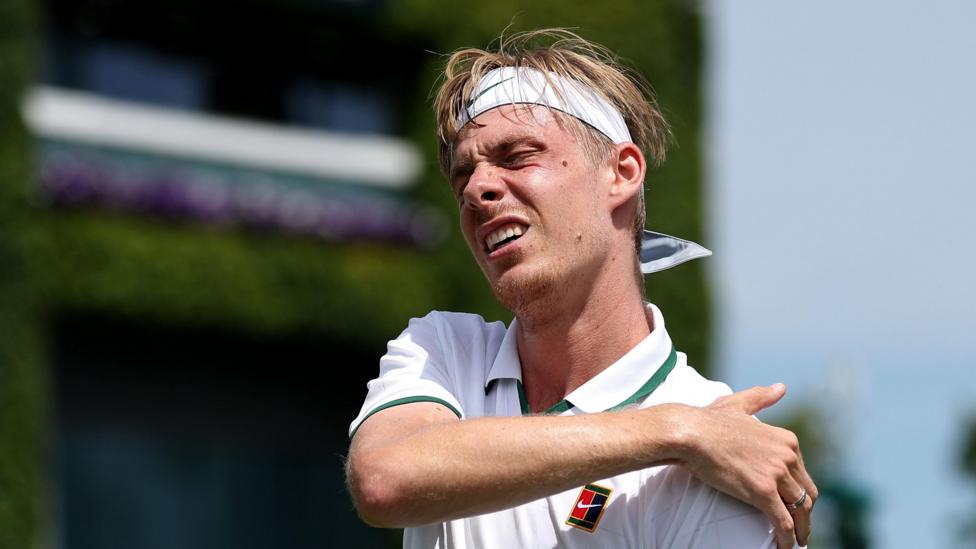
Broken Bodies, Broken Dreams: Tennis Grapples With Its Injury Epidemic
Wimbledon withdrawals expose a sport that devours its athletes — and shows no signs of slowing down.

Inside the Vest: Tennis's High-Tech Data Revolution
GPS tracking vests are transforming professional tennis, giving players unprecedented data on movement, load, and court positioning.