Osaka Moves in Silence — and Straight Sets — at Wimbledon
Naomi Osaka cruised past Gasanova 6-3, 6-2, finding peace in victory and perspective beyond the baseline.
title: "Osaka Moves in Silence — and Straight Sets — at Wimbledon"
category: tennis
badge: Grand Slams
badgeType: category
author: Alex Thompson
authorRole: Tennis & General Editor
authorInitials: AT
date: 2026-07-01
readTime: 7 min read
image: https://i.guim.co.uk/img/media/e94dd2cce43a262f58000f630c3f4b3b0017ca54/297_0_3695_2956/master/3695.jpg?width=140&quality=85&auto=format&fit=max&s=885e4a49f02772ee3527b4aab65e9c41
imageAlt: Naomi Osaka hitting a forehand on No. 2 Court at Wimbledon 2026
tags: Wimbledon, WTA, Grand Slams
excerpt: "Naomi Osaka cruised past Gasanova 6-3, 6-2, finding peace in victory and perspective beyond the baseline."

There is a particular quiet that descends on Court No. 2 at Wimbledon when a four-time Grand Slam champion is playing well. Not the reverential hush of Centre Court, with its royal box and cathedral architecture, but something closer to contentment — the sound of a crowd settling into the knowledge that they are witnessing competence of the highest order and need not hold their breath. On Wednesday afternoon, that quiet belonged to Naomi Osaka, who dismantled Russian qualifier Anastasia Gasanova 6-3, 6-2 with the kind of efficient, punishing tennis that once made her the most feared player on the women's tour. With that victory, she proved a showstopper on and off the court, advancing to the third round.
The result was never truly in doubt. What lingered afterward, in Osaka's own words and in the texture of her performance, was something far more interesting than the scoreline.
A Champion Relearning Her Own Reflection
Osaka's return to professional tennis, now well into its second full season since she stepped away in 2022 citing mental health struggles and later became a mother, has been defined by a tension between who she was and who she is becoming. This evolution is not just mental but visual, playing out in her on-court entrances, which have become almost as anticipated as her first serve. The contrast between her bold fashion choices and naturally reserved personality has become a fascinating subplot. Two days after turning heads in a sculptural kimono-inspired creation embroidered with cranes and cherry blossom for her Wimbledon opener, she dressed to command attention again for her second-round match. The sweeping layers had been toned down – replaced by a cleaner silhouette featuring a traditional sash, a flowing train and a bomber jacket embroidered with flowers – but the effect was the same with photographers and fans crowding around her during the walk to Court 2. It’s a deliberate, dramatic contrast to the quiet, internalized focus she brings once play begins. Osaka continues to prove a showstopper on and off the court, arriving in a new outfit before each match as she advances.
The player who won four Grand Slam titles between 2018 and 2021 — two Australian Opens, two US Opens — operated with a ferocious clarity, her serve a weapon of first-strike annihilation, her groundstrokes flattening opponents into submission. She was, for a brief and blazing window, the most dominant hardcourt player alive.
Wimbledon was always the outlier. The grass-court Slam has historically been the least hospitable surface for Osaka's game, which relies on heavy topspin and deep baseline positioning that the slick turf can neutralize. She reached the third round in 2017 and 2018, then never advanced past that stage during her peak years. A semifinal run here has always eluded her.
And yet here she is, reaching the third round at Wimbledon in back-to-back years during what amounts to a second act in her career. The context matters. Osaka is not the player she was in 2021. The serve, while still formidable, does not generate the same unplayable angles it once did. Her movement, always the most scrutinized part of her game, has been rebuilt around a different body — one that carried and delivered a child, one that required fundamental recalibration.
What has replaced the raw dominance is something more nuanced: a player who reads the court with the wisdom of someone who has seen it all and now approaches it with less terror and more craft.
The Anatomy of a Cruise
Against Gasanova, Osaka's performance was a masterclass in controlled aggression. After her eye-catching entrance, she peeled away the outfit and quietly dismantled her opponent. Her serves and groundstrokes were stellar, as the courtside report noted, but the word "stellar" undersells the specificity of what she did. Against a qualifier who had earned her place through three rounds of qualifying and a first-round upset, Osaka systematically removed every avenue of hope.
The first set was professional and clean. The second set carried the only real friction of the afternoon, and even that was more comedy than crisis. When Osaka struck a ball out during the second set, her reaction — "What the hell?" — drew laughter from the No. 2 Court crowd, the kind of spontaneous human moment that makes tennis in the intimate Wimbledon outside courts feel like a conversation rather than a spectacle.
More revealing was her interaction with her coaching box. Osaka turned to her team to complain about Gasanova's grunting, a minor irritation that in years past might have derailed her concentration entirely. The Osaka of 2021, who withdrew from Roland Garros and later Wimbledon citing the pressure of press obligations and the weight of public expectation, might have let a small annoyance metastasize into something larger. On Wednesday, she acknowledged it and moved on.
That distinction — between acknowledgment and absorption — may be the most important evolution in Osaka's game.
"I don't rate my performance. I have to wait a bit to do that. My current emotion is that I am happy to win."
The quote is telling in its restraint. Osaka has always been disarmingly honest in her press interactions, sometimes painfully so. But there is a different quality to her candor now, less like a confession and more like a weather report. She is observing herself without judgment.
Motherhood as Narrative — and as Reality
The post-match interview turned inevitably personal. Tomorrow is her daughter's birthday, Osaka shared, explaining that she did not want to make a toddler board a plane on her special day. The plan: practice in the morning, then a trip to the park. "She loves making new friends," Osaka said, and the line landed with the kind of effortless warmth that no media training can manufacture.
Motherhood in professional tennis is no longer the career-ending condition it was once assumed to be. Evonne Goolagong Cawley won Wimbledon as a mother in 1980. Kim Clijsters returned from retirement to win the US Open in 2009 after the birth of her daughter. Serena Williams reached four Grand Slam finals after giving birth to Olympia in 2017. Victoria Azarenka, Caroline Wozniacki, and others have navigated the same terrain.
But Osaka occupies a unique intersection of motherhood, mental health advocacy, and commercial superstardom. She remains one of the highest-earning female athletes in history, with endorsement portfolios that extend well beyond tennis. Every match she plays at a Grand Slam carries not just competitive weight but symbolic gravity: proof that the new architecture of her life — practice schedules built around naptimes, tournament travel organized around a child's calendar — can coexist with elite performance.
Wednesday's win was evidence that the architecture holds.
What the Draw Holds Next
Having now reached the third round, the stage represents a threshold for Osaka. It is the point in the draw where the competition begins to sharpen considerably. The grass-court season has historically exposed the limits of her movement, and the deeper she goes, the more likely she is to face opponents who can exploit the surface.
Yet the broader landscape of the 2026 women's draw offers possibilities. With the top seeds navigating their own pressures and the early rounds producing their customary upsets, there is space for a player of Osaka's caliber to make a deeper run than she ever has on grass. Her serve, when firing as it was on Wednesday, remains one of the most potent in the women's game. Her return game, always underrated, is built for the kind of aggressive first-strike tennis that grass rewards.
The question is whether Osaka can sustain the level she showed against Gasanova over five more matches — against players who will not grant her the same margins.
The Sound of Something Building
What struck most about Osaka's performance on Wednesday was not any single shot or moment but the absence of something: anxiety. The Osaka who once described the pressure of competing as suffocating played with the loose-limbed ease of someone who has made peace with the full spectrum of outcomes. She can win in straight sets and not rate her own performance. She can complain about an opponent's grunting and laugh about it minutes later. She can plan a birthday party at a London park and call it the most important item on her schedule. She can use her entrance as a form of self-expression that contrasts so sharply with her quiet game, yet both facets feel authentic.
This is not indifference. It is perspective, and perspective in sport is worth more than any technical adjustment.
Wimbledon's outside courts have always been where the tournament's real stories unfold — away from the cameras and the ceremonies, in the intimate theaters where players reveal who they actually are. On Court No. 2 on Wednesday, Naomi Osaka revealed a player who is still searching for her best tennis but no longer at war with herself in the process.
That may be enough to carry her further than she has ever gone on this surface. And if it is not, the park will still be there tomorrow, and her daughter will still be making friends.
Updated: July 1, 2026 — Integrated details on Osaka advancing to the third round and her continued showstopper status with new outfits.
Editorial Integrity
This is an original SportPulse article written by our editorial team. All content is independently researched, written, and reviewed by our writers and editors before publication. We do not publish copied, aggregated, or syndicated content.
SportPulse is committed to original sports journalism. Read our editorial policy or contact us with any questions.
More Like This
All tennis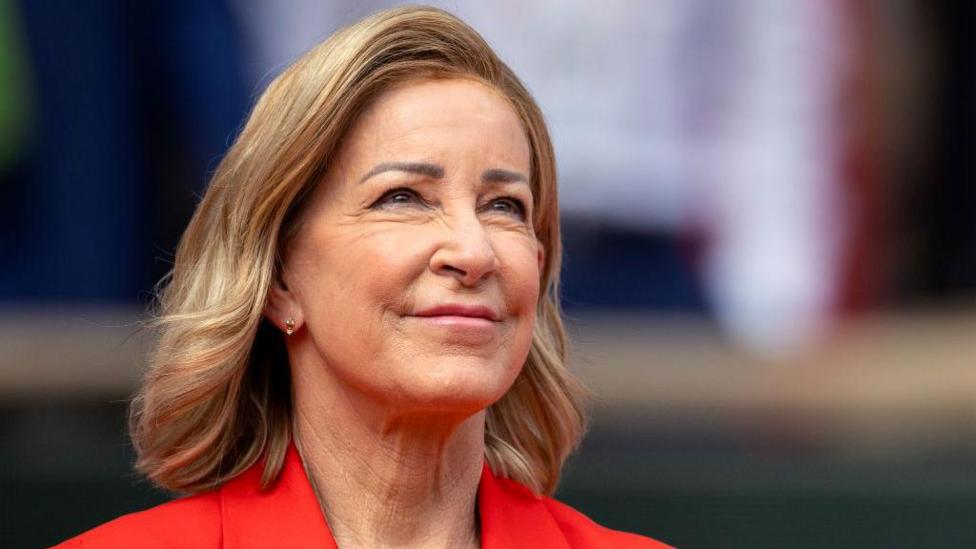
The Relentless Opponent: Chris Evert Faces Her Toughest Match Yet
Wimbledon champion Chris Evert announces a third cancer diagnosis, challenging a legend who dominated tennis's mental game.
WTA Mandates Genetic Sex Testing for Tour Eligibility
The WTA will require all players to undergo genetic sex testing to compete, sparking debate over fairness, privacy, and inclusion in women's tennis.
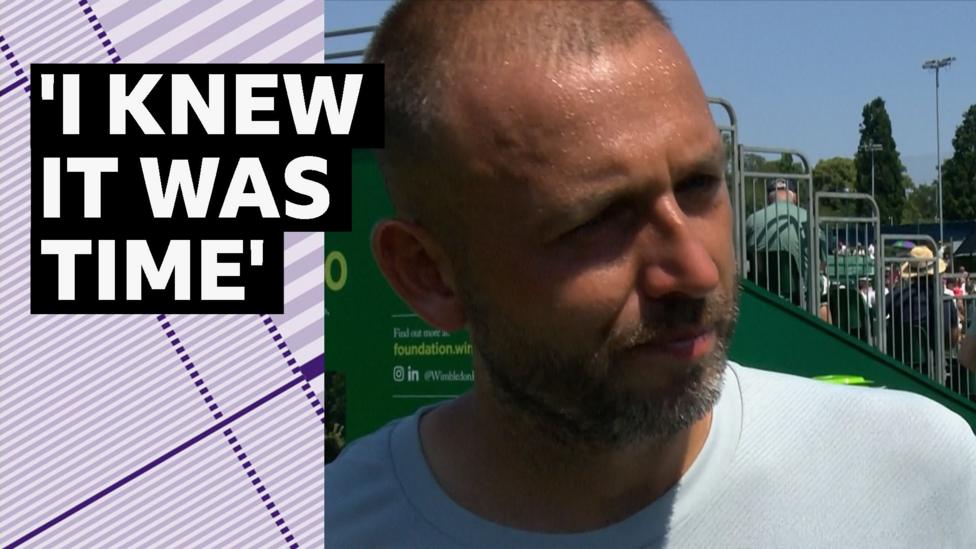
The Long Goodbye: Dan Evans Bows Out on His Own Terms
Dan Evans closes the book on a singles career defined by reinvention, resilience, and one unforgettable comeback.