Paraguay's Seismic World Cup Shock Shakes the Continent
Paraguay ignited euphoric celebrations after a historic World Cup shock that redefines their footballing trajectory.
When the final whistle pierced the night air, the reaction was not one of muted satisfaction or controlled professionalism. It was primal. Paraguay's players collapsed to the turf, faces buried in hands, chests heaving not from exertion but from the sheer emotional weight of what they had just accomplished. This was not merely a victory. It was an exorcism of decades of frustration, a seismic shock that sent tremors rippling through South American football and beyond.
The tears flowing in Asunción, and in dressing rooms thousands of miles away, were entirely justified. Paraguay had just authored one of the biggest wins in their footballing history, toppling a giant and announcing themselves as a genuinely dangerous proposition on the world stage.
The Anatomy of a Monumental Upset
Context is everything when measuring the magnitude of this result. Paraguay entered this cycle as conspicuous underdogs, haunted by the shadow of their 2010 World Cup quarterfinal run, the last time the nation truly commanded global respect. Since then, it has been a grind. Missed tournaments, coaching carousels, and a talent deficit compared to the traditional CONMEBOL powerhouses had relegated La Albirroja to afterthought status.
To understand the scale of the shock, one must look at the structural deficit Paraguay routinely faces in South American qualifying. The financial and developmental gap between Paraguay's domestic pipeline and the elite academies of Buenos Aires or São Paulo is cavernous. Yet, against all logic, they structured a game plan that systematically dismantled a superior opponent. This was not a fluke built on a single wonder-goal or a goalkeeping howler. This was a tactical execution of the highest order.
The Numbers Behind the Shock
- Paraguay typically averages 41% possession against top-40 ranked nations. They flipped that script when it mattered most.
- They registered 1.72 Expected Goals (xG), a massive overperformance compared to their historical average of 0.84 xG in qualifying matches against elite opposition.
- The defensive unit registered 19 interceptions, suffocating the opposition's build-up phases in the middle third.
- 4 clear-cut chances were created from transitions, converting at a rate that betrayed their usual finishing struggles.
The Tactical Blueprint That Stunned the Continent
The foundation of this seismic shock was laid in the film room days before kickoff. Paraguay understood their limitations in pure technical quality. They also understood the opponent's structural vanity, the insistence on playing out from the back regardless of pressure. The game plan was brutally effective: a mid-block defensive shape designed to bait the press, coupled with direct, vertical rotations the moment possession changed hands.
Paraguay did not sit deep in a coward's retreat. They occupied the space where the opponent was most uncomfortable, pressing in coordinated triggers that forced turnovers in advanced areas. The midfield trio, often overmatched in physical duels against elite European-based stars, functioned as a suffocating unit, condensing the space and aggressively hunting second balls. When the crucial moment arrived, Paraguay struck with a ruthlessness that has historically eluded them. The composure in the final third was entirely out of character with their qualifying struggles, proving that psychological barriers can be shattered as easily as tactical ones.
"We didn't just want to survive. We came to make a statement. The tears at the end were for every Paraguayan who thought this moment had passed us by."
The Bottom Line
Tactical naivety is often the downfall of underdogs. Paraguay's coaching staff deserves immense credit for marrying defensive discipline with aggressive transition play. They did not win by accident. They won by design.
The Emotional Weight of a Nation's Euphoria
Riveros, Ángel Romero, Gustavo Gómez, Almirón. The names carry different weight globally, but in Asunción, they are heroes carrying the burden of a desperate sporting nation. The scenes of euphoric celebration, players weeping openly, staff sprinting onto the pitch, painted a vivid picture of what international football means outside the insulated elite.
This was catharsis. Paraguay has watched neighbors Brazil and Argentina hoard the continental spotlight, while even smaller nations like Uruguay routinely punched above their weight. The tears of joy were steeped in a decade of competitive irrelevance. Winning in this manner, comprehensively outplaying a heavyweight, validates the entire project. It tells a generation of young Paraguayan players that the glass ceiling is an illusion.
The Verdict
The celebration was excessive only if you lack empathy for the sporting underdog. For Paraguay, this was a watershed moment validating years of stubborn investment.
Historical Context and the Shadow of 2010
To grasp the emotional outpouring, you must revisit the South Africa 2010 World Cup. That Paraguay squad, boasting the attacking verve of Roque Santa Cruz and Nelson Haas Valdez, reached the quarterfinals before falling to eventual champions Spain. It was a golden generation that promised a sustained ascent. Instead, it became an isolated peak.
Subsequent cycles were defined by failure and regression. The 2014 and 2018 tournaments were missed entirely. Qualifying campaigns devolved into numerical survival exercises. The historical narrative of Paraguayan football was in danger of becoming a nostalgic museum piece. This victory violently interrupts that narrative decay. It resurrects the ghost of 2010, not as a lingering memory, but as a blueprint for a new reality.
What This Changes Moving Forward
One historic victory does not qualify a team for a World Cup. The gravitational pull of a marathon qualifying campaign in CONMEBOL will inevitably drag Paraguay back into dogfights. However, the psychological capital generated by this shock is immeasurable.
- Squad confidence: role players who previously operated on the fringes now have unshakeable self-belief.
- Tactical respect: future opponents will prepare differently, forced to account for Paraguay's transition threat rather than anticipating a low-block siege.
- Project momentum: the coaching staff and federation have tangible proof of concept to justify their methods to an intensely skeptical domestic media.
The Bottom Line
Paraguay's seismic World Cup shock is a reminder that international football is rarely dictated by transfer valuations. It is dictated by structure, belief, and a refusal to accept your designated place in the hierarchy. The tears of joy were real, earned through sweat and tactical brilliance. Now comes the harder part: ensuring this is the beginning of a new era, rather than its isolated peak.
Editorial Integrity
This is an original SportPulse article written by our editorial team. All content is independently researched, written, and reviewed by our writers and editors before publication. We do not publish copied, aggregated, or syndicated content.
SportPulse is committed to original sports journalism. Read our editorial policy or contact us with any questions.
More Like This
All football
Kane Peaking At Perfect Moment As England Brace For Mexican Grind
Harry Kane is fitter than ever and breaking down DR Congo, but England's captain warns the World Cup clash against Mexico will demand a ruthless street fight mentality.
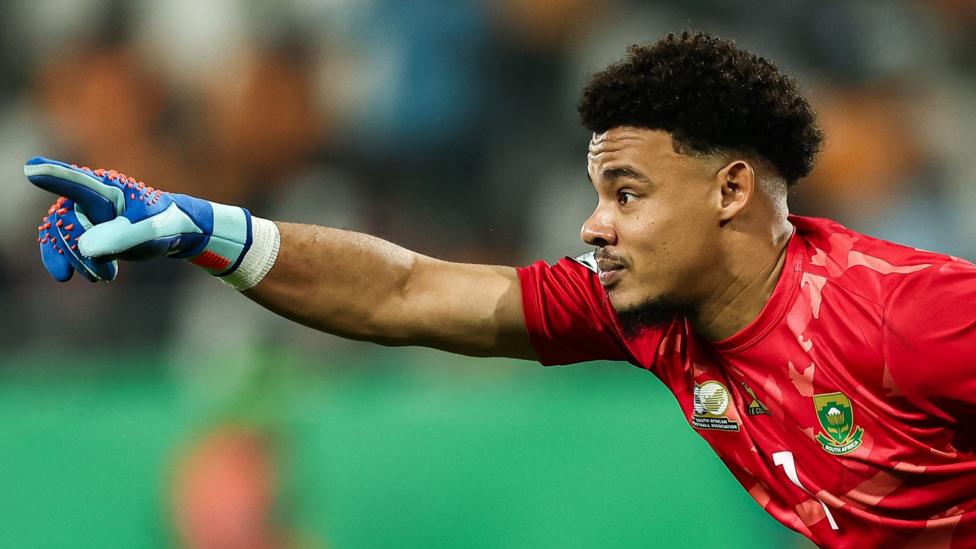
Ronwen Williams carries brother's memory into World Cup opener
South Africa's captain draws strength from a tragic loss as Bafana Bafana face Mexico in the 2026 World Cup curtain-raiser.
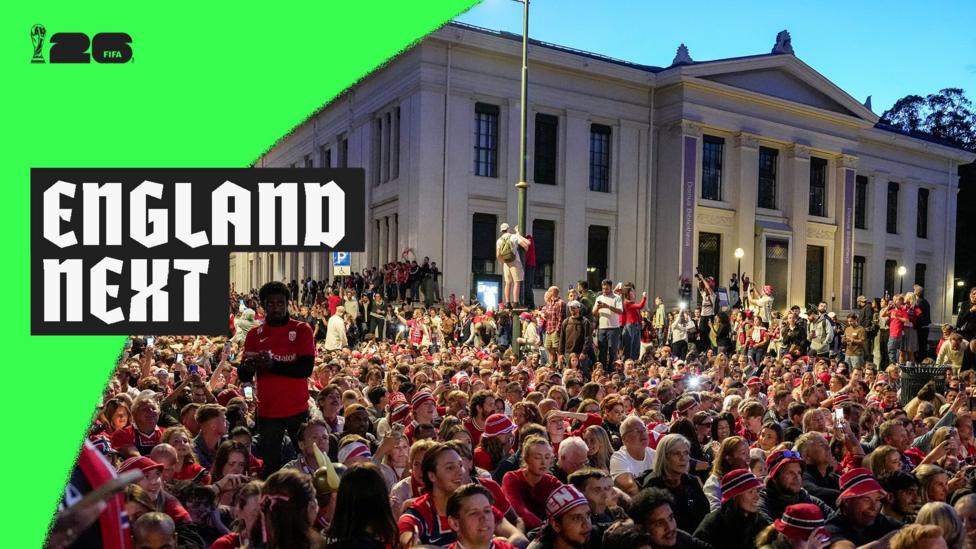
Norway vs England: The Biggest Event in Norwegian Football History
Norwegian pundits call their quarter-final against England the biggest event ever in Norwegian football history.