Piastri 'Mind-Blown' as FIA Overturns Gasly's Monaco Pit-Lane Penalty
A rare penalty reversal in Monaco raises serious questions about pit-lane enforcement consistency and the appeals process.
A Decision That Defied the Sensors
In a sport governed by milliseconds and millimetres, pit-lane speeding penalties are supposed to be among the most black-and-white rulings in Formula 1. The car either exceeds the limit or it doesn't. The ECU logs the data, the FIA's speed trap records the number, and the penalty follows like gravity. Except, apparently, when it doesn't.
McLaren's Oscar Piastri made no attempt to hide his astonishment after learning that Pierre Gasly's pit-lane speeding penalty from the Monaco Grand Prix had been overturned on appeal. "I'm pretty mind-blown," Piastri said, a reaction that resonated up and down the paddock. When a driver who's generally measured and composed in public is that openly baffled, it tells you something about the severity of the precedent being set.
How Pit-Lane Speed Enforcement Actually Works
To understand why this reversal is so contentious, you need to understand the technology underpinning pit-lane speed monitoring. Every car carries an FIA-mandated ECU that governs the pit-lane speed limiter, a system the driver activates with a steering wheel button before entering the pit entry line. The ECU then holds the car to a pre-set maximum speed, typically 80 km/h at most circuits, though Monaco's narrow confines and compressed pit area sometimes carry specific local regulations.
The FIA measures speed via GPS transponders and loop sensors embedded in the pit lane surface. These systems cross-reference the car's velocity at multiple points through the pit entry, the pit box, and the pit exit. If any of those readings breach the limit, a penalty is automatic. There is no discretion in the initial penalty application. The system is designed to be deterministic, not probabilistic.
That's precisely what makes an overturn so unusual. In most years, a pit-lane speeding penalty sticks because the evidence is sensor-driven and unambiguous. Drivers accept them with gritted teeth. Teams rarely appeal, because the telemetry either supports the breach or it doesn't. When the FIA reverses course, it raises a fundamental question: what did the sensors get wrong?
The Appeals Process and Its Gray Areas
F1's penalty appeals process has always existed on paper but is rarely invoked for on-track or pit-lane infractions. The right of review under the International Sporting Code allows teams to present "significant and relevant new evidence" that wasn't available to the stewards at the time of the original decision. That's a high bar, and most teams don't clear it.
The fact that Gasly's penalty was overturned suggests either a measurement calibration issue, a procedural error in how the original penalty was applied, or a genuine technical anomaly in the speed recording. Alpine, Gasly's team, would have needed to present concrete data to convince the stewards. Whatever they showed was evidently compelling enough to reverse a penalty that, in the normal run of racing, would have been treated as settled law.
Engineering Insight: Speed Limiter Calibration and Margin of Error
Here's where the technical deep-dive gets interesting. The pit-lane speed limiter doesn't operate on a single constant. It uses closed-loop feedback control, adjusting throttle position in real-time to maintain the target speed. But no control system is perfect. Variables like tyre circumference changes (from wear or pressure shifts), drivetrain compliance, and GPS signal latency all introduce micro-tolerances.
The FIA allows for a tiny margin in its readings, typically around 1-2 km/h, to account for sensor precision. If a car registers 80.5 km/h in an 80 km/h zone, the stewards may use discretion. But at Monaco, where the pit lane is shorter and the entry angle more aggressive than almost anywhere else on the calendar, a driver's approach speed and braking point into the pit entry can create momentary spikes that flirt with the limit.
It's plausible that Alpine argued one of two things: either the car's speed limiter was correctly activated and the sensor reading was within acceptable tolerance, or there was a momentary system anomaly that the driver couldn't have anticipated or corrected. Either argument would require granular telemetry data, including GPS trace overlays and ECU logs showing the exact moment of limiter activation relative to the pit entry line.
"I'm pretty mind-blown." — Oscar Piastri, reacting to the overturned penalty
What This Means for the Grid
Piastri's reaction isn't just personal frustration. It reflects a broader unease among drivers and teams about consistency in stewarding. This isn't the first time in recent seasons that penalty decisions have been questioned, but pit-lane speeding was considered the one area where the FIA had almost perfect clarity. Every car is subject to the same measurement system, the same limits, and the same consequence structure. Removing that certainty erodes confidence.
For McLaren, the concern is competitive as much as philosophical. If Gasly's penalty stands in its original form, it impacts his finishing position and potentially the constructors' championship points allocated to Alpine. In a midfield battle where single points can mean the difference between P5 and P7 in the standings at season's end, every decision carries outsized weight.
For Alpine, the successful appeal is a tactical win. It demonstrates that their engineering team can marshal data effectively enough to overturn what appeared to be a straightforward ruling. That capability is itself a competitive advantage, not in speed, but in operational rigour.
The Broader Stewarding Question
F1 has spent years trying to professionalise its stewarding process. The appointment of permanent stewards at some events, the use of former drivers as advisors, and the investment in real-time data analysis have all been steps toward greater transparency. But every overturned penalty introduces doubt.
When Lewis Hamilton lost a championship-deciding race in Abu Dhabi in 2021 under controversial safety car procedures, the FIA responded with a full governance review. When penalties are reversed mid-weekend or days after a race, it creates the perception that the rules are negotiable if you have the right engineers and the right data package. For a sport that prides itself on being the pinnacle of precision, that perception is toxic.
Piastri wasn't alone in his reaction. Multiple paddock figures, from team principals to race engineers, privately questioned how a penalty grounded in sensor data could be overturned without the sensors themselves being called into question. If the sensors are unreliable, that's a safety issue that affects every car. If they're reliable, the penalty should have stood.
Looking Ahead: Implications for the Next Rounds
The Monaco precedent, however narrow in scope, will linger. Teams now know that pit-lane speeding penalties are not immutable. That changes the incentive structure for appeals. Expect more teams to challenge penalties they previously would have accepted, stretching the FIA's stewarding resources and potentially delaying post-race classifications.
For Piastri and McLaren, the immediate focus shifts to extracting maximum performance from the MCL38 at the next round. But the frustration lingers. In a sport where margin of error is measured in thousandths, the perception that some penalties carry asterisks undermines the integrity of the competition.
The FIA needs to address this publicly. Whether that means publishing the specific data that led to the reversal, revising the appeals threshold for sensor-driven penalties, or issuing a technical directive clarifying speed limiter tolerances, silence is not an option. The grid deserves clarity, and the fans watching at home deserve to know that the rules apply equally to everyone.
Because in Formula 1, the only thing worse than a penalty is a penalty that doesn't stick.
Update:
The new item confirms Gasly's reinstatement to third place following the penalty overturn, adding the final classification outcome.
Editorial Integrity
This is an original SportPulse article written by our editorial team. All content is independently researched, written, and reviewed by our writers and editors before publication. We do not publish copied, aggregated, or syndicated content.
SportPulse is committed to original sports journalism. Read our editorial policy or contact us with any questions.
More Like This
All f1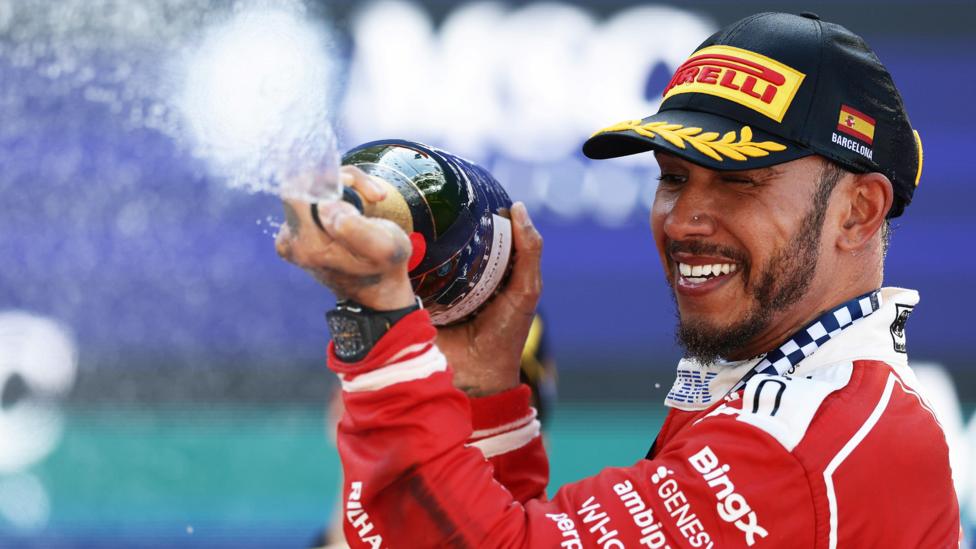
Seven-Time Glory Restored: Hamilton Silences Every Doubt in Barcelona
Lewis Hamilton's Barcelona victory wasn't just a win for Ferrari — it was a reckoning with every voice that said his best days were gone.

Silverstone Sweep: A Four-Leg Bet Builder Decoded for the British Grand Prix
A technical breakdown of a four-leg British Grand Prix bet builder, examining podium, points, and outright markets through the lens of Silverstone's unique demands.
Hungarian GP Bet Builder: Five Legs Built on Pace and Degradation
A five-leg Bet Builder for Budapest balances top-six finish logic with classified finisher and points-scoring picks.