Pickford's Bold Statement: England's Identity Under Tuchel Goes Beyond Shootout Survival
After 29 straight tournament starts, Jordan Pickford wants England to win the World Cup the hard way — through open play dominance.
The Goalkeeper Who Doesn't Want to Be the Hero
Jordan Pickford has saved England in penalty shootouts more than once. He was the decisive figure in Moscow in 2018, the savior against Switzerland in the 2019 Nations League third-place match, and a steady hand when it mattered most in knockout rounds at Euro 2020 and Euro 2024. Yet as England secured top spot in Group L with a professional 2-0 victory over Panama on Saturday, the Everton goalkeeper made his tactical philosophy unmistakably clear: this team should not need him to be a shootout hero.
It is a revealing statement, not because penalty shootouts are inherently undesirable, but because it speaks to the identity Thomas Tuchel is trying to forge. Pickford's message carries weight. He has now appeared in 29 consecutive major tournament matches for England, a streak stretching back years that places him among the most experienced tournament goalkeepers in Three Lions history. When someone with that pedigree says he wants the team to finish the job in regulation, he is not offering a platitude. He is describing a system.
Tuchel's Structural Foundation
Under Tuchel, England have moved away from the conservative, reactive blueprint that defined stretches of the Gareth Southgate era. The 2-0 win over Panama was not a spectacle, but it was structurally sound. England controlled territory, limited transitions, and forced Panama into a low-block defensive posture for the majority of the match. The two goals came through sustained pressure rather than moments of individual brilliance, which is precisely the pattern Tuchel wants to normalize.
Tuchel's coaching philosophy has always prioritized positional play over direct attacking. At Borussia Dortmund, he built intricate passing circuits through half-spaces. At Chelsea, he won the Champions League with a 3-4-2-1 formation that compressed the pitch and suffocated opponents in their own third. At Bayern Munich, he adapted to a more possession-heavy model while maintaining defensive compactness. Now with England, the German coach is applying those same principles to a squad with considerable technical quality in midfield and wide areas.
The result is a team that creates through structure rather than relying on transitions or set pieces. This matters because historically, England's tournament exits have come against opponents who were comfortable defending deep and hitting on the counter. Tuchel's system is designed to prevent that scenario entirely by suffocating space before the opposition can organize.
The Pickford Dimension
Pickford's role in this system extends far beyond shot-stopping. Under Tuchel, England build from the back with a deliberate emphasis on the goalkeeper as the first distributor. Pickford's long-range passing, always a strength of his game, becomes a tactical weapon when opponents press high. His ability to switch play to the flanks with accurate diagonal balls relieves pressure and forces opposing defensive lines to retreat.
This is where Pickford's experience becomes invaluable. At 32 years old, he has accumulated tournament knowledge that few active goalkeepers can match. His debut at under-16 level came in 2009, and despite the humbling experience of conceding a goal to Canada's goalkeeper from open play at the under-17 World Cup in Mexico in 2011, he has matured into one of the most reliable performers in international football. The fact that he has started every major tournament match for England across this stretch is not a coincidence. It is evidence of sustained excellence.
Tactical Shift: The Panama Blueprint
The 2-0 victory over Panama offers a useful tactical case study for what Tuchel is building. England's pressing structure was notably aggressive in the first half, with the forward line cutting off passing lanes into Panama's central midfield. This forced Panama into wide areas where England's fullbacks were positioned to win duels and initiate counter-presses.
The key adjustment came in how England managed the second half. With the lead established, Tuchel did not revert to a defensive shell. Instead, the team maintained a medium block, controlled possession in the opposition half, and looked to create overloads on the right side through inverted runs from midfield. This is a hallmark of Tuchel's in-game management: the scoreline does not dictate the tactical approach. The structure remains consistent, and the intensity is modulated through pressing triggers rather than wholesale shape changes.
Panama offered limited attacking threat, which is to be expected given the gulf in quality. But the manner of England's dominance was instructive. They did not need to take risks to create chances. They did not rely on individual moments. They simply executed a system that generated opportunities through positional superiority. For Pickford, this is exactly the kind of football that eliminates the need for penalty drama.
What Comes Next: The DR Congo Test
England's reward for winning Group L is a round-of-16 meeting with the Democratic Republic of Congo in Atlanta on Wednesday. It is a fixture that presents a significant step up in difficulty compared to the group stage. DR Congo possess pace in wide areas, physicality in midfield, and the kind of athletic profile that can punish teams who commit too many bodies forward.
This is where Tuchel's tactical choices will face genuine scrutiny. The question is not whether England can dominate possession against DR Congo. They almost certainly will. The question is how they manage the moments when DR Congo break the press and transition quickly into the attacking third. Tuchel's defensive structure relies on compact lines and rapid recovery runs, but DR Congo's speed on the counter could test those mechanisms in ways Panama never threatened to.
Pickford will be central to navigating those moments. His positioning on through balls, his communication with the defensive line, and his distribution under pressure will all be tested at a higher intensity than anything the group stage demanded. It is precisely the kind of challenge that separates tournament contenders from teams that simply survive the group phase.
The Bigger Picture
Pickford's desire to win without penalties is not a rejection of his own abilities. It is a statement of ambition. England have the personnel to control matches against most opponents, and Tuchel's tactical framework gives them the structure to do so. The 29-match tournament streak Pickford carries is remarkable, but it also represents a career spent navigating the fine margins of knockout football. He knows better than anyone that relying on penalties is a gamble, not a strategy.
Tuchel's England are still a work in progress. The group stage offered glimpses of a cohesive tactical identity without providing the kind of examination that reveals its true ceiling. Wednesday's match against DR Congo will be the first real test of whether this system can withstand the pressure of elimination football. If Pickford is right, and England's attacking approach is mature enough to deliver results without needing shootout heroics, then the path to the latter stages of this World Cup becomes considerably clearer.
If not, Pickford will be ready. He always is.
"We don't want penalties. We want to win games properly." — Jordan Pickford
Editorial Integrity
This is an original SportPulse article written by our editorial team. All content is independently researched, written, and reviewed by our writers and editors before publication. We do not publish copied, aggregated, or syndicated content.
SportPulse is committed to original sports journalism. Read our editorial policy or contact us with any questions.
More Like This
All football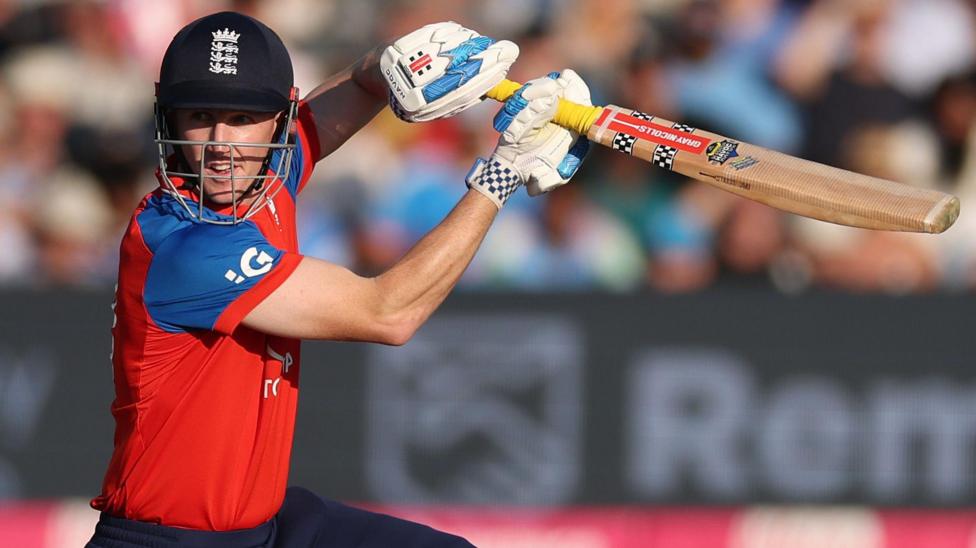
England Shatter T20 Curse as India Plummet to Historic Low
England claim their first-ever T20 series win over India while the visitors suffer a record fifth straight defeat.
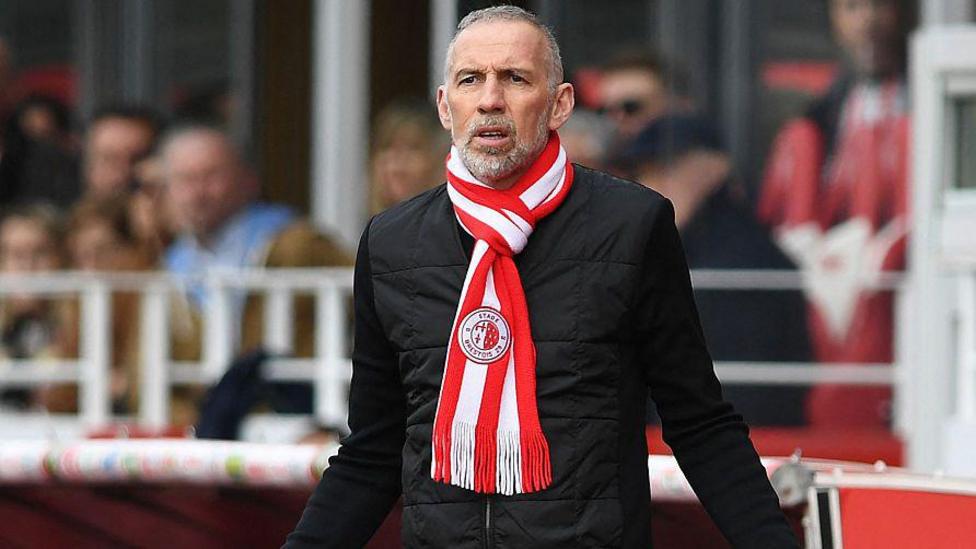
Eric Roy: The Architect Who Redefined Brest
Eric Roy masterminded Brest's tactical revolution while privately battling pancreatic cancer, leaving a profound strategic legacy.

More Than a Match: Morocco vs Netherlands Is a Diaspora Derby Decades in the Making
When Morocco meet the Netherlands in Monterrey, it's not just a knockout tie — it's a generational reckoning.