Pochettino's American Dream: Audacity Meets Reality for 2026
Pochettino believes nobody sees the USA as World Cup contenders. His job is changing that narrative by 2026.
The Question Nobody Is Asking — And Pochettino Wants That to Change
Mauricio Pochettino has managed in the Premier League, La Ligue 1, and the Premier League again. He has coached at the Parc des Princes, Stamford Bridge, and White Hart Lane. He has dealt with Neymar's entourage, Daniel Levy's spreadsheets, and Todd Boehly's transfer strategy. But nothing in that decade-plus of elite club management quite prepares a man for what he has taken on now: convincing the football world that the United States of America can win a World Cup on home soil in 2026.
"No one sees the USA as a contender," Pochettino told The Guardian in an expansive interview. "But why not?"
It is the kind of line that sounds like motivational wallpaper until you consider who is saying it and where he is saying it from. This is not a coach padding his rhetoric before a friendly against Panama. This is a man who managed Lionel Messi, Kylian Mbappé, and Neymar in the same dressing room, who took Tottenham to a Champions League final, and who has spent enough time at the sharp end of European football to know the difference between delusion and defiance.
The question is whether defiance alone is enough.
Murphy, Santa Fe, and the Weight of 1978
Pochettino's connection to the World Cup is not manufactured. It is not a PR talking point crafted by U.S. Soccer's communications department. It is deeply, physically personal.
He grew up in Murphy, a small town in the province of Santa Fe, Argentina. In 1978, when Argentina hosted and won the World Cup, Pochettino was six years old. He watched the tournament on one of the few colour television sets in town, at a local club where the old men played bochas while the children pressed against their fathers' pockets, eyes locked on the screen.
"I lived in a prefab with my grandmother and my older brother because my parents were off working the land. Then at the weekend we would go to the club. There were three courts and I remember standing there, hanging on to my dad's pocket, watching the World Cup. The ticker-tape at River Plate, that image engraved. Passarella, Ardiles, Luque, Bertoni, Kempes, Fillol, Tarantini... my heroes."
That ticker-tape image at El Monumental is one of football's most iconic photographs. A nation erupting under a blizzard of paper, Daniel Passarella lifting the trophy, César Luis Menotti's revolutionary 4-3-3 dismantling the Dutch total football machine in extra time. For Pochettino, it was not history. It was a formative experience that stamped the World Cup onto his nervous system.
Now he is tasked with engineering a similar moment for a host nation that has never been mistaken for Argentina.
The Honest Reckoning: Where the USMNT Actually Stands
Here is where the analysis gets uncomfortable, and where Pochettino's challenge truly crystallizes.
The United States men's national team has a FIFA ranking that has hovered in the low-to-mid teens in recent years. Their best World Cup result remains the quarter-final run in 2002, a tournament where they benefited from a favourable draw and a Portugal side in freefall. At Qatar 2022, Gregg Berhalter's squad exited in the Round of 16 after a 3-1 loss to the Netherlands that exposed a fundamental gap in quality against elite opposition.
The talent pipeline, however, tells a different story than the one casual observers assume. The current player pool includes individuals operating at genuinely elite European clubs:
- Christian Pulisic at AC Milan, having rediscovered his best form after a turbulent Chelsea stint
- Weston McKennie at Juventus, a Champions League regular
- Tyler Adams, whose injury history is the only real question mark on his résumé
- Giovanni Reyna, whose ceiling remains tantalizing despite persistent fitness concerns
- Folarin Balogun, a Monaco striker with genuine top-five-league pedigree
- Sergiño Dest, when fit, offering full-back dynamism few CONCACAF nations can match
This is not a collection of MLS journeymen. This is a squad with players featuring in the Champions League, Serie A, Ligue 1, and the Bundesliga. The raw materials exist.
What has historically been missing is the connective tissue: the tactical framework that turns a collection of individually talented players into a coherent, competitive unit capable of beating a France, a Brazil, or an England in a knockout tie.
That is why Pochettino is here.
Pochettino's Tactical DNA and What It Means for 2026
Those who watched Tottenham between 2015 and 2019 understand what Pochettino builds at his best. High pressing, aggressive transitions, full-backs functioning as auxiliary wingers, a relentless intensity that suffocates opponents in the middle third. At Spurs, his sides consistently ranked among the top three in the Premier League for pressing intensity, with PPDA (passes per defensive action) numbers that reflected an organized, aggressive out-of-possession structure.
The question is whether that translates to international football, where managers get limited training camps, minimal time to install complex pressing triggers, and rosters that change based on injury, form, and availability.
Pochettino's tenure at PSG offers a mixed data set. He won Ligue 1 but never fully imposed his identity on a squad built around individual brilliance rather than collective structure. The Champions League semi-final collapse against Manchester City in 2021 and the Round of 16 exit against Real Madrid in 2022 raised legitimate questions about his ability to manage superstars in high-stakes knockout football.
At Chelsea, the picture was similarly uneven. A mid-table Premier League finish masked some genuinely progressive underlying numbers, but results never matched the process metrics.
The Bottom Line
Pochettino is a genuine tactical mind with a clear footballing philosophy. International management, however, is a different discipline. The best coaches at World Cups — Deschamps, Scaloni, Luis Fernando Suárez in his own way — have succeeded not by imposing elaborate systems but by maximizing simplicity, cohesion, and defensive solidity. Pochettino will need to adapt, not transplant.
Tempering "Arrogance" — Pochettino's Most Important Job
One of the more revealing parts of Pochettino's interview is his candid acknowledgment that managing expectations is as important as managing the team.
He used the word "arrogant" to describe the host nation's mentality — not as a criticism, but as something to be carefully tempered. The United States has a sports culture built on winning, on the assumption that home advantage and institutional investment translate into results. The NFL, NBA, and MLB have conditioned American audiences to expect dominance.
Football does not work that way. The gap between the USMNT and the tournament's genuine contenders — France, England, Argentina, Brazil, Spain — is not a gap that closes because of ticker-tape and home crowds. It closes through years of tactical development, player progression, and competitive experience in high-pressure environments.
Pochettino understands this intuitively. He grew up in Argentine football culture, where the weight of expectation is both a fuel and a poison. He managed at PSG, where the demand for Champions League glory created a toxic cycle of underachievement. He knows that expectation without realism breeds dysfunction.
His job is to channel American optimism into something productive. To make a nation believe without believing too much. To install the kind of tactical discipline and competitive edge that allows a good team to overperform in a tournament setting.
The 2026 Calendar and What Comes Next
The expanded 48-team format changes the calculus significantly. The USMNT will navigate a group stage that, on paper, should be manageable given their seeding as hosts. The Round of 16 offers a realistic pathway. It is from the quarter-finals onward where the gulf in quality becomes most apparent.
But World Cup history is littered with host nations exceeding their perceived ceiling. South Korea in 2002 reached the semi-finals. Russia in 2018 knocked out Spain. Qatar in 2022 was a disaster, but that tells us more about the absence of a genuine football culture than about the power of home advantage itself.
The United States has something Qatar did not: a generation of players already embedded in elite European football, a massive domestic fanbase ready to create an atmosphere that will genuinely intimidate visiting sides, and now, a manager whose entire career has been defined by building competitive teams from raw, athletic talent.
What to Watch
The next 12 to 18 months will be definitive. Key indicators include:
- Concacaf Nations League and Gold Cup performances against regional rivals — the USMNT needs to establish total dominance in CONCACAF
- Friendly results against European and South American opposition — Pochettino must prove his system works against quality
- Player development trajectories — Can Balogun cement a starting role? Will Reyna stay healthy? Does McKennie maintain his Juventus form?
- Tactical identity clarity — By mid-2025, the playing style should be unmistakable, even in a friendly against a minor nation
The Verdict
Pochettino's "why not?" is not delusion. It is a calculated provocation designed to shift a narrative that has calcified around the USMNT for decades: that they are participants, not contenders. He is right that the talent pool has never been deeper, that home advantage in a 48-team tournament offers structural benefits, and that a well-organized side with genuine pressing intensity can cause problems for anyone in a single knockout match.
But he is also honest enough to acknowledge the gap. The United States is not France. It is not Argentina. It is not even England, a nation that took a World Cup semi-final and a European Championship final to truly believe it belonged at the top table.
What Pochettino is building is a project, not a miracle. The 2026 World Cup will tell us whether the foundations he lays in the next two years are strong enough to support genuine ambition, or whether his American dream remains exactly that — a dream glimpsed through a colour television screen in a small Argentine town, beautiful and unreachable.
The ticker-tape is waiting. Whether it falls for the right team remains the most intriguing question in international football.
Editorial Integrity
This is an original SportPulse article written by our editorial team. All content is independently researched, written, and reviewed by our writers and editors before publication. We do not publish copied, aggregated, or syndicated content.
SportPulse is committed to original sports journalism. Read our editorial policy or contact us with any questions.
More Like This
All football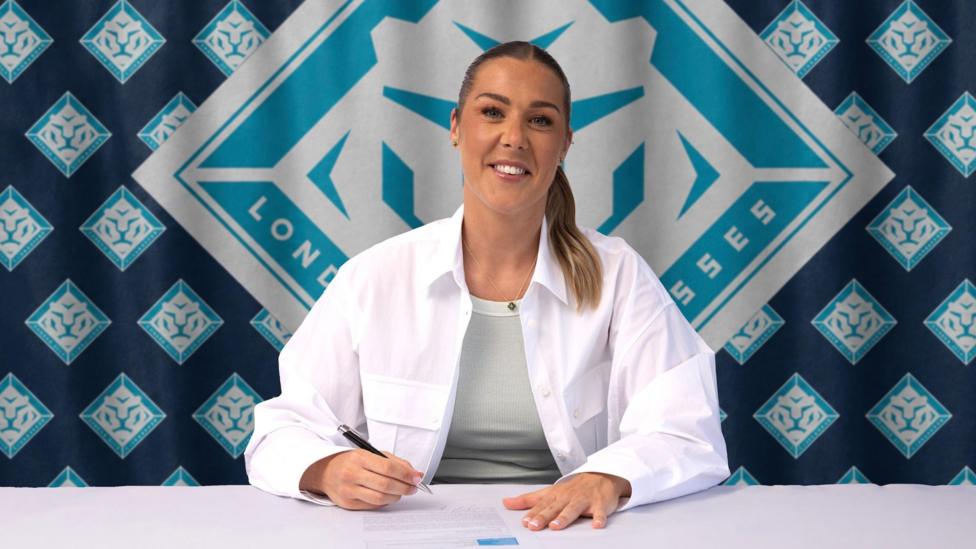
Earps Drops to Championship in Shock London City Move
Former England No. 1 Mary Earps joins London City Lionesses on a two-year deal after leaving PSG.
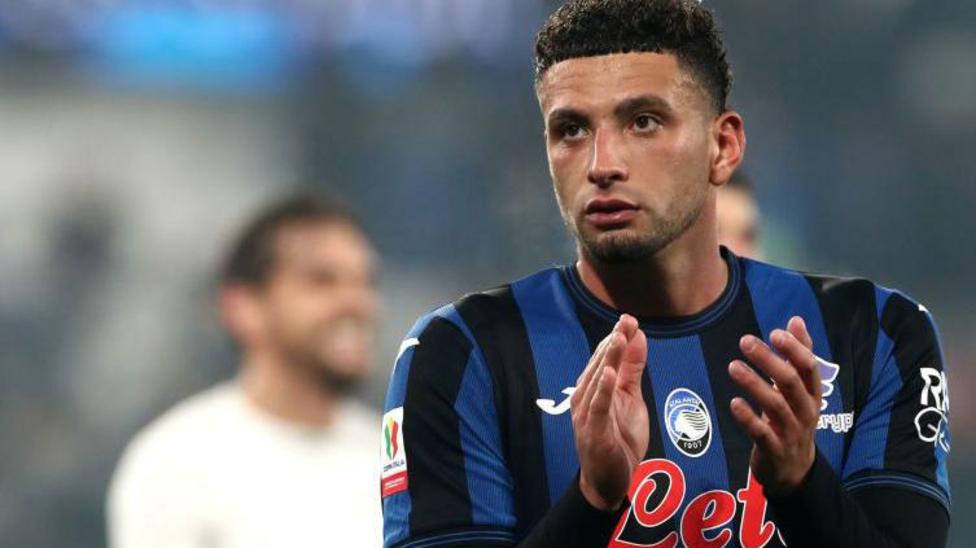
Godfrey to Rangers: A Career Reset Atalanta Couldn't Provide
Ben Godfrey joins Rangers on loan from Atalanta seeking the minutes and confidence his stalled career desperately needs.
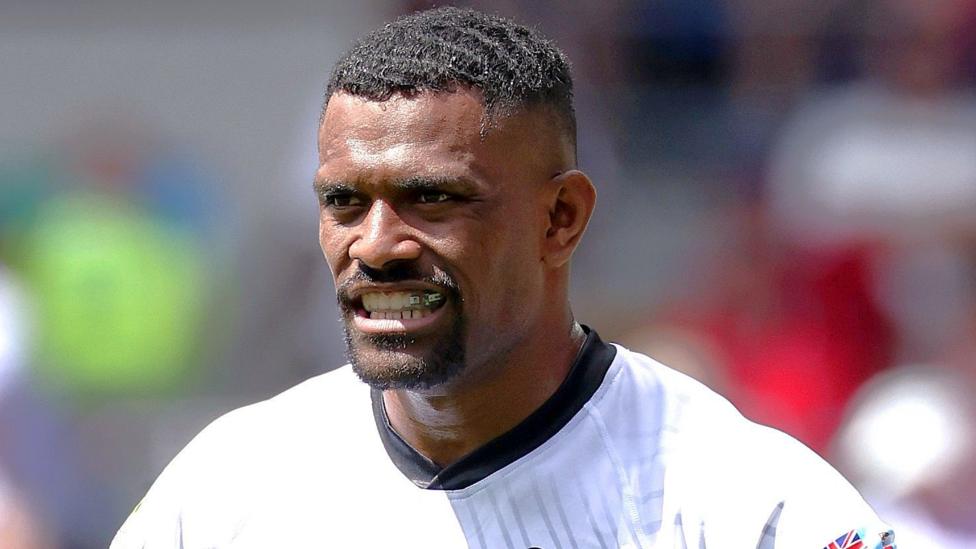
Jiuta Wainiqolo: The Fiji Phenomenon England Cannot Contain
Fiji's flying wing is outscoring rugby's elite finishers and now faces a vulnerable England side with nowhere to hide.