Pogacar's Tactical Fortress: Who Can Breach It?
With his cycling dominance refined to near-perfection, rivals face an impossible tactical puzzle as the Tour de France begins.
The peloton rolls out of Barcelona with the unmistakable sensation of a coronation in waiting. Tadej Pogacar arrives at the 2024 Tour de France not merely as a favorite but as a kinetic system problem the rest of the field has yet to solve. His new hairstyle, drawing playful comparisons to Eminem, is the lightest footnote in a season defined by ruthless sporting arithmetic. The real story is whether any rider can apply sufficient tactical pressure to dislodge a champion who has turned grand tour racing into a mathematical exercise of attrition and acceleration.
The Architectural Dominance of UAE Team Emirates
Modern cycling, like continental football, is a game of system architecture and resource allocation. Pogacar does not win in isolation. He wins because UAE Team Emirates constructs a squad template designed to control every phase of a stage. The model mirrors a dominant football side asserting its tactical philosophy on every match, regardless of venue. Their approach is built on controlled tempo, numerical superiority at the front of the peloton, and a multi-leader structure that exhausts opponents long before the final climb.
The� specific physiological output required to beat Pogacar over three weeks is staggering. Recent grand tour data indicates he sustains a 6.5 W/kg effort during decisive mountain phases. This is the cycling equivalent of a football team executing a relentless gegenpressing system for the full 90 minutes. Opponents cannot simply match his individual wattage because his team's structural pacing shatters their legs first. The gradient structures of Pyrenean and Alpine stages are where this system punishes rival teams, transforming natural topography into a weapon.
The Structural Problem Facing Rivals
Rival teams face a profound tactical deficit. Visma-Lease a Bike and Ineos Grenadiers operate like sides trying to counter aCatalan possession monster by sitting deep and hoping for transition moments. The fundamental issue is the absence of a cohesive rival template capable of matching Pogacar across all terrain. Time trialing, high mountain pacing, and sprint leadouts are all conquered territories for the Slovenian. To beat him, a team requires a high-risk Rompeur strategy.” This involves sending multiple riders into breakaways, forcing UAE to chase and deplete their domestique core before the final 10 kilometers.
"We don't wait for the perfect moment. We build the shape that creates the moment." — A coaching philosophy easily applied to UAE's stage racing methodology.
Yet even this tactical pivot is flawed because it assumes UAE's climbing core will crack. The squad's recruitment model mirrors a top club acquiring the best positional players in the world. They don't merely buy horsepower; they acquire high-cognitive riders capable of interpreting road psychology and wind echelon formations in real time. When the race hits the coastlines or narrow Pyrenean descents, they move to the front, dictating the lateral positioning of the entire peloton.
Tactical Shift: The Inertia Problem
In football, a team trailing by two goals at halftime risks losing its tactical shape. The lot of the peloton faces a similar inertia problem. If Pogacar secures early time bonuses in the opening week—a phase where sprinters and puncheurs normally dictate the narrative—the race suffers a tactical death. The传统 groupletto dynamic inverts. Instead of the yellow jersey defending, it attacks. Pogacar's historical pattern of launching audacious long-range attacks on upper mountain flanks forces rivals to dedicate riders to tempo-setting duties prematurely.
A key tactical adjustment rivals must consider is the adversed contemporary pacing strategy. Instead of chasing the initial Pogacar acceleration on the lower slopes of a final climb, rival teams could instruct their leader to ride a strict physiological threshold' pace, ignoring surges. This prevents the physiological failure that occurs when riders attempt to follow a 7 W/kg surrge and subsequently drop to 4 W/kg. By maintaining a steady 5.8 W/kg tempo, a rival might limit the time gaps to manageable margins. However, executing this requires absolute confidence in one's own biological numbers, a rare commodity in the current peloton.
The Psychological Erosion of the Peloton
Tactical dominance inevitably breeds psychological submission. The peloton has witnessed Pogacar's accelerations for several seasons now. The collective willingness to chase has eroded. Riders instinctively look at each other when the Slovenian surges, a resignation mirrored in defeated mid-table football teams when the league leaders score an inevitable opening goal. This psychological erosion forces rival directeurs sportifs into increasingly futile tactical permutations.
The Bigger Picture: Can Remco Evenepoel Fix the Equation?
If there is a tactical counter to Pogacar's systemic dominance, it belongs to Remco Evenepoel. The Belgian represents a different school of posed soccer philosophy, operating as an isolated number 10 who relies on individual brilliance rather than collective numerical structures. Evenepoel's advantage lies in his time trialing capacity. A long, flat test against the clock is the one phase where UAE's climbing domestiques cannot shield their leader. If Evenepoel can secure a decisive margin in the TT, he creates a narrative inversion: Pogacar must attack in the mountains to regain the deficit.
This is the only functional tactical shift capable of stressing Pogacar's game state. Forcing the Slovenian to chase changes the psychological burden. A deficit alters the physiological expenditure. Yet Evenepoel must survive the high mountains without cracking under the collective weight of UAE's pacing. His individual threshold is elite, but cycling history demonstrates that grand tour battles are ultimately won by the deepest roster, not the single strongest rider.
What's Next: The Barcelona Decider Fantasy
The Tour begins in Barcelona, a fitting stage for a sporting drama steeped in intensity and tactical nuances. The opening days will reveal much about the structural integrity of the peloton's challenge.
If the early stages see Visma and Ineos attempting to disrupt UAE's positioning through aggressive crosswind echelon formations, the tactical backdrop shifts dramatically. A natural footballing metaphor applies:hunting the ball in transition. But if the opening week passes without a structural rupture, the Pyrenees will become a controlled possession exercise for Pogacar. The roads from Barcelona into the Pyrenees demand respect. It is there, on gradients exceeding 8%, that the architectural impossibility of beating Tadej Pogacar will likely be mathematically confirmed for a fifth time.
The challenge for the peloton is the challenge of all challengers facing a perfected system. They must find a flaw that, at present, does not exist in the architecture.
Editorial Integrity
This is an original SportPulse article written by our editorial team. All content is independently researched, written, and reviewed by our writers and editors before publication. We do not publish copied, aggregated, or syndicated content.
SportPulse is committed to original sports journalism. Read our editorial policy or contact us with any questions.
More Like This
All long-reads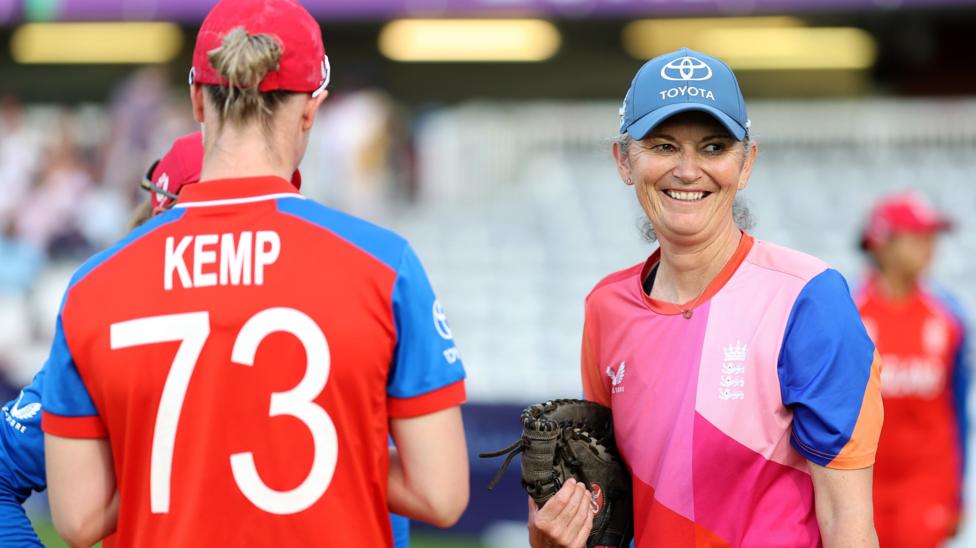
Never More Confident: Edwards Sends Warning Shot From England's Camp
Charlotte Edwards declares England have never been more confident heading into a World Cup semi-final.

Mason Jones Draws MarQuel Mederos at UFC Sacramento — A Career-Defining Crossroads
Welsh lightweight Mason Jones faces MarQuel Mederos in Sacramento with his UFC trajectory hanging in the balance.
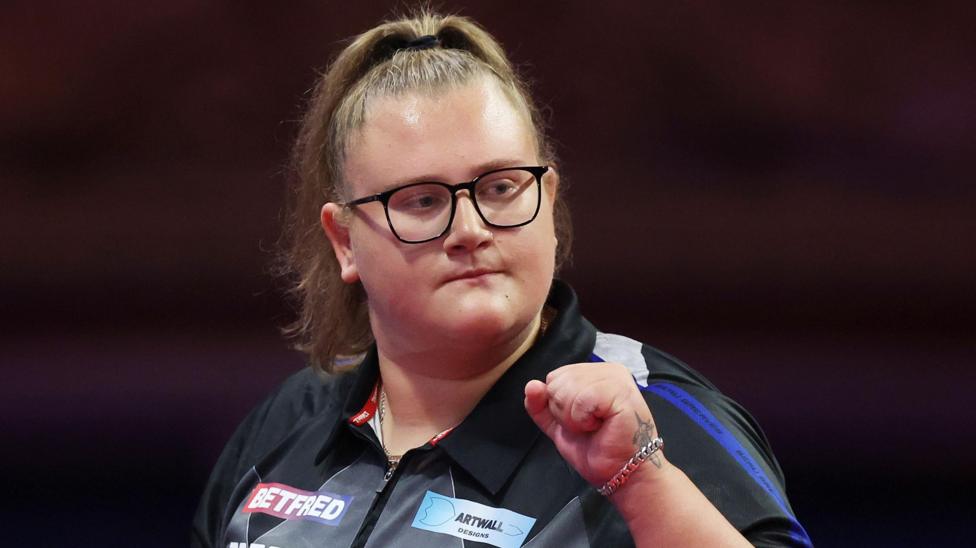
Greaves Smashes Another Ceiling as First Woman on PDC European Tour
Beau Greaves makes darts history again, becoming the first woman to qualify for a PDC European Tour event.