Popovic's Penalty Gamble Exposes Socceroos' Creative Void
Football Australia backs Tony Popovic, but the shootout loss to Egypt reveals a tactical ceiling Australia must shatter before 2026.
Bringing on a goalkeeper specifically for a penalty shootout is a gamble that splits the football intelligentsia clean down the middle. Asking an 18-year-old with zero senior international experience to step up and take one of the most pressure-laden spot kicks in recent Socceroos memory borders on tactical masochism.
Tony Popovic's decisions during Australia's shootout loss to Egypt in Dallas have predictably triggered an avalanche of criticism. Yet, in the cold light of the Texas morning,Football Australia chief executive Martin Kugeler was not reaching for the panic button.
"Every fan believes he's a great national coach, right?"
Kugeler's phrasing was clumsy, his pronoun reference muddled, but the institutional message was unequivocal: Popovic has the backing of his employers. The real question is not whether the FA will pull the trigger, but whether Popovic's methodology can transcend its own limitations before the 2026 World Cup arrives.
The Dallas Debacle: A Microcosm of a Macro Problem
The specific chain of events in Dallas warrants microscopic dissection. Substituting Maty Ryan into a penalty shootout is not a move born of inspiration; it is an act of cold calculus. Ryan is a seasoned goalkeeper, and the logic of bringing on a fresh pair of gloves and a 6'3" frame to intimidate Egyptian penalty takers has a certain ruthless geometry to it.
Where the geometry collapsed was in the distribution of responsibility. Handing Lucas Herrington, aged 18, the burden of a decisive penalty is staggering. This is not a criticism of Herrington, a youngsterThrown into the deep end without a life jacket. It is a critique of the environment Popovic has cultivated. If the dressing room hierarchy is so out of alignment that an teenager is culturally allotted a crucial penalty ahead of seasoned outfielders, the leadership chain is fundamentally fractured.
Alternatively, if Popovic instructed Herrington to take it as a test of mental fortitude, the coach was treating a senior international fixture like an audition. International World Cup preparation does not feature auditions.
The Numbers Behind the Frustration
- 0 goals conceded from open play across 120 minutes against Egypt, highlighting Popovic's innate defensive stability.
- 18 years old — the age of Lucas Herrington, thrust into the most extreme mental crucible of his fledgling career.
- 1 penalty shootout defeat, derailing positive tactical momentum built during the group phase.
The Popovic Paradigm: Fortresses Built on Sand
To understand the current Socceroos impasse, one must acknowledge Popovic's track record. He is a capable, vastly experienced manager who has proven his pedigree at club level across the A-League and Asian football. His greatest triumph in the current role was navigating Australia out of a challenging World Cup qualifying group when the Graham Arnold era had left the squad staring into the abyss.
The defining characteristic of a Popavic side is structural rigidity. His teams do not lose shape. They do not concede cheap goals. They are a nightmare to break down, frustrating opponents with a disciplined mid-block and aggressive transition pressing. This defensive mindset is exactly what the Socceroos needed to staunch the bleeding during a turbulent qualifying campaign.
However, that same defensive mindset is now the ceiling on Australia's ambitions.
The modern international game demands controlled aggression in possession. Against Egypt, Australia demonstrated they could contain, but they failed to create with any sustained coherence. The xG numbers across recent fixtures under Popovic paint a grim picture: the Socceroos are generating chances at a rate utterly insufficient to trouble the elite nations at an expanded 48-team World Cup.
1.1 xG per 90 minutes is an acceptable baseline against lower-tier Asian opposition. Against African champions and European sides, it is a formula for a slow, agonizing death by attrition.
The Bottom Line: Popovic has built an armored car, but he has forgotten to install a steering wheel.
The Creative Deficit: Who Carries the Mantle?
The most alarming aspect of the Socceroos' current trajectory is the complete absence of a creative fulcrum. Since the golden generation of Tim Cahill, Mark Bresciano, and Harry Kewell, Australia has struggled to produce players who can manipulate tight spaces and unlock low blocks.
Currently, the squad relies heavily on physical transitions and set-piece efficiency. Against a team like Egypt, who are content to sit deep and absorb pressure, Australia lacks the technical brass to pick the lock. There is no centralized playmaker; there is no intricate rotation in the final third. Popovic's system asks wide players to provide chaotic service to a solitary striker heavily isolated against multiple center-backs.
This is where the push from Football Australia and the broader Australian footballing public comes into play. The consensus is forming that creativity must trump caution. Kugeler's public endorsement was accomplice anted by a private expectation that Popovic must evolve his offensivestructures.
The tactical reality is stark. Heading into the 2026 World Cup on home soil—co-hosted alongside the United States and Mexico—Australia cannot simply rock up and park the bus. The tournament demands initiative, particularly against the mid-tier European and South American sides they will inevitably face.
The Road Ahead: Adapt or Perish
Football Australia's public backing is the correct, pragmatic decision. Sacking a coach who safely navigated World Cup qualification over a penalty shootout defeat in a preparatory friendly would be administrative lunacy. Popovic has earned the right to lead this team to North America.
But the clock is ticking. The International match calendar between now at the World Cup kickoff is shrinking. Popovic has a finite number of windows to fundamentally recalibrate his tactical approach.
The tactical prescription is clear: Australia must integrate its emerging technical talent with its established defensive spine. Players like Herrington should be blooded, but in scenarios that develop their game intelligence, not in penalty shootouts where their confidence can be shattered. The midfield must be restructured to facilitate a primary creator, even if it means sacrificing a degree of defensive coverage.
Verdict: Popovic's job security is intact, but his tactical ego must be checked at the door. The Socceroos have proven they can defend. The next 18 months must prove they can play.
Editorial Integrity
This is an original SportPulse article written by our editorial team. All content is independently researched, written, and reviewed by our writers and editors before publication. We do not publish copied, aggregated, or syndicated content.
SportPulse is committed to original sports journalism. Read our editorial policy or contact us with any questions.
More Like This
All football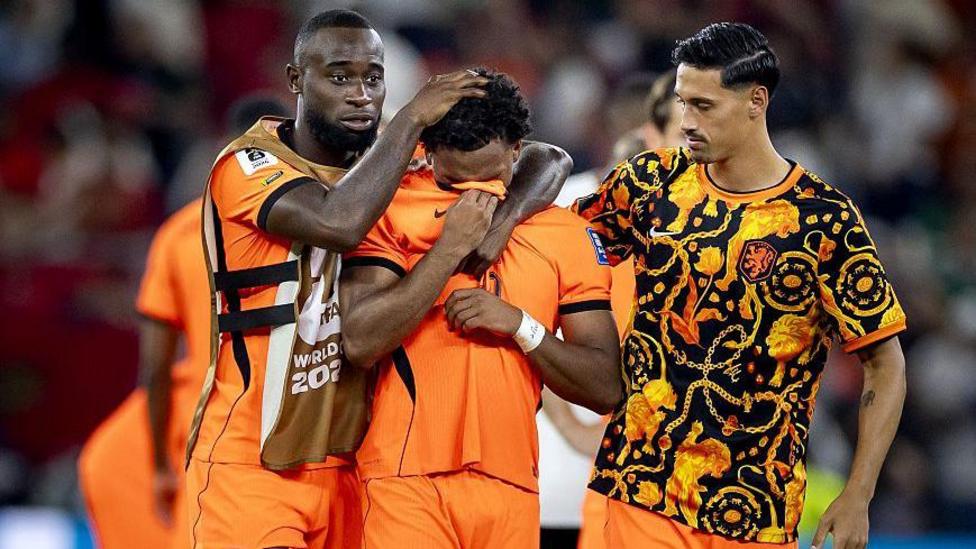
The Beautiful Game's Ugliest Problem Is Getting Worse
FIFA's own monitoring service confirms a sharp spike in severe online racist abuse at the World Cup.
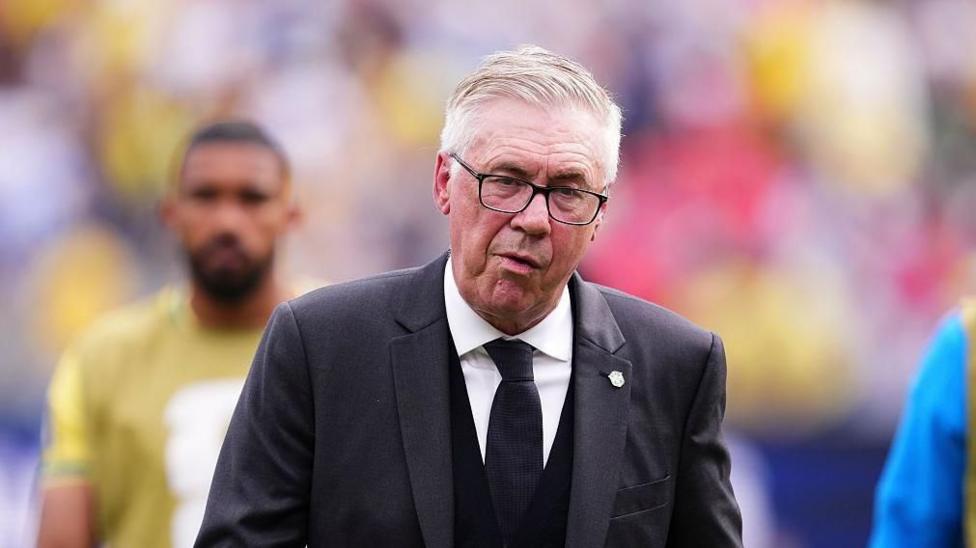
Brazil's Tactical Decline Exposes Existential Crisis Beyond Ancelotti
Brazil's World Cup exit to Norway revealed structural decay no coach can quickly fix, questioning whether Ancelotti suits a rebuilding project.
At 17, Layla Drury Just Rewrote Manchester United's Record Books
The youngest player in United Women's history now holds another record after signing her first professional deal.