The Professor's Pain: How Prost Turned Personal Tragedy Into a Second Crown
Alain Prost clinched the 1986 title amid devastating personal loss, proving speed and resilience are inseparable in Formula 1.
When the Stopwatch Doesn't Care About Grief
Formula 1 has always demanded an inhuman ability to compartmentalize. No season illustrated that brutal truth more clearly than 1986, when Alain Prost defended his world championship while carrying a wound that no engineering upgrade could fix. The loss of his close friend Elio de Angelis, who died during testing at Paul Ricard in May 1986, shattered the paddock and left Prost questioning whether the sport was worth the cost.
He kept driving. He kept winning. And in one of the most dramatic championship deciders in the sport's history at Adelaide, Prost secured his second consecutive title. But the triumph was inseparable from the tragedy that shadowed every lap.
The Technical Landscape of 1986
To understand Prost's achievement, you have to understand the machinery war raging around him. The 1986 season was peak turbo era, a period when engineers threw 1,400+ horsepower in qualifying trim at circuits with barriers barely a foot from the racing line. The regulations allowed 1.5-liter turbocharged engines with a fuel limit of 195 liters per race, meaning the challenge was as much about fuel management as outright speed.
Prost's McLaren MP4/2C was powered by the TAG-Porsche TTE PO1, a V6 turbo that John Barnard had integrated into the carbon-fiber monocoque chassis he pioneered in 1981 with the MP4/1. The engine wasn't the most powerful on the grid. The Honda RA166E in the back of both Williams FW11s of Nigel Mansell and Nelson Piquet held that advantage, particularly in qualifying where boost pressures could be cranked to extreme levels.
What the McLaren lacked in brute force, Prost compensated for with an almost preternatural sensitivity to tire degradation, fuel burn rates, and throttle mapping. Where Mansell would attack kerbs and slide the rear end of his FW11 through high-speed corners, Prost drove with an economy of input that preserved the Goodyear rubber over stints. He could sense, through the steering column feedback and the seat of his pants, when a tire was beginning to grain, and he would adjust his lines accordingly without losing meaningful lap time.
This wasn't just talent. It was a form of real-time telemetry analysis conducted by the driver's own nervous system, years before the data channels would do the job digitally.
Engineering Insight: The TAG-Porsche Turbo Strategy
The McLaren-TAG partnership represented a fundamentally different philosophy from the Williams-Honda juggernaut. While Honda optimized for peak boost pressure and aggressive throttle response, the TAG-Porsche unit was designed around a broader, flatter torque curve. This gave Prost a more predictable power delivery, particularly useful in the mid-corner to exit phase where traction mattered most.
The trade-off was terminal velocity. On long straights like those at Monza or Hockenheim, the McLaren simply didn't have the top-end punch. Engineer Steve Nichols and the McLaren aerodynamic team compensated by running slightly lower drag configurations, accepting a deficit on speed traps in exchange for stability under braking. Prost's braking technique, which favored a trail-braking approach to rotate the car, demanded a rear end that wouldn't snap away unpredictably. The MP4/2C's longer wheelbase relative to the FW11 helped here, providing a wider operating window before the rear tires lost adhesion.
The fuel management strategy was equally critical. McLaren's engineers, working closely with Prost, developed pre-programmed boost maps that the driver could select via a cockpit switch. In the opening laps, Prost would often run a lean mixture at lower boost, banking fuel for a late-race push. It was the F1 equivalent of marathon runners sitting in the pack before kicking with two kilometers to go. The difference was that Prost executed this under 5G braking forces with 1,000 horsepower at his right foot.
The Shadow Over Paul Ricard
The death of Elio de Angelis on May 15, 1986 was a pivotal moment not just for Prost but for the entire safety discourse in Formula 1. The Italian driver, just 28 years old, crashed his Brabham BT55 during a private test at the Paul Ricard circuit. The rear wing detached, the car became airborne, and de Angelis died not from the impact but from smoke inhalation after being trapped in the cockpit as the fuel ignited.
The lack of marshals and medical personnel at a private test meant rescue efforts were fatally delayed. The FIA subsequently mandated that all test sessions, not just race weekends, must have minimum medical and fire-safety provisions on site.
For Prost, the loss was deeply personal. De Angelis had been a contemporary, a friend, and a competitor Prost respected enormously. The two had spent evenings together away from the paddock, sharing meals and conversations that had nothing to do with lap times. Prost later admitted that for weeks after the accident, he found himself questioning the fundamental bargain of the sport: that you accept mortal risk in exchange for the thrill of competition.
"I was not the same person after Elio. The championship mattered, but I kept asking myself what it was all for. Racing became something I had to reconcile with, not just something I loved." — Alain Prost
The Adelaide Showdown
The 1986 Australian Grand Prix at Adelaide remains one of the greatest championship deciders in F1 history. The mathematics going in were straightforward but the execution was anything but. Mansell led the championship standings with 70 points, Prost had 64, and Piquet sat on 63. Mansell needed to finish ahead of Prost to clinch the title. Piquet, despite being Mansell's teammate, was pursuing his own championship ambitions.
The race itself was a masterclass in tension. Mansell led early, but Prost shadowed him, the McLaren running a low-fuel strategy that would allow him to push harder in the closing laps. Then, on lap 63, one of the most famous incidents in F1 history unfolded: Mansell's left-rear Goodyear tire exploded at over 180 mph down the Brabham Straight. Sparks showered from the rim as he wrestled the car to a halt on the pit straight, the championship seemingly vanishing in a plume of rubber smoke.
Williams, now in a bind, called Piquet in for a precautionary tire change. The Brazilian lost critical seconds in the pits, and Prost inherited the lead. He managed his remaining fuel, nursed his tires, and crossed the line to win the race and the 1986 World Championship with 72 points to Mansell's 70 and Piquet's 69.
The Numbers That Defined the Season
- Prost's 1986 record: 4 wins from 16 races, but critically, 12 podium finishes
- Points consistency: Prost was classified in the top 3 in 75% of all races
- Adelaide: Prost won by over 4 seconds from Mansell's teammate Piquet, who had been called in for tires
- DNFs: Prost retired from only 3 races all season, compared to Mansell's 5
- Qualifying gap: Prost averaged 0.4 seconds slower than Mansell over the season, but converted races into points more efficiently
The Professor's Legacy in 1986
What Prost achieved in 1986 was not the fastest-car-wins-the-championship narrative that dominates many title fights. The Williams FW11 was, by most technical metrics, the superior machine. The Honda engine produced more power, Adrian Newey's aerodynamic philosophy was gaining sophistication, and the Williams team had the resources to run two genuinely competitive cars.
Prost beat them with intelligence. He beat them with an ability to extract 99% of a car's potential on every single lap while protecting the hardware underneath him. He beat them because he understood that a championship is not won in qualifying, where Mansell's raw pace often prevailed, but in the accumulation of points across 16 grueling races.
The emotional cost, however, was real and lasting. Prost has spoken candidly in the decades since about how the 1986 season changed his relationship with the sport. The joy of victory was muted. The elation of the Adelaide champagne was tempered by the knowledge that de Angelis would never stand on a podium again.
Looking Backward to Look Forward
The technical lessons of 1986 echo through modern Formula 1 in ways that are easy to overlook. Prost's approach to tire management and fuel efficiency prefigured the strategies that define current-era racing, where Pirelli degradation curves and ERS deployment maps demand the same blend of aggression and conservation that Prost perfected with mechanical turbo engines.
His insistence on a predictable, progressive power delivery over raw horsepower mirrors the debates that teams like Red Bull and Mercedes have had over engine philosophies in the hybrid era. Max Verstappen's preference for a stable rear end and Lewis Hamilton's legendary ability to manage tires through a stint are direct spiritual descendants of the way Prost extracted performance from the MP4/2C.
And the safety improvements mandated after de Angelis's death, requiring full medical and marshaling coverage at all test sessions, became foundational pillars of the FIA's safety infrastructure that has saved countless lives since. The sport learned, at a terrible cost, that danger does not clock out when the cameras switch off.
Prost's second title was not his most dominant. It was not his most famous. But it may have been his most human, a reminder that behind every lap time, every telemetry trace, every engineering decision, there are people carrying burdens that the stopwatch cannot measure.
Editorial Integrity
This is an original SportPulse article written by our editorial team. All content is independently researched, written, and reviewed by our writers and editors before publication. We do not publish copied, aggregated, or syndicated content.
SportPulse is committed to original sports journalism. Read our editorial policy or contact us with any questions.
More Like This
All f1
Silverstone Awaits: Why the British GP Remains F1's Crown Jewel
F1 descends on the Cathedral of Speed this weekend — here's why Silverstone still sets the standard.
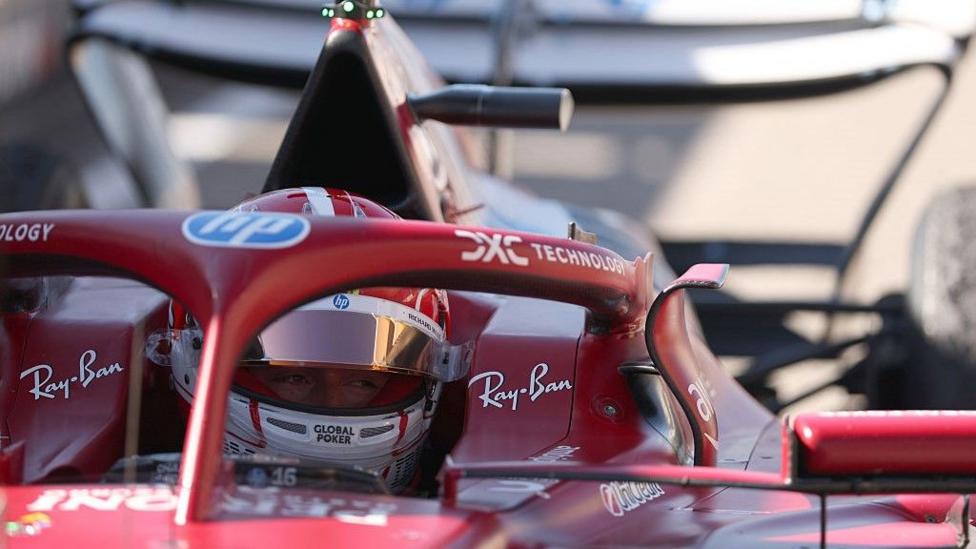
The Halo: How F1's Most Hated Invention Became Its Greatest Lifesaver
The titanium arc above every F1 cockpit has rewritten the rules of survival in motorsport's most dangerous arena.
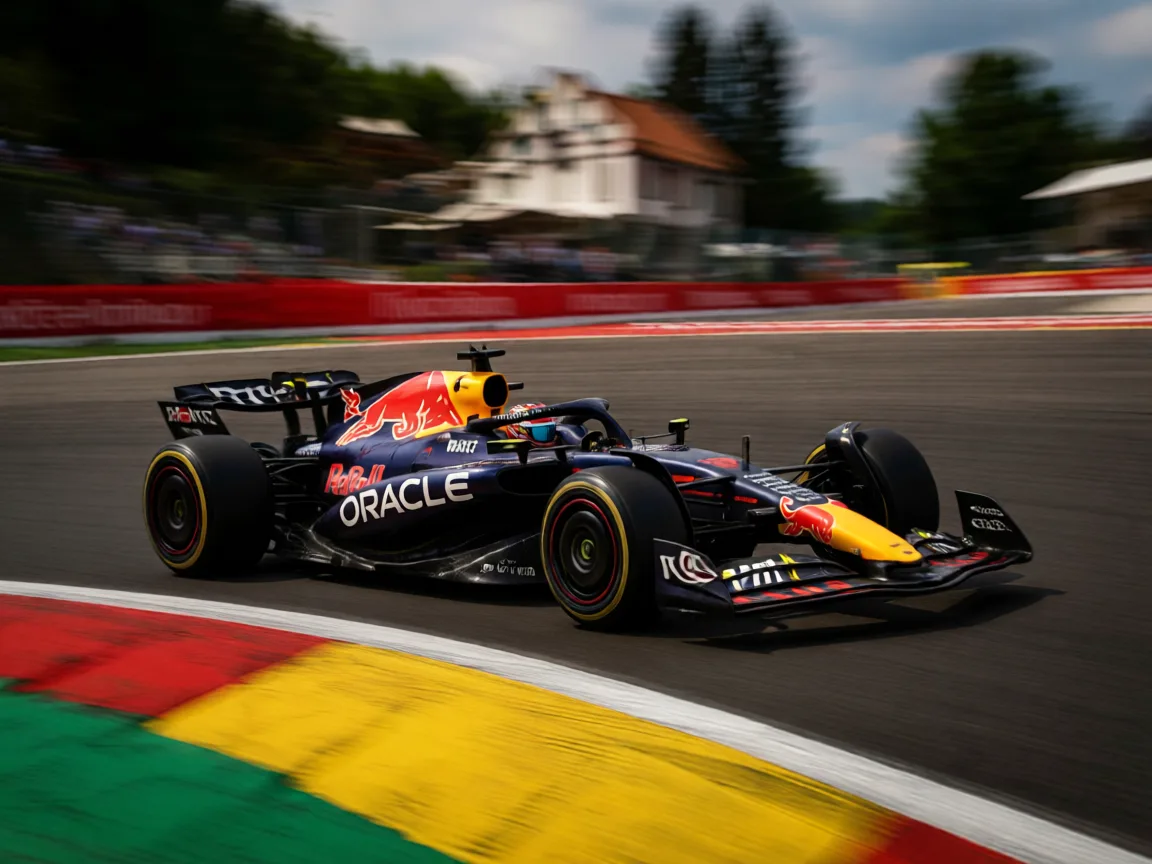
Verstappen Controls Spa Opening Practice, Hadjar Penalty Reshuffles Grid
Max Verstappen topped Belgian GP first practice ahead of Lewis Hamilton, while Isack Hadjar's grid penalty added post-session intrigue.