R&A Stands Firm: DeChambeau Penalty Was Clear-Cut
Mark Darbon dismisses political pressure over DeChambeau's penalty, reaffirming governance independence at the Open.
In a sports landscape increasingly shaped by external political currents, the R&A's public stance on Bryson DeChambeau's penalty stands as a study in institutional resolve. CEO Mark Darbon confirmed that the ruling body will not be swayed by outside commentary or political figures.
The incident in question involved a rules violation that cost DeChambeau dearly during the Open Championship. The penalty, assessed as a clear-cut application of the rules of golf, immediately drew scrutiny from fans and media alike, reigniting the longstanding tension between tradition and modern influence in the sport.
Darbon's statement that the decision was straightforward speaks to a broader philosophy of governance that eschews discretion when the letter of the law is clear. The specific penalty, assessed under the guidelines governing course conditions and equipment interaction, reflects a commitment to uniform standards regardless of a player's stature or profile.
The Political Context
The most notable element of Darbon's remarks was the explicit mention of former US President Donald Trump. Darbon confirmed that Trump had not called the R&A to discuss or contest the penalty, a clarification that carries significant weight given Trump's known interest in golf and his history of engaging with sporting bodies on matters of perceived injustice.
This clarification serves dual purposes. First, it establishes a factual baseline against rumors or assumptions about political intervention. Second, it signals that the R&A operates independently of the kind of pressure that has influenced other sports organizations in recent years. The statement is a preemptive strike against speculation about behind-the-scenes lobbying.
Governance Philosophy
The R&A's posture reflects a particular governance philosophy rooted in the history of golf's rule-making bodies. Unlike sports that operate under centralized authority with broad discretion, golf has traditionally functioned through consensus-based rule application. The penalty assessed to DeChambeau is consistent with this tradition.
Darbon's willingness to publicly characterize the decision as clear-cut also marks a shift in communication strategy. Governing bodies in golf have often preferred quiet diplomacy over public declarations. By speaking openly, the R&A is asserting that transparency reinforces rather than undermines authority.
The DeChambeau Factor
Bryson DeChambeau occupies a unique position in modern golf. His scientific approach to the game, emphasis on distance optimization, and physical transformation have made him both a polarizing figure and a compelling protagonist. Any penalty assessed to DeChambeau carries additional narrative weight because of his reputation as a boundary-pusher.
The violation itself centers on a fundamental principle: the equal application of rules regardless of a competitor's approach to the game. The R&A's decision to enforce the penalty without hesitation sends a message that innovation in strategy and technique does not grant latitude in adherence to established protocols.
The Broader Landscape
This episode occurs against a backdrop of significant upheaval in professional golf. The emergence of LIV Golf, the subsequent framework agreement between the PGA Tour and the Saudi Public Investment Fund, and ongoing debates about the future structure of the sport have created an environment of unprecedented uncertainty.
In this context, the R&A's firmness on a rules matter may seem minor. But it represents something more substantial: a governing body demonstrating that its authority remains intact and its processes function as designed, even amid the turbulence reshaping the professional game. The message is that while negotiations over commercial frameworks may proceed, the application of the rules themselves remains non-negotiable.
Statement and Interpretation
Darbon's remarks, while measured, contain several layers worth examining. The classification of the penalty as clear-cut is an assertion of confidence in the rules apparatus. The confirmation that no call was received from Trump is a factual assertion that shuts down a specific line of speculation. The combination creates a comprehensive defensive posture.
The penalty was a clear-cut decision, and the notion that any external figure might seek to influence the process is a matter we can address directly.
This framing positions the R&A not merely as a rule-maker but as an independent arbiter. The distinction matters in a sports world where the lines between governance, commerce, and politics increasingly blur.
What This Means Moving Forward
The immediate practical impact of this episode on DeChambeau's competitive trajectory remains to be seen. The penalty may influence his approach to similar situations in future championships, potentially introducing a more conservative calculation into his risk-reward assessments.
For the R&A, the affirmation of its authority comes at a critical moment. With the professional game fragmented and the future of major championships potentially subject to renegotiation, demonstrating that the rules can be enforced without controversy reinforces the organization's centrality to the sport.
The Player's Calculus
DeChambeau's response to the penalty will be scrutinized for signals about his evolving relationship with golf's establishment. His past statements have suggested a willingness to challenge convention, but public acceptance of this ruling would indicate recognition of the boundaries within which innovation must operate.
The competitive ramifications extend beyond a single tournament result. Each rules controversy creates a precedent that future competitors will study, and the R&A's firm stance here establishes that violations of this nature will be penalized consistently. Players accustomed to operating at the margins of the rulesbook must now factor this certainty into their tactical planning.
Institutional Independence
The most lasting consequence of this episode may be the reinforcement of institutional independence in sports governance. By publicly addressing the question of political intervention, even to deny its occurrence, the R&A has asserted that its decisions are based solely on the rules of golf and the judgment of its officials.
This position has implications beyond the Open Championship. As golf navigates its current period of structural transformation, the credibility of governing bodies will be tested repeatedly. The R&A's demonstration that it can enforce its rules without bowing to external pressure provides a foundation for the kind of stable governance the sport needs.
The coming months will reveal whether this stance holds as commercial and political pressures continue to mount. For now, the R&A has drawn a line. The rules are the rules, and their application is not subject to negotiation.
Looking ahead to the next major championship, the enforcement precedent set here will loom over every marginal decision competitors face. The R&A has made clear that the standards are fixed, and the cost of miscalculation is certain.
Editorial Integrity
This is an original SportPulse article written by our editorial team. All content is independently researched, written, and reviewed by our writers and editors before publication. We do not publish copied, aggregated, or syndicated content.
SportPulse is committed to original sports journalism. Read our editorial policy or contact us with any questions.
More Like This
All long-reads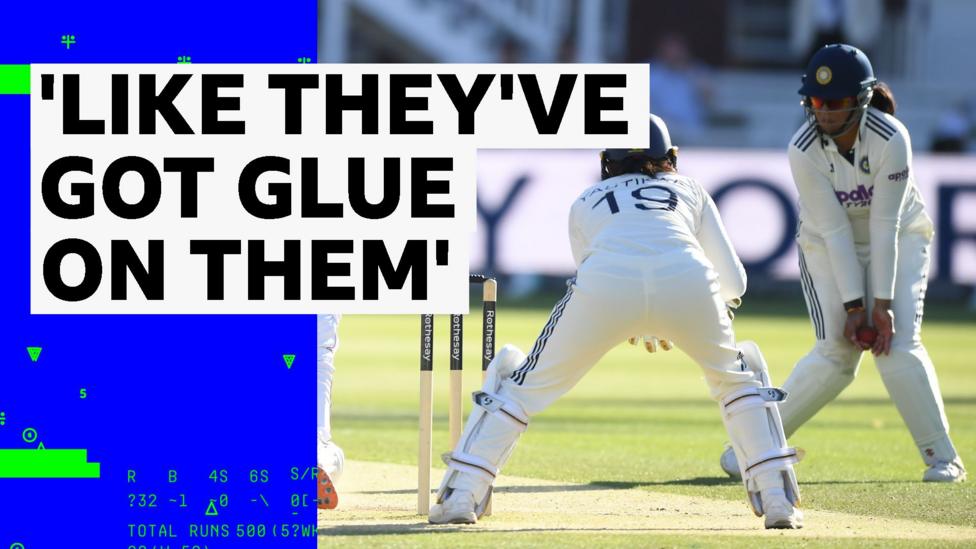
Richa Ghosh's Lord's Miracle Leaves England Staring Into the Abyss
A catch for the ages from Richa Ghosh sent Mady Villiers packing and left England 130-6 chasing an impossible 457.

Jac Morgan's Return: The Tactical Linchpin For Wales's Barbarians Test
Jac Morgan's return to the Wales XV against the Barbarians is a critical test of Warren Gatland's defensive rebuild.

The Sneeze That Silenced a Nation: Cuba's War on Independent Press
Abraham Jiménez Enoa built Cuba's first independent magazine. The state responded with isolation, surveillance, and interrogation.