Rabiot Slams MetLife Pitch As France Face Olympic Turf War
Adrien Rabiot's warning over MetLife's artificial-feeling pitch exposes a deeper conflict between stadium commercialism and football's tactical purity.
The opening tactical motif of any high-level football match is written not by the coach, but by the grass beneath the players' feet. For Adrien Rabiot and the French national team, the surface at the New York New Jersey Stadium has authored a profoundly uncomfortable prologue. Ahead of their Olympic campaign, the Juventus midfielder vocalized what many tacticians quietly dread: a pitch that fundamentally alters the physics of the contest. Rabiot's description of the MetLife surface as feeling "more like an artificial surface" is not merely a player's gripe about aesthetics. It is a stark operational warning that dictates every subsequent tactical calculation Didier Deschamps and his staff will make.
The Substrate of Strategy
To understand Rabiot's unease, one must first deconstruct what a hybrid or compromised natural surface does to the mechanics of professional football. The modern European game is built on the assumption of a pristine, uniformly responsive substrate. When a player drops their weight to receive, the foot must plant with absolute certainty. On a pitch that resembles artificial turf, the interaction between boot and blade changes dramatically. The friction coefficients shift, the give of the earth disappears, and the ball adopts a radically different bounce and roll.
For a midfielder of Rabiot's profile, operating largely in the left half-space, this degradation is catastrophic. His role within France's 4-3-3 structure demands continuous rotational movement off the ball, receiving under pressure, and instantly shifting the angle of attack. A surface that skews unpredictably forces a player to take an extra micro-second to adjust their body mechanics after the first touch. In the suffocating density of an Olympic tournament, where margins are measured in milliseconds, that adjustment is the difference between playing through the lines and being dispossessed in the transition.
"It felt more like an artificial surface out there. When you are trying to establish a rhythm, especially in the build-up phase, the pitch has to respond how you expect it to. This didn't." — Adrien Rabiot
This uncertainty creates a cascading effect on France's possession phase. Deschamps has gradually evolved his side from a deep, counter-attacking block into a team that seeks to control territory through sustained possession. The primary mechanism for this is vertical compression. By keeping the backline high and the midfield compact, France aims to shrink the operational space and force opponents into low blocks. However, playing on an unforgiving, quasi-artificial surface penalizes this high line. A misplaced pass stemming from an unpredictable bounce invites immediate counter-pressing, requiring defenders to turn and recover on a turf that offers no cushion for deceleration.
Tactical Shift
When the substrate fails, the philosophy must pivot. Rabiot's post-match assessment effectively signals that France cannot execute their standard inverted full-back rotation with the same aggressive width. Against a pitch that accelerates the ball artificially and refuses to absorb the pace of a drilled pass, the tactical turning point occurs before the whistle blows. The shift is from structure-based progression to safety-based ball retention.
If the ball cannot be trusted to sit perfectly on the half-turn, midfielders will instinctively drop their positioning by five to eight meters. This pulls the team's midfield line deeper, intentionally creating a longer distance between the defensive and attacking units. The consequence is fractured spacing. Wide attackers like Ousmane Dembélé or Randal Kolo Muani suddenly find themselves isolated against defensive blocks, starved of the quick, angled passes from the double pivot that typically feed their runs into the final third.
Furthermore, the out-of-possession structure suffers equally. Deschamps favors a mid-block压迫体系 that occasionally triggers aggressive counter-pressing traps in the opposition's defensive third. Pressing on an artificial-feeling surface exponentially increases the risk of soft tissue injuries and drastically reduces the margin for error in defensive footwork. Players cannot commit their weight forward aggressively if the ground beneath them offers no natural yield.
The Anatomy of a Compromised Surface
The situation at the New York New Jersey Stadium is a symptom of a growing crisis in modern stadium management. Facilities primarily designed for American football—with interchangeable turf trays and heavy concert calendars—struggle to cultivate the deep-rooted, European-standard ryegrass that elite football demands. The sand-based infills required to keep these hybrid surfaces intact during NFL collisions harden the topsoil, stripping it of the elasticity found at venues like the San Siro or the Volksparkstadion.
Rabiot, fresh from navigating the tactical intricacies of Serie A, possesses a refined sensitivity to pitch conditions. Italian football's emphasis on catenaccio-inspired defensive shape and precise spatial denial relies heavily on a perfect playing surface. When he labels the MetLife pitch artificial, he is diagnosing a specific failure: the absence of forgiveness. A genuine grass pitch absorbs the energy of a pass; a hardened hybrid surface repels it, causing the ball to skid rather than settle.
- Ball speed: Increases by an estimated 10-15% on rock-hard or artificial surfaces compared to pristine grass
- Injury risk: FIFA medical reports consistently indicate higher incidence of ankle ligament sprains on人工 surfaces
- Tactical impact: Forces teams to abandon short build-up play in favor of direct vertical passing
The Broader Implications for Tournament Football
Rabiot's critique opens a broader debate regarding the standardization of playing surfaces in international tournaments. While FIFA mandates specific pitch dimensions and line markings, the actual agronomic quality remains a persistent gray area. Elite European players, accustomed to the manicured lawns of the Premier League or La Liga, face a stark biomechanical shock when transitioning to multi-purpose American stadiums.
This is not an isolated grievance. During past international friendlies and club tours held in similar NFL-optimized venues, players have privately lamented the inconsistent bounce and the abrasive texture that exacerbates friction burns during slide tackles. The public airing of these concerns by a player of Rabiot's stature, however, shifts the narrative from a tolerated inconvenience to an unacceptable competitive imbalance.
The Olympics, compressed into a brutal schedule with minimal recovery days, offer no respite for tactical experimentation. A team forced to adapt its entire 压迫体系 to account for a subpar pitch is a team already fighting an opponent before the game even begins. For Deschamps, this means recalibrating his entire game model.
What Comes Next: Adapting to the Turf
Looking ahead to their upcoming fixtures in the tournament, France's coaching staff faces a critical operational decision. They can either attempt to force their natural 4-3-3 onto an unyielding surface, risking rapid transition goals against, or they can adapt their shape to the environment. The most probable adjustment is a shift toward a more direct 4-2-3-1, utilizing a deep-lying double pivot designed specifically to bypass the unpredictable midfield third.
By pulling Rabiot and his midfield partner deeper, France can utilize their physicality to win second balls in the air rather than relying on intricate ground combinations that the pitch will ultimately betrayed. The wingers will be instructed to stay high and wide, stretching the pitch vertically to exploit the accelerated ball speed for long, sweeping switches of play rather than tight interchanges in the inside channels.
However, this adaptation strips France of the very positional superiority that makes them tournament favorites. It reduces a sophisticated, multi-layered attack into a functional, environmentally determined structure. The next match will reveal whether Deschamps can engineer a compromise between his tactical principles and the unforgiving reality of the pitch beneath them. If the surface at the New York New Jersey Stadium remains unchanged, the true opponent for France may not be the team across the halfway line, but the very ground they stand on.
Editorial Integrity
This is an original SportPulse article written by our editorial team. All content is independently researched, written, and reviewed by our writers and editors before publication. We do not publish copied, aggregated, or syndicated content.
SportPulse is committed to original sports journalism. Read our editorial policy or contact us with any questions.
More Like This
All football
Three-Week September Break: What Changes for 2026
Starting September 2026, the international window expands from roughly 10 days to three full weeks, reshaping the domestic calendar.
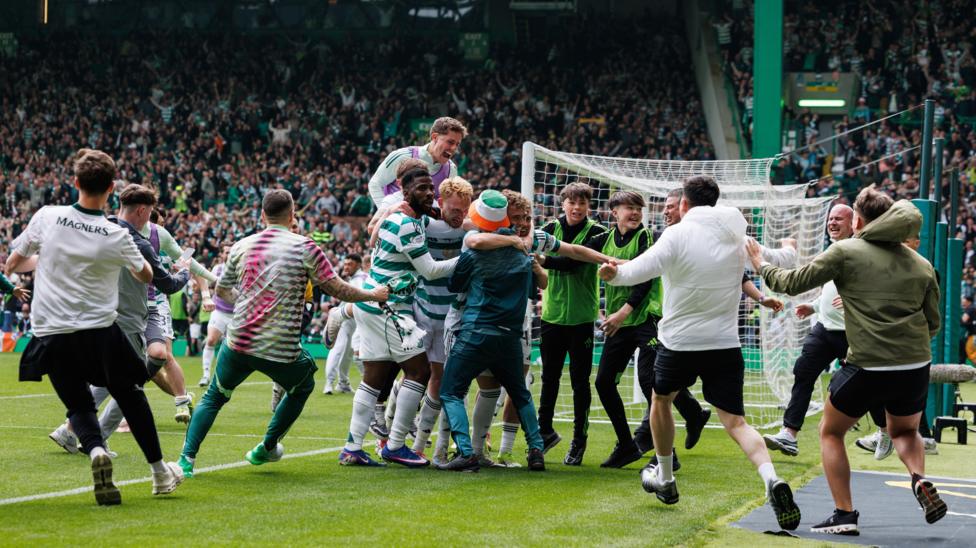
Scotland Cracks Down: Courts Empowered to Tackle Pitch Invasions and Pyrotechnics
Empowering Scottish courts to issue tougher football banning orders addresses pitch invasions and pyrotechnic use head-on.

Klopp's Mbappe Confession: The Transfer That Never Was
Inside the private plane pursuit that could have rewritten football history, as Klopp reveals Liverpool's decade-old Mbappe chase.