Racing Bulls' Spa Upgrade Package Passes Its First Real Test
Arvid Lindblad scored points at Spa, but the real story is whether Racing Bulls' upgraded aero package fundamentally shifts the car's operating window.
The Turning Point
At Spa-Francorchamps, the Racing Bulls team faced a test that goes far beyond a single weekend's result. The Belgian Grand Prix served as a live wind tunnel validation for a new upgrade package, and the data collected through the forested Ardennes sweeps will define the team's development trajectory for the remainder of the season. When a team bolts significant new aero components onto a car, the immediate concern is always whether the CFD simulations and wind tunnel correlations will hold up under the chaotic, turbulent reality of a race weekend.
Arvid Lindblad, navigating the steep learning curve of his rookie campaign, delivered a composed drive to secure another points finish. However, the narrative underneath the timing screens revolves entirely around physical airflow, downforce trade-offs, and suspension geometry. Spa is the ultimate aerodynamic proving ground, a circuit that strips away the margin for error and exposes whether a new floor and front wing concept is genuinely robust or merely a theoretical spreadsheet exercise.
Unpacking the Upgrade Package
The philosophy behind Racing Bulls' latest update cycle centers on managing aerodynamic derating. In simple terms, derating is what happens to airflow when a car enters a corner and the steering angle changes. The airflow separates from the surfaces, and the downforce drops off a cliff. If you design a car that produces maximum downforce only when driving perfectly straight on a rolling road, you have built something utterly useless for lap times. A good upgrade package widens the operating window, maintaining airflow attachment through higher yaw angles.
Sticking to the ground is simple in a straight line. Sticking to the ground while cornering at 180 mph through Eau Rouge is an entirely different engineering problem. The Racing Bulls upgrade is designed to keep the underfloor aerodynamic airflow stable when the car is moving dynamically, not just when it is perfectly positioned. At Spa, the differences between simulation and reality become painfully apparent because the circuit demands both extreme low-drag configuration on the long straights and immense high-speed cornering grip.
Think of front wing airflow like water running from a kitchen tap. A narrow stream is fast and precise, exactly hitting the drain, but it is fragile. Move the tap slightly, and the water misses entirely. A spread-out stream is slower but covers more area and is far harder to disrupt. Racing Bulls seems to have redesigned their front wing endpoints and floor edge vanes to create a wider, more forgiving aerodynamic stream that tolerates the chaotic, bouncing real-world conditions of a Formula 1 car at speed.
Engineering Insight: Managing Eau Rouge Flat-Out
The most critical test of Racing Bulls' new components came at Eau Rouge and Raidillon. To take this legendary complex flat out, a driver relies on the downforce increasing precisely as the car compresses at the apex bottom. This requires a stable aero platform. If the downforce suddenly spikes, the car bottoms out violently against the tarmac, stalling the airflow. If the downforce drops off as the car pitches on the uphill compression, the rear end snaps into oversteer before the driver has even reached the Kemmel straight. The new floor geometry, specifically the aggressively ramped floor tunnels, must be tuned so the downforce curve is linear and predictable through the compression, not peaky. A peaky downforce curve at Spa means instant retirement in the barriers.
The Technical Verdict from the Cockpit
Lindblad finishing in the points again is a strong indicator that the new components have successfully transferred from the wind tunnel to the track. When a team gets it wrong, the driver reports zero confidence, a car that refuses to turn in, and unpredictable aero movements that make cornering terrifying. When the correlation is correct, the driver simply reports that the car does what it is told.
The car felt consistent from the first practice session. We maximised the performance of the package, and the balance remained predictable in both qualifying and the race. It is important to know the upgrades are working as expected.
For Lindblad, driving with a predictable aero platform allows him to trust the machinery at the limit. Trust is the currency of speed in Formula 1. Spa requires absolute commitment through the high-speed sectors. If a rookie knows the downforce will be there every time he turns the wheel, he can attack corners like Pouhon flat out. An unpredictable car forces a driver to second-guess the steering inputs at 260 km/h, an impossible situation if the goal is to extract maximum performance over a race distance.
What This Means for the Development War
The data from Belgium confirms the Racing Bulls development direction is fundamentally sound. In a budget-capped era, producing parts that fail to correlate with simulation data costs millions and several months of crucial development time. A single weekend can ruin a season if the team must abandon a concept and start over. Lindblad's points finish is exactly what the engineers needed to authorize the next stage of CFD and tunnel development without hesitation.
The specific focus moving forward will be on cooling efficiency and how that interacts with the new aerodynamic surfaces. Spa exposed potential thermal limits. The trade-off at high-speed tracks is always about how large you can make the brake ducts and engine inlet openings without destroying the clean airflow to the rear wing. Every square inch of open duct creates drag. The team must now refine the internal airflow pathways to ensure reliability without月刊 sacrificing the straight-line speed gains they just unlocked. This will be critical at the next high-speed circuits on the calendar.
Looking Ahead: Zandvoort's Technical Challenge
The next challenge for the Racing Bulls package takes the grid to Zandvoort, a circuit that presents a severe contrast to the sweeping nature of Spa. Instead of long straights and fast compressions, the Dutch track features banked corners and extremely short straights, providing virtually zero time to cool the brakes and power unit. The aerodynamic requirement shifts from drag reduction to maximum downforce at all costs.
At Zandvoort, the banked corner geometry changes the game entirely. When a car runs on a high banked angle like the Hugenholtzbocht, the airflow hits the sidepods and underfloor asymmetrically. This asymmetrical loading is one of the most difficult aerodynamic challenges to simulate, even in the most advanced CFD programs. It is similar to how a hydrofoil boat behaves when a wave hits it from the side; the control systems must constantly adapt to the tilt and the unbalanced pressure distribution. If the Racing Bulls upgrade package can maintain its predictable platform on the Zandvoort banking, the team will have confirmed they have built a truly versatile car.
The technical narrative of this season is shifting rapidly. While the spotlight often remains on the championship battles at the front, the real engineering warfare happens in the midfield, where teams like Racing Bulls are rapidly iterating their cars, chasing hundredths of a second with every single floor ramp and wing element they produce. Maximizing their performance in Belgium was not just about scoring points today. It was about proving the map they have drawn for tomorrow is accurate.
Editorial Integrity
This is an original SportPulse article written by our editorial team. All content is independently researched, written, and reviewed by our writers and editors before publication. We do not publish copied, aggregated, or syndicated content.
SportPulse is committed to original sports journalism. Read our editorial policy or contact us with any questions.
More Like This
All f1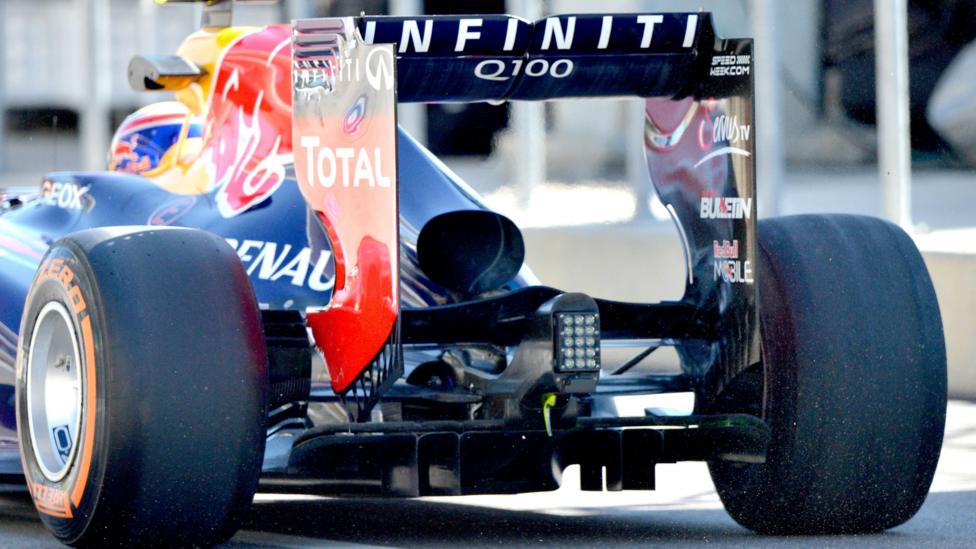
F1's V8 Comeback: Could the Roar Return to Grand Prix Racing?
Two parallel engine conversations are reshaping F1's future, and the return of V8s is no longer a fan fantasy.
Piastri's Hungary charge ends in Sainz collision retirement
McLaren's Oscar Piastri retired from the Hungarian GP after a collision with Carlos Sainz's Williams while fighting for victory.
Pirelli Locks Tyre Compounds for 2026 Hungarian Grand Prix
Compound confirmation sets the strategic baseline for a tight circuit where tire management dictates race outcomes.