Old Firm Window Heats Up: Dragojevic Nears Rangers, Celtic Defender Heads for France
Rangers close in on Serbian midfielder Dragojevic while Celtic brace for a defensive departure to France, shaping the Old Firm title race.
A Midnight Phone Call That Could Shift Glasgow's Balance
The call usually comes at midnight.
In Belgrade, a phone buzzes. An agent answers. On the other end, voices from Glasgow whisper numbers, terms, and ambition. For Serbian midfielder Dragojevic, that scenario is no longer hypothetical. It is real, it is imminent, and it could alter the physics of the Scottish Premiership.
Across the city, at Celtic Park, the mood shifts from acquisition to preservation. A key defender is packing his imagination toward France. Ligue 1 clubs, sensing both opportunity and financial leverage, hover with documents prepared and medicals pencilled in.
Two deals. Two clubs. One unforgiving city that measures success in inches and tolerates failure even less.
The Dragojevic Pursuit
Rangers have identified their man. Dragojevic, a Serbian midfielder whose blend of physical presence and technical security has drawn attention across the Balkans and beyond, is edging closer to a switch to Ibrox. Negotiations have accelerated in recent days, with the club now confident an agreement is virtually complete.
What makes this deal compelling is not just the player's profile, but the timing. Rangers sit at a critical point in their competitive cycle, chasing domestic dominance while trying to prove themselves credible on the European stage. Dragojevic represents exactly the type of acquisition that moves both needles simultaneously.
The Serbian's camp has been tight-lipped, but the signals now point overwhelmingly toward Glasgow. Paperwork is being finalised, and conversations have shifted from "whether" to "when."
For Rangers supporters, the name carries promise. The club has mined the Serbian market before to varying degrees of success, and Eastern European midfielders, particularly those forged in the competitive fire of the Serbian SuperLiga, have often adapted well to the physicality of Scottish football.
A secondary consideration involves depth structures. The modern game at the top Scottish level does not afford a club the luxury of rotation policies that sacrifice control. Rangers need a midfielder who can keep the ball smartly, arrive late in the box, and handle the physical duel when opponents attempt to disrupt rhythm.
Dragojevic, by all scouting assessments, checks those boxes.
What Dragojevic Brings to Ibrox
Forget any notion of the Serbian being merely a rotation piece. This is a player whose skill set suggests a genuine contender for a starting role.
- A robust physical profile, comfortable in tight spaces and combative transitions
- Ball-striking quality that can serve Rangers off set-pieces and second-phase offensive moves
- An engine-room mentality, disciplined out of possession and capable of covering ground across a demanding fixture calendar in Scotland and Europe
- Tactical adaptability, fitting into a midfield pivot or a slight number 10 role as the match scenario requires
The Scottish Premiership has always rewarded teams that control the midfield corridor. Control the corridor and you control the city.
Behind the Deal
The financial architecture of this transfer reveals much about Rangers' recent strategy. The model now blends inherit-and-develop acquisitions with targeted, experience-ready additions. Dragojevic falls into the latter category.
Negotiations have centered on a fee structure that avoids overcommitting the club's wage framework while creating upside for both parties. Performance-based add-ons are understood to be part of the package, protecting the club while rewarding the player as he meets specific minutes and metrics thresholds.
The timing is deliberate. Getting a deal concluded early enough in the window allows the player maximum ramp-up time before the league campaign's decisive stretch. It also signals intent to the dressing room — no complacency, no settling, and a clear statement that places are won, not given.
"The board has made it clear that European nights at Ibrox are the standard, not the ceiling. This signing reflects that ambition."
But the tension is not resolved yet. As anyone who has tracked the Balkan market knows, last-minute complications or rival interventions are never off the table.
Celtic's Defensive Dilemma
Meanwhile, across Glasgow, a different kind of window drama unfolds.
Celtic are bracing for the potential departure of a key defender to a French club, with the player now believed to be on his way Ligue 1-ward. The development is not entirely unexpected within the corridors of Celtic Park. Whispered interest from France had surfaced in prior windows, but the situation has now reached an advanced stage.
Ligue 1 clubs, operating with differential scouting networks across European markets, have long recognised the value of extracting established defenders from the Scottish Premiership. The league's physical demands produce players comfortable against aggressive pressing and aerial challenge. For French clubs, that profile comes at a value point often lower than equivalent talent in France or Italy.
Celtic's challenge is two-fold. Internally, they must mentally prepare for a solution that replaces not just the defender's positional output, but the communication and organisational functions he provides to a backline that has been a foundation of their domestic dominance.
The gap left would be immediate. It is not a depth problem — it is a backbone problem.
The Replacement Equation
Replacing a starting-calibre defender mid-stream is never simple, and Celtic's recruitment team knows the window's remaining days will demand decisive action.
The candidates likely include a mix of internal promotions and external targets. Internally, younger defenders may receive an accelerated audition. Externally, agents across Europe have surely noted the situation, with those representing capable centre-backs or full-backs making inquiries.
The risk, of course, is twofold: paying an inflated fee driven by urgency, or trusting a replacement who might require weeks to adapt to the intensity and tempo of Scottish football. Neither option is ideal, but both are inevitable.
What This Means for the Old Firm Race
The deeper story here is not merely transactional. It is competitive narrative.
Both Celtic and Rangers operate under a fans' expectation that every window either upgrades the squad or at minimum protects its core. The effect of both concurrent developments — Rangers adding, Celtic potentially subtracting — creates a marginal shift in perception within the title race.
That shift may be small in raw staffing terms, but in the psychological arena of the Old Firm, small margins have outsized consequences. One late goal, one defensive miscommunication, or one moment of midfield brilliance slides the entire season.
Rangers' acquisition of Dragojevic reads as proactive strengthening, addressing a midfield gap before it becomes a season-defining vulnerability. Celtic's situation demands the opposite: reactive replacement, the most taxing form of transfer business.
For Rangers fans, the feel is momentum. For Celtic supporters, it is anxiety. Dragovic in, a defender out — the optics matter.
Looking Ahead
The coming days will determine whether the Dragojevic deal crosses the finish line cleanly and whether Celtic successfully navigate the exit of their defender without a defensive collapse.
Key questions remain unanswered:
- Will Rangers finalise terms before competing interest materialises from other suitors who may have belatedly noted the Serbian's availability and profile?
- Can Celtic recruit a replacement in time, or will the window close with a blueprint rather than a finished product?
- What Europeans dominoes might still fall that could impact both clubs' strategic planning before the deadline?
The Glasgow air is thick with anticipation. The Old Firm window is always a theatre, and Act One has only just begun.
For Dragojevic, the next phone call might be the last before he boards a plane. For Celtic's departing defender, the bags are nearly packed. And for both halves of Glasgow, the stakes are already climbing toward the sky.
The Scottish Premiership does not wait. Neither does ambition. And in this city, second is nowhere.
The Old Firm Transfer Imperative
Glasgow is a city that does not tolerate patience. Every transfer window is a referendum on ambition, and every signing is an instrument measured against the immediate present, not a distant future. Rangers are moving now. Celtic must move soon. The next three weeks will echo for nine months.
Dragojevic knows this. His agent knows this. And somewhere in Glasgow, two managers are watching the same clock, ticking toward a deadline that never slows down.
"This is not a window. This is a statement of intent, written in permanent ink, read by fifty thousand voices every weekend."
The drama is only beginning. And in the Old Firm, the drama never really ends.
Editorial Integrity
This is an original SportPulse article written by our editorial team. All content is independently researched, written, and reviewed by our writers and editors before publication. We do not publish copied, aggregated, or syndicated content.
SportPulse is committed to original sports journalism. Read our editorial policy or contact us with any questions.
More Like This
All football
France's Stacked Attack Makes Them the Team Nobody Wants to Face
Mbappé, Olise, Dembélé, Barcola: France boast an attacking arsenal no nation can match heading into the 2026 World Cup.
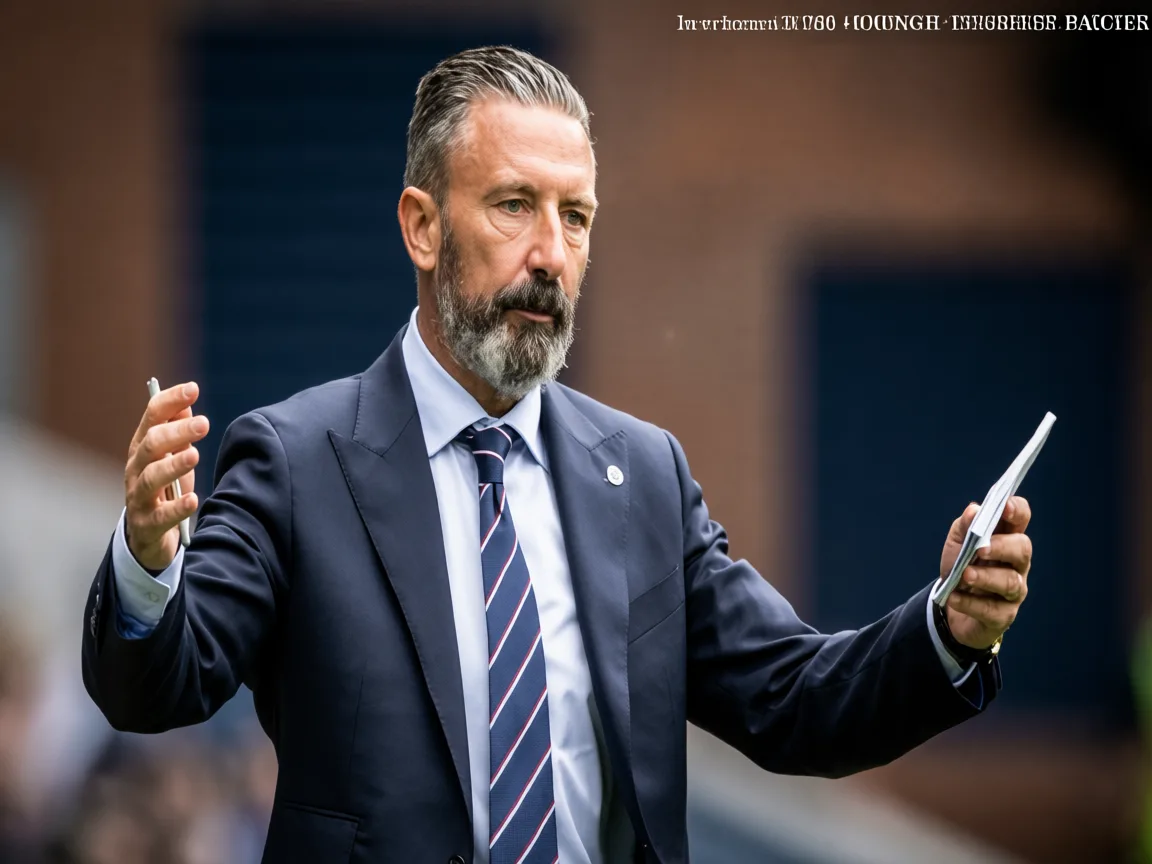
McInnes Promises New Arrival Before Rangers Kick Off at Dundee United
Derek McInnes teases at least one signing within 48 hours as Rangers prepare to open their season at Tannadice on Friday.

Pitbull Concert Forces Kauno Zalgiris From Historic Champions League Tie
A Pitbull concert at their stadium has forced Lithuania's Kauno Zalgiris to relocate a decisive Champions League qualifier against KI Klaksvik.