From the Azteca to Lusail: The Greatest World Cup Finals Ever Played
ranking World Cup finals is subjective chaos, but three matches stand above the rest as transcendent sporting theatre.
The Impossible Question
What makes a World Cup final truly great?
Is it the quality of the football? The stakes of the moment? The narrative weight of a single player chasing immortality? Or is it something less tangible: the atmosphere, the backdrop, the sense that you are witnessing something that will be replayed for decades?
Every four years, the global game conspires to produce a finale that is supposed to cement itself in history. The reality is that most finals fail the test. They are tight, nervous, suffocated by fear. Legends are often made in semifinals; finals are where knees buckle.
Yet a precious few transcend the occasion. They do not merely decide a tournament. They redefine the sport.
When you attempt to rank the greatest World Cup finals, you are not just judging ninety minutes of football. You are weighing cultural moments, tactical revolutions, and the sheer theatrical weight of a single afternoon. It is subjective, contentious, and deeply personal.
But three finals rise above the rest with an undeniable, gravitational pull.
Brazil at the Azteca, 1970
The gold standard.
Italy stood across the field in the suffocating Mexico City heat. They were hardened, cynical, and magnificent in their own right. They had reached the final through endurance and defiance.
But Brazil were not playing a football match. They were conducting a symphony.
The 4-1 scoreline flattered Italy only in the sense that it suggested a degree of competitiveness that never truly existed. Brazil scored four, hit the woodwork twice, and produced a goal so breathtaking that it is still replayed as the ultimate distillation of the beautiful game.
The fourth goal. Carlos Alberto. The ball traveled through eight players without an Italian touching it. Tostao to Clodoaldo. Clodoaldo to Rivelino. Rivelino to Jairzinho. Jairzinho to Pele. Pele through the line. Carlos Alberto arriving like a freight train off the right flank.
Thwack.
The most famous goal in World Cup history.
"I was just running. I knew Pele would find me. He always found everyone."
That Brazil team did not just win the World Cup. They preserved it. They turned a tournament into a museum piece, a permanent exhibition of what football could look like when genius was choreographed into a collective vision.
Why 1970 reigns supreme
- Pele at his peak of influence, scoring and creating at 29 years old
- The goal average of 2.96 per match across the entire tournament
- A Brazilian side that won six out of six games, the only team to do so in a 16-team format
- The first World Cup broadcast globally in color, cementing the visual mythology
Lusail's Coronation, 2022
For fifty-six minutes, it was a procession.
Argentina led France 2-0 in the Lusail Iconic Stadium. Lionel Messi had his goal. Angel Di Maria had his fairy tale. The trophy was being measured for engravings.
Then Kylian Mbappe happened.
Ninety-seven seconds. That is all it took for France to transform from a lifeless husk into a roaring beast. Mbappe scored a penalty in the 80th minute. Then, in stoppage time, he smashed a volley that defied geometry, logic, and the Argentine bench's collective sanity.
2-2.
Extra time. A tournament within a tournament. Messi tapped in from close range in the 108th minute to complete his coronation. Mbappe answered from the spot again in the 118th minute.
3-3.
A World Cup final had never seen a hat-trick since 1966. Now it had seen one from a 23-year-old while his opponent, a 35-year-old playing his final international match, was completing the most significant individual narrative in the sport's history.
Penalties. Gonzalo Montiel. The net rippled. Argentina won the World Cup.
"What could I say? Many people, including myself, thought it was over. But football sometimes goes beyond logic."
The numbers behind the chaos
- 6 goals in the final, the most since 1958
- 2 penalties awarded in a single final for the first time
- 166 goals across the tournament, a record
- Mbappe's 8 goals earned him the Golden Boot, one ahead of Messi
- The match drew a global television audience of approximately 1.5 billion viewers
The tension was never about the goals alone. It was the collapse, the resurrection, the second collapse, and the penalty shootout conclusion that etched it into memory.
This was a final that bent drama into absurdity and emerged as a masterclass in resilience.
England's Home Triumph, 1966
For English football, it is the origin story.
For everyone else, it is a monument to a single, controversial moment that still echoes in pubs, parlors, and post-match debates.
Geoff Hurst's second goal in the 101st minute. The ball struck the crossbar, bounced down, and the referee awarded the goal after consulting his linesman.
苏联 researchers later concluded it did not cross the line.
Modern technology suggests it did not fully cross either.
But in 1966, at Wembley Stadium, the moment was not about pixels or projection lines. It was about timing, nerve, and the audacity of a player who had been a surprise selection to even start the match.
Hurst completed his hat-trick in the dying seconds of a 4-2 victory over West Germany. He remains the only man to score three in a World Cup final.
"Some people are on the pitch. They think it is all over. It is now!"
Those words from commentator Kenneth Wolstenholme became as iconic as the goal itself.
The enduring legacy of '66
- 96,000 fans packed into Wembley Stadium
- The match attracted a UK television audience of roughly 32.3 million
- Hurst's hat-trick remains the only one in a World Cup final
- England's only major tournament victory to this day, a 57-year drought and counting
1966 carries weight because it is not just a match but a mythos. It was the moment England hosted and won, cementing the tournament's stature as a global spectacle.
The Lower Tier of Greatness
Honorable mentions must be acknowledged.
1974 delivered the Total Football of the Netherlands against the pragmatism of West Germany. It was a clash of ideologies. But the match itself was sloppy at times, defined more by what these sides represented than what they produced.
1986 saw Argentina and West Germany in a grudge match that produced a 3-2 thriller for the neutral but was overshadowed by Diego Maradona's broader tournament.
1958 was Pele's announcement. He scored a double in a 5-2 win over Sweden at 17 years old. The final was exciting, but Sweden were never the equal of the Brazilians. It was a coronation, not a contest.
What Makes These Three Different
1970, 2022, and 1966 each possess an ingredient that cannot be manufactured.
They have narrative closure. Pele's story in 1970 was about a man who had been kicked out of two previous tournaments and returned to the pinnacle. Messi's story in 2022 was the resolution of a career-long chase. Hurst and England in 1966 were about a nation asserting itself on the sport it invented.
The remaining finals, however competitive, often lack the story arc.
1998's France-Brazil was lopsided. 2010's Spain-Netherlands was marred by brutality. 2014's Germany-Argentina was tense but one-sided in the end.
Greatness demands not just a match but a moment when the sport, the stage, and the stakes align perfectly.
The Subjective Verdict
Ranking them is an exercise in personal bias.
If you value the aesthetics of attacking football as a collective expression, nothing beats 1970. The heat of Mexico, the magic of that fourth goal, the majesty of Pele in yellow. It remains the benchmark for what the World Cup should look like.
If you value drama, chaos, and the sheer sporting spectacle of two giants trading blows until the end, 2022 takes the crown. It was the most unhinged World Cup final ever played. A narrative so absurd that no screenwriter would have dared propose it.
And if you value the weight of history, 1966 still stands unshakeable. A home final, a hat-trick, and a moment of controversy that has fueled decades of debate.
Three finals. Three distinct definitions of greatness. Each one earned its place not through the scoreline alone but by becoming a permanent fixture in the global football consciousness.
The question was always going to be subjective.
But the memories are not. They are etched in the archives, replayed in documentary after documentary, and passed down through generations.
From the Azteca to Lusail, the World Cup final remains the biggest stage in sports.
Only a precious few have truly risen to it.
Editorial Integrity
This is an original SportPulse article written by our editorial team. All content is independently researched, written, and reviewed by our writers and editors before publication. We do not publish copied, aggregated, or syndicated content.
SportPulse is committed to original sports journalism. Read our editorial policy or contact us with any questions.
More Like This
All football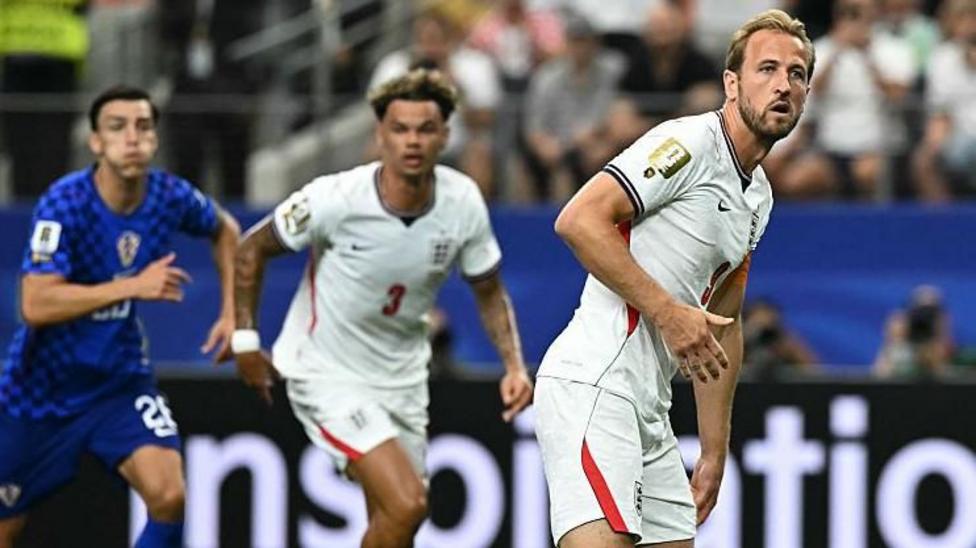
Kane's Stutter Penalty and VAR: The Tactical Evolution of Spot-Kicks
Harry Kane's VAR-assisted penalty against Croatia exposed the modern battle between penalty taker and goalkeeper.
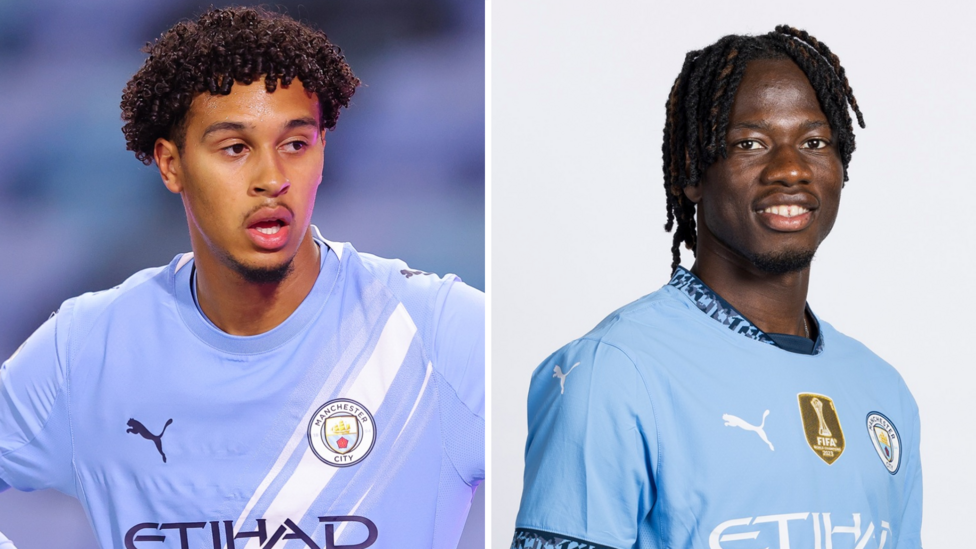
Inside Man City's Loans Exhibition Day: The Transfer Market's Hidden Engine
Manchester City opened its training ground to clubs worldwide, turning loan management into a calculated art form.

Robinson Finally Lands Long-Time Target Lewis Smith for Aberdeen
Aberdeen secure winger Lewis Smith from Livingston as Stephen Robinson ends a years-long pursuit of the player he repeatedly tried to sign.