Red Bull's Austria Upgrade Unlocks Season-Best Pace at the Home of Bulls
A major upgrade package transformed Red Bull's fortunes at Spielberg, delivering Verstappen's strongest result of 2025.
The Upgrade That Changed the Equation
Red Bull arrived at the Red Bull Ring carrying more than the weight of expectation from a home crowd. They carried a significant upgrade package that, by Laurent Mekies' own admission, transformed the RB21 into the most competitive it has been all season. The result? Max Verstappen's season-best P2 finish and a statement of intent that the Milton Keynes squad may finally be turning a corner in a 2025 campaign that has fallen well short of their own sky-high standards.
Mekies, who took over as Red Bull's team principal following the seismic departure of Christian Horner earlier this year, didn't mince words after the race. The Austrian Grand Prix weekend represented a genuine inflection point for a team that has spent much of the season searching for answers.
"It was undoubtedly the strongest race of the season. The upgrade package delivered exactly what the wind tunnel and CFD simulations predicted, which is never a guarantee in Formula 1." — Laurent Mekies, Red Bull Team Principal
That caveat is important. The gap between computational fluid dynamics models and real-world aerodynamic performance is a persistent source of heartbreak across the paddock. Red Bull's simulation tools getting it right on a package this significant suggests their correlation is in excellent shape, even if the on-track results haven't reflected it until now.
What Changed on the RB21
The upgrade package that Red Bull brought to Spielberg touched multiple aerodynamic surfaces, a coordinated update rather than a single-component tweak. This is significant. When teams deploy upgrades across the floor, diffuser, and front wing simultaneously, it indicates a deeper rethinking of the car's aerodynamic philosophy rather than band-aid fixes.
Think of it like renovating a house versus replacing a lightbulb. Red Bull didn't swap out a wing endplate and hope for the best. They re-examined how air flows under and around the entire car, optimizing the pressure distribution from nose to diffuser trailing edge. The goal: extract more downforce without proportionally increasing drag, a balance that sounds simple in theory but is maddeningly difficult in practice.
The Red Bull Ring is an ideal proving ground for this kind of update. At just 4.318 kilometers, it is one of the shortest circuits on the calendar, but it punishes poor aerodynamic efficiency brutally. The three long straights demand low drag, while the sequence of medium-speed corners in the middle sector requires genuine mechanical and aerodynamic grip. A car that is merely quick in a straight line or merely strong in the corners will be exposed here. The fact that Verstappen delivered a season-best performance on this specific track means the upgrade package addressed Red Bull's core weakness: maintaining downforce through high-speed direction changes without hemorrhaging time on the straights.
Engineering Insight: Floor and Diffuser Redesign
The most critical area of any modern ground-effect Formula 1 car is the underbody floor. Since the 2022 regulation overhaul, teams generate the majority of their downforce through Venturi tunnels beneath the car rather than through traditional front and rear wings. This makes the floor the single most performance-sensitive surface on the car.
Red Bull's Austria package featured revised floor edges and an updated diffuser geometry. The floor edges control how much air is allowed to seal the low-pressure zone underneath the car. Think of it like running your finger along the edge of a vacuum cleaner hose: the tighter the seal, the stronger the suction. Red Bull's updated floor edges appear to create a more robust seal, particularly in yaw conditions when the car is turning and the airflow becomes asymmetric.
The diffuser modifications are equally important. The diffuser is the ramp-shaped section at the rear of the underbody that accelerates the air exiting from beneath the car. Faster exit velocity means lower pressure underneath, which means more downforce. Red Bull's revised diffuser geometry likely improves flow attachment at varying ride heights, a perennial challenge in ground-effect cars that tend to be extremely sensitive to even millimeters of suspension travel.
The fact that Verstappen could push consistently through the high-speed Remus and Schlossgold curves without the rear instability that plagued earlier weekends strongly suggests the diffuser is now producing more consistent downforce across a wider operating window. This is the difference between a car that is fast on a single qualifying lap and one that is fast over a full race distance.
The Season Context: Why This Matters Beyond Austria
Verstappen's P2 might not sound revolutionary for a driver who won 19 out of 22 races in 2023, but the 2025 season has been a humbling experience for the entire Red Bull organization. The departure of key personnel, the ongoing adaptation to the Mekies leadership structure, and what many in the paddock describe as a fundamental aerodynamic correlation issue earlier in the year left the team playing catch-up to McLaren, Ferrari, and sometimes even Mercedes.
Before Austria, Red Bull had struggled to extract consistent performance from the RB21. The car showed flashes of pace at certain circuits but lacked the all-around competitiveness that defined their dominant 2022 through 2024 run. Engineers within the team have privately acknowledged that the wind tunnel-to-track correlation problem meant that upgrades brought earlier in the season did not deliver the expected gains, forcing the team into an expensive cycle of trial and error.
Spielberg changed that narrative. The upgrade package delivered measurable, repeatable performance gains across practice, qualifying, and the race. Verstappen was competitive in all three DRS zones, posted strong sector times through the technical middle section, and managed tire degradation effectively over the full stint lengths. This was not a one-lap anomaly or a track-specific fluke. It was a genuine step forward.
The Numbers Tell the Story
- P2 finish: Verstappen's best result of the 2025 season
- Strong pace across all three sectors, suggesting a well-balanced car rather than a setup that favored one area
- Competitive tire degradation profile, indicating improved mechanical grip and aerodynamic consistency
- Upgrade package delivered performance gains consistent with CFD predictions, signaling improved simulation accuracy
- First race of 2025 where Red Bull appeared genuinely competitive for victory, not just a podium
Mekies' Measured Confidence
What makes Mekies' reaction particularly interesting is his tone. There is no hyperbole, no premature celebration. His language suggests a team that understands this is a foundation, not a ceiling.
"We need to confirm this performance at different circuits with different characteristics. One strong weekend does not solve everything, but it validates the direction we are heading." — Laurent Mekies
This is the measured approach of a technical leader who understands that aerodynamic performance is circuit-dependent. The Red Bull Ring's combination of high altitude (approximately 700 meters above sea level, which reduces air density), short lap, and specific corner types may flatter the RB21's updated aero package in ways that other circuits might not. The real test will come at tracks with different demands: high-downforce Monaco-style configurations, low-drag power circuits like Monza, and the bumpy street courses that punish mechanical compliance.
Looking Ahead: Silverstone and Beyond
The next major test arrives at Silverstone, a circuit that shares some aerodynamic DNA with the Red Bull Ring in its demand for efficient downforce but adds the complexity of high-speed sweeps like Copse, Maggots, and Becketts that will push the updated floor and diffuser to their limits. Silverstone's long, fast corners require the car to generate consistent downforce at high yaw angles and sustained lateral loads, exactly the conditions where Red Bull's previous iterations struggled.
If the Austria upgrade package holds its performance gains at Silverstone, the implications for the second half of the season are significant. Red Bull would move from midfield frustration to genuine front-runner status, putting pressure on McLaren and Ferrari who have enjoyed relatively comfortable advantages for much of the campaign.
More importantly, an upgrade that works across multiple circuits validates the entire development pipeline. It means the wind tunnel, CFD simulations, and trackside correlation are aligned, a prerequisite for the kind of aggressive in-season development that wins championships. Red Bull's legendary rate of development during the 2022 and 2023 seasons was built on this foundation. If Mekies and his engineering team have rebuilt that pipeline, the rest of the paddock should take notice.
The Red Bull Ring may have been a home race celebration, but the real party starts if this upgrade proves portable. For a team that has spent 2025 searching for its identity, Austria offered the first concrete evidence that the path forward is clear and the tools to walk it are finally sharp enough to cut.
Editorial Integrity
This is an original SportPulse article written by our editorial team. All content is independently researched, written, and reviewed by our writers and editors before publication. We do not publish copied, aggregated, or syndicated content.
SportPulse is committed to original sports journalism. Read our editorial policy or contact us with any questions.
More Like This
All f1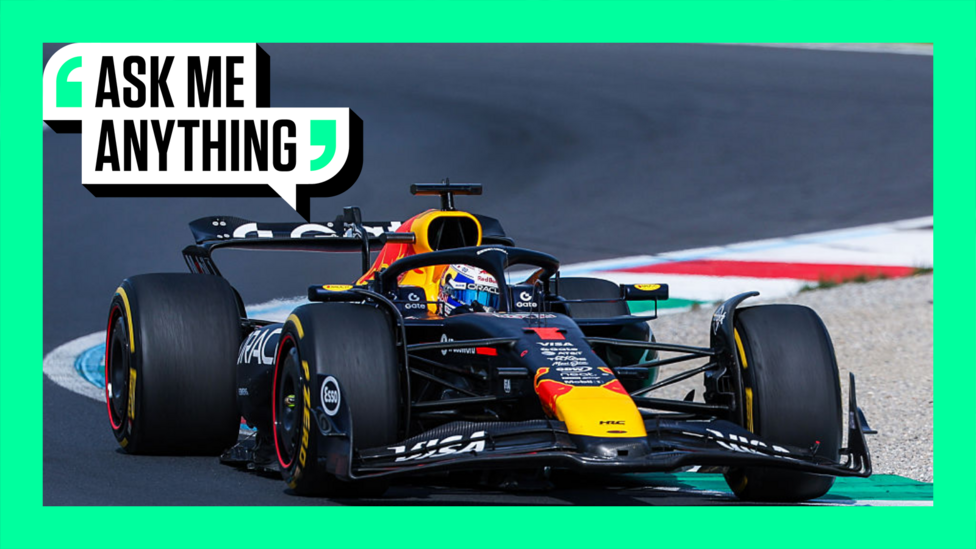
Decoding the F1 Super Licence: Engineering a Grid Slot
The F1 Super Licence is a rigorous points-based filter engineering the genetic makeup of the grid's future driver talent.
Verstappen's Red Bull Era Is Cracking. What Comes Next?
Three DNFs, nine races winless. Red Bull's competitive collapse is forcing Verstappen to seriously weigh his Formula 1 future.

Antonelli Demands Attention: Mercedes Rookie Tops Austria FP2
Kimi Antonelli stunned the Spielberg field by setting the pace in Austria FP2, edged Piastri and Norris in a Mercedes warning shot.