When Mechanics Decide Champions: Reliability's Hidden Hand
Mercedes and Kimi Antonelli face reliability questions, but history proves mechanical resilience decides titles as much as raw pace.
The air in the Mercedes garage carries a particular tension these days, thick with the scent of carbon fiber and unanswered questions. Kimi Antonelli, the prodigy entrusted with a seat that carried Lewis Hamilton to six titles, finds himself staring at telemetry screens more often than rear-view mirrors. The recent string of mechanical gremlins has not derailed a title charge, not yet, but the pattern emerging from Brackley and Brixworth carries an echo that should make every engineer in the building uncomfortable.
Reliability in Formula 1 is not glamorous. It does not generate pole position laps or overtake-of-the-month compilations. It is the silent tax on ambition, the invisible hand that pushes championship trophies across the pit lane from one garage to another. When a power unit surrenders fifteen laps from the finish, the data engineers do not shrug and call it bad luck. They call it a championship decision.
The Physics of Attrition
Modern Formula 1 operates on a knife-edge of thermal efficiency and mechanical stress. The current power unit regulations, in their final campaign before the 2026 overhaul, push internal combustion engines to thermal efficiency figures exceeding 50%, a number that would have seemed absurd a decade ago. Every component rotates, combusts, and vibrates within tolerances measured in microns.
When Antonelli's car develops an issue, it happens within a system already operating at the absolute frontier of materials science. The MGU-K harvests kinetic energy under braking at temperatures that would melt conventional metals. The turbocharger spins at over 100,000 RPM. A single sensor failure, a momentary voltage drop, can cascade into a race-ending shutdown faster than a driver can reach the kerb.
Mercedes understands this calculus better than any team on the grid. They won eight consecutive constructors' titles from 2014 to 2021 partly because their power unit was bulletproof while competitors burned through allocation after allocation. The irony now is almost poetic. The team that made reliability its signature now watches a rookie's season threatened by the same unpredictable ghosts.
Eight Moments That Rewrote History
The historical record makes one thing brutally clear: mechanical failure does not merely cost points. It reshuffles championships.
-
1994, Australia, Adelaide — Damon Hill's Williams retired with a driveshaft failure while chasing Michael Schumacher for the title. Had the car held together, the championship arithmetic shifts entirely. Schumacher won by a single point.
-
1997, Jerez — The final race saw Jacques Villeneuve clinch the title, but only after Schumacher's attempt to take him off the track left both cars damaged. The reliability question lingered: could the Ferrari have matched the Williams over a clean race distance without its earlier-season gremlins?
-
1999, Europe, Nürburgring — Mika Häkkinen's McLaren suffered a suspected hydraulic failure during the race, handing momentum back to Eddie Irvine. Ferrari's title challenge ultimately faltered, but the points dropped here reshaped the final standings. Häkkinen won by just 2 points.
-
2005, United States, Indianapolis — The Michelin tire controversy sidelines fourteen cars, but the underlying issue was structural. Tire reliability, not pace, dictated who could safely navigate the banking. Only six cars took the start. The championship conversation that year rotated around rubber, not horsepower.
-
2010, Abu Dhabi, Yas Marina — Sebastian Vettel claimed his first title after a season where both Alonso and Webber lost critical points to mechanical issues. The Red Bull's Renault engine had been fragile early in the season. By the finale, Vettel's car held together while the strategic chaos around Alonso unfolded.
-
2016, Malaysia, Sepang — Hamilton's engine erupted in flames while leading comfortably. The 25-point swing proved decisive. Rosberg won the title by 5 points. A single con-rod failure decided a World Championship.
-
2021, Azerbaijan, Baku — Max Verstappen's tire failure at over 320 km/h sent him into the wall with the victory in sight. The points dropped here, compounded by the Silverstone clash later that year, forced the season to its extraordinary Abu Dhabi finale.
-
2021, Italy, Monza — The collision between Verstappen and Hamilton was a racing incident, but the subsequent grid penalties for power unit changes underscored how reliability concerns had pushed both teams to the edge of their allocation. Every subsequent failure carried a penalty.
Strategy Breakdown
The strategy wall in Formula 1 is not merely a tactical command center. It is a risk-assessment hub where reliability projections meet sporting ambition. When Mercedes engineers flagged concerns about Antonelli's power unit before recent rounds, the wall faced a familiar dilemma: deploy the current pool cautiously and accept strategic compromise, or push the allocation and risk grid penalties later.
The current regulations allow only four of each power unit component per season before penalties cascade. With races still on the calendar, a failure now does not merely cost the points from one afternoon. It reshuffles the strategic deck for every subsequent round. The wall must calculate whether a P5 finish on a conservative engine map outweighs a potential victory with an aggressive configuration that might detonate the MGU-H.
This is where Mercedes' recent history becomes instructive. In 2022, their porpoising issues masked underlying power unit concerns. The team managed the season without catastrophic failures, but the performance deficit was so severe that reliability became irrelevant. A fast car that breaks down loses championships. A slow car that finishes has already lost them.
The Antonelli Equation
For Antonelli, the stakes carry a different weight. A veteran like Hamilton or Alonso can absorb a retirement into a championship narrative accumulated over years. A rookie destroying potential points while establishing his credibility faces a more insidious threat. It is not the championship standings, not yet, but the internal conversation about whether the talent justifies the investment.
Mercedes has invested heavily in Antonelli's development. His single-seater career was marked by raw pace and occasional fragility, the familiar profile of a driver pushing machinery beyond its designed envelope. Translating that to Formula 1 requires not just talent but the technical maturity to manage a car across a race distance. The telemetry from his recent races suggests the driving itself is not the issue. The power unit is making its own decisions.
What complicates the picture is Mercedes' transitional status. With Hamilton departing for Ferrari and George Russell assuming the de facto lead role, the team's technical direction is in flux. Power unit reliability issues, if they persist, will constrain the strategy team's options during race weekends. Every grid penalty imposed on Antonelli compresses his strategic latitude and forces the wall into reactive rather than proactive decisions.
What the Telemetry Cannot Explain
The most troubling aspect of a reliability problem is that it often resists linear diagnosis. A component fails. The team identifies the cause. They implement a fix. And then a different component fails for an entirely unrelated reason. This cascading pattern is what separates a one-off mechanical issue from a systemic reliability deficit.
Mercedes' recent record suggests they understand how to diagnose and correct. The question is whether they have time. The calendar offers no respite, and every practice session is both a testbed and a high-stakes data collection exercise. The gap between identifying a problem and implementing a solution can span multiple races.
Championship Calculator
The starting championship permutations remain fluid, but the underlying math is unforgiving. A non-finish costs a driver roughly 18 to 25 points depending on the qualifying position and race pace. Across a season, two retirements can swing the title by upward of 50 points, a margin larger than any single-race maximum.
For Mercedes, the path forward requires not just speed but consistency. The Brackley wind tunnel and Brixworth dyno cells must translate theoretical reliability into material certainty. The grid does not wait for garage solutions.
The championship table, as it stands, does not yet reflect the full consequences of Mercedes' mechanical uncertainty. But the grid penalty notices mounting in the stewards' documents tell their own story. Every quantifiable reliability moment becomes a permanent entry in the season's ledger. By the final checkered flag, those entries may sum to more than the points gap between first and second.
Editorial Integrity
This is an original SportPulse article written by our editorial team. All content is independently researched, written, and reviewed by our writers and editors before publication. We do not publish copied, aggregated, or syndicated content.
SportPulse is committed to original sports journalism. Read our editorial policy or contact us with any questions.
More Like This
All f1
Spa Qualifying: Verstappen Uncages the Beast as Title Rivals Fumble
Verstappen conquered Spa qualifying before a gearbox penalty buries him to P11, exposing McLaren and Mercedes' strategic fragility.
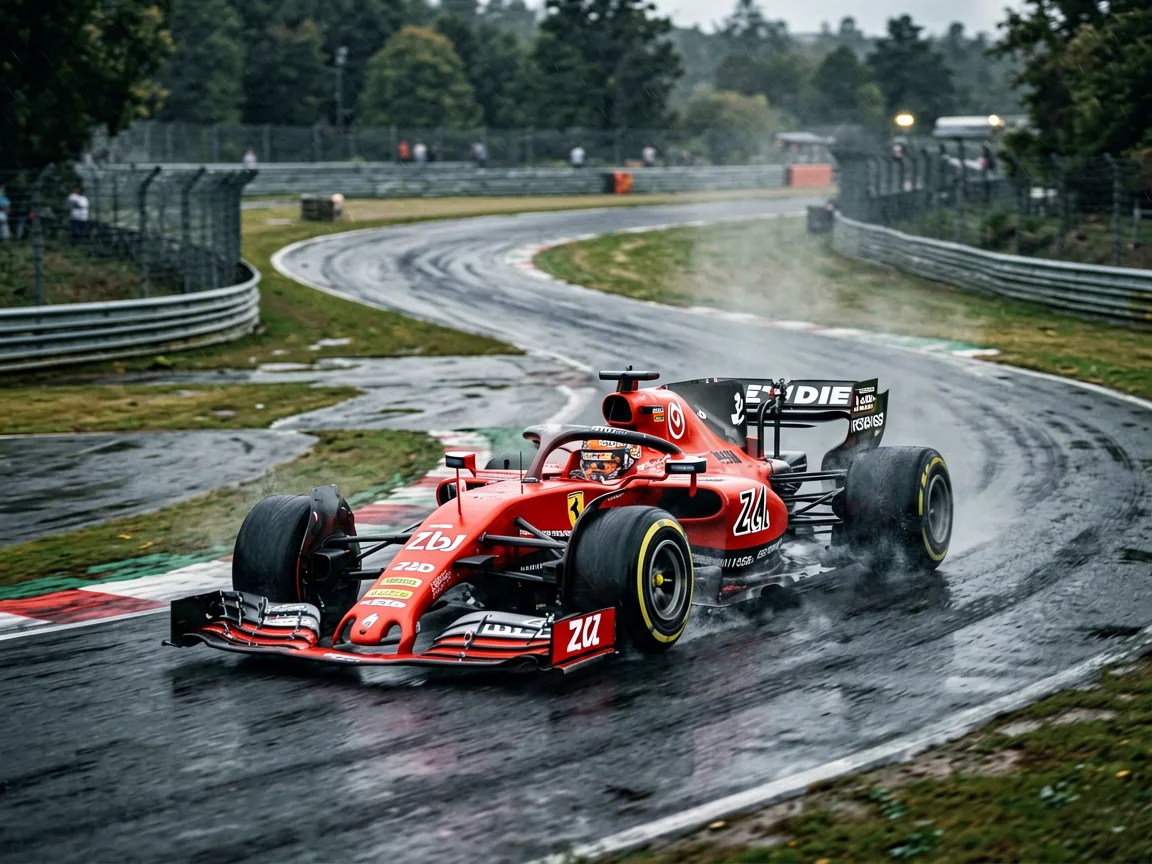
Ferrari Head to Spa Right in the Podium Fight
Leclerc and Hamilton expect to challenge for silverware from P4 and P5 as tire strategy and Spa's weather decide the fight.

Decoding The Professor: How Prost Engineered F1 Greatness
Alain Prost didn't outgun rivals; he out-engineered them. A deep dive into the technical mastery of F1's ultimate cerebral champion.