Russell Holds Nerve to Conquer Austria as Verstappen Rages
George Russell survives a ferocious late assault from Max Verstappen to deliver Mercedes a statement victory at the Red Bull Ring.
title: "Russell Holds Nerve to Conquer Austria as Verstappen Rages"
category: f1
badge: Race Reports
badgeType: category
author: David Kim
authorRole: F1 Analyst
authorInitials: DK
date: 2026-06-28
readTime: 6 min read
image: https://ichef.bbci.co.uk/ace/standard/976/cpsprodpb/a62f/live/cf916cf0-72fe-11f1-8b3a-1977d6dee6ef.jpg
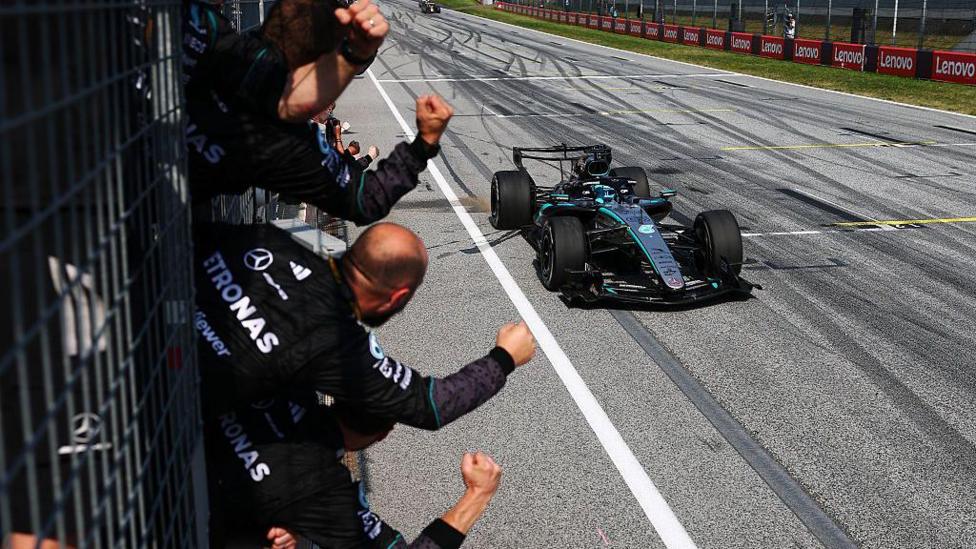
imageAlt: George Russell celebrating with team members after his Austrian Grand Prix victory with the Red Bull Ring in the background
tags: Formula 1, Austrian Grand Prix
excerpt: "George Russell survives a ferocious late assault from Max Verstappen to deliver Mercedes a statement victory at the Red Bull Ring."
The Red Bull Ring Crucible
The Styrian mountains provided a deceptively picturesque backdrop for a race weekend that promised pure combustion. Low grip, high degradation, and persistent track limits violations set the stage at the Red Bull Ring. The 4.318-kilometre circuit, with its short lap time and multiple heavy traction zones, forces drivers into a relentless cycle of tire management and track position defense. Three DRS zones tempt bravado, but the abrasive nature of the circuit demands restraint. George Russell and Mercedes navigated this razor-thin margin perfectly, converting a tense, high-pressure afternoon into a vital victory at the Austrian Grand Prix.
Russell crossed the line to seal the win, but the margin over a charging Max Verstappen tells only a fraction of the story. What unfolded was a masterclass in tire preservation under extreme duress. The initial phase of the race established an intense rhythm, but it was the final 15 laps that distilled the Grand Prix into a gripping psychological duel between a Mercedes driver defending on degraded rubber and a world champion smelling blood.
The Unfolding Battle
From the moment the lights went out, the tactical sabre-rattling between the pit walls dictated the flow. Russell established his track position early, forcing Red Bull into reactive strategy shifts. The Mercedes W15, often a diva in slow-speed corners, found a hospitable operating window in the flowing, mid-to-high speed corners of Spielberg. Verstappen, wielding his customary Cairo-pan grip on the RB20, attempted to offset the deficit through strategic undercuts.
The race pivoted dramatically as the pit windows opened. Red Bull attempted to pit Verstappen early to force Mercedes into an overlapping sequence, aiming to use the tire delta to punch through the clean air. Mercedes held their nerve on the pit wall, extending Russell's first stint to build a crucial 2.8-second buffer before switching to the hard compound. By the time the field cycled through, track position was king.
Verstappen, fitted with fresher medium rubber in the closing stint, began erasing the gap at a rate of 0.7 seconds per lap. The visual of the Red Bull filling the Mercedes mirrors was a constant, looming threat. Yet Russell refused to buckle, hitting his braking markers with clinical precision across the Turn 3 and Turn 4 complexes, deliberately sacrificing exit speed at Turn 1 to ensure his defensive positioning into the critical Turn 3 DRS detection zone.
Final Classification
- George Russell — Mercedes — 1:20:36.614
- Max Verstappen — Red Bull — +1.205s
- Kimi Antonelli — Mercedes — +2.198s
- Oscar Piastri — McLaren — +13.881s
- Lewis Hamilton — Ferrari — +16.337s
- Isack Hadjar — Red Bull — +22.194s
- Lando Norris — McLaren — +24.012s
- Charles Leclerc — Ferrari — +26.543s
Strategy Breakdown
The battle won in the Mercedes strategy room was as crucial as the one won on the asphalt. The war of attrition at Spielberg demands absolute precision regarding tire compounds, and Mercedes played the long game with ruthless efficiency.
Anticipating the Red Bull's superior pace on low-fuel runs, the Mercedes pit wall engineered their strategy around a single, sustained second stint on the hard tires. Knowing that Verstappen would likely switch to the mediums for a late assault, Russell's race engineer implored him to manage his right-rear tire within a 0.2-second performance window per lap. The target was clear: sacrifice immediate lap time to retain structural grip for the inevitable final-quarter onslaught.
Red Bull's miscalculation was assuming the medium tire's inherent pace would overpower the aerodynamic deficit of running in dirty air. Crucially, they underestimated the thermal degradation the mediums would suffer while tucked up behind the Mercedes. Verstappen could close to within 0.8 seconds in the DRS activation zones, but the aerodynamic wash stripped his front-left tire of grip precisely when he needed it for the corner entry at Turn 4.
As Verstappen closed the gap, the team radio crackled. Russell's engineer delivered a series of冷静, pinpoint updates. The implication was obvious: the Red Bull was faster, but it could not pass without destroying its own tires. Red Bull's frantic radio traffic, urging Verstappen to exploit gaps that simply did not exist, highlighted the absolute futility of pace without position.
Technical Nuances and Track Limits Carnage
The Austrian Grand Prix's most persistent antagonist is the white line demarking the track limits at Turns 9 and 10. Pirelli supplied the C5, C4, and C3 compounds for the weekend, but even the hardest tire in the range was subjected to agonizing thermal degradation when pushed beyond the asphalt and onto the painted kerbing.
Russell's defensive discipline was as much technical as it was psychological. Every time Verstappen feinted to the inside at Turn 3, Russell modulated his brake pressure to allow the Red Bull to overshoot its apex, flushing Verstappen wide and compromising his exit. This defensive technique costs the defending car roughly 0.15 seconds in lap time but denies the attacker the momentum required to complete a pass into Turn 4. Over 15 laps of relentless pressure, these marginal gains accumulated into an unassailable defensive wall.
The relentless policing of track limits turned the race into a demographic of deleted laptimes. Cars failing to respect the limits at the final two corners lost their lap times, destroying their tire strategies as they were forced into extended stints or double-stacked pit stops. Russell, by contrast, kept his car millimeters within the white lines, forfeiting ultimate pace for legal, consistent laptimes.
Championship Implications
Russell's triumph sends a resounding message through the paddock. The victory awards him 25 crucial points, elevating his championship campaign and establishing Mercedes as a genuine threat at circuits that reward aerodynamic efficiency and mechanical grip. For Verstappen, the 18 points for second place narrow his lead at the summit, proving that the RB20 is not invulnerable when forced to chase rather than lead. Yet, the Dutchman remained upbeat, calling the Austrian Grand Prix "extremely positive" as he reflected on finishing on the heels of race winner George Russell. Russell’s result also elevates him to second in the drivers' standings, overtaking Ferrari’s Lewis Hamilton.
Hamilton’s subdued run to fifth, losing significant time to the top three, raises urgent questions about setup direction and tire preparation at Brackley. While Russell祝贺 his team, Hamilton's feedback on the radio suggested a car fundamentally imbalanced on its rear axle under traction loads. The McLaren duo of Oscar Piastri and Lando Norris secured a strong points haul, reinforcing their status as the season's most consistent midfield predators.
The Constructors' standings now tighten at the critical juncture. Mercedes' haul from this single event, led by Russell's win and Antonelli's podium, slashes the gap to Ferrari, while Red Bull's advantage, though still massive, shows the first cracks of strategic vulnerability. As the circus moves toward the high-downforce demands of later circuits, the question shifts from whether Mercedes can win, to how often they can weaponize their newfound strategic confidence. The championship fight, once a foregone conclusion, has just caught its second wind.
Updated: 2026-06-29 — Corrected final classification to show Antonelli 3rd, Hamilton 5th, and updated championship standings implications.
Updated: 2026-06-30 — Added Verstappen's post-race positive reflection on the Austrian Grand Prix.
Update:
新项目包含奥斯卡·皮亚斯特里对在奥地利大奖赛中击败法拉利的赛后反应引述。
Editorial Integrity
This is an original SportPulse article written by our editorial team. All content is independently researched, written, and reviewed by our writers and editors before publication. We do not publish copied, aggregated, or syndicated content.
SportPulse is committed to original sports journalism. Read our editorial policy or contact us with any questions.
More Like This
All f1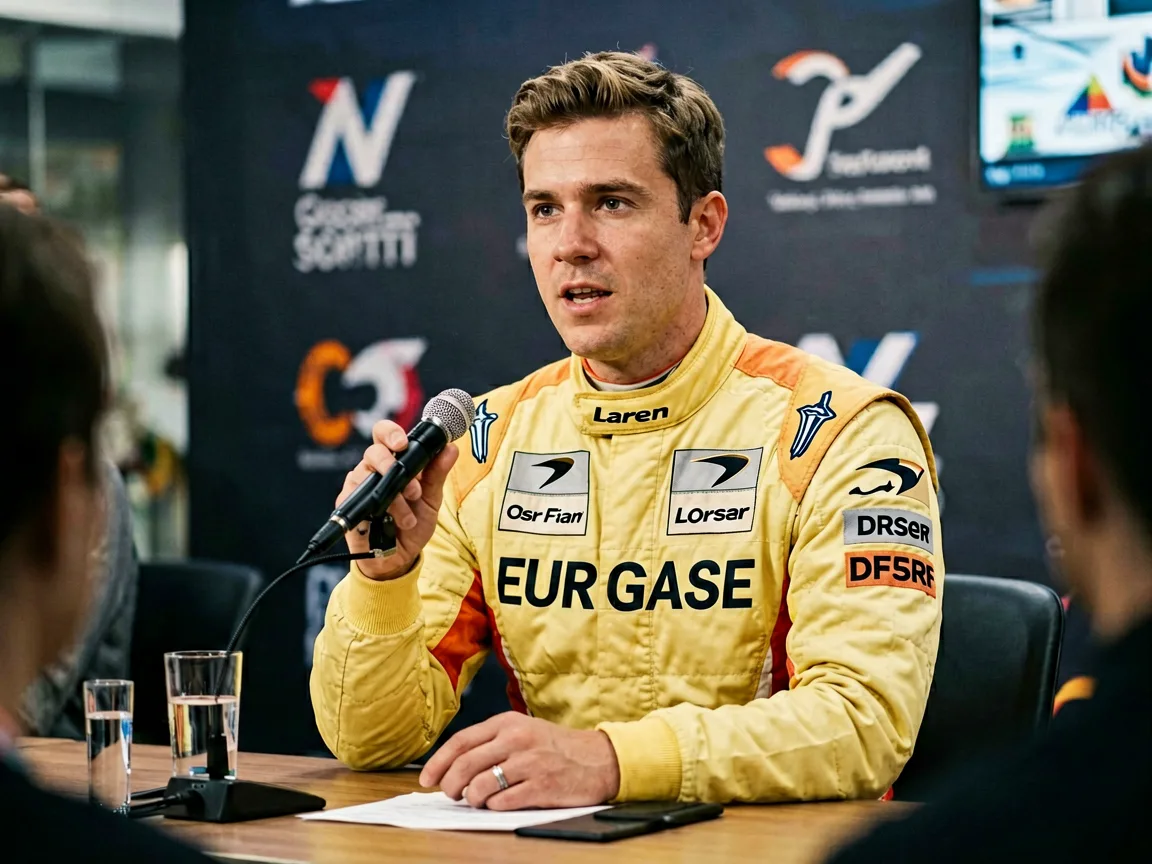
Piastri Stands Firm as Verstappen-to-McLaren Storm Brews
Oscar Piastri dismisses exit rumors with icy calm while Max Verstappen's McLaren links threaten to detonate F1's silly season.
Silverstone Delivers a Classic as Title Fight Intensifies
The British Grand Prix served up high drama at Silverstone, reshaping the championship picture with a race full of twists.
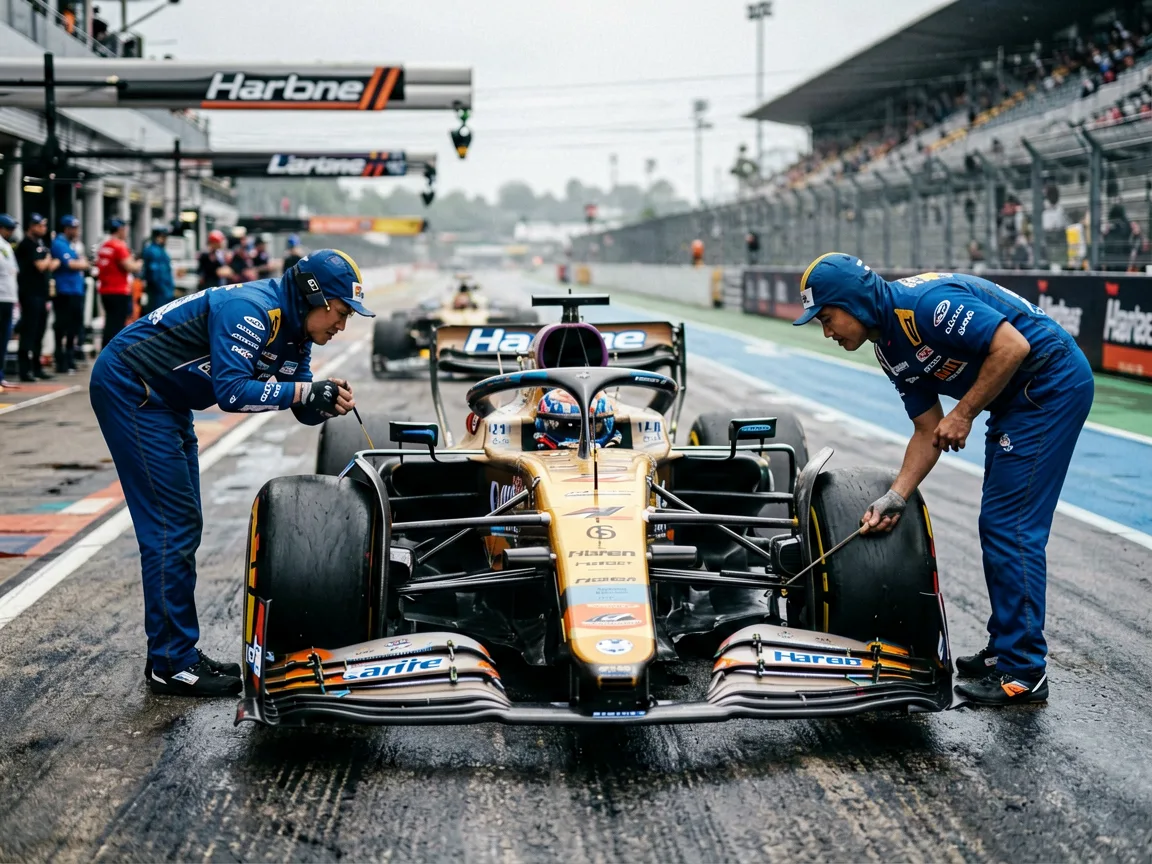
McLaren's Upgrade Reset: The Anatomy of a Philosophy Shift
Andrea Stella overhauls McLaren's development philosophy mid-season, prioritizing correlation and conceptual clarity over raw lap-time delivery.