Fox's 62 at Birkdale: Tactical Brilliance or Course Surrender?
Ryan Fox's record-equalling 62 at Royal Birkdale reveals a strategic masterclass in links chess.
The Strategic Canvas of Royal Birkdale
Every great round of championship golf begins not with a swing, but with a plan. When Ryan Fox signed for an eight-under-par 62 on Saturday at Royal Birkdale, he was not merely executing shots. He was conducting a strategic dismantling of one of links golf's most venerable examination papers.
The number itself carries weight. A 62 at Birkdale is not a fluke. It is a score that demands every component of a player's game to align under the unique pressure of championship conditions. Fox became only the third player to post that exact figure at this venue, affirming the achievement's rarity rather than its regularity.
What makes this score particularly compelling is the context of the round. Moving day at a championship venue invites a particular brand of aggression, but links golf punishes reckless ambition. Fox's approach retained the attacking intent of a front-foot press while guarding against the catastrophic mistakes that characterize ill-disciplined rounds.
The Architecture of the Round
To understand how Fox constructed his 62, one must examine the rhythm of his scoring. Eight under par suggests a sustained barrage of birdies. The reality is a methodical progression that respected the natural flow of the golf course. Links layouts are designed to reward players who work with the land rather than against it. Fox's round demonstrated a profound understanding of that principle.
His ball-striking established the foundation. On a course where wind makes target selection a moving calculation, Fox consistently found the correct quadrants of the greens. This is not听起来 about raw power. It is about spatial awareness and the ability to commit to a shot shape under pressure.
The putting surface demands a specific type of approach play. Birkdale's greens complexes reward approaches that use the contours effectively. Fox's iron play was precise enough to leave putts within the makeable zone, reducing the variables that turbulence can introduce.
The Turn and Strategic Positioning
Every championship round has a pivot. On Saturday, that turn came as Fox assessed the scoring trajectory required to thrust himself into contention. Rather than settling into a protective mindset, he accelerated.
Tactical Adjustment
The pivotal stretch for Fox was not random. It was a response to the conditions presented by Birkdale on that day. Wind direction, green firmness, and pin positions all contribute to a tactical map that players must navigate. Fox read that map with precision.
When the opportunity arose to attack, he did so with conviction. When the sentinel hazards of the course demanded caution, he positioned conservatively. This is the essence of links course management.
"It will be cool to be in the mix on Sunday." — Ryan Fox
That understatement captures the mindset of a player who understands that Saturday's score is merely the platform. The real confrontation comes on Sunday, when the dynamics of the leaderboard transform a tactical round into a psychological contest.
What the Numbers Reveal
- 62: The score that places Fox in elite company at Birkdale.
- 8-under par: A metric of the efficiency with which he converted opportunities.
- 3rd player: To achieve this score at this venue, positioning the round as a historica outlier.
EachStroke in the round was a component of a larger tactical framework. The bogey avoidance was as crucial as the accumulation of birdies. On a links course, the big number lurks behind every pot bunker and every dead patch of rough.
The Tactical Implications
Fox's performance raises a fascinating question about the nature of championship golf. When a player posts a number like 62 on a Saturday, the narrative shifts from the leaderboard to the psychological architecture of the final round.
For Fox, the 62 was a statement. It announced his presence on the leaderboard and forced the leaders to reckon with a charge. The final round becomes a different kind of contest when you know a competitor has demonstrated the capacity to go low.
For the rest of the field, Fox's round redefined the scoring paradigm. If the conditions remain forgiving, someone will have to emulate or surpass his score. If the course bares its teeth, the 62 stands as an imposing benchmark.
The Birkdale Factor
Royal Birkdale is one of those venues where tactical intelligence is paramount. The course does not reward one-dimensional play. Its strategic quirks require adaptability. Fox's round was a celebration of that adaptability.
The layout comprises par fours of varying lengths. Par threes that can be vulnerable or dangerous depending on the wind direction. Par fives that offer scoring opportunities.
The scoring distribution across the round reveals where Fox capitalized. The par fives are generally the scoring holes on any championship layout. Fox's ability to negotiate the par fours was what distinguished his 62 from a mere good round.
Beyond the Scorecard
The significance of Fox's 62 extends beyond the raw number. It places him in a historical lineage of players who have mastered Royal Birkdale. The course's championship pedigree is well-established, having hosted the Open Championship on numerous occasions.
When a player posts a score that equals a tournament record, the conversation naturally shifts to the conditions. Were they benign? Was the setup sympathetic? These questions are inevitable.
However, to attribute the score purely to conditions is to dismiss the execution required. Under pressure, with the round building momentum, the challenge becomes as much psychological as physical. Fox's ability to maintain his tactical composure through the round speaks to a maturity that suggests Sunday contention is not a remote possibility but a tangible outcome.
The Pressure of Positional Play
The dynamics of the final round add complexity to the tategic equation. The leaders face a defensive challenge. Fox, by contrast, may find himself in a chasing role, which offers a distinct psychological advantage. The hunter has nothing to lose; the hunted must protect.
"It will be cool to be in the mix on Sunday." — Ryan Fox
The simplicity of that statement contains a strategic truth. Being in contention on Sunday is the culmination of every decision made across the previous rounds.
The Final Round旦actical Canvas
As Sunday approaches, the strategic landscape will shift. The course setup may be more challenging. The weather may introduce new variables. The psychological pressure of the final round will test every player in contention.
For Fox, the challenge is to maintain the tactical discipline that produced the 62. The temptation to chase the same score can lead to errors. A measured approach that allows the round to develop naturally is often more effective.
For the leaders, the challenge is to respond to Fox's numerical challenge with composure. Knowing that a competitor has posted a low score can alter decision-making. It can breed recklessness.
The beauty of championship golf lies in these narratives. The tactical adjustments, the psychological contests, and the score that redefines the competitive landscape.
Looking Ahead to Sunday
The final round promises a tactical duel that extends beyond the golf course. Fox has laid down his marker. The 62 is his bid for a place in the history of this venue.
What makes Saturday's round significant is not the score alone. It is the statement of intent it represents. Fox has demonstrated that he possesses the tactical acumen to dismantle Royal Birkdale.
Sunday will reveal whether he can summon that same precision under the intense scrutiny of final-round contention. Whatever the outcome, his 62 stands as a testament to the art of tactical golf, a systematic masterclass in course management, and a reminder that in golf, as in any sport, the mind is as important as the body.
The Birkdale canvas has been painted. Sunday will determine whether Fox's round becomes a footnote or a prelude to victory.
Editorial Integrity
This is an original SportPulse article written by our editorial team. All content is independently researched, written, and reviewed by our writers and editors before publication. We do not publish copied, aggregated, or syndicated content.
SportPulse is committed to original sports journalism. Read our editorial policy or contact us with any questions.
More Like This
All long-reads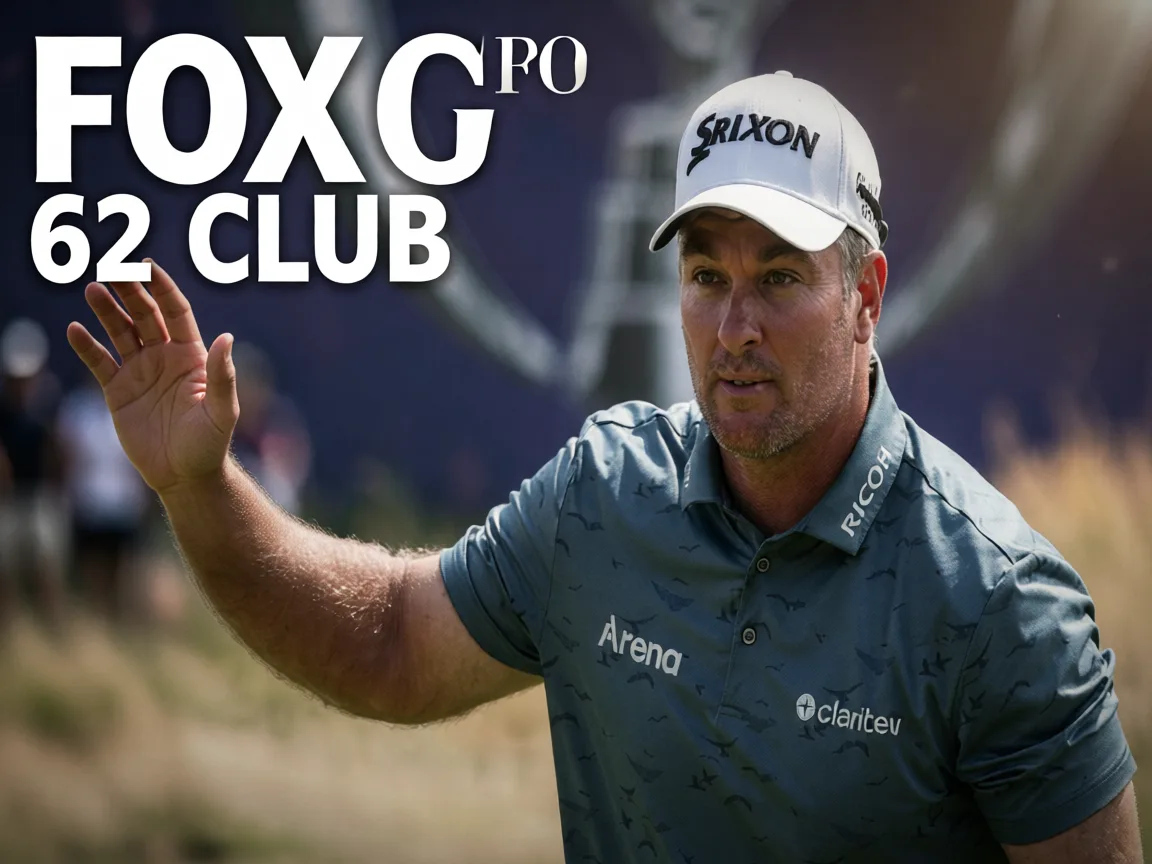
Fox Fires 62 to Crash Open's Major-Record Party at Birkdale
Ryan Fox's record-equalling 62 at Royal Birkdale puts the Kiwi giant joint top, branding the 2026 Open as the year of the 62.
From the Paint to the Pitch: Shaq's Secret Treatment Fuels England's World Cup Push
England skipper Nat Sciver-Brunt turns to a Shaquille O'Neal-approved recovery method to chase T20 World Cup glory.
Borthwick's England Stuck Between Reset and Reckoning
Two years out from Australia 2027, Steve Borthwick's Nations Championship returns expose a side still searching for a definitive identity.