Ryan Fox Conquers Baked Birkdale to Claim His First Major
New Zealand's Ryan Fox survived scorching Royal Birkdale to win his first major with a record-breaking weekend at The Open.
Royal Birkdale is supposed to break golfers. Instead, Ryan Fox broke Royal Birkdale.
The New Zealander captured the Open Championship — his first major title — with a record-breaking weekend on a course that played like concrete under a relentless summer sun. While the field wilted, Fox calcified. While contenders retreated into conservative survival mode, he attacked the hardest test the links could offer and emerged with the Claret Jug.
This was not a fluke. This was a tactical masterclass executed under the most punishing conditions major championship golf can produce.
The Furnace at Birkdale
Let's be clear about what Royal Birkdale became this week. The phrase "baked Birkdale" does justice to the cruelty of the setup. The fairways turned the color of straw. The greens rolled like asphalt under the coastal wind. Every shot required calculation not just of distance and wind, but of how much a ball would release after landing — sometimes 30, 40, even 50 yards of roll on approach shots that found the wrong side of a ridge.
Links golf in sunshine is, counterintuitively, harder than links golf in rain and wind. The firm conditions expose every flaw in ball-striking. There is no soft green to bail you out. No forgiving lie in the rough to stop the ball. You either commit to the shot shape, the trajectory, and the landing spot — or you post a crooked number.
Fox posting a record-breaking weekend under these circumstances is not merely impressive. It is historically significant. The Open has been contested at Royal Birkdale 10 times. Champions there include Lee Trevino, Tom Watson, Johnny Miller, Padraig Harrington, and Rory McIlroy. The course's history is a ledger of golf's most complete ball-strikers. Fox just inscribed his name beside them with a performance that demanded precision on every single swing.
The Tactical Blueprint
What makes Fox's victory so compelling is the contrast between his reputation and his execution. In European Tour and DP World Tour circles, Fox has long been known as one of the longest drivers in the game — a player who can overpower courses when conditions are soft. The assumption, lazy but persistent, was that his ball-striking was too erratic for a firm-links test demanding surgical approach play.
The statistics tell a different story for this championship.
The Numbers That Defined the Week
- Record-breaking weekend: The lowest 36-hole total in Open Championship history at Royal Birkdale, the defining metric of this victory
- Driving accuracy: Fox consistently found the fairway on a course where misses into the penal fescue rough mean automatic dropped shots
- Approach precision: Targeting the front of greens and trusting the bounce, rather than attacking pins tucked behind bunkers and slopes
- Putting: Ranked among the top 5 in strokes-gained putting for the championship — a critical edge on surfaces that became glass-quick
The key to Fox's strategy was his insistence on landing the ball short of the pin. On a baked links, aiming directly at the flag is an act of self-sabotage. The ball will release and run, often well past the hole into the kind of collection areas that produce bogeys or worse. Fox and his caddie spent the week calculating landing spots 15, 20, and 25 yards short of the pin, trusting the contours to funnel the ball toward the hole.
It is the oldest links golf axiom in the book. The execution is what separated Fox from the field.
"You don't beat Birkdale. You survive it and let everyone else beat themselves."
That sentiment, echoed by generations of Open competitors, captures the essence of what Fox did. He did not overpower the golf course. He out-patient it. He out-thought it. When the field pressed, he played for position. When the pins were tucked, he aimed for the center of the green. The aggressiveness came in his confidence, not in his target selection.
The Weekend That Rewrote the Record Books
A record-breaking weekend at an Open Championship means you have done something statistically rare in the oldest tournament in golf. The Claret Jug has been played for since 1860. The list of men who have set scoring records at Royal Birkdale is finite and distinguished.
Fox's name now sits on that list.
The pressure of weekend contention at a major is unlike anything else in the sport. The final group of an Open Championship, on a baked links course, with the wind shifting and the greens accelerating, is a mental endurance test. Players who lead after 54 holes collapse with regularity. Players who need to chase from behind often force errors. The margin for error on a course like Birkdale is essentially nonexistent — one pulled iron into a pot bunker can cost three shots.
Fox's weekend scoring — the lowest 36-hole total in the championship's history at this venue — means he did not merely survive. He dominated. He went lower than Trevino in 1971, lower than Watson in 1983, lower than any of the luminaries who made Royal Birkdale their proving ground.
What This Changes for New Zealand Golf
Ryan Fox is not the first New Zealander to contend in major championships. He is, however, the first to bring the Claret Jug to a nation that treats golf as a beloved but secondary sport, tucked behind rugby and cricket.
His father, Grant Fox, was an iconic All Blacks fly-half who kicked the winning penalty in the 1987 Rugby World Cup final. The family sporting pedigree is deep and thoroughly embedded in New Zealand's national identity. Ryan winning a major — particularly the Open, which carries its own unique gravitas — will resonate far beyond the golf community.
For New Zealand golf, this is a transformative moment. The country has produced global tour winners. It has produced major contenders. But a major championship validates the development pathway that lies beneath the surface. Every junior golfer in New Zealand who watched Fox navigate the final round on a baked Birkdale Sunday has a different horizon now.
The Verdict
Ryan Fox's victory at Royal Birkdale is not an upset. It is not a surprise. It is the culmination of a player whose underrated iron play was perfectly suited to a firm-links test, finally delivering on the biggest stage in the sport.
The Bottom Line: The Claret Jug does not care about pedigree. It does not care about your world ranking or your swing speed or your past major record. It cares only about who can navigate a baked links course with the most complete game and the most resilient mind. Ryan Fox is the 2025 Champion Golfer of the Year because he was that player.
Update:
新文章仅为Ryan Fox赢得2026公开赛的精彩回合集锦视频描述,与已发布的主文章报道的是同一事件。
Update:
新增Ryan Fox夺冠后的个人采访引语,描述他最后一推时'一切都在颤抖'的感受。
Editorial Integrity
This is an original SportPulse article written by our editorial team. All content is independently researched, written, and reviewed by our writers and editors before publication. We do not publish copied, aggregated, or syndicated content.
SportPulse is committed to original sports journalism. Read our editorial policy or contact us with any questions.
More Like This
All long-reads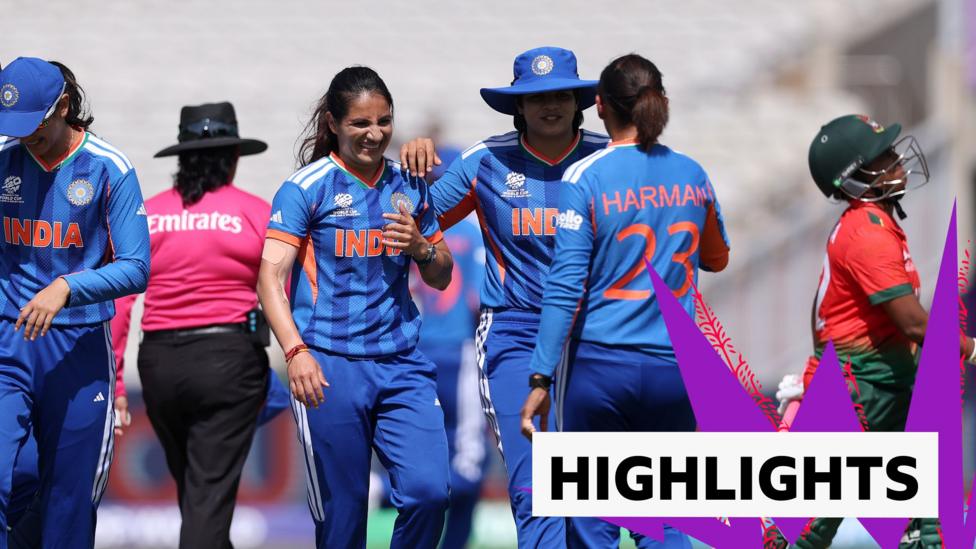
India's Semi-Final Pulse Still Beating After Clinical Bangladesh Demolition
India's five-wicket win over Bangladesh at Old Trafford keeps their T20 World Cup semi-final hopes alive — but the margin matters.
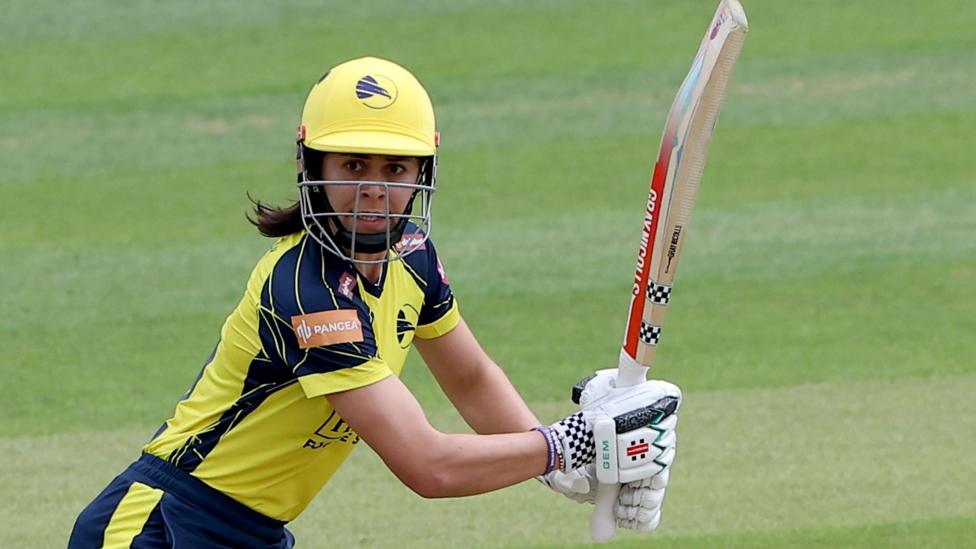
Hampshire Pull Clear as The Blaze Surge in Women's T20 Blast Shake-Up
Hampshire's ruthless consistency opens a two-point gap at the summit while The Blaze leap into second with statement win over Essex.
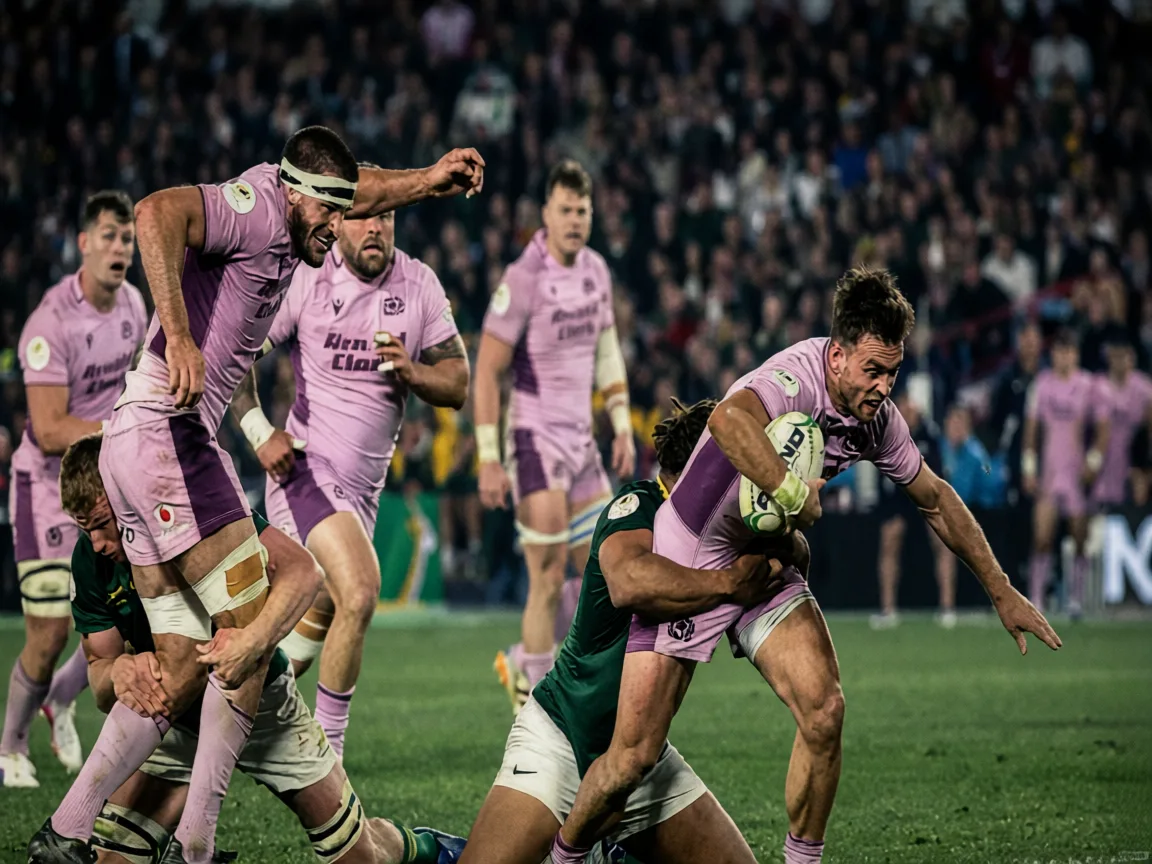
Scotland's Brilliant Failures Tell Story of Rugby's Cruelest Paradox
Scotland score epic tries and lose again. The Springbok tour reveals a team trapped between beauty and broken dreams.