The Volcano Speaks: Sabalenka Confronts Her Demons Before Wimbledon
Aryna Sabalenka addresses her French Open collapse and public perception, framing chaos as the price of her ferocious genius.
A volcano does not apologize for the ash it spews into the sky. It simply erupts, driven by pressures deep beneath the surface that demand release. In the rarefied world of professional tennis, Aryna Sabalenka has long operated as the sport’s most volatile and terrifying natural force. She brings an energy that terrifies opponents and captivates audiences, but it is an energy that comes with a devastating cost. Less than a month ago, that cost nearly bankrupted her competitive soul.
On the eve of Wimbledon, the world No. 1 is finally peeling back the layers of her psyche. She is addressing the specter that has haunted her career: the implosion. Her frankness is as brutal as her forehand. She understands the whispers, the social media verdicts, the armchair psychology. She even understands the label.
"I understand why some people think I'm a bitch."
It is a startling admission from the summit of the sport, a place usually guarded by anodyne platitudes and media-trained deflections. Yet for Sabalenka, the aggression that defines her on court is a double-edged sword that has sliced her reputation as much as it has carved open defenses.
The Unraveling in Paris
To comprehend the depth of her recent crisis, one must revisit the specific geometry of the trap in Paris. The French Open was supposed to be her coronation. She was playing at a level that made a mockery of the draw, striking winner after winner from the baseline, bullying the sport’s elite into submission before teasing them with delicate drop-shots. In the last 16 against Naomi Osaka, Sabalenka appeared invincible, an unstoppable juggernaut.
By the quarter-finals, the landscape had shifted entirely in her favor. All her primary rivals were already scattered by the wayside. The path to a fifth Grand Slam singles title was clear. Standing across the net was world No. 25 Diana Shnaider. The match was a procession. Sabalenka took the first set 6-3 and built a seemingly insurmountable 5-3 lead in the second. Victory was not merely an inevitability; it was an administrative formality.
Then the wind came.
A gusting, swirling gale swept across Court Philippe-Chatrier, turning the stadium into a wind tunnel. The organizers, paralyzed by indecision or protocol, failed to close the roof. Under normal circumstances, a champion adapts. But Sabalenka’s engine does not idle well. Faced with elements she could not bludgeon into submission, the mechanics of her game seized. One game lost. Then another. Then another. Shot after shot was walloped long and wide, the very ferocity that makes her great becoming the instrument of her demise.
The Anatomy of a Collapse
There is a distinct physics to a Sabalenka implosion. It is not a gentle decline; it is a sudden, violent snapping of the tension that holds her game together. When the margins shrink, her instinct is to swing harder, to hit through the chaos. In the swirling Parisian wind, this mentality was fatal.
The statistics of that collapse are jarring. Serving for the match at 5-3, she failed to find the court. As the conditions deteriorated, her unforced error count skyrocketed. The aggressive facial expressions that serve as her war paint were misread as petulance, a perceived arrogance that fuels the public's harshest judgments. Her face on court, twisted in fury and desperation, tells a story of extreme effort, yet the world reads it as malice.
The Edge of the Abyss
In the immediate aftermath of the Shnaider loss, the dam broke. Sabalenka announced to the world that she felt like walking away from tennis entirely. It was not a calculated PR move or a cry for help; it was the raw, unfiltered exhaust of a competitor who had just watched herself burn to the ground on the sport's biggest stage.
This is the eternal paradox of the modern gladiator. The very traits that elevate an athlete to the top ranking in the world, the obsessiveness, the refusal to accept limitations, the visceral rage that fuels their pursuit, are the same traits that leave them entirely unequipped to process failure. When Sabalenka says she was done with tennis, she meant it in that frozen moment of time. The pain of the implosion had momentarily outweighed the joy of the occupation.
But the volcano does not stay dormant forever. The fire cools, the pressure recalibrates, and the lust for battle returns. Speaking ahead of Wimbledon, Sabalenka is recalibrating her internal narrative. She insists she is not quitting. She is instead attempting to reconcile the two versions of herself that have lived in bitter conflict. There is the snarling, screaming征服者 on the baseline, and there is the woman off-court who insists she is, contrary to popular belief, actually nice.
The Duality of the Champion
The psychological tension between the on-court predator and the off-court human is the central drama of Sabalenka's career. She is far from the first champion to struggle with this duality, but she is perhaps the most transparent about it in the current era. The screaming, the contorted expressions, the sheer violence of her shot-making, these are not affectations. They are the necessary rituals of a player who must drag herself to an emotional precipice to summon her best tennis.
Yet the public jury is notoriously unsympathetic. They see the screams and the smash of the racket and render their verdict. They do not see the profound vulnerability of a competitor who must step to the very edge of madness to find her greatness, trusting each time that she can pull herself back before she falls.
The Grass Court Reckoning
Now the circus moves to Wimbledon, where the grass demands a different kind of cruelty. The surface eliminates the heavy topspin that bails Sabalenka out on clay and hard courts. It requires reflexive, abbreviated aggression. More importantly, it demands mental stillness in the face of unpredictable bounces and rapid momentum swings.
The All England Club is a place of rigid tradition and suffocating silence, an environment entirely at odds with Sabalenka’s feral energy. Yet she has reached the semifinals here before, proving she can harness the hurricane when the stakes are highest. The question is not whether she possesses the game to conquer the grass. The question is whether the scar tissue from Paris has healed enough to allow her to trust herself again.
If she steps onto Centre Court serving for a match and things begin to go awry, will the specter of the Shnaider collapse paralyze her?.Can she learn to throttle back her power when the wind blows, or the rain falls, or the ball refuses to sit up? History suggests that champions are forged not in the moments of triumph, but in the ashes of their most devastating defeats.
Sabalenka has the ashes. She has stared into the void of retirement and decided she is not finished. She understands the labels. She accepts the perceptions. But beneath the aggressive mask, there is a competitor recalibrating her relationship with the chaos that made her.
The volcano is stirring once more.
Editorial Integrity
This is an original SportPulse article written by our editorial team. All content is independently researched, written, and reviewed by our writers and editors before publication. We do not publish copied, aggregated, or syndicated content.
SportPulse is committed to original sports journalism. Read our editorial policy or contact us with any questions.
More Like This
All tennis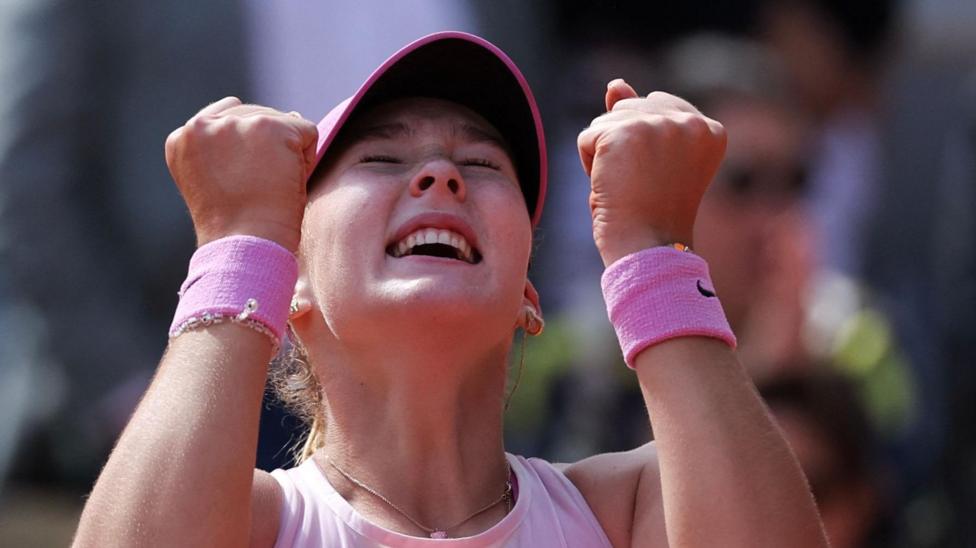
Five Reasons This French Open Will Echo Through Tennis History
Shocks, dramas, and fairytale runs at Roland Garros delivered a Grand Slam classic for the ages.
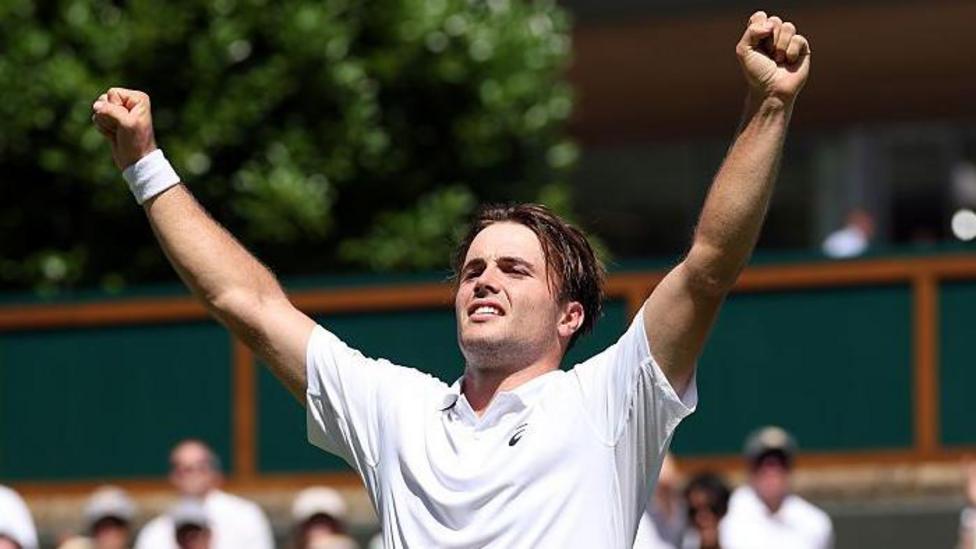
Arthur Fery Keeps British Hopes Alive With Gritty Wimbledon Comeback
The French-born Briton fought back from a set down to reach the Wimbledon third round and ignite Centre Court dreams.

WTA Finals Cut Saudi Arabia Short, Return to California's Desert Oasis
The WTA's season-ending spectacle abandons Riyadh a year early, seeking redemption in the California sun.