From Nasr City to Anfield: How Salah's Discipline Forged His Rise
Melissa Reddy's book extract reveals how Mohamed Salah's early years at Al Mokawloon forged the discipline behind his Liverpool stardom.
Nasr City to Anfield
The entrance to Al Mokawloon Al Arab's youth sector in eastern Cairo is framed by thick concrete slabs and marble-like trim that shifts colour in the Egyptian light. A no-nonsense black steel gate sits below white block letters in Arabic, satellite notices and announcements posted alongside. The blend of functional and decorative architecture is typical of the Nasr City neighbourhood.
What distinguishes the building is what sits above those gates. Mohamed Salah's face dominates the facade, a reminder of where he began. He entered the sector at 14 and left as one of the Premier League's most decisive attacking forces, a trajectory that married raw talent with discipline and determination.
The Discipline in the Numbers
Melissa Reddy's exclusive book extract traces Salah's path back to that Nasr City entrance. She frames his career around a working principle his Liverpool years proved repeatedly: talent without structure remains potential. The structure was built in Egypt before it was refined in Europe.
The truth is he has achieved the impossible.
The line holds for a player from a working-class Cairo neighbourhood who became one of the most prolific forwards in Premier League history. His Liverpool game reflected the values instilled at Al Mokawloon: relentless work rate, positional discipline within attacking phases, and the ability to sustain performance across a demanding fixture calendar.
Inverting the Flank
Salah's arrival at Liverpool transformed how Klopp's 4-3-3 operated on the right. Rather than staying wide, he inverted into central areas, exploiting the half-spaces between opposition centre-backs and full-backs. The movement required the discipline Reddy's account describes: the patience to hold a run, the awareness to drift inside without losing width as an outlet, and the defensive work rate that kept Klopp's pressing system viable.
His numbers did not come from instinct. He understood spatial relationships and knew when to press from the front and when to conserve energy for the final third. 31 goals in 38 Premier League games during his second season anchored that consistency. His ability to maintain output across multiple campaigns points to a professional framework built long before he left Egypt.
What Sustained the Adaptation
Salah is 33, entering the phase where maintenance matters as much as performance. His transition from winger to interior forward has been smooth, and his defensive contributions remain above average for a player in his position. The Nasr City entrance marks the origin point of a professional mindset that allows him to adapt across different tactical systems.
Reddy's extract underscores one fact: Salah's path was never inevitable. The gates of Al Mokawloon were walked by thousands of boys. What separated Salah was his willingness to combine talent with structured dedication, a lesson learned at 14 that explains his continued output at Anfield.
Editorial Integrity
This is an original SportPulse article written by our editorial team. All content is independently researched, written, and reviewed by our writers and editors before publication. We do not publish copied, aggregated, or syndicated content.
SportPulse is committed to original sports journalism. Read our editorial policy or contact us with any questions.
More Like This
All football
Ake to Fenerbahce: The Brutal Economics of City's Squad Purge
A £7m valuation for a Netherlands international reveals the unforgiving accounting driving Manchester City's summer rebuild.
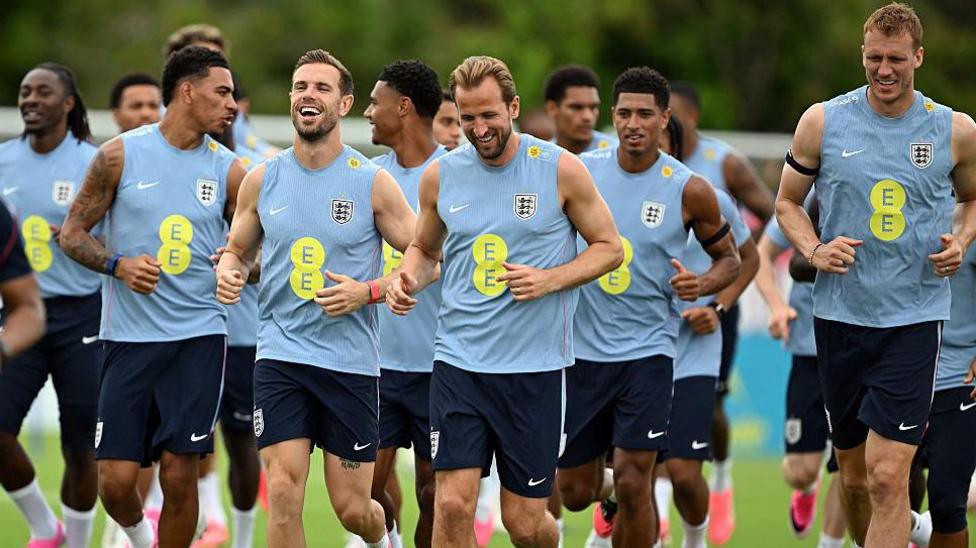
Inside England's SkyJo Obsession: The Tactical Psychology of Squad Cohesion
England's credit-card game obsession reveals how Southgate's successor weaponizes off-pitch psychology for on-pitch tactical cohesion.

Swansea’s Burgess Sidelined With Achilles Fear After Birmingham Blow
Cameron Burgess limped off against Birmingham City as Swansea brace for a significant Achilles problem that could hamper their season.