Salah's Saudi Stalemate and the Transfer Dominoes Ready to Fall
Salah's wage demands stall Saudi move, Bayern guard Olise from Madrid, and Barcelona zero in on Adeyemi.
The Stalemate in the Desert
Mohamed Salah has spent the last eighteen months operating in a peculiar kind of limbo. His Liverpool contract expires in 2025, and since the Saudi Professional League first circled him in the summer of 2023, the assumption has been that a lucrative Middle Eastern exit was a matter of timing, not possibility. That assumption now looks premature. Salah's financial demands are reportedly giving Saudi clubs serious pause.
The Saudi transfer model has never purely been about acquiring talent. It operates on a strict cost-benefit axis. The league's hierarchy, backed by the Public Investment Fund, has demonstrated a willingness to shatter wage structures for marquee arrivals, but only when the commercial and sporting return justifies the expenditure. Salah is 32. His explosiveness over the first ten yards has undeniably diminished, even as his creative output has evolved to compensate.
When the Math Stops Working
Saudi clubs are not seeing a clear return on the investment Salah's camp is demanding. The numbers being floated would require a commitment that even PIF-backed sides find prohibitive when applied to a player entering the back half of his thirties. This impasse says less about Salah's ability and more about the league maturing past its initial spending frenzy.
Consider the historical context. The SPL spent over £350 million in transfer fees alone during the summer of 2023, largely on players in their peak years or slightly past them. The wages attached to those deals were astronomical. If Salah's representatives expected the same blank-check approach that greeted Cristiano Ronaldo's arrival in early 2023, they miscalculated. The spending landscape has tightened.
The market for aging superstars is not a bottomless pit; it is a carefully managed ecosystem that recalibrates with every signing.
The Bottom Line: Salah's camp must either moderate expectations or commit to a renewed Liverpool deal, because the Saudi safety net appears to have a hole in it.
Bayern's Olise Red Line
In Munich, the optics of Michael Olise's proposed move to Real Madrid have Bayern Munich's hierarchy reacting with appropriate and decisive urgency. Bayern have firmly rebuffed Madrid's interest in the French winger, who only arrived at the Allianz Arena last summer from Crystal Palace in a deal worth approximately £50 million.
The concern for Max Eberl and Christoph Freund is not just sporting; it is reputational. Bayern have spent years fighting a perception that they are vulnerable to Spanish giants poaching their best players. Toni Kroos left for Real Madrid in 2014 and became a foundational piece for a dynasty. The messaging from the Bayern board room now is one of absolute坚决.
The Evolution of Olise
Olise's inaugural season in Bavaria has been uneven, flashes of technical brilliance interspersed with injury disruptions that limited his overall influence. His underlying numbers remain strong: he has provided attacking output at a rate of roughly 0.45 goals and assists per 90 minutes across all competitions. Yet there is a feeling within the club that his tactical integration under Vincent Kompany is still in its early stages.
The 23-year-old represents the archetype of the modern wide creator: exceptional in one-on-one situations, a reliable set-piece deliverer, and capable of operating in half-spaces. Real Madrid's interest, reportedly preliminary, is rooted in the search for long-term succession planning. Eden Hazard's failed tenure and the gradual aging of the attacking core has Madrid always searching for youthful attacking additions.
For Bayern, resisting Madrid's overtures is about establishing an institutional boundary. Eberl has already made public his intention to build a sustainable and competitive squad.
Verdict: Olise will remain a Bundesliga asset for the foreseeable future; Madrid's acquisitive gaze will pivot elsewhere.
Barcelona's Adeyemi Gamble
FC Barcelona's financial restructuring under Joan Laporta has produced a paradox: a club still desperately managing debtwhile simultaneously concluding deals for highly-rated attacking talent. The latest target is Karim Adeyemi, the Borussia Dortmund winger now primed to make the jump to the Camp Nou.
Adeyemi's time in Germany has been a narrative of unfulfilled potential suddenly igniting. His early Dortmund career was marked by tactical inconsistency under Edin Terzic, butseason under Nuri Sahin has seen a notable statistical spike. His goal contributions in the early months of the campaign have marked him out as the most direct attacker in the Dortmund squad.
The Fit Under Flick
nHansi Flick wants verticality and extreme pace. Barcelona are systematically adding one-touch progression to a squad that grew stagnant under Xavi's more methodical possession. Adeyemi, whose core strength is sprinting behind defensive lines, fits the blueprint perfectly. His arrival would provide Flick with a rotational option for Raphinha and Lamine Yamal, both of whom have logged significant minutes in a relentless start to the campaign.
Laporta's ability to register Adeyemi's wages with La Liga's strict financial controls remains the primary obstacle. The club's €1 billion debt and the continuing payment schedule from the Espai Barça project mean any incoming transfer must be offset by sales or contract renegotiations.
The Bottom Line: Barcelona may have the sporting desire to land Adeyemi, but the financial mechanics present a steep hurdle that has derailed many similar deals in recent seasons.
eneration we are witnessing.
Beyond the Headlinesary Window Intel
Away from these primary narratives, the transfer market is already developing secondary plotlines that will dominate the discourse when formal business reopens.
-
Viktor Gyokeres's future: The Swedish striker has been a statistical anomaly in the Portuguese capital, but Sporting CP will demand a fee in excess of €70 million. Clubs weighing up a move must evaluate whether his Primeira Liga output translates to a top-five European league.
-
The Abraham dilemma: Tammy Abraham's struggles to nail down a starting berth at AC Milan, where he has often found himself behind more physically robust options, highlight a player whose stock has fallen notably since his peak Roma years under Jose Mourinho.
-
Marcus Rashford's ambitious reset: Seeking a new challenge after a period entirely devoid of momentum at Old Trafford, Rashford could command significant interest from Paris Saint-Germain, a club perpetually searching for marketable forward talent.
A Market in Transition
The fundamental tension of modern football economics is visible in these concurrent negotiations. Clubs backed by nation-states operate with different mathematical constraints. Traditional powers like Barcelona teeter between ambition and insolvency. Bayern Munich sit atop a stable but strict hierarchy, refusing to buckle when Spanish powers call.
The market is recalibrating after a period of unprecedented spending. The Saudi Professional League, once willing to overpay for pedigree, is having sober second thoughts. Whether that maturity persists through the summer window, when desperation often trumps prudence, will determine the financial landscape for years to come.
Verdict: Expect the summer window to produce fewer blockbuster deals, with a premium placed on younger assets with resale value.
Editorial Integrity
This is an original SportPulse article written by our editorial team. All content is independently researched, written, and reviewed by our writers and editors before publication. We do not publish copied, aggregated, or syndicated content.
SportPulse is committed to original sports journalism. Read our editorial policy or contact us with any questions.
More Like This
All football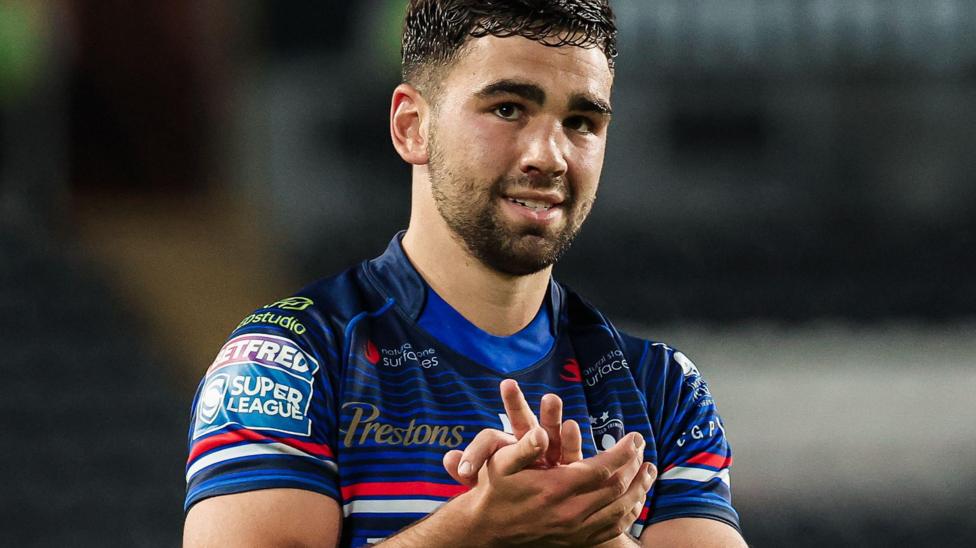
Wakefield Survive Huddersfield Scare in Frantic Finish
Wakefield snatched a last-gasp victory over bottom-side Huddersfield in a chaotic, momentum-swinging Super League encounter.

Can England Fans Match Scotland's Boston Charm Offensive?
After Scotland's Tartan Army charmed Boston, England supporters face pressure to shed their toxic reputation and win over the city.
Laporte's Mind Games: Painting Argentina as the World Cup's Scorched Earth Crew
Aymeric Laporte's 'leave a mark' barb at Argentina is calculated psychology before a World Cup final loaded with physical and historical tension.