Sandbagging in F1: The Engineering Art of Hiding Speed
Every team does it. No one admits it. Here's how sandbagging actually works in Formula 1's technical arms race.
The Oldest Trick in the Paddock
Sandbagging is Formula 1's worst-kept secret, a practice as old as the sport itself and yet one no team principal will ever openly acknowledge. The term describes the deliberate act of concealing a car's true performance potential during testing, practice sessions, or even early-season races. Think of it as poker in carbon fiber. You don't show your hand until the chips are on the table.
But here's what makes sandbagging genuinely fascinating from a technical standpoint: it isn't just about driving slowly. Modern F1 teams deploy engine mapping profiles, fuel load strategies, aerodynamic configurations, and power unit modes to create a deliberate performance deficit that looks natural on the timing screens. The margin between "testing pace" and "qualifying pace" can be worth one to two seconds per lap at certain circuits. That's an enormous window to play with.
Why Teams Sandbag: A Strategic Calculus
The motivations are layered. First, there's the psychological warfare element. If Mercedes turns up to Bahrain testing and posts the fastest time by half a second, every rival team shifts resources immediately. Engineers at Red Bull, Ferrari, and McLaren would pore over every piece of available footage, every GPS trace, every onboard clip looking for clues about the car's aerodynamic philosophy.
"You never want to be the team that everyone is studying on day one. You want them chasing ghosts." — A former senior F1 aerodynamicist, speaking on condition of anonymity
Second, there's the regulatory dimension. F1's governance structure means that dominant performance can trigger rule changes. The Technical Directive process exists partly to close loopholes that give one team an unfair advantage. If you're running something genuinely clever, the last thing you want is for the FIA to notice it before you've extracted maximum points.
Third, and perhaps most practically, sandbagging allows engineers to run data-gathering programs without the pressure of performance. Testing isn't about lap times. It's about correlating CFD (Computational Fluid Dynamics) models and wind tunnel numbers with real-world behavior. A team running a new floor specification needs clean, repeatable laps at consistent speeds, not heroics that might mask a fundamental design problem.
How It Works: The Technical Mechanics
Engine Modes and Power Unit Mapping
The most straightforward sandbagging tool is the power unit mode. Modern F1 power units produce roughly 1,000 brake horsepower in their highest settings, but teams can run significantly detuned maps during testing. This means less electrical energy deployment from the MGU-K, reduced turbo boost pressure, and conservative ignition timing on the internal combustion engine.
The effect is dramatic. Running in a low-power mode can easily cost 0.8 to 1.2 seconds per lap depending on the circuit. And to the outside observer, it simply looks like the engine is performing normally, just without that final searing edge.
Fuel Loads
This is the classic lever. F1 cars carry up to 110 kilograms of fuel at race start. Every 10 kilograms of fuel costs approximately 0.3 to 0.35 seconds per lap. A team running a full fuel load versus one running on fumes can appear to be separated by three seconds or more, even if their cars are fundamentally identical in performance.
During pre-season testing, teams rarely publish fuel figures. They'll run everything from five-kilogram qualifying sims to race-distance fuel loads within the same session, deliberately obfuscating their true pace. The timing sheets show nothing but raw numbers. No context. That's the beauty of it.
Aero Configuration and Ride Height
Here's where it gets genuinely clever. Teams can raise the ride height by a few millimeters, which fundamentally changes how the underfloor and diffuser generate downforce. A higher rake angle, or a slightly elevated front wing angle, can both slow the car and provide engineers with useful data on how the aerodynamic platform behaves at different configurations.
Some teams have been known to deliberately run asymmetric setups during testing, one configuration on the left-hand side of the garage and another on the right, to confuse photographers and rival analysts who study flow-vis paint patterns and aero rakes mounted on the car.
Engineering Insight: The Flow-Vis Arms Race
One of the most underappreciated aspects of sandbagging is the cat-and-mouse game around aerodynamic visualization. During testing, teams routinely coat their cars in fluorescent oil-based paint (flow-vis) to visualize airflow patterns across bodywork. Rival photographers stationed trackside capture these images, which reveal critical information about a car's aerodynamic philosophy.
Sophisticated teams counter this by applying flow-vis to older specification parts while hiding their latest developments. Others will run flow-vis only during private filming days or at wind tunnel correlation sessions away from prying eyes. Some have been photographed with dummy bodywork panels that conceal internal ducting geometry.
The technical arms race extends to sensor arrays as well. During testing, teams mount large aero rakes, essentially grids of pressure sensors, behind the front wheels and around the floor edges. Rival engineers study these sensor placements obsessively, because where a team chooses to measure tells you what they're investigating. A rake positioned at the rear diffuser throat suggests that area is a development focus. Smart teams will occasionally mount sensors in areas of no interest purely to mislead.
Historical Sandbagging Moments
F1 history is littered with famous sandbagging allegations. Mercedes in 2014 pre-season testing ran deliberately conservative programs while secretly knowing their hybrid power unit was a generation ahead of the competition. When the season started in Australia, Lewis Hamilton and Nico Rosberg lapped the field.
Brawn GP in 2009 is a more nuanced case. The team genuinely had reliability concerns with their double-diffuser concept during testing and weren't deliberately hiding pace. But once those issues were resolved, the performance gap was so extreme that rivals accused them of deception.
Red Bull's dominance in the 2022-2023 era featured similar accusations. Adrian Newey's cars would arrive at testing looking beatable, only to unleash devastating pace once qualifying began. The RB19 in particular seemed to have an almost supernatural ability to find time when it mattered, a hallmark of a team that understands exactly how much performance they're holding in reserve.
"The gap between our testing pace and our qualifying pace is not sandbagging. It's called having a well-engineered car with performance headroom." — Christian Horner, Red Bull Team Principal
The Counter-Intelligence Game
Modern F1 teams employ dedicated personnel to analyze rival performance. They track GPS speed traces through every corner, compare straight-line velocities against known engine mode patterns, and cross-reference telemetry data with video analysis of tyre behavior and car balance.
The sophistication is remarkable. Analysts can estimate a rival's approximate fuel load by studying corner exit speeds and traction characteristics, since a heavier car will exhibit more pronounced understeer and slower acceleration. They monitor pit stop timing to calculate stint lengths and extrapolate fuel loads backward.
Teams also study cooling configurations. A car running with fully open cooling louvers on the engine cover is almost certainly in a detuned, high-fuel configuration. Closed or minimally open cooling panels suggest the car is in a performance-oriented, low-fuel state.
What It Means for the Current Season
As the 2025 season unfolds, sandbagging remains deeply relevant. Pre-season testing in Bahrain always produces a flurry of analysis and hot takes, but the wise observer knows that the fastest team in testing rarely translates directly to the fastest team at the first race.
The real signals to watch are long-run consistency, tyre degradation patterns, and mechanical grip through slow-speed corners. These are much harder to fake than raw single-lap pace. A team that looks impressive on a soft tyre qualifying sim might be running a deliberately aggressive setup that would destroy the tyres over a race stint.
Looking Ahead: Why Sandbagging Will Never Die
Formula 1's budget cap, now set at $135 million for 2025, has added a new dimension to the sandbagging debate. With resources constrained, teams must be more strategic about when they deploy their latest upgrades. Introducing a significant aerodynamic package at the wrong race, one that doesn't suit the car's characteristics, wastes both money and development tokens.
This means teams are increasingly conservative in revealing their true performance until they're confident the package delivers. The era of unlimited testing mileage, when teams could pound around Fiorano or Silverstone for weeks on end, produced its own sandbagging culture. The modern era, with just three days of pre-season testing and limited in-season running, makes each appearance more consequential and the incentive to sandbag even greater.
Sandbagging isn't cheating. It isn't even dishonest. It's engineering strategy applied to information warfare, and it's as fundamental to Formula 1 as the internal combustion engine itself. The teams that master the art of controlled revelation, showing just enough to keep rivals guessing while hiding the true depth of their performance, are invariably the ones fighting for championships.
The next time someone points to a testing time sheet and declares a title winner, remember: the fastest lap in February means absolutely nothing. The real pace is what they're not showing you.
Editorial Integrity
This is an original SportPulse article written by our editorial team. All content is independently researched, written, and reviewed by our writers and editors before publication. We do not publish copied, aggregated, or syndicated content.
SportPulse is committed to original sports journalism. Read our editorial policy or contact us with any questions.
More Like This
All f1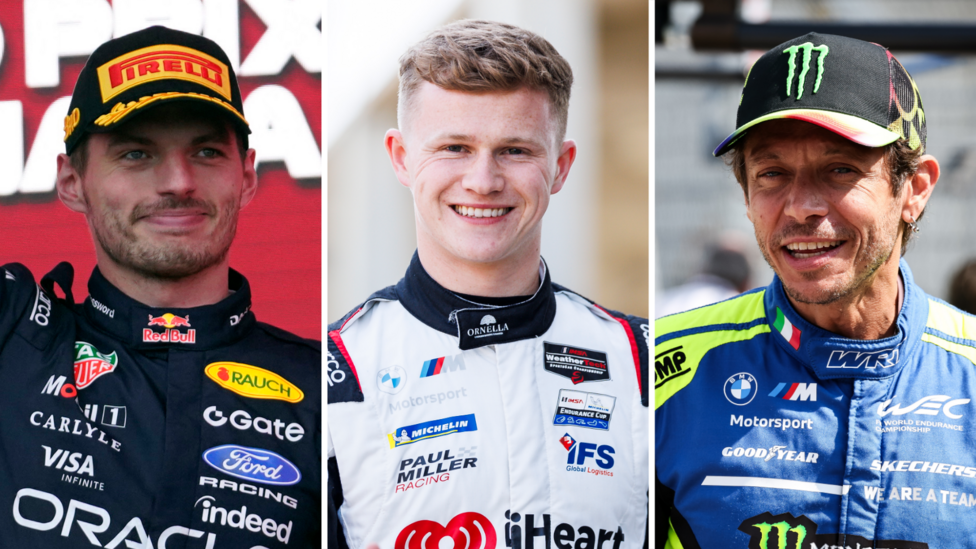
From Verstappen's Rival to Rossi's Teammate: Dan Harper's Extraordinary Path to Le Mans
Northern Irish driver Dan Harper bridges F1 royalty and MotoGP legend as he prepares for his Le Mans 24 Hours debut.

Antonelli Demands Attention: Mercedes Rookie Tops Austria FP2
Kimi Antonelli stunned the Spielberg field by setting the pace in Austria FP2, edged Piastri and Norris in a Mercedes warning shot.
Bortoleto Eyes Best of the Rest as Audi Show Friday Pace in Budapest
The Audi rookie senses a real opportunity at the Hungaroring after a Friday that exceeded expectations.