The Quiet Genius Departs: Santi Cazorla Retires at 41
Santi Cazorla's retirement closes the book on one of modern football's most technically complete midfielders.
A Career That Refused to End on Someone Else's Terms
Santi Cazorla has retired from professional football at 41 years old, closing one of the most improbable and technically brilliant careers the modern game has produced. The announcement, while expected given his age and the toll his body has endured over more than two decades, still carries a weight that transcends the simple fact of a player hanging up his boots.
Cazorla was never the loudest presence on a pitch. He rarely dominated back pages or trended on social media for anything beyond the sheer elegance of his football. Yet his departure leaves a void that is difficult to quantify, because what he offered was something the sport increasingly struggles to produce: a midfielder who could manipulate geometry through touch alone.
The Two-Footed Anomaly
To understand Cazorla's tactical value, you must first grasp what made him genuinely unique. He was perhaps the most naturally ambidextrous outfield player of his generation, and arguably of the Premier League era entirely. This was not a parlour trick. It was a structural advantage that shaped how managers deployed him, how opponents defended against him, and how his teams built attacks from deep positions.
Operating primarily as a left-sided midfielder or a number 10 in a 4-2-3-1 system, Cazorla could receive possession on either flank and deliver identical quality of pass, cross, or shot with either foot. For opposing full-backs and pressing triggers, this created an almost unsolvable problem. The conventional defensive heuristic of showing a wide player onto his weaker foot simply did not apply. Defenders were forced into conservative positioning, which in turn opened the half-spaces that Cazorla exploited with surgical precision.
His body orientation in tight spaces was a coaching textbook unto itself. Cazorla would receive with his back foot already angled for the next action, creating what analysts call a "pre-turn" that eliminated the first touch from the decision chain entirely. The ball moved from reception to progressive pass in a single fluid motion, compressing the time available for opponents to reorganise.
The Wenger Years: Orchestrating from the Left Pocket
Arsène Wenger's acquisition of Cazorla from Málaga in the summer of 2012 was one of the Frenchman's final masterstakes in the transfer market. At £10 million, it represented extraordinary value for a player who would become the creative heartbeat of Arsenal's midfield for the better part of four seasons.
Winger's tactical framework at Arsenal during this period was built around a fluid 4-2-3-1 that often collapsed into a 4-4-2 out of possession. Cazorla occupied the left-sided attacking midfield role, but his positional heat maps told a different story: he was a roamer, drifting centrally to collect possession between the lines, drifting wide to create overloads, occasionally dropping deep alongside Mikel Arteta or Mathieu Flamini to initiate build-up play.
What made this arrangement tactically fascinating was the spatial chaos Cazorla generated. In a system that prized positional structure, his movement was deliberately anti-positional. He would abandon his designated zone to find pockets of space where his first touch could turn defence into attack in an instant. Teammates learned to read his drifting patterns, and Arsenal's attacking play during 2012-2015 was at its most incisive when Cazorla was allowed to be the free radical in an otherwise organised equation.
His set-piece delivery added another dimension entirely. Whether swinging corners with his right foot or whipping free kicks with his left, Cazorla gave Wenger's Arsenal a dead-ball threat that opposing coaches had to plan for on both sides of the pitch. This dual-sided quality from static situations was effectively a tactical multiplier: every free kick within 35 yards of goal was a genuine scoring opportunity.
The Injury That Nearly Took Everything
The Achilles tendon injury that Cazorla sustained in 2016 was not merely a footballing setback. It was a medical crisis that threatened his ability to walk, let alone play at a professional level. Over eight surgeries, gangrene developed in the wound, and doctors reportedly discussed the possibility of amputation. A significant portion of the skin on his lower leg had to be grafted from his forearm, which carried a tattoo of his daughter's name.
The recovery timeline stretched beyond what any normal medical protocol would project for such an injury. Cazorla did not play a competitive match for Arsenal again after October 2016, and his contract expired without renewal in 2018. Many assumed his career was over.
It was not.
The Comeback: Villarreal and the Second Act
Cazorla's return to Villarreal was one of modern football's great redemption arcs. Playing 60 matches in his first season back in La Liga, he demonstrated that the technical qualities which had defined his career were entirely intact. The body had changed, certainly. The pace had diminished, as had the ability to cover ground in sustained pressing sequences. But the mind and the feet remained.
Villarreal used him in a deeper role than Arsenal typically had, deploying him as an interior midfielder in a 4-3-3 or occasionally as the deepest of a midfield three. This repositioning was tactically intelligent: it reduced the physical demands of his role while maximising the value of his passing range. Cazorla could dictate tempo from a deeper station, spraying diagonals and threading passes through defensive lines without needing to sustain high-intensity sprints.
His performances were sufficiently impressive to earn a recall to the Spain national team, an extraordinary achievement for a player who had been written off medically. He added to his international honours from Euro 2008 and Euro 2012, two tournaments where his technical contributions were integral to Spain's dominance of the era.
The Final Chapter: Coming Home
Cazorla's later career saw him pass through Al Sadd in Qatar before returning to Real Oviedo, the club from his hometown in Asturias that he had supported as a boy. There was a poetic symmetry to this closing arc: a player who had graced the Emirates, the Camp Nou, and international finals spending his final professional days at a club in Spain's second division, playing in front of the community that first nurtured his gift.
At Oviedo, his role was less about tactical influence and more about mentorship and presence. Yet even in diminished physical condition, Cazorla could produce moments of technical quality that left younger teammates and opponents alike shaking their heads. His understanding of space, tempo, and weight of pass never deteriorated, because those qualities were never dependent on athleticism in the first place.
What Cazorla Represented
In an era increasingly dominated by physical metrics, pressing intensity, and positional rigidity, Cazorla was a reminder that football's deepest rewards come from technical mastery. He was not fast. He was not strong. He was not particularly tall. None of it mattered, because his relationship with the ball operated on a plane that physicality could not reach.
For coaches, his career offers a compelling case study in the tension between tactical structure and individual expression. Wenger built a system that gave Cazorla freedom; later managers at other clubs demanded more positional discipline. The player's best football always came when the framework bent to accommodate his instincts rather than asking him to conform.
The Legacy
Cazorla's retirement at 41 is remarkable not only for its timing but for the journey it represents. A player who nearly lost his foot, who was discarded by the medical system, who was told his career was finished, played professional football into his fifth decade.
The game will miss him, though it may not fully appreciate what it has lost until it tries to find another player who can do what he did with both feet, in any space, at any speed. Those players are not produced by academies. They emerge, fully formed, from the mystery of talent itself.
Cazorla walks away now, on his own terms, carrying with him two European Championship titles, the adoration of Arsenal and Villarreal supporters, and the quiet satisfaction of a career that was never supposed to last this long, and was all the more beautiful for it.
Editorial Integrity
This is an original SportPulse article written by our editorial team. All content is independently researched, written, and reviewed by our writers and editors before publication. We do not publish copied, aggregated, or syndicated content.
SportPulse is committed to original sports journalism. Read our editorial policy or contact us with any questions.
More Like This
All football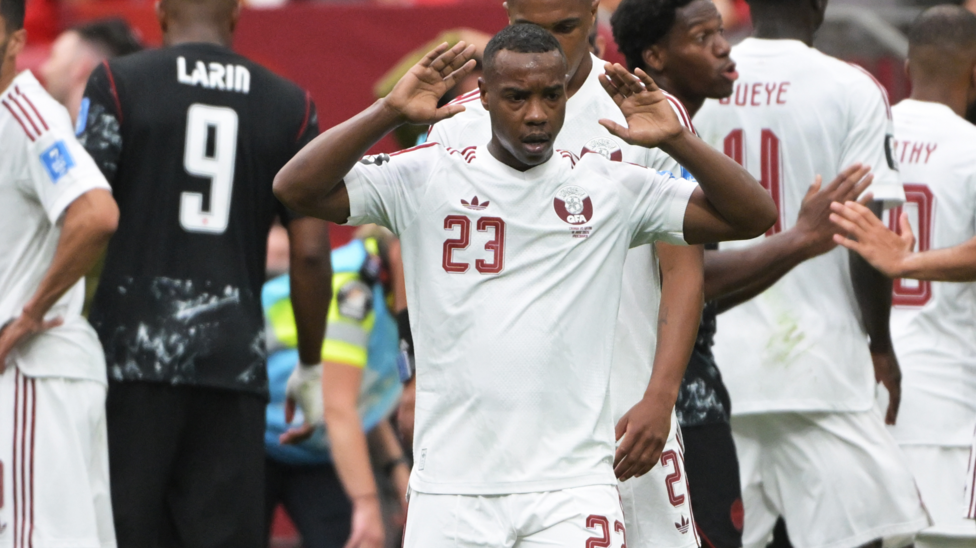
Madibo's Five-Match Ban: Proportionate Justice or Disproportionate Punishment?
Qatar's Madibo faces a lengthy absence after a five-match sanction, raising questions about disciplinary consistency in Asian football.
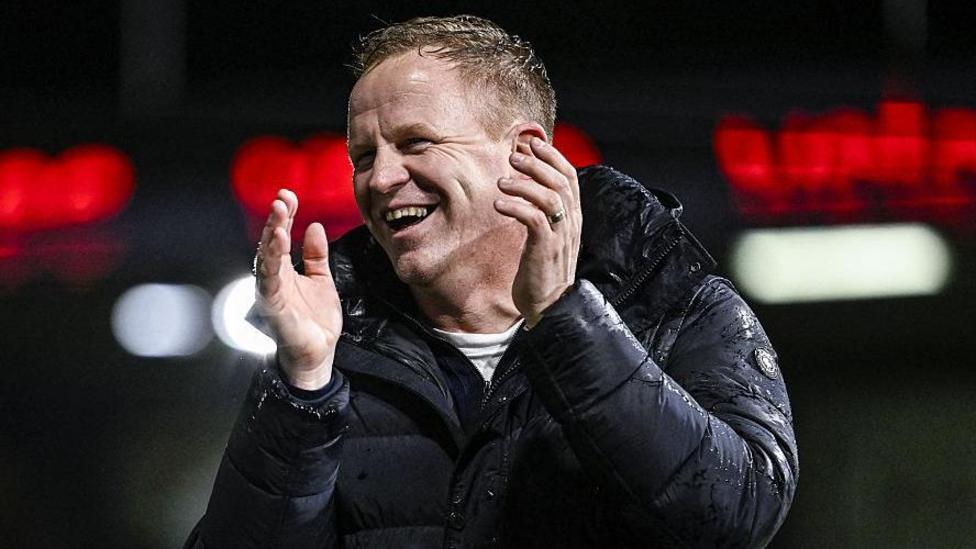
Hearts Bet Big on Belgian Mastermind Wouter Vrancken
Hearts are poised to hand the Tynecastle reins to Belgian coach Wouter Vrancken, a radical shift from Scottish football convention.
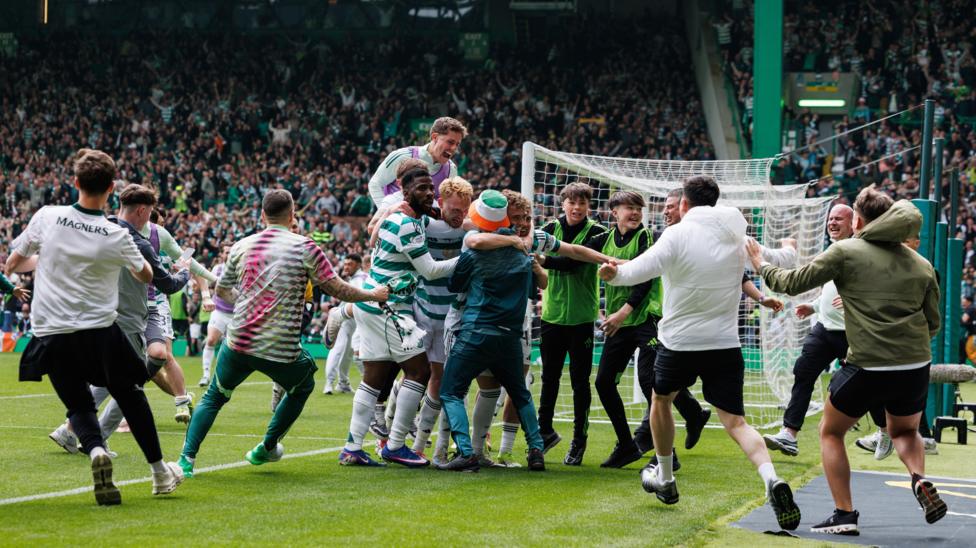
Scotland Cracks Down: Courts Empowered to Tackle Pitch Invasions and Pyrotechnics
Empowering Scottish courts to issue tougher football banning orders addresses pitch invasions and pyrotechnic use head-on.