Savannah James Fires Back at LeBron's Career Critics
As LeBron exits the Lakers, Savannah James exposes the industry built on tearing down the NBA's most scrutinized icon.
The most consequential offseason decision of the modern NBA era has officially dropped, and the seismic tremors are being felt from Los Angeles to every front office with cap space. LeBron James has informed the Lakers he will not return, setting the stage for a free-agency sweepstakes that will dominate the summer landscape and dictate the competitive balance of the league for the next two seasons. But while team executives crunch the numbers on max contracts and draft compensation, the cultural fallout is already producing salvoes in the media. Savannah James, his wife and the anchor of his inner circle, has finally fired back at the cottage industry that has thrived on tearing down her husband.
It is impossible to overstate what this departure means for the Lakers' future blueprint. For four years, the franchise has operated in a state of perpetual win-now mode, trading away future first-round picks to build rosters around LeBron's twilight. Now, they face a rebuild on the fly without a centerpiece to attract free agents. The front office must pivot from recruiting established superstars to player development, a stark shift in identity.
The End of an Era
From a roster-construction standpoint, the Lakers have been living on borrowed time. When LeBron initially signed, the mandate was simple: win a championship immediately. That mission was accomplished in the 2020 NBA Bubble, but the cost was steep. Los Angeles surrendered significant draft capital, leaving the cupboard bare when injuries and roster attrition derailed their momentum. Now, they face a harsh reality.
- Zero guaranteed future first-round picks outgoing, but a depleted asset chest regardless
- $35 million+ in cap space suddenly freeing up for the summer
- A rebuild centered around Austin Reaves and trade acquisitions
The front office must now face the slings and arrows of a competitive Western Conference without the best player on the planet to mask their roster deficiencies. It is a bitter pill for a franchise accustomed to championship or bust expectations.
The Politicization of a Legacy
LeBron has spent two decades under a microscope, a level of scrutiny unmatched in basketball history. Every free-agency decision has been treated as a betrayal by one fanbase and a coronation by another. The 2010 Decision turned him into a villain in Cleveland. The 2014 return made him a prodigal son. The 2018 move to Los Angeles was framed as a Hollywood power grab. Now, this departure is being dissected as the final act of a mercenary career, a narrative that ignores the physical toll of playing 21 NBA seasons.
Savannah James has watched this theater play out from the closest possible vantage point. On her podcast, she broke her usual silence to address the machine that profits from her husband's every misstep.
"People have definitely made careers out of talking about [LeBron]. Like… [critics having] a subjective opinion about what everybody thinks is the best thing. But to be on the other side of it, it's like, 'No, it's not.' They make careers out of that."
Her co-host April McDaniel reinforced the point with surgical timing, noting that people in the digital space actively "build up things to crush them."
The Economics of Outrage
To understand the frustration radiating from the James family, you have to look at the structural shift in sports media over the last fifteen years. LeBron's career has run parallel to the rise of the hot-take economy. Pundits have built personal brands worth millions by positioning themselves as the primary antagonists of Team James.
- The First-Take Era: Debate shows necessitated binary opposition. You were either Brady or Manning. You were either Kobe or LeBron.
- The Social Media ecosystem: Twitter and Instagram algorithms rewarded negativity.
- The Podcast Boom: Former players and media personalities found a lucrative lane criticizing active superstars.
Savannah calling out critics for making "careers" out of her husband is the most specific and pointed criticism she has ever leveled. She is not just defending his legacy. She is exposing the financial incentive structure that drives the discourse.
Fit Check: Finding the Right Landing Spot
While the Lakers scramble to pivot, the rest of the league is positioning itself. For any team acquiring a player entering his age-40 season, the calculus is unique. The fit must be flawless to justify the investment.
- Cleveland Cavaliers: The romantic narrative. They have the defensive infrastructure and a young core featuring Donovan Mitchell and Evan Mobley. The $31 million trade exception could facilitate a homecoming.
- Golden State Warriors: A pursuit of legacy rings. Stephen Curry and LeBron in a pick-and-roll would terrorize defenses.
- Philadelphia 76ers: A bold move to pair him with Joel Embiid.
What separates this free-agency cycle from previous ones is the reality of the salary cap. Teams are not just chasing talent. They are chasing legacy. Any franchise acquiring LeBron must accept that this is likely a short-term rental. The financial commitment requires immense luxury-tax flexibility and a willingness to win immediately.
What the Numbers Say
The statistical argument for LeBron's continued excellence is overwhelming, making the media's framing of his decline seem almost manufactured.
- 25.7 points, 7.3 rebounds, and 8.3 assists per game last season
- Shot 54.0% from the field, a mark that defies age-related regression
- Played 71 games, his highest total since the 2017-18 season
These are not the numbers of a player who should be quietly riding into the sunset. They are the numbers of a top-ten player demanding a max contract. The narrative that LeBron is holding teams hostage is a fiction. He is still producing at an MVP-adjacent level.
The Bigger Picture
The Lakers are now staring down a competitive abyss. Without LeBron, they are a franchise without a clear direction, relying on a depleted roster in a conference stacked with young, ascending teams. The Clippers are retooling. The Suns have their own superstar core. The Nuggets remain the class of the conference.
LeBron's departure will have a cascading effect on the trade market. Teams looking to shed salary will find the Lakers desperate to acquire serviceable talent. The 2025 NBA Draft is not considered particularly deep, meaning draft compensation may not hold its usual allure at the deadline.
"I think people build up things to crush them."
McDaniel's quote captures the essence of the LeBron discourse. He is built up to be torn down. Every achievement is met with an asterisk. Every loss is a referendum on his entire resume. The fatigue in Savannah's voice is the fatigue of someone who has watched two decades of bad-faith arguments.
What's Next
The deadline for LeBron to make his decision is approaching. Front offices around the league are preparing their pitches. The Lakers are already pivoting to contingency plans, looking at mid-tier free agents to fill the void.
For the rest of the NBA, the message is clear. The King is leaving Los Angeles, and the throne is vacant. The first franchise to offer the right combination of draft picks, veteran talent, and organizational stability will land the biggest fish of the summer. Expect a decision shortly after the league's moratorium ends.
The critics will be there waiting, typess reused and takes pre-written. But this summer, they will be writing about a player still performing at the peak of his powers, and a family no longer willing to stay silent about the industry built on his back.
Bottom Line: LeBron's Lakers exit triggers a franchise reset and exposes the profitable double standard of NBA media scrutiny.
Editorial Integrity
This is an original SportPulse article written by our editorial team. All content is independently researched, written, and reviewed by our writers and editors before publication. We do not publish copied, aggregated, or syndicated content.
SportPulse is committed to original sports journalism. Read our editorial policy or contact us with any questions.
More Like This
All basketball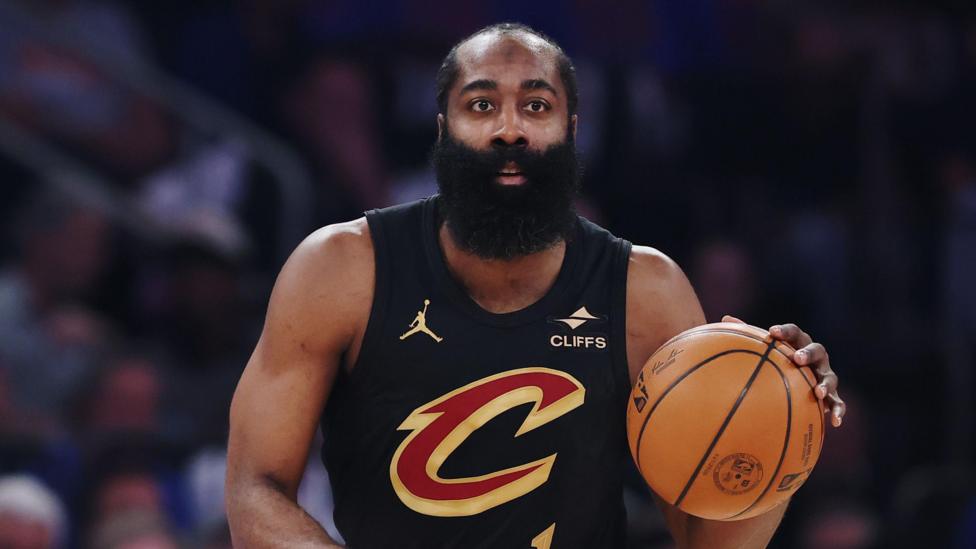
Harden's Houston Hangover: Arrest Shadows Cavaliers' Season
James Harden's legal troubles in Houston raise urgent questions about his future with the Cleveland Cavaliers.

The NBA Media's Jaylen Brown Problem
A championship Finals MVP traded and suddenly painted as a liability. The analytics brigade has lost the plot.
More Than a Ring: How the Knicks' Run Became a Collective Act of Healing
The Knicks' improbable Finals run has transcended basketball, becoming a cultural lifeline in a nation worn thin by everything else.