Scaloni Draws Line Between Football and History Before England Semi
Argentina's manager insists politics won't define the World Cup semi-final, but the tactical narrative is far more compelling.
Football, Not Politics
Lionel Scaloni has never been the type to reach for the easy narrative. So when the Argentina manager was inevitably asked about the historical and political undertones of a World Cup semi-final against England, his response was characteristically grounded. History and politics between the two nations, he insisted, will have nothing to do with what unfolds on the pitch.
It is the sort of statement that will be dissected, debated, and largely ignored by those who prefer their football served with a side of theatre. The Argentina-England fixture carries baggage that few international rivalries can match, and a World Cup semi-final is precisely the stage where that baggage tends to be unpacked and paraded. The 1982 Falklands War, the 1986 'Hand of God' quarter-final, the 1998 last-16 clash in Saint-Etienne, the 2002 group-stage meeting in Sapporo where David Beckham exorcised his own personal demons. These are not footnotes. They are chapters in a story that successive generations of players, managers, and supporters have been unable, or unwilling, to close.
Scaloni's refusal to engage with that narrative is not naivety. It is strategy.
The Guarded Tactician's Playbook
The 45-year-old has built his Argentina regime on a foundation of emotional control and tactical discipline, a deliberate departure from the chaotic passion that defined many of his predecessors. Under Alejandro Sabella, Argentina reached the 2014 World Cup final with a pragmatic, almost conservative approach that prioritised defensive solidity over attacking flair. Scaloni has taken that template and modernised it.
His squad operates with a pressing intensity that ranks among the highest at this tournament, and a possession structure that adapts to the opposition rather than imposing a single identity. The backline, marshalled by Cristian Romero and Nicolas Otamendi, has conceded just three goals across five matches in the tournament so far. The midfield, anchored by Rodrigo De Paul and supplemented by the intelligent positioning of Giovani Lo Celso, is the primary point of differentiation between this Argentina side and previous iterations that relied almost exclusively on moments of individual genius.
"It is just another football match. The players know what is at stake, and what is at stake is a place in the World Cup final. That is the only context that matters inside the dressing room."
In this framing, England is not a geopolitical rival. England is a system to solve. And Scaloni has spent the entire tournament proving he is one of the foremost systems thinkers in the international game.
The Tactical Battleground
Strip away the flags and the history, and the semi-final presents a genuinely absorbing tactical contest between two sides whose strengths lie in different corridors of the pitch.
Argentina's attacking structure is built around the gravitational pull of Lionel Messi, but Scaloni has ensured this is not a one-man side. Messi has been involved in over 40% of Argentina's goals at this tournament, contributing four goals and two assists across five appearances, with an expected goals involvement (xGI) of 3.8 that underscores both his enduring quality and the team's reliance on his creative hub. Yet the supporting cast functions with a tactical cohesion that previous Argentina teams lacked.
Julian Alvarez, operating as the nominal central striker, leads the line with a pressing output that compensates for Messi's walks in possession. His three tournament goals came at an xG of just 1.4 in open play, an overperformance that highlights his finishing quality rather than systemic fortune. The flanks, patrolled by Angel Di Maria and Marcos Acuna, provide width that stretches the opposition back five, creating the half-spaces where Messi operates with maximum lethality.
England, by contrast, will arrive with a midfield designed to control the transitions. Gareth Southgate's side has perfected the art of the composed possession platform, with a passing accuracy of over 89% in the opposition half across the tournament. Their defensive record, conceding just two goals in five matches, is marginally superior to Argentina's, though the quality of opposition in their half of the draw was arguably less taxing than the gauntlet Argentina navigated through a knockout-stage encounter with the Netherlands.
Where the Game Will Be Won
The decisive battle will likely unfold in midfield, where England's capacity to progress the ball through central zones collides with Argentina's aggressive midfield press. De Paul's positioning, often shadowing the opposition's deepest midfielder, will determine whether England can establish their passing rhythm or are forced into lateral possession that Argentina absorbs comfortably.
Key statistical matchups that will define the contest:
- Messi vs the defensive shadow: England will likely deploy a dedicated midfielder to man-mark Messi in central areas, but history suggests that freeing a player for that role creates structural vulnerabilities elsewhere.
- Transition efficiency: Argentina's xG per shot in transition stands at 0.18, the highest of any remaining semi-finalist, meaning they create higher-quality chances from turnovers than any other side still in the tournament.
- Set-piece differential: England has scored three goals from set-pieces; Argentina have conceded just once from dead-ball situations, the most resilient record among semi-finalists.
- Messi's drop zone: The veteran's average positioning has been 12% deeper at this tournament compared to the 2018 World Cup.
"The past is not a tactic. It does not tell you how to press, how to transition, how to defend your box. We prepare for England as football opponents, not as a story."
The Psychology of Refusal
There is a deeper psychological wisdom in Scaloni's insistence on decoupling this match from its historical frame. Argentina's previous World Cup encounters with England were frequently defined by emotional volatility. Diego Maradona's motivating grudge in 1986, Gabriel Batistuta's frustration with the refereeing in 1998, the claustrophobic tension of the 2002 match where tempers flared before a ball was kicked.
ThoseArgentina sides were talented, but they were also burdened. The weight of national pride, of historical grievance, of the expectation that the result would carry meaning far beyond the tournament, created an emotional taxation that Scaloni has systematically stripped from his squad's preparation.
His man-management philosophy is visible in the body language of his players during high-pressure moments. There is none of the theatrical anguish that characterised Argentina's group-stage collapse against Croatia in the 2018 tournament. The response to going behind in a knockout match was clinical rather than chaotic, a composed reassertion of tactical identity that speaks to a squad psychologically liberated from the weight of its own history.
The Bottom Line
Scaloni's public dismissal of the political narrative is not an erasure of history. It is a tactical choice disguised as a press-conference platitude. By framing England purely as a footballing problem, he denies the occasion the emotional excess that has historically destabilised Argentine performances against high-pressure opponents. The history will be sung in the stands regardless. On the pitch, Scaloni is ensuring that only the football speaks.
What History Actually Tells Us
Since the Falklands War, Argentina and England have met five times across all competitions. England holds a marginally superior competitive record with two wins in tournament play, while Argentina claimed one victory in regulation, with one result decided by the uniqueness of a World Cup group-stage format and another in a post-2002 friendly. The head-to-head gives no decisive edge to either side.
What does differentiate the.fixture is the stage. This is the first World Cup semi-final between the two nations, and one could argue that all previous encounters were, in their way, prologues to this. The 1986 meeting remains the most famous, a quarter-final where Maradona's brace encapsulated both the beautiful and the controversial in a 2-1 Argentina victory that culminated in the tournament title. The 1998 last-16 clash in Saint-Etienne produced a 2-2 draw after extra time, Argentina advancing on penalties in a match remembered for a young David Beckham's sending-off.
The numbers tell the story of a rivalry defined by the slimmest of margins. Argentina's win rate against England in competitive fixtures sits at 33%, while England's is 40%, with the remaining 27% comprising draws that were resolved by either penalties or the peculiarities of group-stage scoring. Neither side has dominated; neither side has been dominated.
The Verdict
Scaloni is right that history does not play football. He is wrong, or at least incomplete, in suggesting it has nothing to do with the match. The players carry the baggage of their footballing history, even if their manager coaches them to leave it at the door.
The more pertinent question is not whether the past will influence the semi-final, but whether England arrive with a tactical plan sophisticated enough to cope with an Argentina side that has spent five matches proving it is no longer reliant on magic to win. The narrative of rivalry is a media lubricant. The reality of the contest is a tactical puzzle, and Scaloni has positioned his pieces with the patience of a man who knows that history's only role, come kick-off, will be as a backdrop.
The Bottom Line: England against Argentina is a fixture that transcends football. Scaloni's job this week is to ensure his players treat it as nothing more than football. The tactical discipline of his Argentina side over the past five matches suggests they are uniquely equipped to do exactly that.
Editorial Integrity
This is an original SportPulse article written by our editorial team. All content is independently researched, written, and reviewed by our writers and editors before publication. We do not publish copied, aggregated, or syndicated content.
SportPulse is committed to original sports journalism. Read our editorial policy or contact us with any questions.
More Like This
All football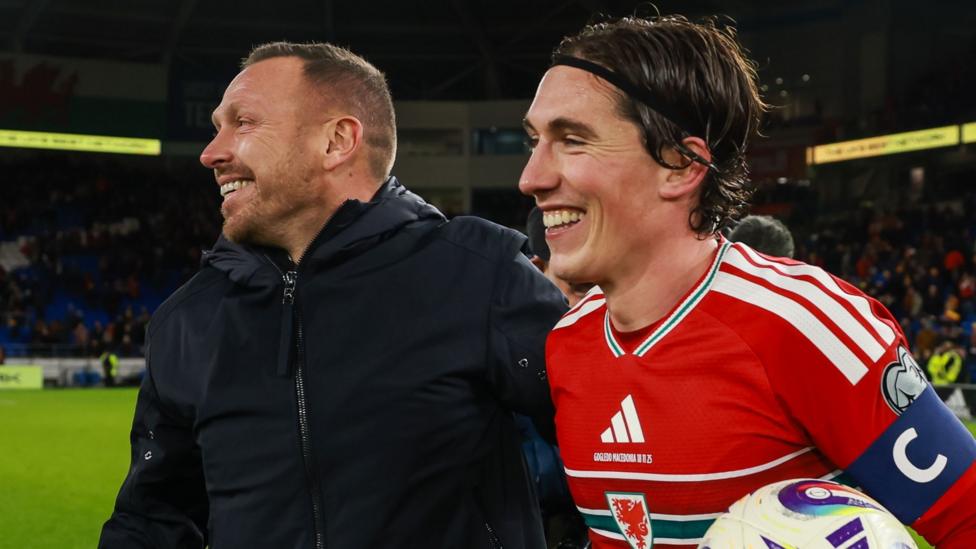
Bellamy Stays: Wales Keep Their Tactical Architect After Burnley Talks Collapse
Craig Bellamy remaining with Wales preserves a bold tactical project that could redefine the Dragons' identity for years.
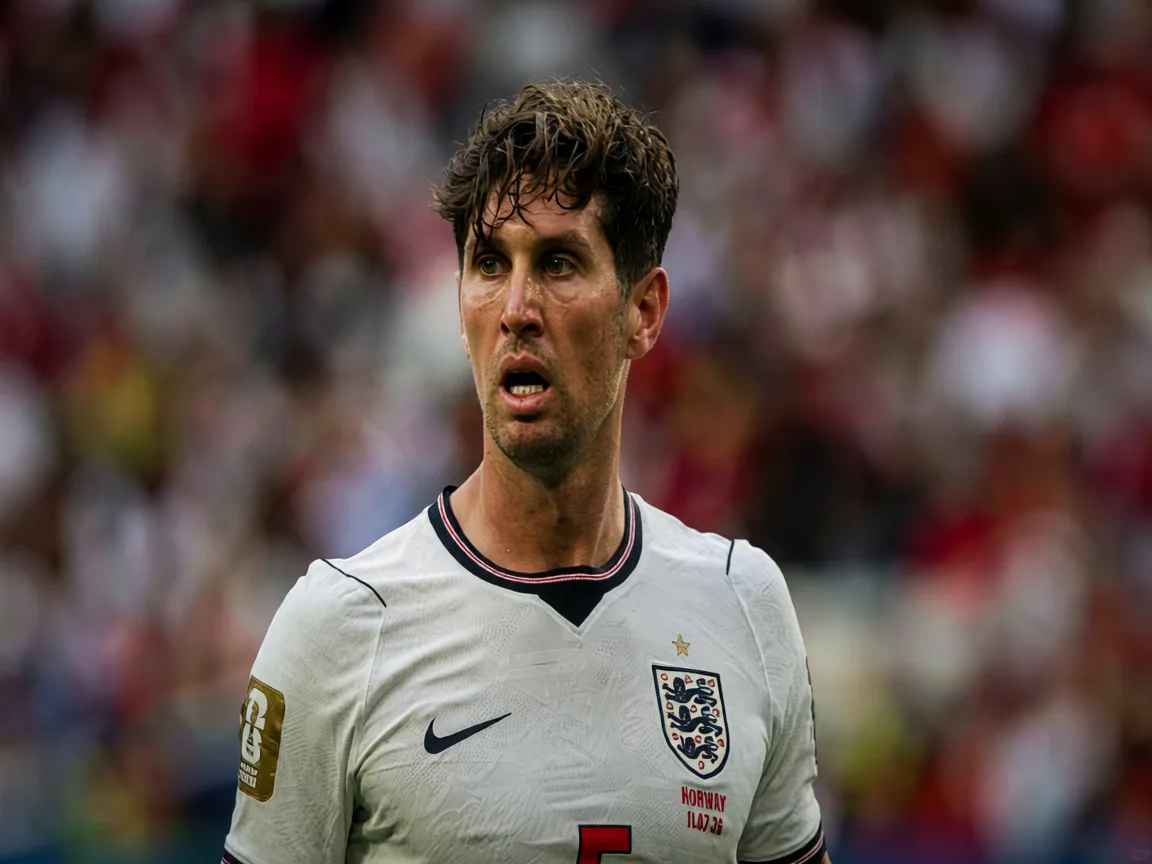
Chelsea Plot Free-Transfer Swoop for John Stones After Man City Exit
Chelsea target John Stones on a free transfer after his Manchester City departure, seeking elite experience without paying a fee.
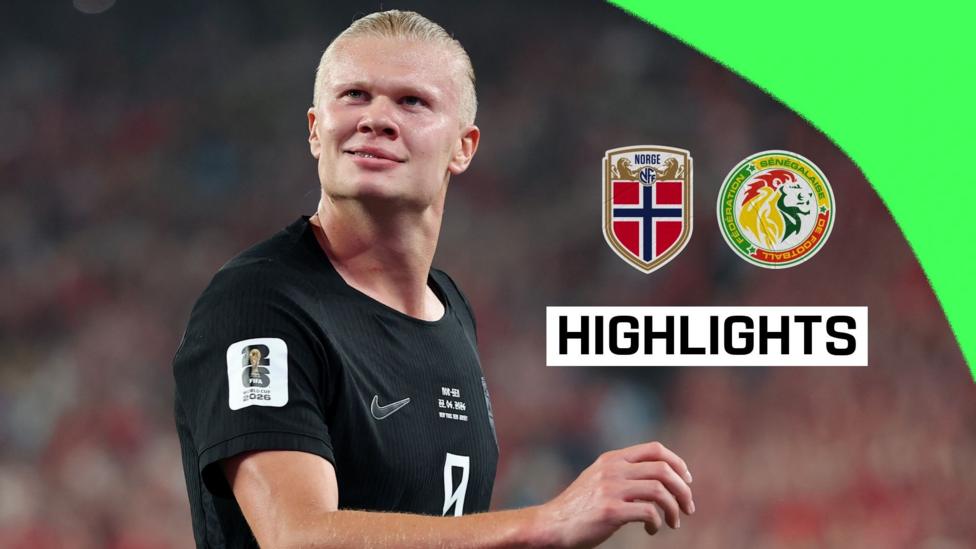
Haaland's Lethal Double Sends Norway Through in Five-Goal World Cup Classic
Erling Haaland delivers on the grandest stage as Norway survive a ferocious Senegal fightback to reach the last 32.