Schlotterbeck Blow: Germany's World Cup Defense Loses Its Left-Foot Anchor
Nico Schlotterbeck's ankle injury fractures Germany's left-sided defensive symmetry at the World Cup, forcing urgent tactical recalibrations.
The architectural foundation of any deep tournament run rests upon defensive symmetry, a principle Germany have now seen violently disrupted. The confirmation that Nico Schlotterbeck will miss the remainder of the World Cup with an ankle injury strips Julian Nagelsmann's squad of its primary left-footed centre-back. This is not merely a roster deletion; it is a fracture in the geometric balance that dictates how a modern 3-4-2-1 or 4-2-3-1 constructs its rest-defence and progression phases. Without Schlotterbeck, the entire left hemisphere of Germany's tactical setup requires urgent, meticulous reconstruction before the pressure of knockout football arrives.
Schlotterbeck's importance to the national team setup stems directly from his profile as a left-sided centre-back. In possession, a back-three or back-four fundamentally relies on its left-footed defender to open up the pitch. A right-footed player positioned on the left side must constantly adjust their body orientation before playing diagonal switches or driving into midfield, sacrificing crucial fractions of a second. Schlotterbeck provides that natural geometrical advantage. His ability to play flat, sharp passes into the left half-space, bypass the first line of opposition pressing, and execute sweeping cross-field diagonals to the right wing-back allows Germany to manipulate the opposition's defensive shape. His absence confines the backline to narrower passing angles, stifling the team's capacity to stretch plays horizontally.
Defensively, the Borussia Dortmund defender offers a unique blend of physicality and aggressive spatial anticipation. Schlotterbeck specializes in stepping out of the defensive line to commit to challenges in the intermediate spaces, a vital component of Nagelsmann's vertical pressing triggers. When Germany lose the ball in the opposition half, Schlotterbeck acts as the first aggressor, using his pace to close the gap before the opponent can turn and transition. Ankle injuries are particularly cruel for defenders who rely on explosive acceleration and sudden directional changes to execute a high-line counter-pressing trap. The moment that joint compromised, so too did Germany's most reliable mechanism for suffocating counter-attacks.
The Rondo Reconfiguration: Navigating the Void
Replacing a left-footed defender on his natural side with a right-footed alternative forces a cascading series of micro-adjustments across the entire pitch. If Nagelsmann persists with a 3-4-2-1, the internal candidates to fill the vacancy present distinct tactical compromises. Waldemar Anton, a capable and composed defender, is fundamentally a right-footed operator. Deploying him on the left of a back three neutralizes his natural passing angle towards the center of the pitch, forcing him to play safer, deeper passes rather than penetrating the left half-space.
Alternatively, relying on Jonathan Tah on the left yields similar friction. Tah possesses elite recovery pace, making him theoretically suited to a high defensive line, but his ball-carrying and progressive passing metrics plummet when forced onto his weaker foot. The data paints a stark picture of this deficiency. Right-footed centre-backs playing on the left side of a back three typically see their progressive passing distance drop by 12 to 15 percent, while their mis-hit long switches increase significantly. In a tournament environment where margins are microscopic, gifting the opposition easy defensive alignments through predictable, one-sided buildup is a fatal error.
Tactical Shift: The Midfield Compensation Matrix
"We construct our attacks from the space we occupy before we receive the ball. Take away one structural pillar, and the roof must be reinforced elsewhere." — Julian Nagelsmann
This vacancy forces Nagelsmann into a vital tactical shift that will define Germany's World Cup trajectory. Without a natural left-footed pivot in the backline, Germany cannot rely solely on their centre-backs to break the first line of pressure. The responsibility for progression must shift to the left wing-back and the left-sided interior midfielder. Players like David Raum, known primarily for his crossing volume, will now be tasked with dropping deeper into the buildup phase to offer a viable left-footed passing angle.
This adjustment dramatically alters Germany's rest-defence. When a wing-back drops into the first line of construction, the left interior, likely Joshua Kimmich or Robert Andrich, must shuffle wide to cover the vacated space. This movement compresses the midfield, making the team exponentially more vulnerable to ball-side overloads from the opposition. Opposing coaches will immediately identify this structural weakness, instructing their wingers to press the right-footed left centre-back and force the ball to the wing-back, thereby trapping Germany in a compressed, slow buildup on the touchline.
Should Nagelsmann abandon the back-three entirely to mitigate these issues, a shift to a 4-2-3-1 offers a different set of complications. In a flat back four, the absence of a left-footed centre-back is obscured slightly by the positioning of the left-back, but the central partnership loses the natural asymmetry that aids lateral pressing. Furthermore, discarding the back-three removes the foundational shape that allows Germany to push both wing-backs high simultaneously, an essential component of their wide-overload mechanisms in the final third. The manager is trapped between compromising his buildup or sacrificing his attacking width.
The Bigger Picture: Systemic Vulnerability
Tournament football is an exercise in problem-solving. The loss of Schlotterbeck is a severe mathematical equation that opposition analysts will aggressively attempt to exploit. Teams possessing dynamic right wingers who specialize in inverted pressing will smell blood. Forcing the ball onto the right foot of a makeshift left centre-back guarantees a slower release, allowing the opposition to set their mid-block and smother the passing lanes into Germany's advanced playmakers.
The psychological component is equally vital. Schlotterbeck carried an assured, almost arrogant composure on the ball that emboldened the entire defensive unit to hold their high line. Without him, the remaining defenders will naturally drop three to five yards deeper, a subconscious reaction to compensate for the lack of a natural left-footed breaker of lines. A deeper defensive line directly contradicts Nagelsmann's core philosophical principle of vertical compression, creating more space for opponents to operate between the lines and ultimately starving the German attack of the high territory it needs to function.
What Lies Ahead: The Reckoning in the Final Third
Germany's next fixture will serve as the ultimate referendum on how Nagelsmann intends to navigate this structural crisis. Expect the opposition to target the left channel of the defense with relentless diagonal runs and aggressive pressing, testing the spatial awareness and footedness of whoever occupies that vacancy. If Germany's midfield cannot provide the necessary close-range passing options to circumvent the compromised backline, the tacticalPIN will be pulled on their World Cup aspirations.
The nagelsmann imperative is clear. He must drill a compensatory rest-attack shape that protects a right-footed left centre-back, or independently pivot to a back-four that may dilute their offensive supremacy. The ankle injury to Schlotterbeck is not just the loss of a defender. It is a fundamental recalibration of how Germany breathe on the pitch, and the air just became significantly harder to find.
Editorial Integrity
This is an original SportPulse article written by our editorial team. All content is independently researched, written, and reviewed by our writers and editors before publication. We do not publish copied, aggregated, or syndicated content.
SportPulse is committed to original sports journalism. Read our editorial policy or contact us with any questions.
More Like This
All football
ITV Extends Rugby World Cup Reign to Tenth Straight Tournament
ITV retains the 2027 Rugby World Cup rights, a broadcast dynasty now spanning ten consecutive editions.

Kane's Double Delivers England's Statement Win in World Cup Cracker
Harry Kane's brace survives a chaotic first-half scare as Tuchel's England open their World Cup campaign with a thrilling victory over Croatia.
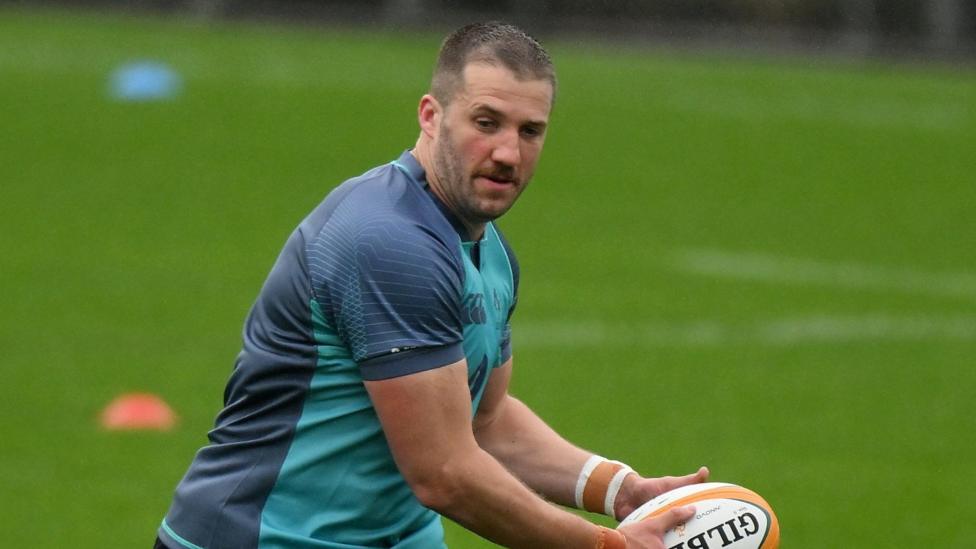
Ireland's Clean Bill of Health Changes the Sydney Equation
Paul O'Connell confirms a fully fit Irish roster ahead of the Nations Championship opener, handing Andy Farrell a rare luxury Down Under.