The Science of the Perfect Penalty: What World Cup Data Reveals
Penalty shootouts decide World Cups. We dissect the tactical, statistical, and psychological anatomy of the perfect spot kick.
The whistle blows. Extra time has failed to separate two exhausted tactical blocs. The match, perhaps a World Cup quarterfinal or a continental final, will not be settled by a moment of open-play brilliance, but by the most isolated, high-pressure set-piece in football: the penalty shootout.
For coaches of a structural inclination, the shootout is an agonizing departure from the realm of tactical control. After ninety or one hundred and twenty minutes of manipulating space, pressing triggers, and rest-defence structures, the coach is rendered utterly helpless. The fate of the tournament transfers from the collective system to the individual psychology of the taker and the duel against the goalkeeper.
Yet, to label the shootout as a mere lottery is a disservice to the vast body of statistical research and biomechanical analysis that has transformed how elite teams approach the penalty kick. The pain of the shootout may be the cruellest fate in the sport, but in the margins between glory and elimination, data provides a decisive advantage.
The Geography of the Twelve-Yard Box
When researchers analyse the anatomy of a penalty kick, the sample sizes are vast. Hundreds of thousands of kicks from domestic leagues, continental tournaments, and the World Cup itself have been coded, tracked, and dissected. The data reveals a fundamental truth: goalkeepers are physically incapable of covering the entire goal mouth when a ball is struck with pace and precision.
A standard professional goal measures 24 feet wide and 8 feet tall. The penalty spot sits 12 yards from the goal line. The average professional goalkeeper possesses a wingspan that allows them to cover roughly 11 to 12 feet of the goal if they dive fully extended. This leaves a theoretical uncoverable area of nearly fifty percent of the goal. The statistical implication is clear. If a striker strikes the ball with sufficient power into the corners, the goalkeeper's reaction time and physical reach become mathematically irrelevant.
However, the neurology of the human brain under extreme duress complicates this mathematical reality. The instinct of a footballer facing a goalkeeper is often to strike the ball as hard as possible, aiming for the visual centre of the goal. The data identifies this as the worst possible strategy. A shot to the centre of the goal, even struck at 80 miles per hour, presents the highest probability of a save because the goalkeeper rarely has to move laterally.
Breaking Down the Optimal Placement
The statistical evolution of penalty taking has shifted from power to absolute placement. Researchers categorise the goal into distinct zones, tracking the conversion rate of shots aimed at each sector.
- The upper corners, specifically the top left and top right quadrants, yield a conversion rate exceeding 80%. Goalkeepers are physically constrained by gravity and their own anatomy from reaching these zones in the 0.3 seconds it takes for a well-struck ball to travel from the spot to the net.
- The lower corners remain highly effective, boasting a conversion rate of approximately 75%, provided the ball is placed within a foot of the post.
- Shots down the middle, targeting the goalkeeper's central starting position, historically convert at roughly 60%.
This statistical breakdown reveals the tactical shift in approach. Elite penalty takers do not aim for the goal. They aim for the narrow geometric window where the goalkeeper's biomechanical reach cannot intersect the trajectory of the ball.
The Gambler's Fallacy and the Panenka
Within the optimal placement zones, a psychological substructure exists. Elite coaches familiar with game theory note the phenomenon of the Gambler's Fallacy in shootouts. If a goalkeeper has dived to the left for two consecutive saves, the statistical probability of them diving left on the third remains exactly the same, yet the human mind perceives a pattern, demanding a deviation.
Antonín Panenka immortalised the psychological exploitation of the goalkeeper by chipping the ball straight down the middle during the 1976 European Championship final. The modern data analyst views the Panenka not as a gesture of arrogance, but as a highly calculated application of the Game Theoretic Equilibrium. If a goalkeeper is conditioned by the recent sequence of kicks to anticipate a left or right dive, the mathematical value of a central strike rises dramatically.
"The penalty kick is not a physical contest; it is a cognitive battle fought in the fractions of a second before the run-up. The player who dictates the narrative of the duel wins." — A prominent analytics coach on the nature of shootouts.
Tactical Shift: The Era of the Goalkeeping Specialist
Historically, penalty shootouts were accepted as an uncontrollable variance. A coach would send out their best technical forwards and hope for the best. The tactical shift occurred when national teams and elite clubs began incorporating set-piece and goalkeeping specialists into their backroom staff.
The modern approach treats the shootout as a preparatory phase. Goalkeeper coaches build extensive dossiers on the run-up angles, the plant foot positions, and the scanning habits of opposing penalty takers. The research shows that a goalkeeper who watches the plant foot of the taker can improve their save probability by nearly 20%.
Conversely, attacking coaches train penalty takers to counter this intelligence. The modern taker is instructed to engage in deceptive trunk rotation, opening the hips toward one corner before striking toward the opposite. The run-up becomes a tool of misdirection. A longer run-up of five to six steps allows for a later decision on placement, whereas a short run-up of two steps demands a pre-determined target, reducing the opportunity for the goalkeeper to read the trajectory.
The Psychological Toll of the Tournament
Studying penalties in a vacuum of biomechanics and physics ignores the crushing psychological weight of the World Cup. A single penalty kick during the group stage carries a different cognitive load than the fifth penalty kick in a World Cup Final shootout. The physiological response is profound.
Under extreme duress, the adrenal glands flood the system with cortisol and adrenaline. The taker experiences a narrowing of the visual field, often termed tunnel vision. The spacious 24-foot goal perceptually shrinks. The muscles in the lower leg tense, embedding micro-tremors that degrade the precision of the strike. This physiological reaction explains the statistical anomaly of elite technical players missing penalties that they would convert with automatic ease during a Sunday training session.
Coaches now employ sports psychologists to construct rituals that combat this physiological arousal. Deep breathing techniques, specific physical routines, and the elimination of eye contact with the goalkeeper are designed to lower the heart rate below 120 beats per minute. The aim is to transition the brain from the sympathetic nervous system, governed by fight-or-flight impulses, back to the parasympathetic system, allowing for the execution of deeply ingrained motor patterns.
The View From the Technical Area
As the World Cup approaches its tensest fixtures, the defining moments will not be the sweeping counter-attacks or the intricate positional rotations in the final third. The crucial sequences will happen at the twelve-yard mark, where the tactical preparation of a squad meets the statistical fluorescence of individual execution.
The incentive to find the perfect penalty has never been greater. National managers integrate penalty practice not as an afterthought at the end of a draining session, but as a structured, cognitively demanding module within the weekly tactical schedule. The next knockout tie will be a crucible. The side that aligns its biomechanical precision with its psychological discipline will lift the trophy. The margins will be measured in centimetres and milliseconds.
Editorial Integrity
This is an original SportPulse article written by our editorial team. All content is independently researched, written, and reviewed by our writers and editors before publication. We do not publish copied, aggregated, or syndicated content.
SportPulse is committed to original sports journalism. Read our editorial policy or contact us with any questions.
More Like This
All football
The World Star Quiz: Why We Never Stop Chasing Tournament Legends
Daily World Cup player quizzes tap into football's deepest instinct: remembering who mattered when it counted most.

Cain Comes Home: Everton Bet on Wales Rising Star
Hannah Cain returns to Everton with her stock soaring after a transformative spell at Leicester City.
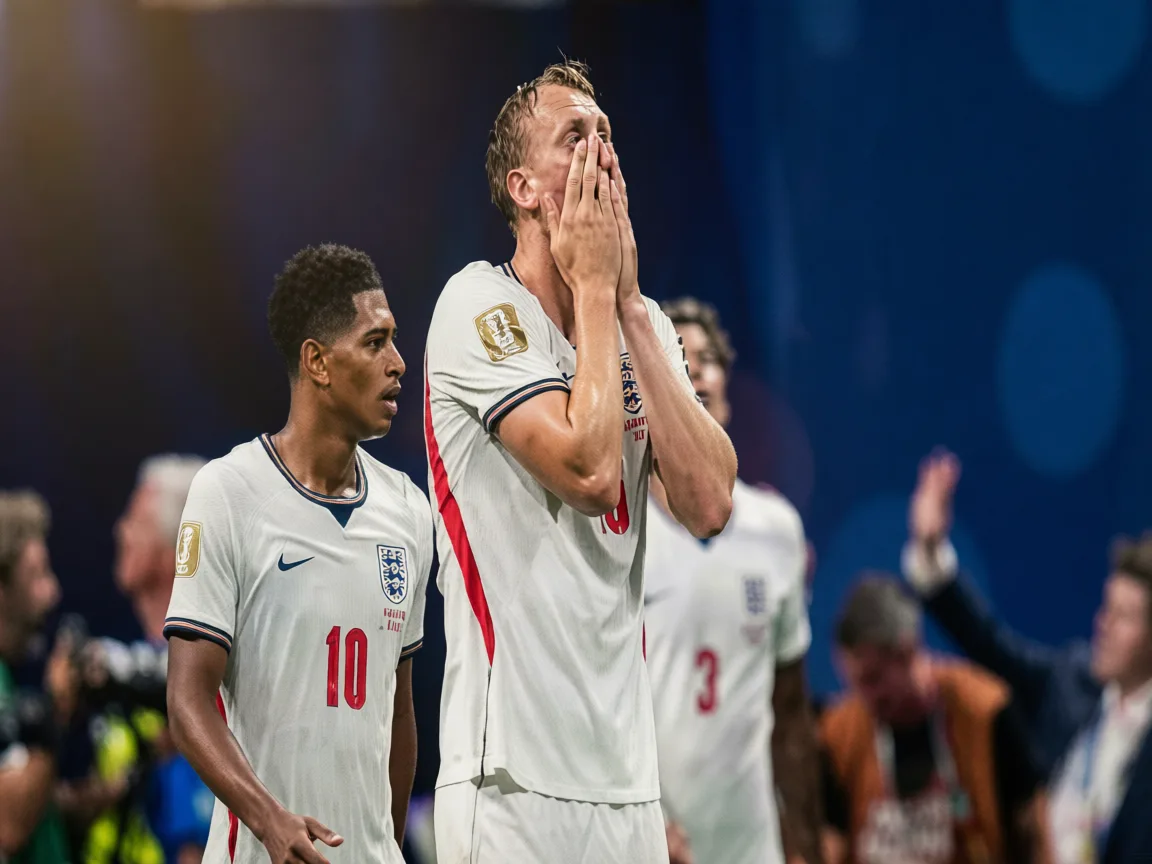
England Left Haunted as Argentina Break Semi-Final Hearts Again
Dan Burn says England's World Cup semi-final loss to Argentina will haunt the squad after history repeated itself on the biggest stage.