Seven Survivors: Clarke's Loyalty Blueprint Takes Scotland to the World Cup
Seven players from Clarke's first Scotland squad in 2019 remain at the 2026 World Cup, a testament to extraordinary continuity.
The Remarkable Thread of Continuity
In an era of managerial churn and squad overhauls, Steve Clarke has done something quietly extraordinary. Seven players who received call-ups for his very first Scotland squad back in March 2019 are still part of his setup at the 2026 World Cup. That is not just loyalty. That is a philosophy made flesh, a coaching tenure built on trust, development, and a refusal to discard what works.
When Clarke took the Scotland job, he inherited a national team stuck in a cycle of qualifying heartbreak and tactical identity crisis. His first squad selection was a statement of intent, mixing established Premier League performers with hungry Scottish Premiership talent. Seven years on, a core of those same players now find themselves on football's grandest stage. The question every Scotland supporter should be asking is not just who those seven are, but what their survival tells us about how Clarke builds.
Clarke's Coaching Philosophy: Trust as a Tactical Foundation
Clarke has never been a coach who chases trends. His tactical identity has always been rooted in defensive organisation, structured pressing, and pragmatic transitions. At club level with Kilmarnock, he demonstrated an ability to maximise limited resources through discipline and collective shape. With Scotland, he has applied the same principles at scale.
What makes the retention of seven players from his first squad so significant is that it reveals Clarke's core belief: a system only functions when the players inside it understand each other instinctively. Repetition breeds fluency. When Robertson knows where McGinn will drift, when McTominay reads the pressing trigger without a verbal cue, when the centre-back pairing has survived three qualifying campaigns together, that shared understanding becomes a competitive advantage no tactical tweak can replicate.
The 3-4-2-1 and 4-2-3-1 formations Clarke has rotated throughout his tenure depend on this internalised knowledge. Wing-backs must know when to invert. The double pivot must shift in unison. The front three must press as a coordinated unit. These are not concepts you teach in a single international window. They are habits forged over years.
The Evolution of Scotland's Pressing Structure
Clarke's pressing system has evolved considerably since 2019. In the early days, Scotland sat in a conservative mid-block, absorbing pressure and relying on set pieces and counter-attacks. The Euro 2020 campaign, Scotland's first major tournament in 23 years, exposed both the strengths and limitations of that approach. The group stage exit was a lesson, not a failure.
By the time Euro 2024 qualifiers came around, Clarke had introduced a more aggressive high press in phases, triggered by specific opposition build-up patterns. Scotland began winning the ball higher up the pitch, creating chances from turnovers in the final third rather than relying solely on structured build-up. This evolution required players with the tactical intelligence to read pressing cues and the physical capacity to sustain intensity.
The seven survivors from that first squad have lived through every iteration of this pressing identity. They have internalised Clarke's defensive triggers, his positional demands, his in-game adjustments. That accumulated knowledge is invaluable at a World Cup, where margins are razor-thin and preparation windows are compressed.
The Loyalty Conundrum: When Does Continuity Become Stagnation?
There is a legitimate debate to be had about loyalty in squad selection. Every manager faces the tension between rewarding proven performers and integrating fresh talent who might offer a higher ceiling. Clarke has leaned decisively toward the former, and the results have validated his approach. Scotland qualified for back-to-back European Championships and now a World Cup, a run of tournament participation that would have seemed unthinkable a decade ago.
But the World Cup is a different beast entirely. The group stage alone demands three matches against potentially elite opposition within a tight window. Physical freshness, tactical flexibility, and depth off the bench become decisive. The question Clarke must answer is whether his seven survivors can still perform at the intensity required, or whether some have been kept around for sentimental rather than strategic reasons.
The evidence from qualifying suggests Clarke has navigated this balance well. He has integrated younger players around his experienced core, using the veterans as the tactical spine while allowing emerging talents to operate in less system-critical positions. The senior players set the pressing tempo and maintain the defensive shape. The younger additions provide the energy and unpredictability in transition.
What Those Seven Represent Beyond the Pitch
The psychological dimension of this continuity should not be underestimated. International football is unique in that players leave their club environments every few weeks to regroup with a different set of teammates, a different system, different demands. The cohesion window is brutally short. Having seven players who have been through qualifying campaigns, tournament heartbreaks, and tactical evolutions together creates a dressing room culture that new additions can assimilate into quickly.
Clarke has spoken repeatedly about the character of his squad, the unity, the willingness to sacrifice individual glory for collective function. That is not manufactured in a single camp. It is the product of years of shared experience, of players who have defended leads together, chased equalisers together, and absorbed painful defeats together.
At a World Cup, where the pressure is unlike anything most of these players will have experienced, that shared history becomes a psychological anchor. When the noise is deafening and the stakes are at their highest, familiarity is a weapon.
Tactical Shift: How Clarke Adapts In-Game
One of Clarke's most underappreciated qualities as a coach is his in-game management. Throughout this qualifying cycle, Scotland have demonstrated an ability to shift tactical shape mid-match, often responding to opposition adjustments with intelligent positional tweaks rather than wholesale changes.
The typical pattern involves Scotland starting in their preferred 4-2-3-1 shape, pressing aggressively in the first half, then transitioning to a more conservative 5-4-1 low block if protecting a lead or absorbing pressure. The seven survivors are central to this flexibility because they have drilled both shapes extensively and can switch between them without confusion.
Against higher-calibre World Cup opposition, this adaptability will be tested severely. Clarke's ability to read the game from the technical area and communicate adjustments quickly will be as important as anything that happens on the training pitch. The trust he has built with his long-serving players means they can process and execute those changes under pressure.
The Bigger Picture: Scotland's World Cup Ambitions
Scotland have not appeared at a World Cup since France 1998, a gap of 28 years by the time the 2026 tournament kicks off. That drought has weighed heavily on the national psyche. Every qualifying near-miss, every playoff heartbreak, has added another layer of frustration.
Clarke has already delivered what many thought impossible: consistent tournament qualification. Now the question shifts from can Scotland qualify to can Scotland compete. The expanded 48-team format offers a more forgiving group stage structure, but Scotland will still need to be tactically disciplined and ruthlessly efficient to progress.
The seven survivors from that first squad represent the foundation upon which any success will be built. They are the players who understand Clarke's demands most intimately, who have seen the full arc of his project from the outside looking in to the World Cup stage. Whether they can translate that understanding into results against the world's best remains the defining question of Clarke's tenure.
What Comes Next
As Scotland prepare for their World Cup group stage fixtures, all eyes will be on how Clarke balances his loyalty to the old guard with the need for fresh legs and tactical variation. The opening match will set the tone, not just for the tournament, but for how this golden generation of Scottish football is ultimately remembered.
Clarke has built something rare in international football: a project with genuine continuity, tactical coherence, and emotional depth. Seven players from his very first squad walking out at a World Cup is the tangible proof. Now they must make it count.
Editorial Integrity
This is an original SportPulse article written by our editorial team. All content is independently researched, written, and reviewed by our writers and editors before publication. We do not publish copied, aggregated, or syndicated content.
SportPulse is committed to original sports journalism. Read our editorial policy or contact us with any questions.
More Like This
All football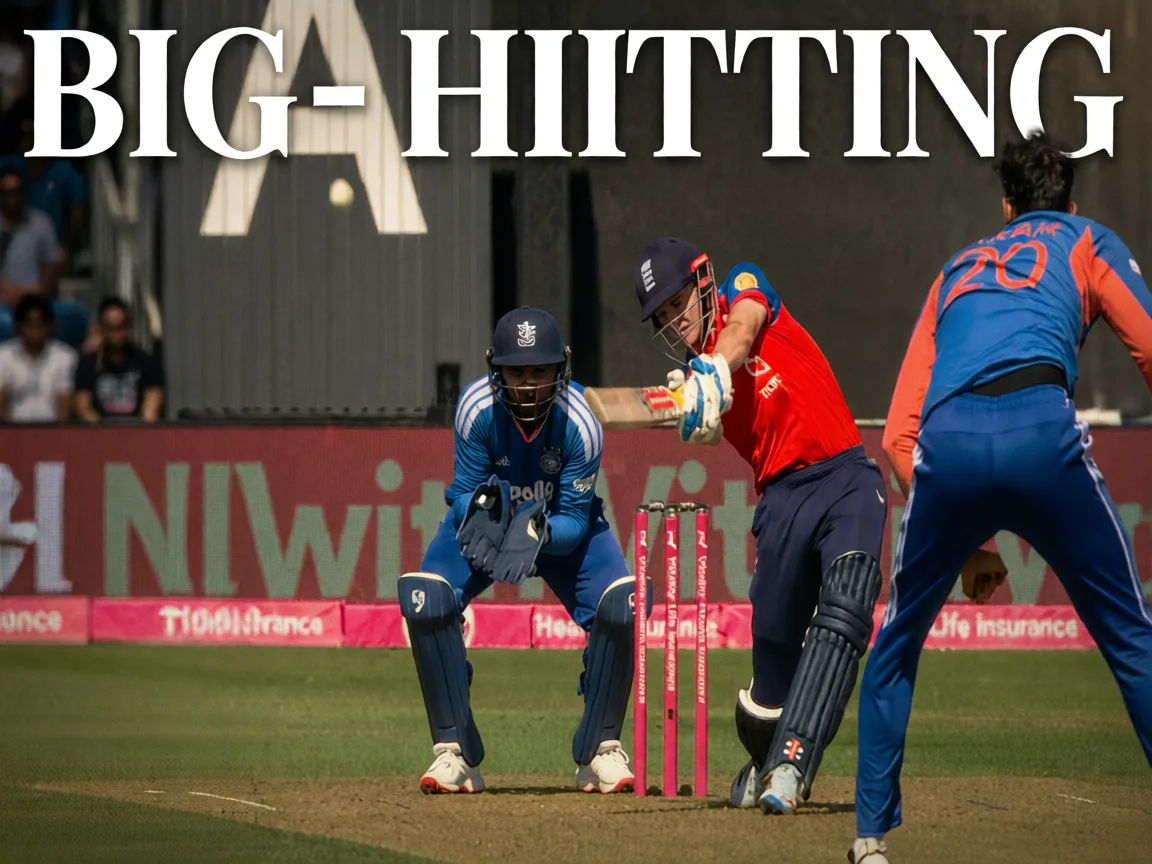
Brook's 19-Ball Fifty Ignites Southampton Finale
Harry Brook smashed a 19-ball half-century against India, turning a dead rubber into a statement of intent for England's white-ball future.

Guess World Cup Star No 40: A Tactical Deep Dive
Test your World Cup knowledge with our tactical analysis quiz. Guess the mystery player through their career stats and tactical profile.

From Paul the Octopus to the Supercomputer: Inside the Netherlands' Data Revolution
The Netherlands are leaning on cold algorithms over psychic octopuses as analytics reshape World Cup prophecy and tactics.