Scotland's World Cup Curse Survives the Expansion Era
A 28-year World Cup drought endures as Scotland fail to progress despite the tournament's expanded 48-team format.
The Format Was Supposed to Change Everything
The 2026 World Cup was billed as the tournament that would finally end decades of heartbreak for mid-tier footballing nations. An expanded field of 48 teams, split into 12 groups of four, with the top two from each group advancing automatically and the eight best third-placed teams also earning passage to the knockout rounds. On paper, it was a lifeline. In practice, it has delivered Scotland their most painful lesson yet: no format, however generous, can compensate for failing to deliver when it matters.
Scotland's elimination from the 2026 World Cup, confirmed after they were unable to finish among the eight best third-placed teams, extends one of international football's most agonizing droughts. The Tartan Army have not seen their country compete at a World Cup since France 1998. That is 28 years without appearing on the sport's grandest stage. Through seven consecutive World Cup cycles, Scotland have fallen short at the qualifying or group stage hurdle, each failure arriving with its own particular brand of torment.
This time, the sting cuts deeper. The expansion to 48 teams was designed explicitly to give nations like Scotland a realistic path. UEFA's allocation increased. The safety net of third-place qualification was introduced. And yet, Scotland found themselves on the wrong side of the arithmetic, their points tally and goal difference insufficient to sneak into that final bracket of eight.
A Familiar Pattern of Near-Misses
Scotland's relationship with World Cup heartbreak is almost literary in its cruelty. There was 1978, when Ally MacLeod's squad arrived in Argentina with genuine belief, only to exit in the group stage after a catastrophic defeat to Peru. There was 1982 and 1986 and 1990, campaigns where Scotland qualified but never escaped the group. And then came the long wilderness, beginning in 2002, that has now stretched across nearly three decades.
Under Steve Clarke's tenure as manager, Scotland experienced a genuine renaissance in European Championship football. They qualified for Euro 2020 (played in 2021), ending a 23-year absence from major tournaments. They qualified again for Euro 2024 in Germany. Clarke built a system, a collective identity, and a sense of belief that had been absent for a generation.
But the World Cup remained the unconquered mountain. Clarke's Scotland have consistently shown they can compete in the European Championship environment, where the margins are slightly wider and the group-stage format historically more forgiving. The World Cup, even in its expanded form, demands a different level of consistency across a compressed group stage where dropped points carry immediate, irreversible consequences.
Tactical Identity: Strengths and Structural Limits
Clarke has typically organized Scotland in a 3-4-2-1 or 5-4-1 shape, prioritizing defensive compactness and exploiting transitions through the wing-backs. The system relies on disciplined low-to-mid block defending, with the back three providing cover and the midfield pair tasked with screening passing lanes into the central corridor.
This approach has produced notable results. Scotland's ability to frustrate technically superior opponents and strike on the counter has been their defining tactical characteristic under Clarke. The wing-backs, whether Andrew Robertson on the left or the rotating options on the right, are asked to provide width in possession and track back diligently out of it.
The problem, however, has always been the other side of the equation: sustained attacking output. Scotland's reliance on transitions means they can struggle to break down organized defenses, particularly against opponents who sit deep and deny space in behind. When Scotland are forced to dictate possession and construct attacks against a low block, the system lacks the creative density in the final third to consistently manufacture high-quality chances.
This tactical limitation has been a recurring theme. In matches where Scotland needed to win rather than simply avoid defeat, the 5-4-1 shape can become a cage. The midfield pair, while industrious, are not typically tasked with progressive ball-carrying or line-breaking passes. The number ten positions behind the striker are often occupied by players whose primary instinct is to press and recycle rather than unlock.
The Third-Place Calculation
The mathematics of the third-place qualification system added an additional layer of complexity. To finish as one of the eight best third-placed teams, Scotland needed not just their own results to align, but a favorable comparison across all 12 groups. Points, goal difference, goals scored, and disciplinary records all factor into the ranking.
This system rewards teams that can absorb pressure in difficult matches but also punish opponents when opportunities arise. A team that draws all three group games 1-1 might finish with three points and a neutral goal difference, which historically has been borderline for third-place qualification. The teams that tend to advance are those who manage at least one convincing victory to inflate their goal difference, even if they lose another match.
Scotland's inability to produce that one emphatic result proved decisive. Without a dominant performance to bolster the aggregate numbers, they were left exposed in the comparative rankings.
What This Means for Scottish Football
The elimination raises uncomfortable questions about the trajectory of the national team program. Clarke has done admirable work in restoring respectability and qualifying for European Championships. But the World Cup remains the ultimate benchmark, and the persistent failure to reach it invites scrutiny of whether the tactical framework, as effective as it is in certain contexts, has a ceiling.
Scotland's player pool, while improved, still lacks the depth of attacking talent available to nations ranked above them. The reliance on a specific system means that when key players are unavailable or out of form, there is limited tactical flexibility. A shift to a more proactive 4-3-3 or 4-2-3-1 shape would demand midfielders capable of dictating tempo and forwards comfortable receiving between the lines, profiles that remain scarce in the current generation.
There is also the broader structural question. Scotland's domestic league, the Scottish Premiership, is dominated by Celtic and Rangers, with limited competitive depth below them. The pathway for young Scottish players increasingly runs through England's Championship and lower Premier League, where tactical development can be uneven. The national team's identity is built on collective organization rather than individual brilliance, which is both its greatest strength and its most significant constraint.
The Clarke Conundrum
In a move that underlines the depth of the disappointment, Steve Clarke has stepped down as Scotland head coach. The manager's position inevitably came under intense discussion following the group exit. Clarke's contract situation and his own ambitions have now shaped this chapter. He has earned enormous respect for transforming Scotland from a side that failed to qualify for anything into a consistent participant at major tournaments. But consistency at the European Championship level, without a World Cup breakthrough, has been perceived as a plateau rather than progress.
"This is a squad that has given everything. The margins at this level are razor-thin, and we came up short. That's the reality of tournament football." — a sentiment echoed within the Scottish camp in the aftermath.
With Clarke's departure, a new voice will take charge. The fundamental challenge remains the same: Scotland must find a way to evolve tactically without abandoning the defensive solidity that has underpinned their revival.
Looking Ahead
The immediate focus shifts to the search for a new manager and the next qualifying cycle, as Scotland aim to break the 28-year curse before it extends into a third decade. The Nations League pathway offers an alternative route to major tournaments, and Scotland's performance in that competition will provide early indicators of the squad's development under new leadership.
For the Tartan Army, this elimination is a bitter pill wrapped in a familiar narrative. Hope was higher than it had been in years, fueled by an expanded format that seemed tailor-made for a nation of Scotland's standing. That it still was not enough only deepens the sense that the World Cup, for Scotland, is less a football tournament and more a recurring test of collective endurance.
The tactical evolution required is clear: more creativity in the final third, more flexibility in approach play, and the courage to abandon the comfort of the low block when chasing games. Whether the talent exists within the current pipeline to facilitate that change will define the next era of Scottish football.
Updated: 2026-06-28 — Added news of Steve Clarke's resignation as Scotland manager following the World Cup exit.
Update:
新增BBC Sport首席体育作家Tom English对苏格兰世界杯出局的个人评论,未提供新的事实数据。
Editorial Integrity
This is an original SportPulse article written by our editorial team. All content is independently researched, written, and reviewed by our writers and editors before publication. We do not publish copied, aggregated, or syndicated content.
SportPulse is committed to original sports journalism. Read our editorial policy or contact us with any questions.
More Like This
All football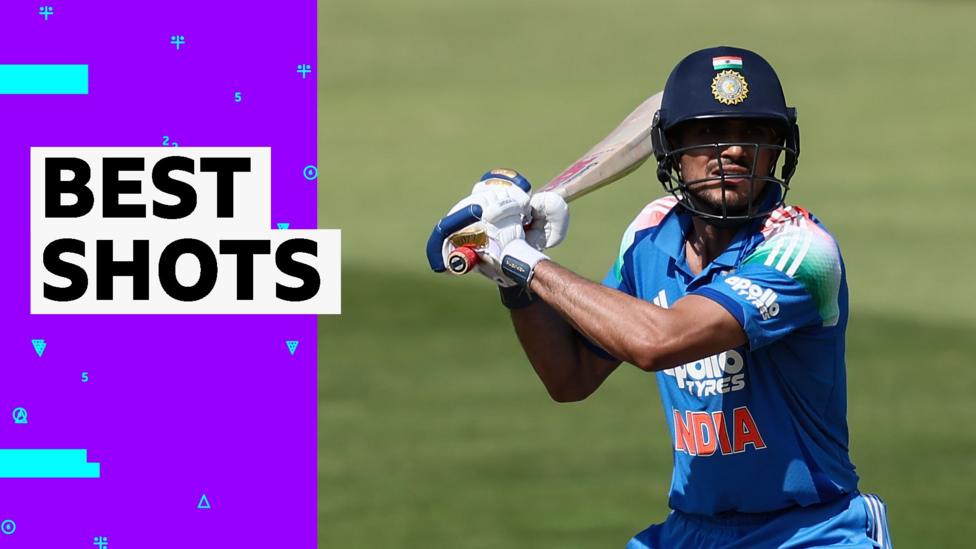
Gill's Captain's Innings Cut Short by Cramp
Shubman Gill's composed 80 against England ended in physical failure, exposing India's batting fragility and raising urgent questions about workload management.
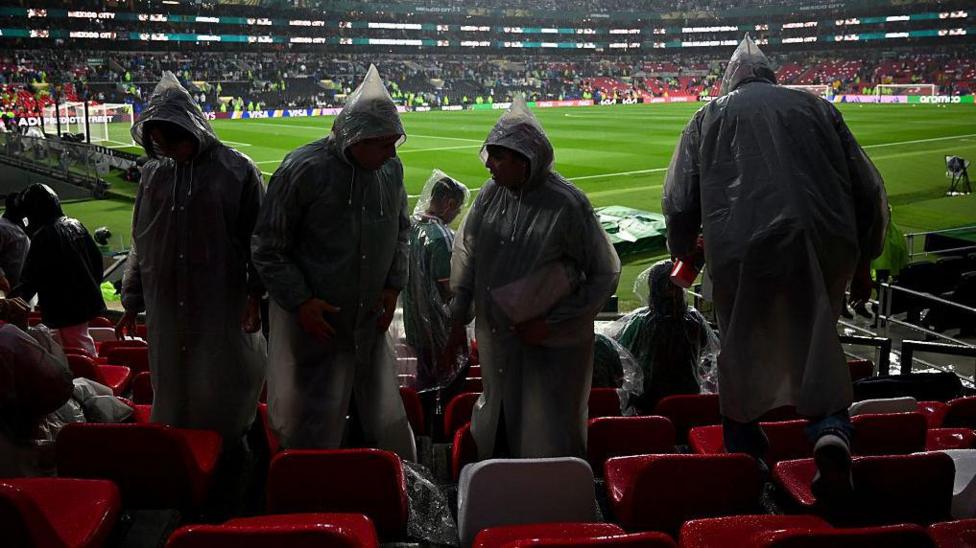
Five Hours of Chaos: How FIFA Left England's Last-16 Tie in Limbo
A scheduling farce left England and Mexico fans stranded for hours before a dramatic FIFA reversal restored order.
At 17, Layla Drury Just Rewrote Manchester United's Record Books
The youngest player in United Women's history now holds another record after signing her first professional deal.