26 Years in the Wilderness: The World Scotland Left Behind
Scotland's men haven't graced a World Cup since 1998 — and the planet barely resembles itself since.
June 10, 1998. Stade de France, Saint-Denis. Scotland walk out for their World Cup opener against the reigning champions, Brazil. John Collins converts from the spot. The Tartan Army roars. The scoreline reads 2-1 to Brazil, and yet there's a strange optimism in the air — a feeling that this Scottish squad, stacked with Premier League and top-flight talent, belongs on this stage.
They didn't know it then. Nobody did. That night in Paris was the last time Scotland would appear at a men's World Cup finals.
Not for one cycle. Not for two. For seven consecutive World Cups and counting, Scotland have watched from the sofa, the pub, or the stands as 31 other nations took the stage without them.
The drought isn't just a footballing footnote. It's a generational scar.
A World That No Longer Exists
Here's what the planet looked like the last time Scotland kicked a ball at a World Cup:
The Scottish Parliament had not yet been reconvened. It wouldn't sit for the first time until May 12, 1999, a full year after Craig Brown's side were eliminated in the group stages.
Google was a Stanford University research project, weeks away from incorporation. The search engine that would reshape human civilization had zero commercial users.
A pint of lager cost roughly £1.90. Today, the average sits north of £4.50 in most Scottish cities, and considerably more in Edinburgh or Glasgow.
Tony Blair had been Prime Minister for 13 months. Boris Johnson was still a journalist. Brexit was not a word.
The Champions League had only existed in its current format for three seasons. The Premier League was six years old.
Apple had just launched the iMac. The iPhone was nine years away.
Tiger Woods had won one major. The Spice Girls were still a functioning unit.
The entire geopolitical, technological, and cultural fabric of daily life has been rewoven since a Scottish player last walked onto a World Cup pitch. That's not nostalgia. That's a measurement of absence.
How Did 1998 Actually Go?
The squad Craig Brown took to France was far from weak. Colin Hendry anchored the defence. John Collins pulled strings in midfield alongside a young Paul Lambert, fresh off winning the Champions League with Borussia Dortmund. Darren Jackson, Craig Burley, and Kevin Gallacher offered attacking threat. David Weir, Tom Boyd, and Jim Leighton brought experience and steel.
The opening match against Brazil? A genuine contest. César Sampaio scored early, Collins equalised from the penalty spot, and for long stretches Scotland believed. A Bebeto goal in the second half sealed it for the Seleção, but Scotland left Saint-Denis with reputations enhanced.
Against Norway, things looked brighter. Craig Burley fired Scotland ahead in what became a tense 1-1 draw. Going into the final group game against Morocco, qualification was still mathematically alive.
Then it collapsed. Morocco tore Scotland apart 3-0 in Saint-Étienne. The campaign was over. Brown's men flew home, tails between their legs but with the quiet dignity of a side that had competed.
Nobody expected it to be the last dance.
The Qualification Graveyard
What followed was a procession of heartbreak that would test the loyalty of any fanbase.
The 2002 World Cup qualifiers saw Scotland finish third in their group behind Croatia and Belgium. Berti Vogts' tenure as manager brought a new era of hope — and immediate disappointment.
2006 was worse. Scotland finished behind Italy and Norway, managing just one away win in the entire campaign.
The 2010 cycle under George Burley and then Craig Levein offered brief sparks before fizzling. Levein's infamous 4-6-0 formation against the Czech Republic in 2010 became a symbol of tactical confusion.
2014 brought Gordon Strachan, arguably Scotland's most respected coach in a generation. He came agonisingly close. A 2-2 draw with Croatia on the final matchday wasn't enough. Scotland finished third, missing out on a playoff spot by a single point.
Strachan's post-match assessment cut deep:
"We're suffering from a lack of physicality in Scottish football. We need to address the genetics of our players."
The comment was controversial, but his frustration was real. Scotland's player pool had thinned dramatically. The days of Hendry, Lambert, and McCoist populating top English clubs were gone.
The 2018 qualifiers brought more pain. Under Strachan again, Scotland were level on points with second-placed Slovakia going into the final round. A 2-2 draw at Slovenia on the last night sealed elimination.
The pattern was merciless: close enough to hope, never close enough to celebrate.
The Euros: A Cracked Window
If the World Cup drought tells one story, the European Championship returns offer a complicated counter-narrative.
Scotland qualified for Euro 2020 (played in 2021), ending a 23-year absence from major tournament football. The moment was electric. David Marshall's penalty save against Serbia in the playoff final sent the entire nation into delirium.
But the tournament itself? Humbling. A 0-0 draw with England at Wembley offered a highlight, but a 2-0 loss to the Czech Republic and a 3-1 defeat to Croatia saw Scotland exit at the group stage without winning a single match.
Steve Clarke's side qualified again for Euro 2024 in Germany. The opening match against the hosts brought a 5-1 demolition by Germany — the worst result in Scotland's major tournament history. A 1-1 draw with Switzerland and a 1-0 loss to Hungary followed. Group stage elimination. Again.
The Euros proved Scotland could reach the party. The World Cup remained the uncracked vault.
Behind the Numbers
Scotland's World Cup qualifying record over the drought makes grim reading:
- Seven failed campaigns since France '98 (2002, 2006, 2010, 2014, 2018, 2022, 2026 ongoing)
- Zero playoff appearances across that span
- Best finish: third place in qualifying groups on multiple occasions
- Only one manager (Strachan, 2014) came within realistic striking distance
The broader structural issue is undeniable. Scotland's domestic league, the Scottish Premiership, ranks outside the top 20 in UEFA's coefficient. Celtic and Rangers dominate domestically but rarely progress deep into European competition. The development pipeline has improved — players like Scott McTominay, Kieran Tierney, and Billy Gilmour have proven Scottish talent can thrive at elite levels — but the depth remains shallow compared to nations with larger populations and wealthier leagues.
What Changes Now?
The 2026 World Cup in the United States, Canada, and Mexico represents a structural shift. FIFA has expanded the tournament to 48 teams, and UEFA's allocation has risen from 13 to 16 places.
For Scotland, that expansion is the single most significant variable in a generation. The margin for error grows. Third place in a group might now yield a playoff route. Second place guarantees qualification.
Clarke's squad is in transition. The Euro 2024 cycle exposed an ageing spine and a lack of cutting edge in the final third. But younger players are emerging. Ben Doak, Lewis Ferguson, and Josh Doig represent a new wave with genuine top-level potential.
The qualification campaign for 2026 is underway. The draw has been made. The fixtures are set.
And Scotland are no longer asking if they can reach a World Cup again. The question has shifted — painfully, cautiously — to when.
The Weight of Time
There's something uniquely Scottish about measuring absence in cultural landmarks. No parliament. No Google. Cheap pints. It's darkly comic, the kind of gallows humour that defines a fanbase conditioned to disappointment.
But beneath the jokes lies a genuine hunger. Twenty-six years is a long time. An entire generation of Scottish football fans has grown up never watching their country at a World Cup. They've seen McFadden's wondergoal against France. They've seen Marshall's save in Belgrade. They've seen McTominay's goals light up Hampden.
They haven't seen Scotland walk out for a World Cup opener.
The world has changed beyond recognition since that night in Saint-Denis. Scotland's place in it hasn't.
Not yet.
Editorial Integrity
This is an original SportPulse article written by our editorial team. All content is independently researched, written, and reviewed by our writers and editors before publication. We do not publish copied, aggregated, or syndicated content.
SportPulse is committed to original sports journalism. Read our editorial policy or contact us with any questions.
More Like This
All football
World Cup Final Half-Time Show: Broadcasters Brace for Unprecedented 25-Minute Spectacle
ITV and BBC face a logistical nightmare as FIFA's Coldplay-curated half-time show threatens to hijack World Cup final coverage.
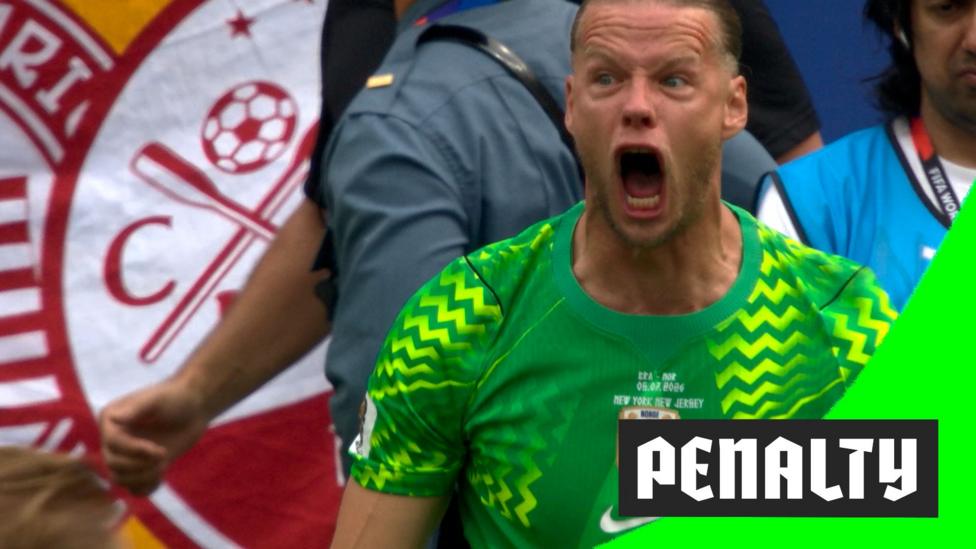
Nyland's Penalty Save Exposes Brazil's Set-Piece Fragility
Orjan Nyland's 14th-minute penalty save from Bruno Guimaraes exposes systemic issues in Brazil's clutch set-piece execution.
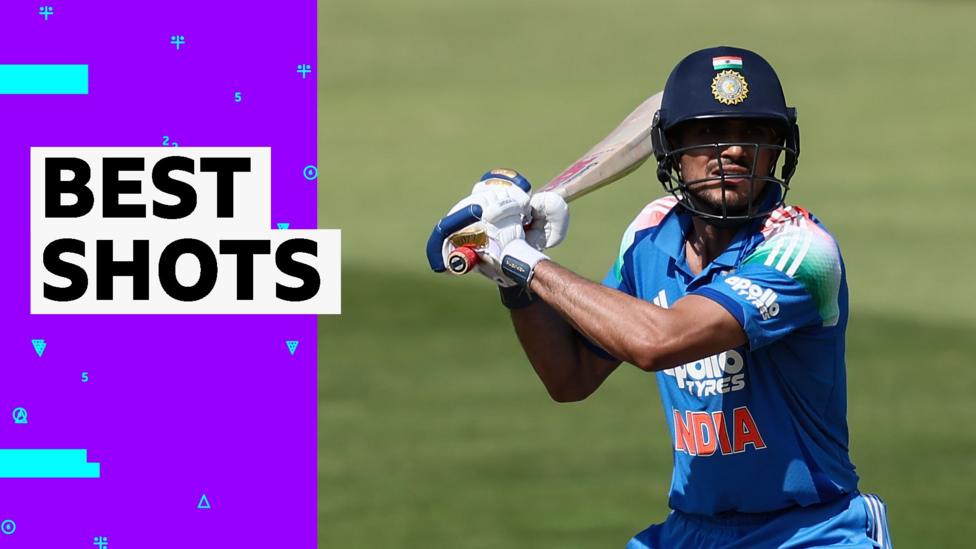
Gill's Captain's Innings Cut Short by Cramp
Shubman Gill's composed 80 against England ended in physical failure, exposing India's batting fragility and raising urgent questions about workload management.