Scotland Had Everything They Wanted. They Still Had Nothing to Show.
Scotland's World Cup collapse raises a haunting question: what happens when perfect preparation meets imperfect mentality?
The Promise They Made Themselves
There was a moment, somewhere between the chartered flights and the bespoke training complexes, the nutritionists and the sleep specialists, the video analysts rewinding footage until their eyes burned, when Scotland's players must have believed this time was different.
This World Cup, they told themselves, would not end the way the others had.
They had everything they asked for. Every detail, every comfort, every marginal gain the modern game demands. The Scottish FA delivered on every front. The preparation was elite, meticulous, borderline obsessive in its thoroughness. And yet, when the boots hit the grass under the American floodlights, the same old story wrote itself.
Scotland didn't perform. Again.
A History That Haunts
To understand why this failure cuts so deep, you have to understand what Scotland's relationship with major tournaments actually looks like. It is not a story of near-misses and gallant defeats. It is a story of unfulfilled expectation stretching back decades.
Scotland have now appeared at multiple World Cups across their history. The record is brutal in its consistency: group stage elimination, again and again, tournament after tournament. Nine World Cup campaigns. Zero knockout stage appearances. That is not bad luck. That is a pattern.
The famous nights exist, of course. Archie Gemmill's goal against the Netherlands in 1978 lives in the Scottish psyche like a folk song everyone knows the words to but nobody can finish. But even that tournament ended in heartbreak, Scotland knocked out on goal difference after a campaign that promised revolution and delivered only a beautiful, fleeting verse.
"We've always had the talent to compete. What we've never had is the tournament mentality to sustain it." — Former Scotland international, speaking candidly about the systemic issue
The question now is no longer whether Scotland can qualify for a World Cup. They proved they can. The question is far more uncomfortable: can Scotland ever actually perform when they get there?
The Preparation Paradox
Here is what makes this particular failure so confounding. The Scotland setup for this World Cup was, by every measurable standard, world-class.
The Scottish FA pulled out every stop. Players spoke before the tournament about how the environment felt different this time. The training base was exactly what the squad requested. Recovery protocols were cutting edge. Tactical preparation was thorough. The federation even ensured the players' families were looked after, removing the kind of off-field distractions that can quietly erode focus over a month-long tournament.
Nothing was left to chance.
And yet.
The gap between preparation and performance has plagued Scotland for generations. Other nations have cracked it. Iceland, with a population smaller than most Scottish cities, reached the quarter-finals of Euro 2016 with a fraction of the resources. Morocco stunned the world at the 2022 World Cup, reaching the semi-finals despite being written off by every pundit breathing. Costa Rica topped a group containing Italy, England, and Uruguay in 2014.
Those nations did not have superior facilities. They did not have better nutrition programs or more advanced GPS tracking. What they had was a collective psychological steel that Scotland, for all their preparation, could not manufacture.
Behind the Preparation: What They Actually Asked For
The details of Scotland's preparation demands paint a revealing picture:
- Specific training pitch dimensions matching their tactical setup
- Dedicated video analysis rooms at the team hotel with custom software
- Individualized meal plans for every squad member, crafted months in advance
- Sleep monitoring technology to optimize recovery between matches
- Family accommodation arrangements to maintain squad morale
Every single request was met. The federation bent over backwards. And the players still could not deliver the one thing that mattered: results.
The Mental Block
This is where the conversation gets uncomfortable, because it forces Scottish football to confront something it has danced around for decades.
The talent exists. It has always existed. Scotland consistently produces players who compete at the highest levels of club football. The current and recent squads have featured performers at Premier League, La Liga, and Bundesliga level. These are not amateurs. These are professionals earning millions, playing under pressure every week in front of 60,000 people.
So what changes when they pull on a Scotland shirt at a major tournament?
The answer, increasingly, looks psychological. Tournament football is a different beast entirely. It compresses pressure, magnifies mistakes, and punishes teams that cannot manage the emotional oscillation between matches. Scotland's history suggests an institutional fragility in these environments, a tendency to either start slowly and chase the tournament or to freeze when the stakes become real.
"It's not about ability. These players are more than good enough. It's about what happens between their ears when that whistle blows on the biggest stage." — Coaching source close to the Scotland setup
The cruel irony is that Scotland's best tournament performances have often come when expectations were lowest. When there is nothing to lose, the team plays with freedom. When preparation breeds hope, and hope breeds expectation, something shifts. The weight becomes visible.
What the Numbers Tell Us
Stripping away the emotion, the statistical picture of Scotland's World Cup campaigns reinforces the narrative of chronic underachievement:
- Goals scored per World Cup match across their history averages below 1.0
- Clean sheets at World Cup tournaments remain a rarity
- Points per group stage match historically sits well below the threshold needed for progression
- Scotland have never won their opening World Cup fixture, a statistic that speaks to the slow starts that have defined their tournament existence
These are not numbers that reflect a lack of talent. They reflect a failure to translate preparation into performance when it matters most.
The Blame Game
The immediate aftermath of Scotland's elimination predictably split opinion. Players pointed to fine margins. Coaches highlighted the quality of opposition. Pundits debated squad selection and tactical choices.
But the uncomfortable truth is that none of those explanations are sufficient on their own.
Fine margins do not explain a pattern spanning decades. The quality of opposition does not explain why similarly ranked nations have historically outperformed Scotland at major tournaments. Squad selection debates are a distraction from the deeper issue.
The problem is cultural. It is embedded in the very fabric of how Scottish football approaches tournament competition, from grassroots to the senior setup. And until that is confronted honestly, no amount of preparation, no matter how sophisticated, will bridge the gap.
The Federation's Position
The Scottish FA now faces difficult questions. Investment in preparation was significant. The return on that investment was negligible. There will be those inside Hampden Park who argue the process was right and the margins were thin. There will be others who point to the result and say the process clearly was not right at all.
Both arguments have merit. Neither solves the problem.
What Comes Next
The cycle threatens to repeat. Scotland will enter the next qualification campaign with renewed optimism. New players will emerge. The squad will grow and evolve. The federation will invest again in preparation, and the players will speak about feeling ready, about this time being different.
The question is whether anyone will believe them.
For Scottish football to genuinely break the cycle, several things need to happen. Tournament-specific psychological coaching must become embedded in the squad culture, not treated as an optional add-on. Youth development needs to prioritize composure under pressure as much as technical ability. And the federation needs to study what Iceland, Morocco, Costa Rica, and other overachieving nations have done differently, not in terms of facilities or tactics, but in terms of collective identity and mental resilience.
The talent will always be there. Scotland produces footballers. That has never been the issue.
The issue is what happens when those footballers arrive at the moment they have spent their entire lives preparing for and discover that preparation alone is not enough.
It never was.
Scotland's World Cup record remains one of international football's great paradoxes: a football-obsessed nation with passionate support, genuine talent, and now world-class preparation that simply cannot translate any of it into tournament success. Until that changes, the cycle will continue to turn.
Editorial Integrity
This is an original SportPulse article written by our editorial team. All content is independently researched, written, and reviewed by our writers and editors before publication. We do not publish copied, aggregated, or syndicated content.
SportPulse is committed to original sports journalism. Read our editorial policy or contact us with any questions.
More Like This
All football
Knockout Heartbreak and Quiet Triumphs on a Wild Final Group Night
England cruise through, Clarke walks away from Scotland, and Iran suffer devastating last-gasp elimination at World Cup 2026.

Lions Rookie Terrion Arnold Named Primary Conspirator in Kidnapping Arrest
Detroit's first-round pick faces shocking felony charges in Tampa, threatening to derail a promising career and a franchise's defensive rebuild.
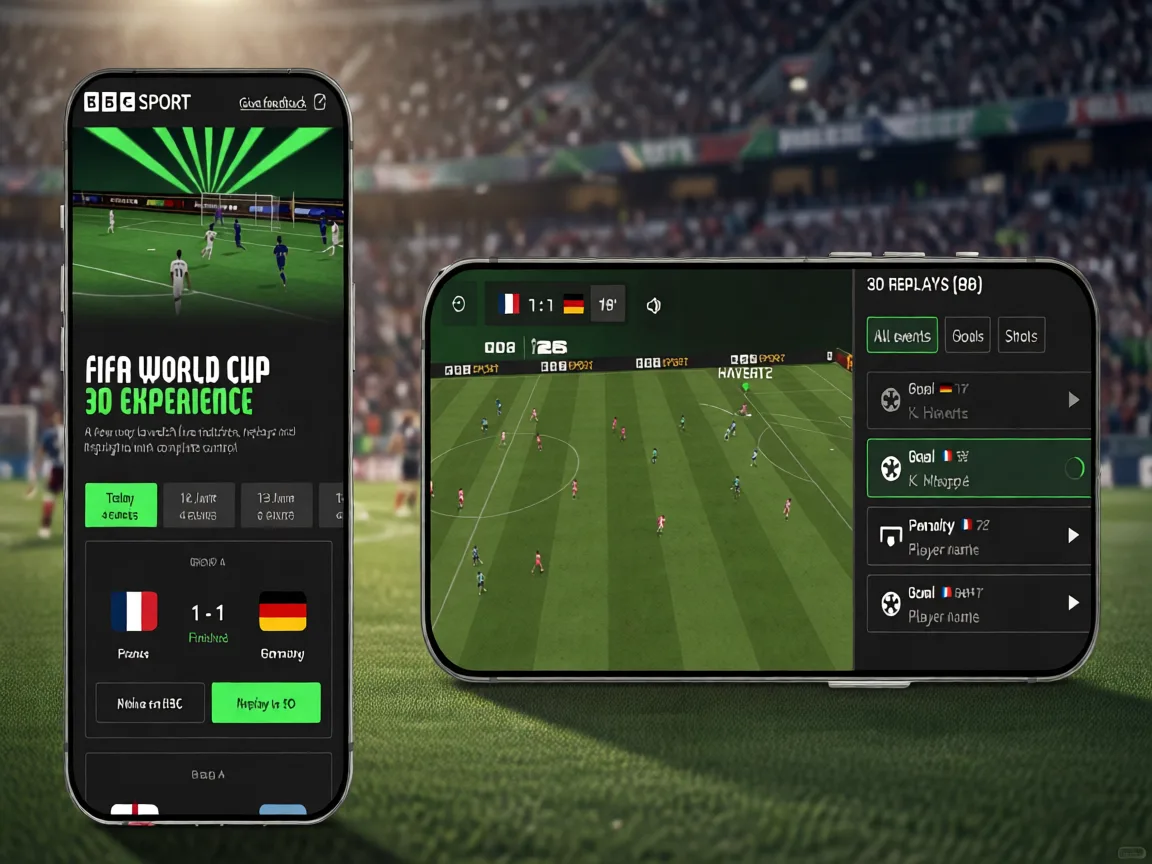
Reliving the World Cup Final Through Eleven Pairs of Eyes
360-degree tactical replay technology lets us dissect the World Cup final from every spatial and positional angle imaginable.