Scotland's Safety Net: How 48-Team Format Rewrites the Knockout Equation
With 32 of 48 teams advancing at the 2026 World Cup, Scotland's path to the knockouts has never been wider.
The Math Has Never Been More Forgiving
Here is the number that changes everything for Scotland: 32 of 48. That is how many teams will advance to the knockout rounds of the 2026 FIFA World Cup in the United States, Canada, and Mexico. It is, by a considerable margin, the most generous elimination threshold in tournament history.
Put another way, two-thirds of every nation that boards a plane to North America will still be playing football past the group stage. It is genuinely harder to go home early than it is to survive. For a country that has not featured at a World Cup since France 1998 and has never advanced past the group stage in eight previous tournament appearances, the expanded format represents a seismic structural advantage.
Scotland do not need to top their group. They do not even need to finish second. A third-place finish, provided it ranks among the eight best across all 12 groups, is enough. The safety net is wide, and Steve Clarke's side knows it.
How the 2026 Format Actually Works
The expanded tournament splits 48 nations into 12 groups of four. Each team plays three group matches, just as in the traditional format. The difference is in who advances.
The top two from every group qualify automatically — that is 24 teams. Then the eight best third-place finishers across all groups fill out the remaining knockout spots, bringing the total to 32. It is the same math that has operated at the European Championship since Euro 2016, where the format proved wildly successful and threw up some of the tournament's most dramatic storylines.
At Euro 2016, Portugal finished third in their group and went on to win the entire tournament. Iceland, one of the eight best third-place teams, stunned England in the Round of 16. Northern Ireland and the Republic of Ireland both advanced as third-place finishers. The format rewarded consistency over perfection.
FIFA has adopted that blueprint wholesale. For Scotland, it means that a campaign built on resilience, discipline, and one or two results against the group's heavyweights could be enough.
Scotland's Historical Burden
The weight of Scottish football history at the World Cup is well documented and largely bleak. Eight tournaments, zero knockout appearances. The famous campaigns of 1974 and 1978 — where Scotland exited unbeaten yet still failed to progress — are etched into the national psyche as both source of pride and recurring heartbreak.
In 1974, Scotland drew with Brazil and Zaire, beat Zaire, but went out on goal difference behind Brazil and Yugoslavia. In 1978, Archie Gemmill's iconic goal against the Netherlands was not enough after defeats to Peru and Iran. Both times, Scotland were good enough to survive in a 32-team format. Neither time did they get the chance.
The 2026 expansion essentially guarantees that a team capable of earning four or five points from three group matches will advance. Scotland's modern squads under Clarke have demonstrated exactly that level of competitiveness in European Championship qualifying and Nations League campaigns. At Euro 2020, Scotland qualified for a major tournament for the first time in 23 years and held England to a 0-0 draw at Wembley. At Euro 2024 in Germany, they competed hard against the hosts in the opening match before fading.
The talent pool is deeper now than at any point in the last two decades. Scott McTominay has become a genuine international difference-maker. John McGinn offers Premier League-level consistency. Kieran Tierney, when fit, provides quality at left-back that few nations outside the top 10 can match. Billy Gilmour brings composure in midfield that Scotland historically lacked at the highest level.
The Third-Place Sweet Spot
Let us be specific about what Scotland realistically need. In a group of four, a team plays three matches. The possible outcomes range from nine points (three wins) to zero.
Historical data from European Championships using the same third-place format suggests that three to four points is the threshold for advancing as one of the best third-place teams. In Euro 2016, four points comfortably qualified. In Euro 2020, three points were enough for several nations. In Euro 2024, the cut-off remained in the three-to-four-point range.
Translating that to Scotland's situation: a win, a draw, and a defeat in the group stage would very likely be sufficient. That is not an unrealistic target. It does not require beating a tournament favourite. It requires beating the weakest team in the group and taking a point off one of the stronger sides.
Under Clarke, Scotland have shown a particular knack for grinding out results against technically superior opponents. The defensive structure is well-drilled. The set-piece threat is genuine. The mentality has shifted from hoping to compete to expecting to compete.
The Caveats Worth Considering
The expanded format is not a golden ticket. 16 teams will still be eliminated, and Scotland cannot afford to treat qualification as a formality. Group composition matters enormously. Drawn against two of the world's top 15 alongside a competitive mid-tier opponent, and even three points might not be enough.
There is also the question of what happens after qualification. Advancing as a third-place team often means facing a group winner in the Round of 32 — a side that has won all three matches and carries momentum. Portugal in 2016 pulled off the miracle, but they had Cristiano Ronaldo. Scotland's knockout ceiling is lower, but the experience of playing in those high-stakes matches alone would represent transformative progress for the programme.
Fitness across a condensed group stage is another variable. The 2026 tournament will feature matches spread across 16 cities in three countries, with travel distances that dwarf anything seen at previous World Cups. Squad depth and recovery management will matter more than ever.
What This Means for Scottish Football
The expanded World Cup is not just a competitive opportunity for Scotland. It is a financial and developmental lifeline. FIFA's prize money distribution means that even group-stage participants receive significant funding. Advancing to the knockout rounds multiplies that figure. For the Scottish Football Association, which operates on a fraction of the budget available to England, Germany, or France, every pound matters.
More importantly, World Cup participation accelerates player development in ways that qualifying campaigns cannot replicate. Young Scottish players competing against world-class opposition in a tournament environment gain experience that filters back into the national team pipeline for a decade.
Clarke has spoken openly about building a squad capable of sustained tournament participation rather than one-off qualification. The 48-team format makes that ambition structurally viable. Scotland no longer need to be one of Europe's 13 best teams to reach a World Cup. They need to be competitive in qualifying and then disciplined enough to take four points from a group of three matches.
The bar has not disappeared. But it has dropped lower than at any point in the tournament's 96-year history. For a nation starved of World Cup football for nearly three decades, that shift is not insignificant. It is everything.
What It Means
The 2026 World Cup's 48-team, 32-advance format fundamentally alters Scotland's tournament calculus. Third place is no longer elimination — it is a viable path. The historical burden of perfect group-stage campaigns no longer applies. Scotland need competence, not brilliance. They need to be organised, clinical against weaker opponents, and stubborn enough to steal a point from the group's top seeds. Clarke has built exactly that kind of team. The question is no longer whether Scotland can qualify for a World Cup. It is whether they can seize the most forgiving format the sport has ever offered and finally break the knockout-stage curse that has defined them for half a century.
Editorial Integrity
This is an original SportPulse article written by our editorial team. All content is independently researched, written, and reviewed by our writers and editors before publication. We do not publish copied, aggregated, or syndicated content.
SportPulse is committed to original sports journalism. Read our editorial policy or contact us with any questions.
More Like This
All football
McCrorie: McInnes Was the Only Reason I Chose Rangers Over England
Ross McCrorie turned down English offers to return to Ibrox, citing Derek McInnes as the decisive factor in his homecoming.
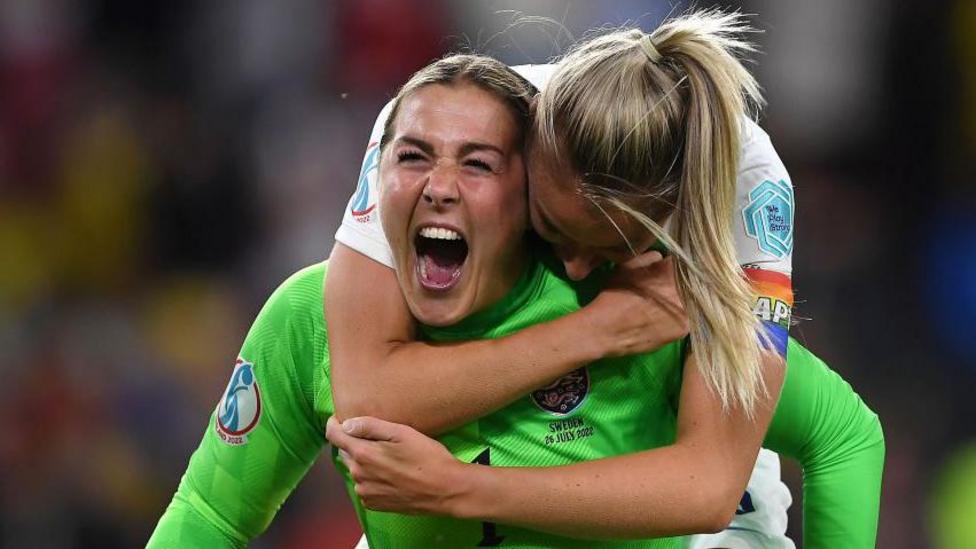
Earps Faces the Spotlight Again After London City Switch
Mary Earps admits uncertainty about returning to the spotlight after her surprising move to the London City Lionesses.

Klopp in Talks for Germany Job After Nagelsmann Quits Following World Cup Exit
Julian Nagelsmann steps down after Germany's World Cup failure, and the DFB is now in direct discussions with Jürgen Klopp.