Selling the Soul: Juventus and the Slow Death of Football's Moral Architecture
The crisis at Juventus is not an aberration. It is the logical endpoint of a sport that sold itself to the highest bidder.
The Confession That Echoes Through Turin
There is a moment in every institution's decline when someone inside the machine says the quiet part aloud. At Juventus, that moment came not from a whistleblower in a courtroom or a leaked document splashed across the front page of La Gazzetta dello Sport, but from a place far more disquieting: the interior of a soul that knew it had been compromised. "I feel like I'm selling my soul," a figure inside the club confessed to journalist Tobias Jones during his 2023 investigation into the financial scandals that had engulfed Italian football's most storied institution.
That confession, preserved now in the amber of The Guardian's long-read archives and recently revived in podcast form, deserves to be heard not as a historical curiosity but as a living document. Because the crisis at Juventus was never merely about Juventus. It was, and remains, a mirror held up to the entire enterprise of modern professional football.
The Turin giants, 36-time champions of Italy, the club that wore black and white like a tuxedo to every occasion, were exposed as having manipulated their balance sheets with the brazenness of a poker player dealing from the bottom of the deck. Salary manipulations, false accounting, inflated transfer valuations. The details read like a forensic audit of institutional arrogance.
But the deeper question Jones posed then, and which reverberates with even greater urgency now, is the one that should keep every football administrator awake at night: Is Juventus the disease, or merely the most visible symptom?
The Architecture of Deception
To understand what happened at Juventus, you must first understand the ecosystem in which it operated. Italian football has always existed at the intersection of glamour and dysfunction, a world where the beautiful game is played against a backdrop of political intrigue, family dynasties, and creative accounting that would make Arthur Andersen blush.
The plusvalenze scandal, at its core, was a mechanism by which clubs inflated the book value of players during transfers, creating artificial capital gains that could be used to balance the books. Juventus were not alone in this practice. Multiple Serie A clubs were implicated in the investigation. But Juve were the flagship, the institution whose stature made the fall from grace all the more seismic.
When Andrea Agnelli resigned as chairman in November 2022, along with the entire board of directors, it was not a quiet departure. It was an earthquake. The Agnelli family had controlled Juventus for nearly a century. The dynasty that gave Italy both Fiat and football, that wove the club's identity into the fabric of Turin itself, was suddenly scrambling for the exits.
The numbers were staggering. Juventus reported a capital loss of €254.3 million for the 2021-22 fiscal year, the largest in Italian football history. The club had recorded suspicious transactions involving player swaps that inflated transfer values by tens of millions. Federico Bernardeschi, Miralem Pjanić, Arthur Melo: names that became shorthand for a system built on the arithmetic of illusion.
"The numbers on the page told a story of health. The truth underneath was something else entirely."
The Italian Football Federation (FIGC) imposed a 15-point deduction in January 2023, later reduced to 10 points on appeal, a penalty that ultimately cost Juventus a place in the Champions League. For a club that had built its modern identity on the revenues of European competition, this was not merely a sporting punishment. It was an existential threat.
A History of Forgetting
There is a peculiar amnesia that afflicts football's institutions. Juventus had been here before, or somewhere hauntingly close. In 2006, the Calciopoli match-fixing scandal stripped the club of two Serie A titles and sent them tumbling into Serie B. It was supposed to be the lesson that changed everything. The purgatory from which they would emerge chastened, reformed, renewed.
And in a sense, they did emerge. Juventus returned to Serie B, won promotion immediately, and over the next decade assembled a run of nine consecutive Serie A titles from 2012 to 2020, a streak of dominance that reshaped the league's competitive landscape. The signing of Cristiano Ronaldo in 2018 for €112 million was meant to be the capstone, the statement that Juventus had not only recovered from Calciopoli but transcended it.
But beneath the trophies and the galáctico signings, the club was accumulating a different kind of debt: moral, financial, structural. The Ronaldo deal, while commercially brilliant in the short term, created a wage structure that the club's revenues could not sustain. When the pandemic emptied stadiums and sponsors tightened their belts, the gap between Juventus's ambitions and its actual income became a chasm.
The plusvalenze manipulations were not the cause of Juventus's crisis. They were the symptom of a club that had been running on the fumes of its own mythology for years, terrified of admitting that the emperor's wardrobe had been acquired on credit.
The Deeper Rot
Here is where Jones's original question cuts deepest. Is the crisis at Juventus symptomatic of a deeper rot in world football?
The evidence, examined honestly, is overwhelming. Barcelona, the club that once declared itself més que un club, leveraged its future television revenues to the tune of billions of euros while posting losses that would cripple most nations. Manchester City have faced 115 charges from the Premier League for alleged financial irregularities spanning nearly a decade, a case whose resolution continues to hang over English football like a storm that refuses to break. Paris Saint-Germain operate under the financial patronage of an entire nation-state, their transfer market spending detached from any recognizable commercial logic.
The pattern is clear. Football's elite clubs have, one by one, abandoned the pretense of financial self-sufficiency. They have replaced it with a theology of growth-at-any-cost, where the balance sheet is not a reflection of reality but a canvas upon which reality can be painted.
What makes the Juventus case particularly instructive is its ordinariness. This was not a state-owned club backed by sovereign wealth. This was not a billionaire's plaything. Juventus was supposed to be the model: a publicly traded company, accountable to shareholders, governed by the rules of the market. If even they could not resist the temptation to cook the books, what hope is there for the rest?
The Human Cost
Jones's investigation surfaced something that the financial reports never could: the human toll of institutional corruption. The individuals inside Juventus who knew what was happening, who felt the moral weight of complicity, who went to work each day knowing that the numbers did not add up but that their livelihoods depended on pretending otherwise.
"I feel like I'm selling my soul." That sentence is not about accounting. It is about the slow erosion of conscience that occurs when an institution demands loyalty over integrity, when the price of belonging is silence.
This is the crisis that no points deduction can address. Football clubs are not just businesses. They are communities, identities, repositories of collective meaning. When the people inside them feel hollowed out by the machinery they serve, something far more valuable than a league position has been lost.
The Reckoning That Wasn't
The uncomfortable truth about Juventus's punishment is how little it actually changed. The points deduction stung. The banishment from European competition hurt the balance sheet. But the structural incentives that created the crisis remain firmly in place.
FFP (now rebranded as UEFA's Financial Sustainability regulations) has proven to be less a safeguard than a speed bump. Clubs continue to find creative ways around its provisions. The gap between the haves and the have-nots in European football has not narrowed; it has widened into a canyon.
Juventus, for their part, have responded to the crisis with the pragmatism that Italian football has always prized. They appointed a new board, cooperated selectively with investigators, and began the long process of rebuilding their reputation. Under Thiago Motta's management in the 2024-25 season, the club has shown flashes of sporting recovery, though the financial constraints imposed by years of mismanagement continue to limit their market ambitions.
But the deeper question remains unanswered. The sport has not reckoned with why Juventus did what they did. It has not confronted the systemic pressures that make financial doping not just tempting but, in the logic of modern football, rational.
"The rules say you cannot spend beyond your means. The culture says you must spend beyond your means or be left behind. Those two truths cannot coexist without someone cheating."
The Mirror and the Window
Tobias Jones's piece from the archives reads now as something more than journalism. It reads as prophecy. The questions it raised in 2023 have not been answered. They have been multiplied.
The Agnelli dynasty's departure from Juventus was supposed to mark the end of an era. Instead, it marked the continuation of a pattern that stretches across the sport: institutions built on ambition that outpaces integrity, governed by people who discover too late that the cost of the game they have built is the very thing that made football worth building.
Juventus will survive. Clubs of that magnitude always do. The black and white shirts will fill the Allianz Stadium again. The anthem will play. The goals will come.
But somewhere in Turin, in an office or a dressing room or a quiet corner of the club's Vinovo training ground, the question lingers like smoke after a fire: What did we sell, and was it worth the price?
Football, as a whole, would do well to ask itself the same. Because the rot at Juventus was never confined to Turin. It lives in every inflated transfer fee, every creative accounting trick, every institution that values the appearance of strength over the substance of integrity.
The soul of the game is not sold in a single transaction. It is sold gradually, quietly, in a thousand small compromises that no one notices until the bill comes due. And in 2026, as the sport hurtles toward ever-larger broadcast deals and ever-more-exotic ownership structures, that bill is still being written.
Editorial Integrity
This is an original SportPulse article written by our editorial team. All content is independently researched, written, and reviewed by our writers and editors before publication. We do not publish copied, aggregated, or syndicated content.
SportPulse is committed to original sports journalism. Read our editorial policy or contact us with any questions.
More Like This
All long-reads
Flower Says No: England's Test Coaching Search Hits a Wall
Andy Flower's rejection leaves England scrambling for Brendon McCullum's successor in acandidate pool that suddenly looks alarmingly thin.
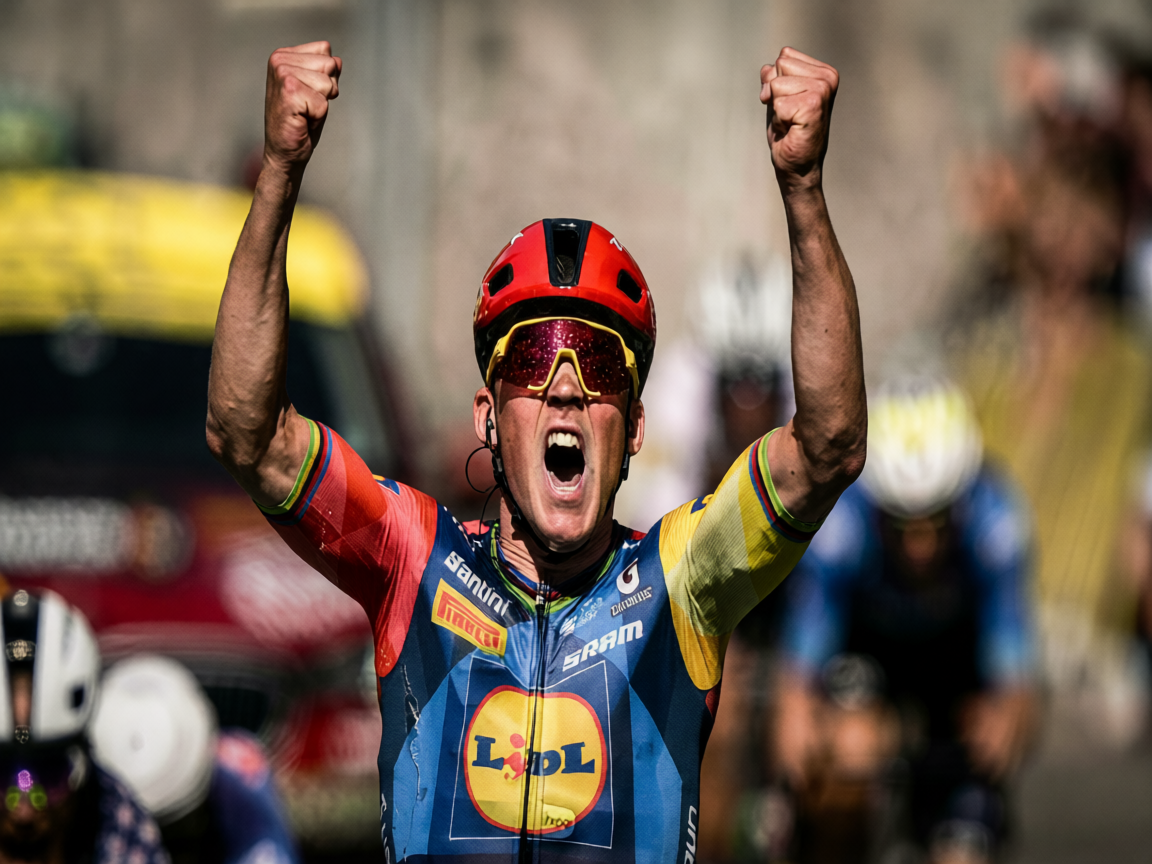
Pedersen’s Sprint Shatters Tour Heat, Pogacar Loses Yellow
Mads Pedersen exploits brutal conditions to claim Stage 4, stripping Tadej Pogacar of the race lead.

Agnew Slams England Cricket's Toxic Drinking Culture
Jonathan Agnew demands accountability after the Stokes-Atkinson nightclub incident, exposing England cricket's deeper alcohol problem.