The Man Behind the Curtain: Serena Williams' Secret Keeper Speaks
Serena Williams' British hitting partner kept tennis' biggest secret — now he's telling his story.
The Invisible Man of Tennis
There is a ghost in every great champion's story. Someone who exists in the margins of the highlight reel, who occupies the practice court at six in the morning but never the center court under the lights. Someone who knows what the cameras cannot capture, who signs a confidentiality agreement before picking up a racket.
For Serena Williams, that ghost was a British hitting partner whose name most fans have never heard. He has now stepped into the public eye, speaking to the BBC about his role in one of tennis' most closely guarded secrets. The revelation is not just a footnote in Serena's glittering career. It is a window into a world that the sport's elite carefully construct and fiercely protect.
The story of how a British player ended up feeding balls to the most dominant force in women's tennis is, on the surface, a tale of access and opportunity. Underneath, it is a story about trust, silence, and the extraordinary lengths that a team will go to in order to shield their principal from the noise.
What a Hitting Partner Actually Does
To understand the weight of this secret, you first have to understand the job itself. A hitting partner is not a coach. They are not a strategist. They are, in the most literal sense, the person who stands on the other side of the net and simulates what the opponent will do. They mirror styles. They replicate pace. They run drills until the patterns are burned into muscle memory.
The best hitting partners are chameleons. On a Monday they might be asked to play like Maria Sharapova, all flat groundstrokes and towering angles. By Wednesday, they are channeling Simona Halep, absorbing pace and redirecting with surgical precision. The job demands technical versatility, physical endurance, and a temperament thick enough to absorb the frustration of a champion who has just shanked a forehand into the net for the fourth time.
It is, in many ways, the most thankless role in professional sport. The pay is decent but not lavish. The travel is relentless. The recognition is virtually nonexistent. And yet, for the handful of players trusted to fill this role for someone like Serena Williams, the job carries a weight that few outsiders comprehend.
"You become part of the inner circle whether you want to or not. The things you see on the practice court, the conversations, the physical condition of the player... you carry all of that with you. And you carry it silently."
The Culture of Secrecy
Serena's team operated with a discipline that would make a military intelligence unit nod in respect. This was not accidental. Across her career, Serena navigated a landscape where opponents, media, and even rival coaches were constantly trying to decode her physical condition, her tactical preparations, and her mental state.
Think about what was at stake. A single report that Serena was nursing a shoulder injury before a Grand Slam could shift bookmaker odds, change an opponent's game plan, and create a media firestorm that would follow her into the tournament. The margins between dominance and vulnerability were thinner than the public ever understood.
Her British hitting partner's involvement in the secret speaks to a broader truth about elite tennis. The sport is, at its foundation, an individual pursuit. But the ecosystem around a champion is anything but. Serena's inner circle included her father Richard, her mother Oracene, coaches like Patrick Mouratoglou, physiotherapists, nutritionists, and yes, hitting partners who were sworn to discretion.
The hitting partner occupies a unique position in this ecosystem. They are close enough to the fire to feel the heat but distant enough from the decision-making to avoid scrutiny. Journalists rarely ask them questions. Rival teams rarely consider them a source of intelligence. And that invisibility is precisely what makes them valuable, and precisely what makes the trust placed in them so significant.
Career by Numbers
- 23 Grand Slam singles titles, the most in the Open Era
- 73 WTA singles titles across a career spanning nearly three decades
- 319 weeks as the world No. 1
- 14 Grand Slam doubles titles alongside sister Venus
- 4 Olympic gold medals (one singles, three doubles)
- Win-loss record of 858-155 in singles, a winning percentage of 84.7%
- 73 titles across all surfaces, demonstrating unmatched versatility
- First held the No. 1 ranking in July 2002, last held it in 2017
The Trust Equation
What does it take to be trusted by Serena Williams? This is not a trivial question. Serena was famously guarded about her inner world. She could be warm and expansive in press conferences, but the real Serena, the one who arrived at practice courts before dawn, the one who nursed injuries she refused to discuss publicly, existed behind a wall that very few were permitted to breach.
Her British hitting partner's account reveals something essential about how that wall was built. It was not constructed from paranoia. It was constructed from experience. Serena had spent her entire career navigating a sport that simultaneously celebrated and scrutinized her more intensely than any other athlete of her generation. She had learned, through decades of headlines and half-truths, that the only way to control her narrative was to control her information.
The hitting partner became part of that control architecture. By keeping him close, Serena ensured that the details of her practice sessions, her physical state, and her tactical preparations remained inside the perimeter. By keeping him silent, she ensured that no leak, however small, could compromise a campaign.
This is not unique to Serena. Novak Djokovic has spoken about the tight circle he maintains around his preparation. Roger Federer was legendary for compartmentalizing his personal and professional lives. But the scale of secrecy surrounding Serena's operations was, by all accounts, extraordinary even by elite standards.
The British Connection
There is something particularly intriguing about the nationality of this particular confidant. British tennis has long occupied an awkward position in the global hierarchy, capable of producing occasional contenders but never quite sustaining a dynasty. The idea that a British player could find his way into Serena Williams' inner circle is a testament to the individual, certainly, but also to the networks and relationships that bind the global tennis community together.
The practice courts of the sport's major tournaments are melting pots. Players from different countries, different tiers, different trajectories collide in these semi-public spaces. And it is here, in the unglamorous hours between matches, that relationships are forged that transcend the rankings.
For this particular Briton, the path to Serena's team likely ran through reputation. Hitting partners are recruited through word of mouth, through the recommendations of coaches who have watched them play and trusted them to perform under specific conditions. The ability to sustain a rally at the required level is only the entry ticket. The ability to keep one's mouth shut is the qualification that actually matters.
The Weight of a Secret
Now that the story has emerged, it invites a broader reflection on the human cost of secrecy in elite sport. The hitting partner carried this story for years. He knew things that the public did not, things that the media would have paid handsomely to publish, things that would have altered the public's understanding of specific tournaments and specific moments.
And yet he said nothing. Not because of legal obligation alone, though confidentiality agreements in professional tennis are standard and enforceable. But because of something more personal. He had been trusted. He had been let inside the perimeter. And to betray that trust would have been to violate a code that, for people who operate at this level, matters more than money or exposure.
This is the unspoken contract of the hitting partner. You give your time, your body, and your silence. In return, you get proximity to greatness. You get to stand three feet away from Serena Williams and watch her hit a tennis ball in a way that no one else on the planet can. You get to witness the work behind the spectacle.
For many, that exchange is more than enough.
Legacy and the Unseen
Serena's legacy is measured in titles, in records, in the barriers she shattered and the generations she inspired. Twenty-three Grand Slam singles titles speak for themselves. But every champion's career is also shaped by the people who never make the highlight reel, who never hear their name chanted from the stands, who never lift a trophy.
The British hitting partner is one of those people. His decision to speak now, after Serena's retirement, is itself a kind of tribute. He is not seeking fame. He is not settling scores. He is simply telling a story that, until now, existed only in the privileged space between two people and a tennis net.
And perhaps that is the most fitting coda to Serena's career. The greatest player of her generation, and arguably any generation, was surrounded by people who loved the game enough to protect its mysteries. People who understood that some stories are worth more when they are kept.
In the end, the secret was never really about what happened on the practice court. It was about the trust between a champion and the person standing on the other side of the net. That kind of trust does not expire. It does not require a confidentiality agreement. It is built in the silence of early mornings and the sweat of shared purpose.
Some things are bigger than the sport itself.
Editorial Integrity
This is an original SportPulse article written by our editorial team. All content is independently researched, written, and reviewed by our writers and editors before publication. We do not publish copied, aggregated, or syndicated content.
SportPulse is committed to original sports journalism. Read our editorial policy or contact us with any questions.
More Like This
All tennis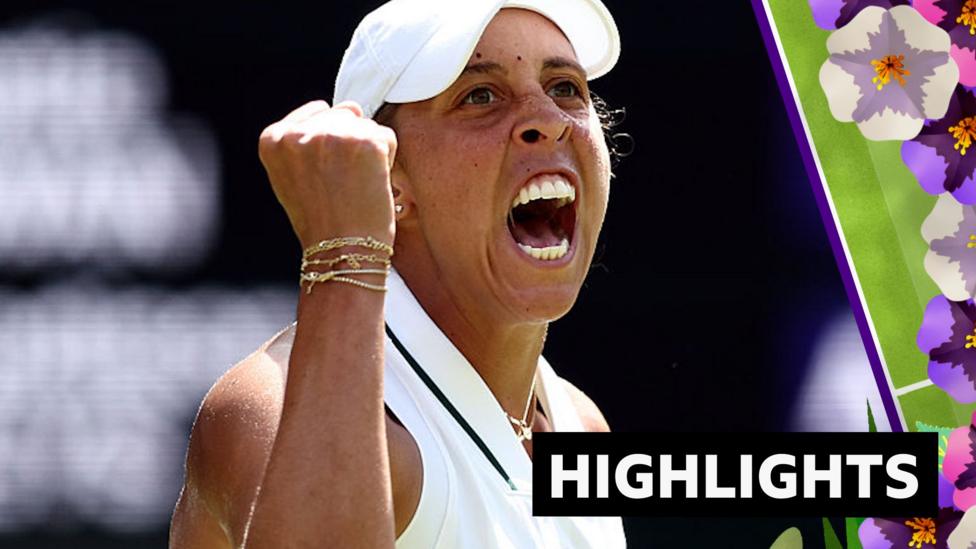
Keys Powers Past Swan to End British Women's Singles Dream
Madison Keys dismantled Katie Swan in straight sets, extinguishing Britain's last hope in the women's draw.
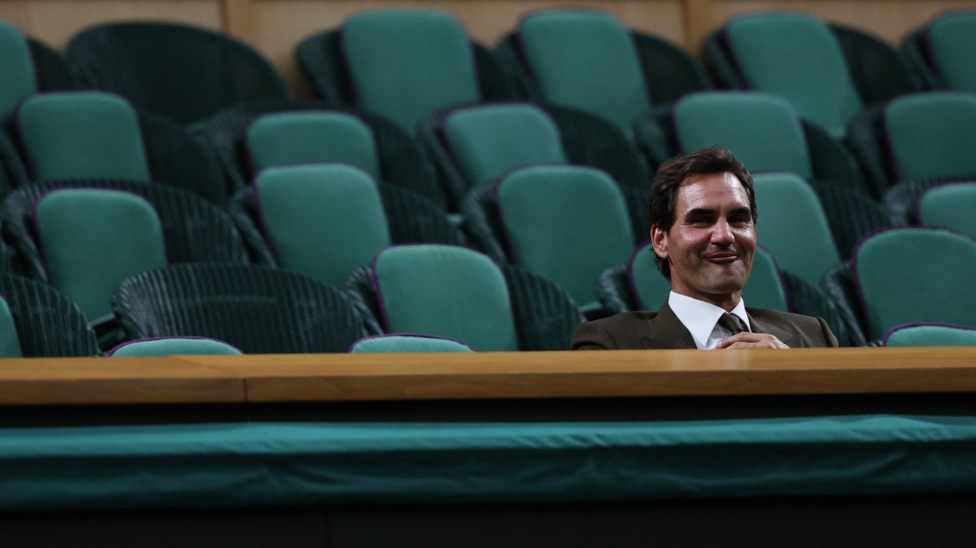
Behind Wimbledon's Royal Box: How Centre Court's Most Exclusive Seats Get Filled
Wimbledon's royal box is sport's most exclusive invitation, where celebrity, diplomacy, and tradition collide on Centre Court.
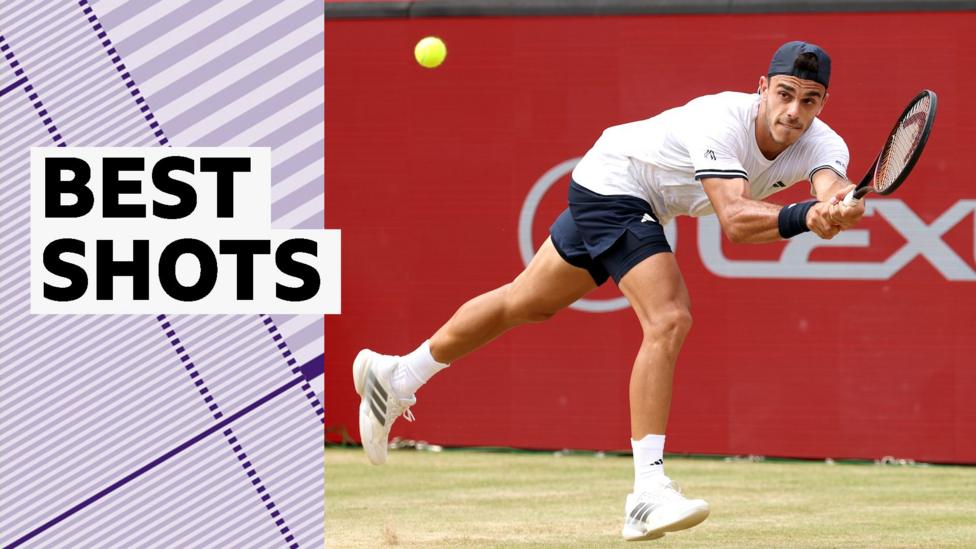
The Argentine Who Learned to Fly on Grass
Francisco Cerundolo's stunning Queen's Club run is rewriting what an Argentine can do on a lawn.