The Shadow Economy of Italy's Curva: A Year Inside the Ultra Underworld
A veteran ultra's story reveals how Italian football's terrace culture became aparallel state of ideology, violence, and organized crime.
The Smoke Beneath the Stadium
There is a moment, standing in the curva as the smoke from a deployed flare begins to thin, when the spectacle of Italian football reveals its scaffolding. The chanting is not spontaneous. The choreography is not amateur. The violence is not incidental. Everything you see has been organized, financed, and enforced by men who operate in the shadows of the stadium's concrete architecture, men whose authority over thousands of supporters derives not from elections or contracts but from a peculiar, terrifying amalgamation of political conviction, physical dominance, and criminal enterprise.
Alessandro Casolari was one of those men.
A Marxist-Leninist who negotiated hostage situations and smuggled cocaine, Casolari defied every lazy assumption about what an ultra leader should be. He was not a knuckle-dragging right-wing hooligan. He was a sophisticated operator who understood that power in the curva flowed from controlling access, commanding loyalty, and maintaining an aura of invincibility. He thrived in the space where political ideology met organized crime, where revolutionary rhetoric provided cover for entrepreneurial violence.
The Architecture of Territorial Control
To understand Casolari is to understand the economy of Italian ultras, which operates as a parallel shadow state. The stadium is not merely a venue for football. It is a marketplace, a political arena, and a fortress.
The ultra leaders control ticket distribution, parking arrangements, merchandise sales, and the informal taxing of vendors operating near the stadium. They negotiate with club management for away-day allocations and favorable ticketing policies, leveraging their ability to mobilize or disrupt thousands of supporters. In some cases, clubs have effectively outsourced crowd control to ultra groups, creating a symbiotic relationship that benefits both parties but corrupts the institution.
Casolari's uniqueness lay in his ideological sophistication. While many ultra groups drifted toward right-wing nationalism or operated as purely criminal enterprises, he maintained a Marxist-Leninist framework that gave his operations a revolutionary veneer. This was not cynicism. He believed in the political dimension of terrace culture, seeing the curva as a site of class resistance and anti-establishment defiance.
He liked that people were scared of him.
That fear was currency. In the ultra economy, reputation translates directly into power. A leader who is feared can command obedience without constant enforcement, can negotiate from strength with club officials, and can deter rival groups from encroaching on territory. Casolari cultivated this fear through proven willingness to escalate: hostage negotiations, drug trafficking, physical violence. These were not aberrations but instruments of statecraft in the parallel world he governed.
When Ideology Becomes a Weapon
The marriage of radical politics and football violence is not unique to Italy, but the peninsula's ultra culture gave it a distinctive institutional permanence. In England, the hooligan firms of the 1970s and 1980s were largely apolitical, organized around territorial loyalty and physical confrontation. In Italy, the ultras emerged from the political turbulence of the 1970s, with explicit connections to both far-left and far-right movements.
Casolari represented a late flowering of this tradition, a figure who carried the ideological commitments of an earlier era into a contemporary context where the lines between political activism and criminal entrepreneurship had blurred beyond recognition.
The Cocaine Connection
The drug trade element of Casolari's story is particularly significant because it illuminates the economic infrastructure that sustains ultra power. Cocaine smuggling provided revenue independent of the football club, which meant political and operational independence. A leader who depends on the club for resources is ultimately subordinate to club management. A leader with independent revenue streams can negotiate from genuine strength.
This economic autonomy is what transforms ultra groups from supporter associations into proto-states. They control territory, generate revenue, enforce rules, provide services, and maintain international connections. The stadium is their capital. The matchday is their fiscal cycle. The supporters are their citizenry, subjects, and constituency all at once.
The Institutional Betrayal
Italian football's relationship with its ultras is characterized by what can only be described as institutional betrayal. Clubs benefit from the atmosphere ultra groups create. The politicized supporters make Italian stadiums among the most intimidating in world football. The choreography, the sustained chanting, the hostile environment for visiting teams: all of this is valuable competitive capital.
In exchange, clubs have historically tolerated, accommodated, and sometimes actively collaborated with ultra leadership. This collaboration ranges from informal understandings about ticket allocation to more serious arrangements involving crowd control and political influence. The result is a system where clubs become dependent on figures whose power derives from criminal activity and political extremism.
Casolari's career exposes this transactional core. A man who negotiated hostage situations and smuggled drugs could maintain his position in the ultra hierarchy because the system rewarded his capability rather than questioning his legitimacy. The club needed someone who could control the curva. Casolari could control the curva. The morality of his methods was, in the logic of this system, irrelevant.
What the Casolari Story Reveals
- Ultra leadership in Italy operates as a parallel governance structure with economic, political, and coercive dimensions
- Political ideology provides legitimacy and cover for activities that would otherwise appear purely criminal
- Fear functions as currency in the ultra economy, translating into negotiating power and territorial control
- The relationship between clubs and ultras creates structural dependency that institutionalizes the shadow system
- Drug trafficking provides economic independence from clubs, enabling genuine operational autonomy
The Unfinished Reckoning
Italian football has spent decades oscillating between confrontation and accommodation with its ultra culture. Legislative efforts to control stadium violence, identity checks at turnstiles, and blanket bans on offending groups have all been attempted with varying degrees of commitment and success. The enduring truth is that the ultra system persists because it is embedded in the political economy of Italian football.
Casolari's story matters because it makes that embeddedness viscerally concrete. When a hostage-negotiating, cocaine-smuggling Marxist-Leninist can rise to prominence within a football support movement, the problem is not isolated bad actors. The problem is structural.
The stadiums will continue to fill. The flares will continue to burn. The curva will continue to generate the atmosphere that makes Italian football a sensory experience unlike any other. But behind the spectacle, the shadow infrastructure endures, adapting to each new regulatory challenge, finding new revenue streams, cultivating new leaders who understand that power in this world is not given but taken, not negotiated but seized.
The lesson of Alessandro Casolari is not that Italian football has a hooligan problem. It is that Italian football has a governance problem, one that the institutions of the sport have neither the will nor the capability to resolve. The curva belongs to those who control it, and those who control it are not the clubs, the federations, or the police. They are men like Casolari, operating in the space where ideology meets enterprise, where fear becomes currency, and where the beautiful game enables something far uglier to flourish in its shadow.
Editorial Integrity
This is an original SportPulse article written by our editorial team. All content is independently researched, written, and reviewed by our writers and editors before publication. We do not publish copied, aggregated, or syndicated content.
SportPulse is committed to original sports journalism. Read our editorial policy or contact us with any questions.
More Like This
All long-reads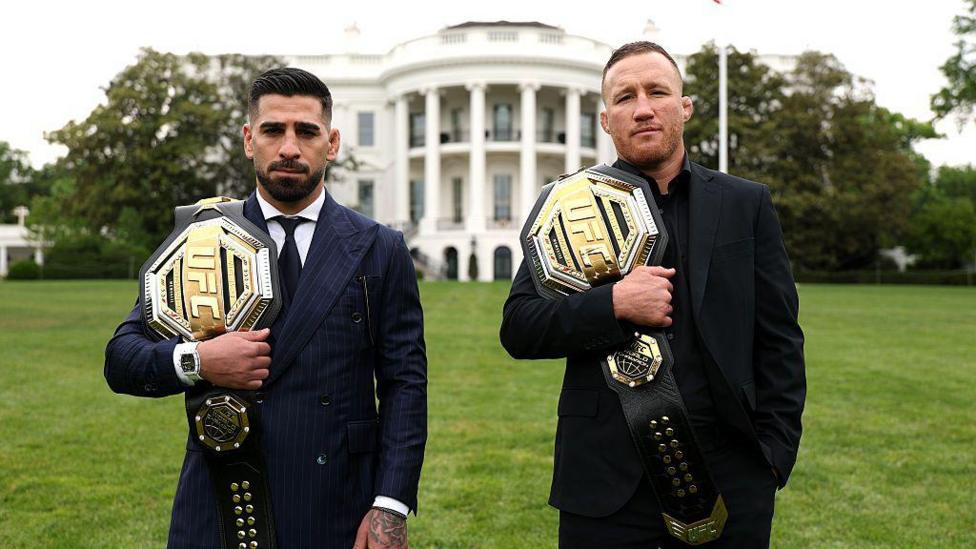
The Octagon at 1600 Pennsylvania Avenue: Combat Sports Breaks Its Final Barrier
UFC Freedom 250 at the White House blurs every remaining line between sport, politics, and spectacle.

When Rankings Actually Mean Something: The World Cup's Top Four Rarity
FIFA rankings usually miss the mark, but when the top four collide in semi-finals, statistics reveal a tournament predicting itself.
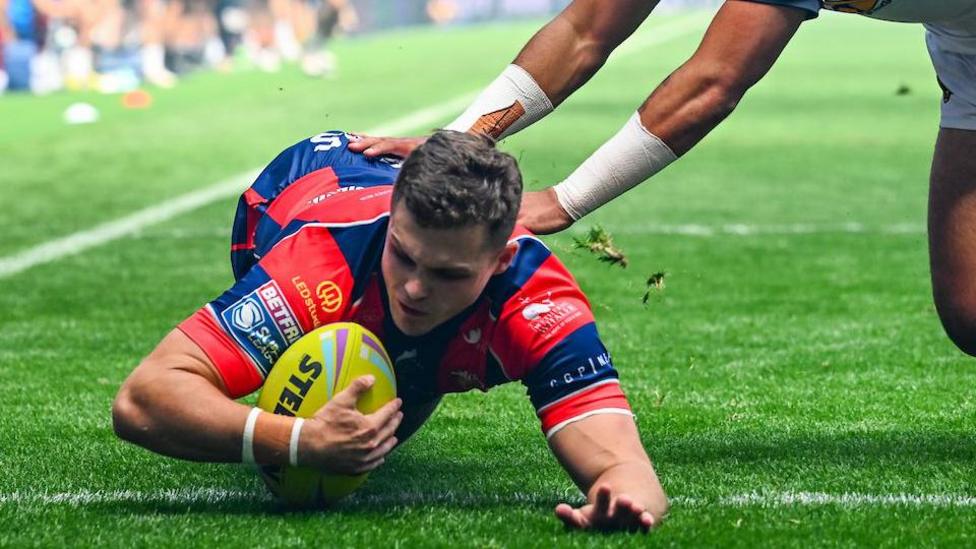
Wakefield's Nine-Try Demolition Exposes Castleford's Systemic Collapse
Wakefield Trinity ran in nine tries against Castleford, decisively shifting the Super League top-four landscape and exposing deep defensive flaws.