The Messi Penalty Paradox: Genius Under Pressure or Costly Sentimentality?
Messi keeps making World Cup history but his penalty misses raise an uncomfortable question Argentina must confront before it is too late.
Lionel Messi stands over the ball. The stadium holds its collective breath. The goalkeeper shifts nervously on his line. The narrative writes itself. The greatest player of all time steps up to deliver another defining moment in a career overflowing with them. And then the ball sails wide, or is saved, or crashes against the post. The narrative collapses into uncomfortable silence.
It keeps happening. On the grandest stage in football, the man who does impossible things for fun continues to stumble over the most routine task in the sport. The paradox is staggering. A player who can weave through five defenders with the ball tied to his feet somehow cannot consistently convert from twelve yards with nobody near him.
The latest miss adds another layer to a growing problem that Argentina can no longer afford to treat as taboo.
A World Cup penalty miss is not just a failed opportunity. It is a seismic blow to tournament momentum.
Every time Messi walks to the spot in a World Cup, the ghosts of past failures hover around him. The history is damning. His penalty record in World Cup tournaments tells a story of brilliant chaos rather than reliable execution. Against Iceland in 2018, a save. Against Poland in 2022, another save. In the shootout against the Netherlands that same tournament, a miss. These are not isolated incidents. They form a pattern.
30 career penalty misses across all competitions for club and country. That number should alarm everyone in the Argentine setup.
The Numbers Behind the Myth
Consider what a penalty represents. 0.76 expected goals. That is the statistical baseline for a standard spot kick. Professional footballers convert roughly 75 to 78 percent of penalties across top-level football. The very best penalty takers in the world hover above 85 percent. Messi sits somewhere in the middle of the pack, a deeply uncharacteristic place for a player who leads almost every other statistical category in the sport.
The contrast is jarring. His career conversion rate of around 78 percent is perfectly average. Not bad. Not exceptional. Just average. For a player whose entire existence defies averages, this feels almost offensive.
What That Miss Rate Costs Argentina
- Tournament momentum swings that shift pressure onto teammates
- Psychological weight carried into subsequent matches
- Failed shootouts where early misses compound into elimination
When Messi misses in a group stage match, Argentina can recover. When he misses in a knockout game, an entire tournament tilts on its axis. The save against Wojciech Szczesny in 2022 did not prove fatal because Argentina found their way past Poland anyway. But what about the moments when there is no second chance?
The Copa America final in 2021 nearly offered that nightmare scenario. Messi did not take a penalty during regular time. Argentina won through a single Angel Di Maria goal. But the specter of a Messi penalty miss in a final looms over every tournament like a storm cloud waiting to break.
The Case for Change
Here is the uncomfortable truth. Argentina has better penalty takers on the pitch.
Lautaro Martinez has maintained a penalty conversion rate above 85 percent across his career. Julian Alvarez brought an ice-cold demeanor to spot kicks at Manchester City under immense Premier League pressure. Emiliano Martinez, the goalkeeper, has built an entire reputation on penalty heroics and possesses an almost supernatural ability to read the psychology of shootout situations.
If you have a teammate who is better at the one specific skill you are trying to execute, ego must yield to outcome.
Dropping Messi from penalty duties is not an insult. It is a tactical adaptation. Pep Guardiola rotated penalty takers at Barcelona and Bayern Munich based on the situation, not sentiment. Diego Simeone at Atletico Madrid has treated penalties like a specialized skill rather than a captain's privilege. The best teams separate the question of who is the best player from who is the best penalty taker.
Argentina's coaching staff knows this. Scaloni has demonstrated flexibility throughout his tenure. He shifted tactical systems, changed personnel, and adapted formations based on the opponent. Yet the penalty duty question appears to remain the one area where sentiment overrides strategy.
The Captaincy Factor
This is where the problem gets complicated. Messi is the captain. The captain takes penalties. That unwritten football convention carries real weight in a sport where psychology and symbolism matter deeply. Stripping a captain of penalty duties sends a message. Opponents notice. Opponents talk. Media narratives form. The mental calculus becomes tangled.
But here is the counterargument. Kurt Zouma was captain of West Ham and never took penalties. Harry Kane is captain of England and takes penalties, but his penalty conversion rate sits above 82 percent. The captaincy argument only works if the captain is actually good at penalties. Messi is not.
Behind the Psychology
Why does this specific failure plague this specific player? The answer reveals something profound about football and about Messi himself.
Penalties are not really a skill test in the way open play is. They are a psychological examination. The ball is stationary. The goalkeeper cannot move until the kick is taken. The outcome is largely predetermined by the taker. Everything happens in the mind. And Messi's mind, for all its genius, operates on instinct and reaction. He is a player who solves problems in motion. Penalties freeze him in time and force him to confront the weight of every expectation in silence.
The penalty spot is the loneliest place in football. A player who thrives on connection and chaos is asked to perform in isolation and stillness.
That disconnect is not just football theory. It is visible in his body language. Messi approaches penalties with a rigid expression that contrasts sharply with the fluid joy he brings to everything else. He seems to hold his breath. The ball seems to hold its breath with him.
The psychological burden compounds. Each miss adds to the internal pressure of the next attempt. Every time Messi steps up, he is not just facing the goalkeeper. He is facing the memory of every previous miss and the accumulating narrative that this specific task has become his kryptonite.
The damage extends beyond Messi himself. Argentina's squad must absorb the emotional fallout. When the best player in history misses, teammates feel a compulsion to compensate. That pressure manifests in rushed decisions, forced passes, and a collective anxiety that infects the team's rhythm. A Messi penalty miss does not just cost a goal. It costs the team's emotional balance.
What Argentina Must Decide
The clock is not stopping. Messi will be 37 years old when the next World Cup cycle reaches its peak. Every international window carries the weight of potential farewell. Every tournament could be the last. Argentina cannot afford to lose a knockout match because of a penalty miss that was entirely predictable.
The coaching staff faces a decision. Maintain tradition and accept the statistical reality that Messi will miss roughly one in four penalties. Or make a cold, ruthless, modern football decision that prioritizes outcome over symbolism.
The greatest leaders recognize when to pass responsibility rather than hoard it.
There is a third path. Argentina could designate Messi as the primary penalty taker during regular play but designate a specialist for shootout scenarios. This compromise acknowledges his standing while protecting the team in high-stakes moments. Antoine Griezmann and Karim Benzema shared penalty duties at different stages of their careers. It happens. It works.
The alternative is accepting that every Argentina tournament run carries a silent vulnerability. A soft underbelly hidden behind the brilliance of everything else this team does. Opponents know it. goalkeepers know it. Messi surely knows it too.
The Bigger Picture
This debate is not really about penalties. It is about the mythology surrounding Messi and Argentina's relationship with that mythology. For years, the national team treated Messi like a talisman whose presence alone could conjure victory. Scaloni changed that culture. He built a team where Messi is the crown jewel rather than the entire structure. That evolution produced a World Cup and a Copa America.
The penalty question is the final frontier of that cultural shift. It asks whether Argentina can apply the same ruthless pragmatism to Messi that Scaloni has applied to the rest of the squad. Can they treat him as a player with specific strengths and specific weaknesses rather than a symbol who must be indulged in all things?
The answer will define the final act of Messi's international career. And possibly Argentina's next tournament.
When the next penalty is awarded and Messi reaches for the ball, a conversation should happen. Short. Direct. Respectful. A captain's privilege yielding to a team's best interest. The story of a player who always did the right thing adding one more chapter of doing the right thing. Even when it hurts. Even when it means walking away from the spotlight at the moment everyone expects him to step into it.
That might be the most Messi ending of all.
Editorial Integrity
This is an original SportPulse article written by our editorial team. All content is independently researched, written, and reviewed by our writers and editors before publication. We do not publish copied, aggregated, or syndicated content.
SportPulse is committed to original sports journalism. Read our editorial policy or contact us with any questions.
More Like This
All football
Darts Over Dancing: England's Quiet World Cup Invasion of New York
While Norway rowed and Germany partied in Times Square, England fans chose oche over optics in the Big Apple.
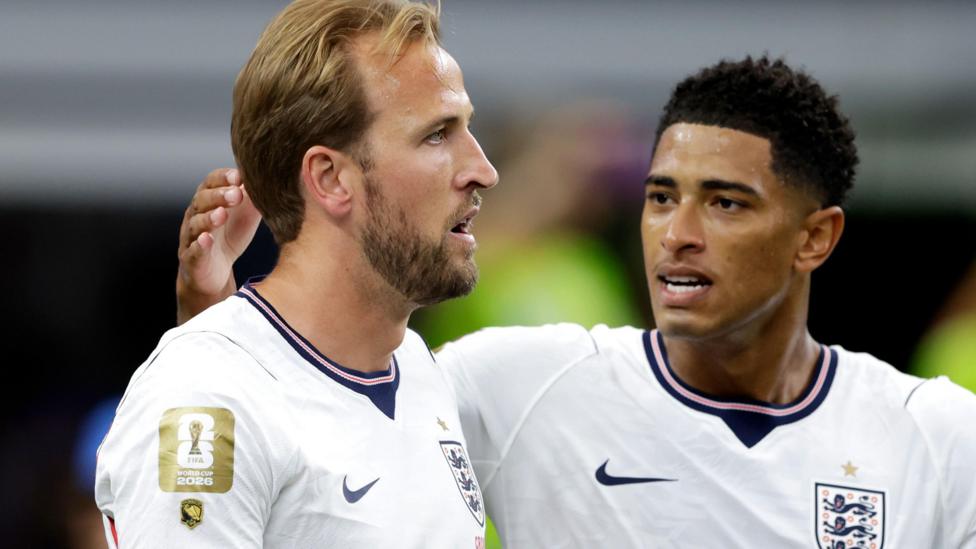
Decoding the World Cup Captain Patches
Harry Kane's distinctive shirt patch isn't just apparel decoration—it's FIFA's sanctioned visual hierarchy for tournament skippers.
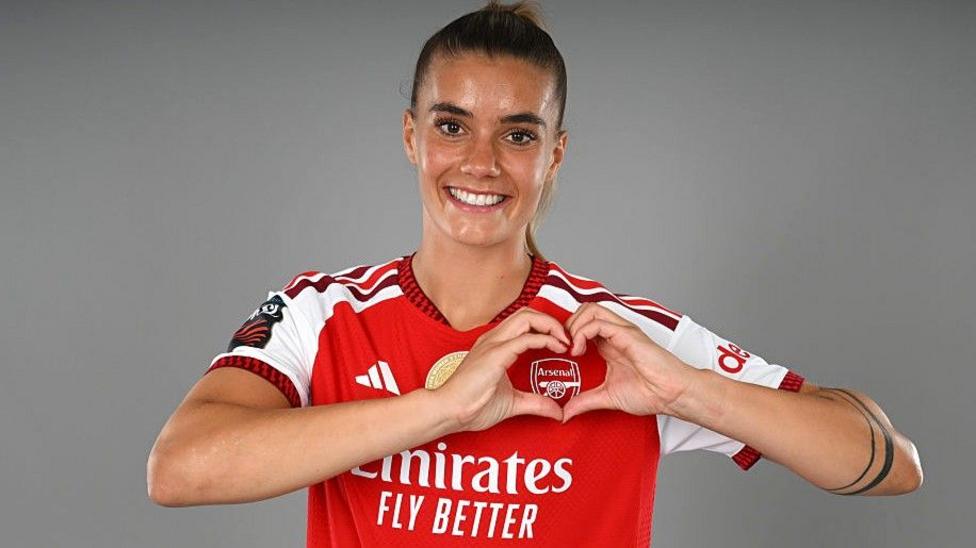
Arsenal Secure Cerci on Free: A Tactical Masterstroke
Arsenal land Germany striker Selina Cerci on a free from Hoffenheim, adding a versatile pressing forward to their tactical arsenal.