Silverstone Shake-Up: Who Engineered Glory and Who Lost the Plot
Mixed conditions at Silverstone exposed which teams mastered aero balance and tire thermodynamics and which collapsed under engineering pressure.
The British Grand Prix as a Technical Crucible
Silverstone has always been a circuit that punishes mechanical compromise. With its succession of flat-out corners from Maggotts to Becketts and the heavy braking zone into Village, the track demands a car that can simultaneously handle high-speed aero loading and low-speed mechanical grip. When the British weather delivers a drying track surface that never quite settles, the engineering challenge multiplies exponentially. The 2024 British Grand Prix served as a rolling wind tunnel session where tire thermodynamics and differential mapping decided the outcome.
The fundamental problem teams face in mixed conditions is the thermal disconnect between front and rear axles. In a drying corner, the front tires heat up quickly because they carve through standing water and generate slip angle. The rear tires, protected by aerodynamic downforce, often lag behind in temperature. This creates a nightmare for engineers monitoring tire temperature windows in real time. A car that looks balanced on full wets can transform into an undriveable monster on intermediates within two laps if the brake bias and differential locking are not remapped on the steering wheel.
Engineering Insight: The Inter-Tire Crossover
The Three-Phase Corner Problem
Understanding why some teams triumphed and others failed requires grasping the physics of running intermediate tires on a damp track. An intermediate tire is a compromise compound designed for a specific thermal operating window. Go below that window and the compound stiffens, losing grip. Go above it and the surface overheats, blistering and graining.
The critical engineering metric at Silverstone was the crossover point between full wets and intermediates. This refers to the track moisture level where the intermediate tire becomes the faster option. Get it wrong by pitting a lap too early and the inter overheats within three corners. Wait a lap too long and the wet tire disintegrates on a track that no longer has enough water to cool it.
- Wet tire operating window: Track surface must retain standing water for evaporative cooling
- Intermediate tire operating window: Damp track with no standing water, ambient track temperature above 15°C
- Crossover detection metric: Rate of lap time degradation on wets versus projected inter lap time based on driver feedback channels and infrared tire sensors
The teams that won on Sunday were the ones whose pit wall algorithms processed this crossover data fastest. The losers were those who deferred to conservative historical default strategies rather than trusting real-time telemetry.
Winners: Mastering the Thermodynamic Dance
Upgrading Under Pressure
The headline winner from a technical standpoint was the team that executed a perfect tire temperature management cycle during the critical transition phase. When the track reached that knife-edge state between wet and dry, their driver was able to modulate the throttle application through Club and Abbey without inducing wheelspin that would have overheated the rear inter compound.
This is not purely driver skill. The underlying engineering involves a torque delivery map that progressively allows more power as rear tire temperature rises. Think of it as a smart heating system that turns on only when the room is cold enough to benefit. The engine mapping mode selected during this phase functions as an electronic nanny, cutting torque at the first hint of wheelspin before the driver even feels it through the steering wheel.
"In those conditions, the car becomes an extension of your nervous system. You feel every millimeter of slip through the wheel and the seat. The team gave me a platform that responded to every micro-adjustment I made."
The aero package also played a crucial role. A higher rear wing downforce level generated the drag that hurts on straights but stabilizes the rear axle when the car is rotated through Stowe. The winning car carried a rear wing configuration that was theoretically suboptimal for a dry race but perfectly suited to the mixed conditions that materialized. Sometimes, engineering foresight is about hedging against the most probable scenario rather than optimizing for the least likely.
Chassis Geometry Wins
Another winner emerged from a team that had quietly refined their front suspension geometry earlier in the season. The change involved altering the front arm angle to produce more mechanical grip during the mid-corner phase. In damp conditions, this translates directly to driver confidence. When the front end bites consistently through Luffield, the driver can maintain momentum onto the Wellington Straight, gaining time that compounds over a stint.
The losers in this specific battle were running a stiffer front setup optimized for high-speed cornering stability. Their drivers reported persistent understeer on the intermediates, a symptom of the front tires sliding across the surface rather than gripping it. Every slide introduces heat into the tire surface that cannot dissipate fast enough.
Losers: The Downforce Trap and Brake Performance
Too Much Front Wing
The most prominent technical failure of the race weekend involved a team that arrived at Silverstone with an aggressive aerodynamic update package. The new front wing flap geometry was designed to increase outwash, redirecting turbulent wake away from the car. This works brilliantly in dry conditions where the airflow is predictable.
In damp conditions, the outwash effect disrupts the clean airflow that the rear wing needs to generate consistent downforce. The result is a car that gains front grip but loses rear stability at precisely the moment the driver needs both. Through the high-speed Maggotts-Becketts complex, this manifested as terrifying mid-corner oversteer that forced the driver to either back out of the throttle or risk losing the car entirely.
The engineering lesson here is that aero performance is not linear across operating conditions. A front wing update that delivers a three-tenths gain in dry running can revert to a five-tenths loss when the track surface is wet. The team's wind tunnel data, collected at consistent temperatures and surface conditions, simply did not account for the chaotic reality of a drying British summer afternoon.
Brake Mapping and Rotor Temperature
A hidden loser from Silverstone was a team whose brake duct sizing was calculated for a completely dry race forecast. Silverstone is notoriously difficult for brake cooling because the heavy braking zones into Village and Stowe are separated by long straights that allow the carbon discs to cool below their optimal operating window. In wet conditions, this cooling effect is amplified and the brake temperature that should sit between 300°C and 500°C can plummet below 200°C.
When brake rotor temperature drops too low, the first bite of the brake pedal is spongy and inconsistent. The driver modulates pressure, expecting a certain deceleration rate, and suddenly the car travels ten meters deeper into the corner than intended. At a track like Silverstone where overtaking is difficult even in normal conditions, losing 0.3 seconds into every heavy braking zone compounds into an insurmountable deficit over a race distance.
The solution involves opening the brake ducts to force more airflow, but this is not a quick fix. It requires a pit stop to physically change components, and in a race where track position is gold, a stop costs more time than the problem it solves.
Looking Ahead: The Next Technical Challenges
Silverstone's mixed conditions provided a dramatic showcase, but the next race presents an entirely different engineering puzzle. The upcoming circuit demands a low-downforce configuration that will force teams to strip away the aero load that proved so crucial in Britain.
The key challenge shifts from tire temperature management to drag reduction efficiency. The long straights mean that the DRS overtaking aid becomes a primary performance differentiator rather than a corner exit tool. Teams will focus their upgrade efforts on beam wing geometry and diffuser expansion to recover the downforce lost from running a skinny rear wing.
The losers at Silverstone need to address their intermediate tire compound activation issues before the next race weekend. When the track rubbered in during the final stint, their tire wear rate spiked alarmingly. This suggests the thermal management was masking a deeper issue with suspension kinematics that cannot be fixed with mapping alone. Expect to see revised front arm geometry on their cars in the next practice sessions.
One technical storyline to follow is how teams manage the power unit deployment on circuits with different altitude and ambient temperature profiles. Silverstone's sea-level conditions and cool temperatures allowed aggressive energy recovery system harvesting that may not be possible at the next venue. The engineers who mastered the British weather must now prove they can adapt their approach to a completely different thermal environment.
Editorial Integrity
This is an original SportPulse article written by our editorial team. All content is independently researched, written, and reviewed by our writers and editors before publication. We do not publish copied, aggregated, or syndicated content.
SportPulse is committed to original sports journalism. Read our editorial policy or contact us with any questions.
More Like This
All f1
Honda's Long Game: Why the Power Unit Gamble With Aston Martin Is Far From Over
Honda Racing Corporation President Koji Watanabe insists the Japanese manufacturer's challenging Aston Martin partnership is built for 2026, not 2025.
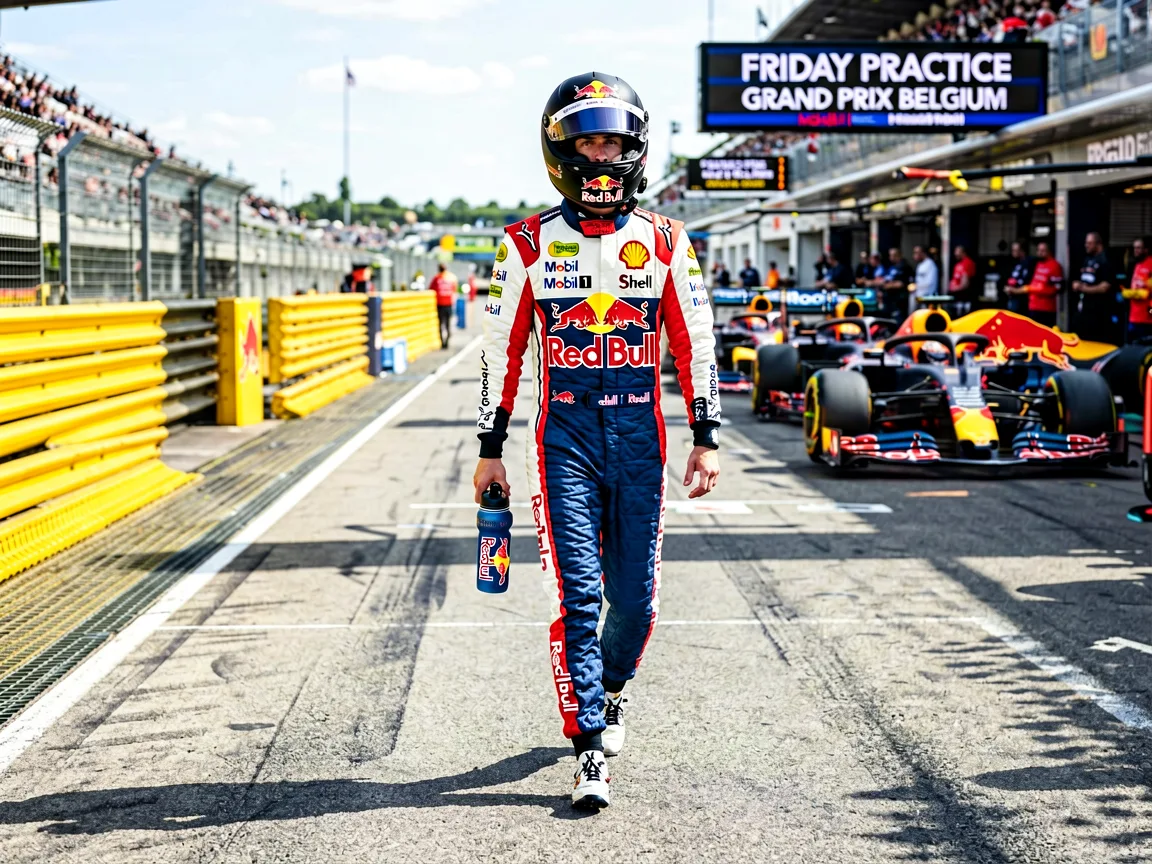
Spa Exposes What Verstappen Already Knew: Red Bull's Grip Is Slipping
Verstappen admits Friday practice at Spa revealed the uncomfortable deficit Red Bull now carries against McLaren and Ferrari.
Tsolov Announces Himself With Commanding F2 Feature Race Win In Austria
Nikola Tsolov's mature Austria victory signals a generational talent is ready to pressure the F1 grid's gatekeepers.