Silverstone Showdown: Five Flashpoints That Define the British Grand Prix
Silverstone's high-speed corners, unpredictable weather, and McLaren vs. Red Bull tension make the British GP a strategic chess match.
The Theatre of Speed Meets Its Greatest Drama
The Silverstone Circuit sits on a former World War II airfield, and on race day, it feels like machinery is still going to war. The 5.891-kilometer layout is a purist's dream, defined by punishing high-speed complexes that test a driver's neck and a car's aerodynamic floor more than any slow-speed street circuit ever could. As the grid forms up for the British Grand Prix, the ambient conditions will dictate the narrative just as much as the starting lights. The classic Northamptonshire weather system can transform aczajdry, grippy track into a gladiatorial ice rink in a matter of minutes.
Aerodynamic configuration is paramount at this venue. Teams arrive with the lowest-downforce setups of the season so far, trimmed to slice through the air on the 1.8-kilometer hangar straight, yet the configuration must still provide enough front-end bite to rotate through the sweeping Maggotts-Becketts-Chapel sequence. Getting that balance wrong means losing multiple tenths of a second in a single sequence of corners. Get it right, and the car takes flight.
The Tire War and Thermal Degradation
Pirelli brings the three hardest compounds in its range to Silverstone: the C1 (hard), C2 (medium), and C3 (soft). This allocation reflects the sheer energy pushed through the tires by the high-speed lateral loads. The left-front tire is put under immense stress, particularly through Vale and Club, but it is the surface temperature of the rears that causes sleepless nights for race engineers.
Track temperature is the critical swing factor. In cool, overcast conditions, the tires refuse to switch on, leading tosnap oversteer and graining on the surface. Under a baking July sun, the asphalt can exceed 50 degrees Celsius, pushing the rears toward sudden thermal degradation. Drivers who can manage their tire temperatures, modulating the brake balance and differential settings entry by entry, will find themselves defeating rivals with nominally faster machinery.
"It is the one race where the wind direction on the grid dictates downforce levels, and the clouds dictate the tire strategy."
McLaren Rising: A Genuine Threat at Home
The narrative of the season shifts fluidly depending on the circuit archetype, and Silverstone represents the most severe test of high-speed aerodynamic efficiency on the calendar. This is precisely the domain where McLaren has surgically rebuilt its competitive advantage over the past two seasons. The British squad thrives on momentum and clean air, making their qualifying performance an absolute necessity. Lando Norris envisions a near-perfect scenario, needing a pole position to escape the chaotic dirty air of the opening lap and dictate the race pace from the front.
Red Bull Racing, conversely, has shown a slight aerodynamic vulnerability in high-speed cornering phases compared to previous iterations of their ground-effect concept. Max Verstappen remains the ultimate defensive fulcrum, but he cannot afford to be mired in a DRS train where the turbulent air strips the front wing of downforce. The battle hinges on whether McLaren can execute a flawless qualifying lap and convert that single-lap pace into a controlled race lead.
The Asphalt Truth: The Resurfacing Question
Silverstone famously repaved the entire circuit ahead of the 2019 season, curing the chronic bumps and dramatically increasing grip levels. However, five years of high-downforce Formula 1 machinery abusing the surface has taken a toll. Specific zones, particularly the runoff areas and the braking zone into Stowe, are increasingly abrasive. This accelerates thermal degradation and increases the likelihood of graining on the front-left tire, challenging the teams to consider a longer-than-ideal stint on the C1 hard compound.
The track evolution across the weekend is extreme. The support races, heavily featuring sideways machinery like the Porsche and Ferrari Challenge cars, lay down sticky rubber that continually alters the grip level. By the time the_race begins, the racing line is optimal, but moving just one car width off-line drops the grip coefficient by a significant margin. Any driver forced off the racing line by a defensive maneuver faces a treacherous, low-grip surface.
The Midfield Auditions and Home Pressure
The British Grand Prix is an audition cycle for the midfield in front of the sport's most discerning paddock. Mercedes-AMGPetronas fields two national heroes desperate for a podium on home soil, carrying the psychological weight of a nation and a manufacturer's pride. The pressure intensifies when their W15 shows flashes of cornering brilliance in practice but fails to transfer that pace into qualifying flow.
Strategy Breakdown: Clouds on the Radar
The pit wall faces an intimidating puzzle. The start time places the race directly at the intersection of British summer atmospheric instability. A 60% chance of precipitation is the standard early-week forecast, a figure that race engineers meticulously monitor not just for timing, but for localized intensity. Silverstone is vast enough that it can rain solely on the Abbey section while Hangar Straight remains bone dry.
Teams simulate wet-to-dry crossover scenarios in Friday practice, using extreme fuel loads and scrubbed tires. A dry race leans toward a one-stop strategy favoring the medium-to-hard transition around lap 20, when the thermal degradation curve steepens. A wet race, however, transforms the strategy wall into a casino. The crossover point from slicks to intermediates, and then back again, dictates the outcome.
The race engineer's mantra here is pure and unvarnished: "Look out for clouds on the left."
The Standings Verdict
Every point altered at Silverstone sends ripples through both championships. Max Verstappen holds the lead in the drivers' standings, but his margin is no longer an unassailable, mathematical mountain thanks to the relentless pace of the McLaren development curve. A mechanical DNF or a strategic fumble in changing conditions can shift momentum permanently.
In the constructors' fight, the financial stakes are astronomical. The prize money distribution heavily weights championship position, and McLaren's resurgence directly threatens the secondary equilibrium. Red Bull requires flawless execution, while Ferrari looks to exploit their high-speed cornering efficiency to close the gap to the front. The British Grand Prix is rarely a straightforward procession; it is a high-speed crucible where strategy, meteorology, and driver skill intersect.
The final championship standings after the checkered flag at Silverstone will tell us not just who won a race, but which team has genuinely mastered the technical poetry of high-speed Formula 1.
Editorial Integrity
This is an original SportPulse article written by our editorial team. All content is independently researched, written, and reviewed by our writers and editors before publication. We do not publish copied, aggregated, or syndicated content.
SportPulse is committed to original sports journalism. Read our editorial policy or contact us with any questions.
More Like This
All f1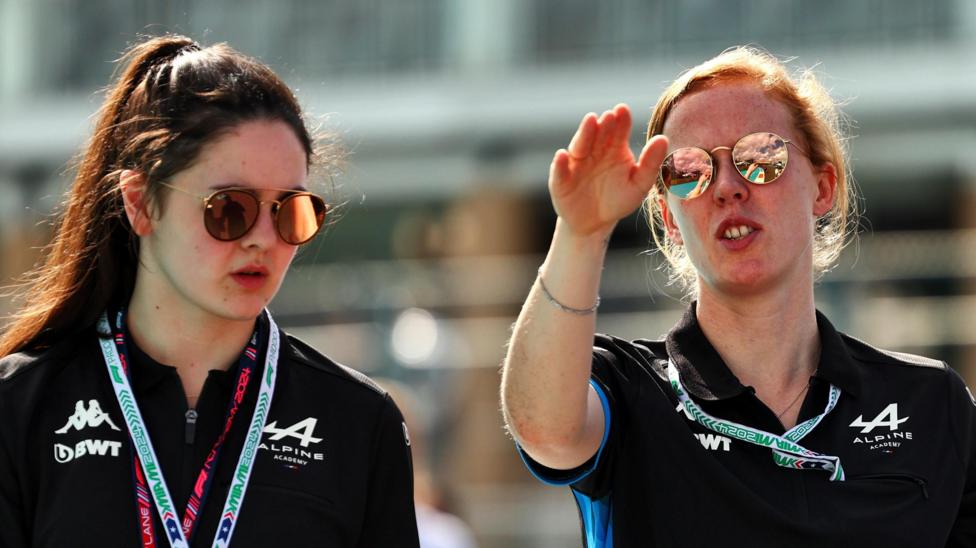
Powell and Pulling Make History as BBC's First All-Female F1 Commentary Team
Alice Powell and Abbi Pulling shatter broadcasting barriers at Barcelona, bringing racing credibility to the commentary booth.

Spa Chaos: Verstappen Charges Through the Field in Belgian GP Thriller
Max Verstappen carved through the field at Spa after a grid penalty, delivering a masterclass in tire management and raw pace.

Britain's Youngest F1 Driver Chases Silverstone Dream
Britain's youngest F1 driver prepares for a homecoming at Silverstone, balancing raw speed with a startling off-track hobby.