Spa's Aero Trap: Why Belgian GP Setup Demands Compromise
Spa-Francorchamps forces engineers into brutal drag-downforce compromises that define the Belgian GP technical battle.
The Longest Circuit Challenge
The Spa-Francorchamps circuit represents the most demanding aerodynamic compromise on the Formula 1 calendar. At 7.004 km, it is the longest track on the current schedule, and its layout alternates between flat-out blasts and medium-speed corners that punish teams unwilling to make difficult setup decisions. The fundamental tension: run high downforce for sector two's twisty middle section, or strip it away for the 1.8 km run from La Source through Eau Rouge and up the Kemmel Straight.
Modern F1 cars generate massive outwash from their front wings, and the current ground-effect regulations intensify the penalty for adding rear wing flap. More angle means more drag, and at Spa, drag is the enemy. The drag-to-downforce ratio becomes the critical engineering metric. Teams typically run what paddock engineers call a medium-low configuration: enough rear wing to keep the car stable through Pouhon and Blanchimont, but not so much that the engine mapping cannot compensate down the straights.
Think of it like a cyclist on a mountain stage. Too much muscle mass helps on the climbs but kills you on the descents. Every gram of downforce is weight the power unit must haul through the air.
The Sector-by-Sector Compromise
Sector One: The Power Test
From the La Source hairpin exit, drivers accelerate for nearly 15 seconds before heavy braking into Les Combes. This phase is governed entirely by power unit deployment and drag efficiency. The ERS (Energy Recovery System) layout matters enormously here. Teams must harvest enough electrical energy through the hybrid system to deploy a full 160 hp boost for the entire Kemmel Straight run.
The MGU-K (Motor Generator Unit - Kinetic) harvests under braking at La Source, while the MGU-H (Motor Generator Unit - Heat) recovers exhaust energy during the acceleration phase. The trick is mapping the energy store so deployment does not create a torque spike when the driver re-joins the throttle at Eau Rouge. Get this wrong and the rear tyres spin, scrubbing precious momentum at the exact moment the car needs clean airflow.
Sector Two: The Downforce Question
The middle sector at Spa reads like a who's-who of legendary corners: Les Combes, Malmedy, Rivage, Pouhon, Fagnes, Campus. Most of these are medium-speed bends requiring genuine aerodynamic grip. A car trimmed for low drag will understeer through Pouhon, a long left-hander taken at approximately 260 km/h, where lateral load builds progressively and the diffuser must work in harmony with the floor edge wings.
The critical technical challenge here is flow conditioning. The front wing elements must direct air outward and upward so the bargeboards can re-energise the boundary layer before it reaches the sidepod inlets. At medium speeds, the airflow has less kinetic energy, which means the entire aero package operates closer to the edge of separation. If the trailing edge of the front wing flap is set too aggressively, the wake hits the front tyres and destroys flow quality to the floor.
Sector Three: The Commitment Test
Sector three is short but violent. Blanchimont is a sweeping right-hander taken at 300+ km/h, demanding a car that remains aerodynamically stable even when the floor has been losing energy for the previous two sectors. The plenum chamber pressure inside the sidepods drops as corner speed decreases, so by the time the car reaches the Bus Stop chicane, the brake ducts must manage temperatures with limited airflow.
Engineering Insight: The Ride-Height Paradox
The greatest engineering dilemma at Spa is not the wing level. It is the ride height. Eau Rouge and Raidillon compress the suspension at the bottom of the hill with multiple Gs of vertical load, then unload it completely at the crest. The heave spring must be stiff enough to prevent the plank from scraping the ground (which would trigger an FIA disqualification for excessive wear), but soft enough to maintain contact patch load as the car crests the hill and aerodynamic downforce drops momentarily.
The dampers are the unsung heroes here. Their bleed valves must open fast enough on compression so the car does not bottom out through Eau Rouge, but close quickly enough on release so it does not bounce over the crest. Third elements (the inertial dampers) manage this pitch behaviour, and teams spend hours in the simulator mapping the exact bump stop rubber hardness to the circuit's unique compression profile.
If the car bottoms out at the valley of Eau Rouge, the underbody stalls. If it pitches too far over the crest, the rear wing loses clean airflow and the whole aero map resets.
Tyre Management Under Aero Stress
The Thermal Challenge
Spa's variable weather is not merely a driver concern. It changes the engineering model entirely. The Pirelli allocation for the weekend typically includes the C1, C2, and C3 compounds, with the hardest rubber necessary for the high-energy loads through Eau Rouge and Pouhon. When the track temperature drops, the tyre blanket effect wears off quickly, and teams must manage core temperature through setup rather than driving style alone.
The camber settings become critical in cold conditions. More negative camber increases the contact patch on the outer edge during cornering, generating heat through deformation. But the straights at Spa are so long that the tyres cool between corners. Engineers must find a camber window where the surface temperature does not drop below 80°C on the straights or exceed 110°C through the high-load sections.
The Degradation Curve
The thermal degradation curve at Spa is unusual because the circuit layout means the tyres experience very different loads depending on the stint phase. Early in a run, when the car is heavy with fuel, the vertical load through Eau Rouge is higher, which stresses the carcass of the tyre. Later, when fuel burns off, the car is faster through Pouhon, which increases lateral shear on the surface compound, not the structure.
Power Unit Mapping for Altitude
The Ardennes region sits at approximately 450 metres above sea level, which means the air density is lower than at sea-level circuits. This affects the turcharger compressor and the combustion efficiency of the internal combustion engine. Lower pressure means less oxygen per cubic metre of air, so the engine produces less power for a given boost pressure.
Teams adjust the ignite map and injection timing to compensate, but the real benefit comes from the hybrid system. Because the MGU-H can recover exhaust energy regardless of atmospheric pressure, the electrical contribution becomes a larger percentage of total power output. Honda, Ferrari, and Mercedes all have different philosophies on H-deployment mapping, and Spa is one of the few circuits where this difference is measurable in lap time.
Every team arrives at Spa with a slightly different philosophy on the drag-downforce compromise. There is no single correct answer. The fastest car on Saturday might not be the best car on Sunday.
What to Watch in the Race
The technical battle at Spa will show itself in specific ways during the race. Watch for cars that lose time between Eau Rouge and Les Combes but gain it back through sector two. Those teams have chosen downforce over straight-line speed. Watch for the DRS activation zones, particularly the long run to the Bus Stop chicane, where the slipstream effect is amplified by the low-drag setups.
The pit stop strategy will hinge on tyre warm-up times in changeable conditions. If it rains, the intermediate tyres require less downforce than the slicks, which flips the setup equation entirely. A car trimmed for dry conditions will struggle with front-end locking on the intermediates through the downhill braking at Brux.
Weather data from the Ardennes is notoriously unreliable. Teams prepare multiple aero maps for the weekend, but the scramble comes when conditions switch mid-race. The engineers who read the track surface temperature accurately and commit to a stop at the right moment are often the ones who win.
Next up is the technical challenge of Zandvoort, where the banked corners and tight layout reward maximum downforce and punish drag. The setup philosophy reverses entirely from Spa. Engineers will reload their aero maps, add wing angle, and prepare for a race where overtaking is nearly impossible and qualifying pace is everything.
Editorial Integrity
This is an original SportPulse article written by our editorial team. All content is independently researched, written, and reviewed by our writers and editors before publication. We do not publish copied, aggregated, or syndicated content.
SportPulse is committed to original sports journalism. Read our editorial policy or contact us with any questions.
More Like This
All f1
Leon Seizes Spielberg Pole with Strategic F2 Masterclass
Noel Leon's maiden F2 pole at Spielberg showcased tactical precision, outpacing Dunne and Tsolov in a gripping session.
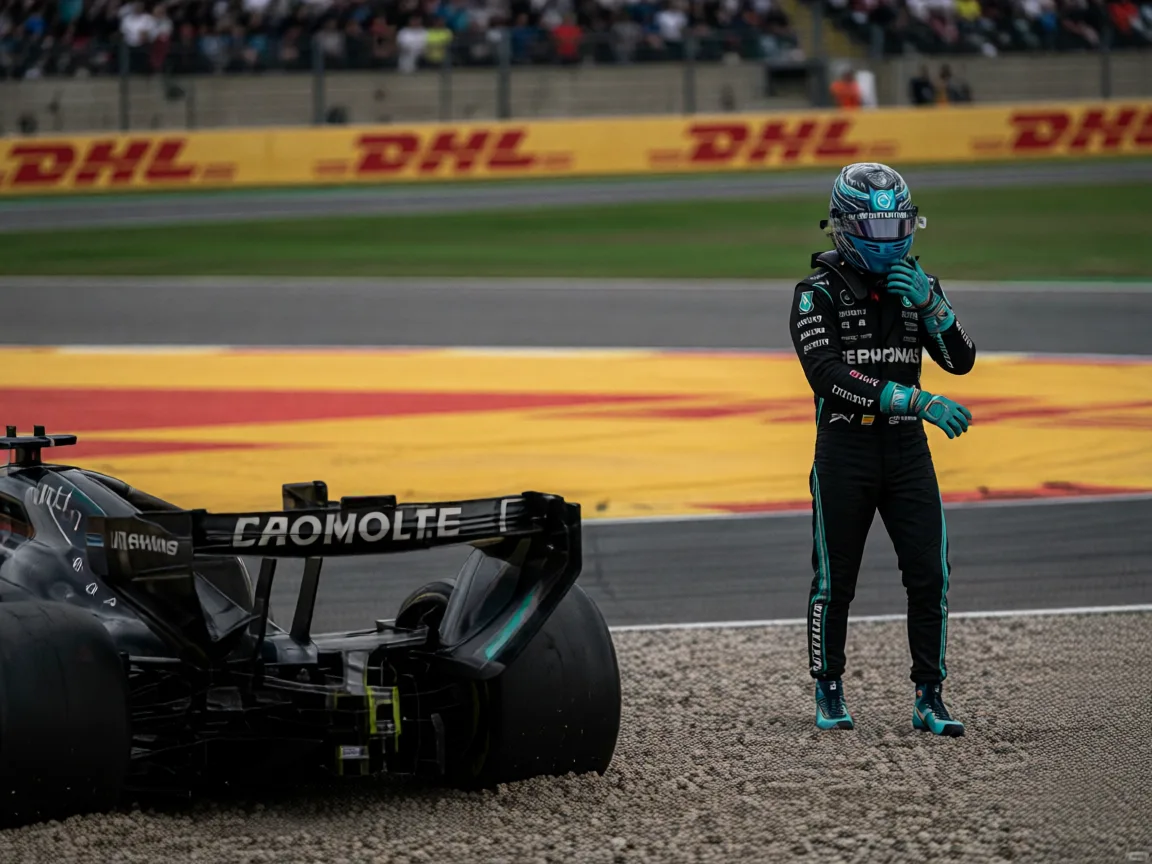
Mercedes Power Failure Derails Russell's Title Hopes at Spa
Toto Wolff holds his hands up after a power unit failure and lap-one clash leave Russell 50 points adrift of Antonelli.
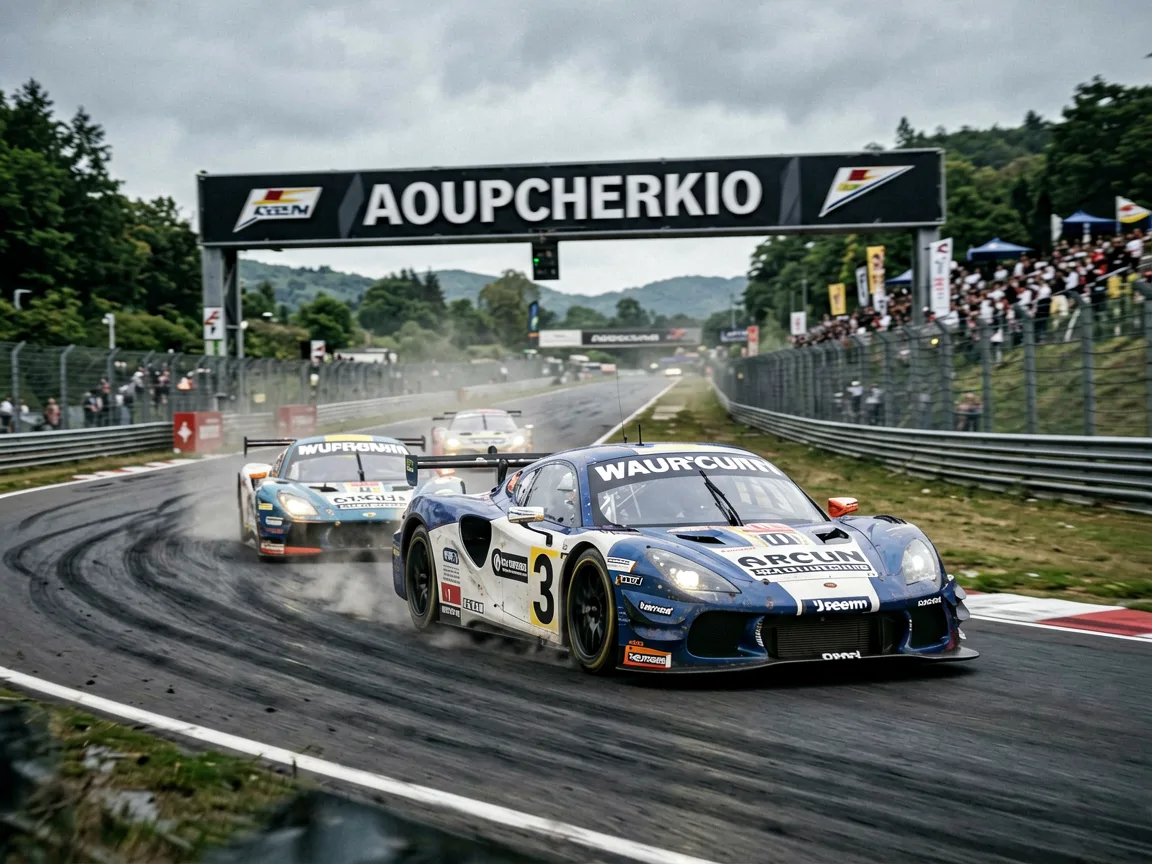
Rivera Storms to Maiden F3 Feature Win at Spa
Red Bull junior Ernesto Rivera conquered Spa-Francorchamps for his first F3 Feature Race victory in a drive that announced his title credentials.