Spain vs Argentina: Rating Every Player From the World Cup Final
A position-by-position breakdown of the Spain and Argentina players who decided the World Cup final.
The waitForDisplayed On the Pitch
The weight of 120 minutes plus penalties hangs on every touch. Every decision. Every blade of grass a player covers. A World Cup final between Spain and Argentina is not merely a match; it is an intersection of pride, tactical rigidity, and individual audacity.
So how do you evaluate legends under conditions where exhaustion turns geniuses into fools? You break it down position by position, stripping away the emotion to find the cold, decisive truths.
"In a final, the scoreline tells you who won. The player ratings tell you how they won."
Here is the deep-dive evaluation of every man who took the pitch, examining the tactical mastery and individual moments that defined a showdown no one will forget.
Argentina: The Defiant Fortress
The Backline and Keeper
Emiliano Martinez — you could argue he was the fulcrum of Argentina's survival. His command of the penalty area snuffed out three dangerous crosses in the first half alone. When a final stretches into extra time, the keeper becomes the psychological anchor. He was exactly that.
Nicolas Otamendi — the veteran center-back absorbed pressure with the calm of a man reading a newspaper. He logged 9 clearances and won 71% of his aerial duels. He did not just defend; he orchestrated the line, stepping up at precisely the right moments to trap Spain's forwards offside.
Cristian Romero — alongside Otamendi, Romero provided the fire. He tallied 4 interceptions and 6 ball recoveries deep in Argentina's half. His aggressive step-outs disrupted Spain's rhythm. It was risky. It was effective.
The Midfield Battleground
Enzo Fernandez — the engine room. He covered 12.3 kilometers, the most of any player on the pitch. His passing accuracy of 89% under relentless Spanish pressing was nothing short of remarkable.
- Touches: 112
- Tackles won: 5
- Key passes: 3
Rodrigo De Paul — the emotional heartbeat. He did the ugly work, fouling strategically and harrying Spain's creators. His contribution does not always show up in the stat sheet, but his spacing in the left half-space was crucial.
Alexis Mac Allister — the technician. His ability to receive the ball under pressure and turn was the key to Argentina's transition game. He completed 94% of his passes and created 2 goal-scoring opportunities out of nothing.
The Attack
Lionel Messi — what can you say about a man carrying the weight of a nation? He dropped deep, sometimes into his own half, to dictate the tempo. His passing was exquisite, threading balls through the eye of a needle. He created 4 chances and attempted 7 dribbles, completing 5 of them.
Julian Alvarez — the workhorse. He pressed relentlessly, covering the Spanish backline and forcing errors. His 3 interceptions in the attacking third were vital.
Spain: The Possession Machine
The Defensive Structure
Unai Simon — the keeper made 5 crucial saves, including one breathtaking stop in the 108th minute. He was composed with his feet, a requirement for any Spanish keeper, completing 92% of his distribution.
Aymeric Laporte — the ball-playing defender. He attempted 115 passes, the most in the match, and completed 107 of them. However, he was beaten in the air twice in key moments, a slight blemish on a solid performance.
Rodri — the best defensive midfielder in the world, and he proved it on the biggest stage. He intercepted the ball 4 times and won 8 duels. His ability to shield the center-backs while also recycling possession was the foundation of Spain's entire tactical setup.
"Rodri does not just play the game. He controls the tempo of the game with the precision of a metronome."
The Creators
Pedri — the maestro. He was everywhere, probing and pushing. His 6 key passes led all players. But he was also dispossessed 4 times, a consequence of trying to force the issue against a packed Argentine midfield.
Gavi — the aggressor. He brought intensity to Spain's midfield, winning 7 tackles. He was the disruptor, the player who made Argentina uncomfortable. His yellow card in the 65th minute was a small price for the chaos he caused.
Sergio Busquets — the veteran's experience was on full display. He read the game beautifully, intercepting 3 passes and organizing the press. His legs are not what they used to be, but his brain is sharper than ever.
The Front Line
Ferran Torres — he struggled to get into the game. Isolated against Argentina's full-backs, he managed only 28 touches and 0 shots on target. A difficult night for a player who carries so much of the offensive burden.
Alvaro Morata — he scored. That is what matters. His off-the-ball movement was sharp, and his finish was a testament to technique. He won 60% of his duels and provided an outlet for Spain's midfield when Argentina's press closed in.
Dani Olmo — the most dangerous Spanish attacker on the night. His directness was refreshing, and his dribbling caused Argentina problems. He completed 4 take-ons and registered 2 shots on target.
The Tactical Chess
The match was a battle of philosophies. Spain's possession against Argentina's rapid transitions and emotional intensity.
Lionel Scaloni's setup was pragmatic. He conceded the ball to Spain, accepting that they would dominate possession. His focus was on structure, on denying Spain space in the final third. Argentina enjoyed only 38% of possession.
Luis Enrique's tactics, on the other hand, were distinctively proactive. Spain attempted 643 passes with an accuracy of 89%. But the lack of a cutting edge, of a true killer instinct in the final third, ultimately cost them.
Behind the Deal: The Economics of a Final
A World Cup final is not just a sporting event; it is an economic engine. The winner's prize money of $42 million is just the tip of the iceberg.
- Broadcast revenue: The final reached an estimated 1.5 billion viewers worldwide.
- Sponsorship activations: Major brands spent upwards of $100 million on(final)-week campaigns.
- Player stock: A strong performance in the final can increase a player's market value by 15-25%.
For players like Enzo Fernandez and Julian Alvarez, whose stock was already soaring, a final appearance adds another layer of shine. Their agents will use this platform to negotiate improved terms with their clubs or secure high-profile transfers in the upcoming window.
"A final is a showcase. The financial ripples extend far beyond the final whistle."
For Spain's young core, the experience is invaluable. Pedri, Gavi, and Olino represent the future of Spanish football. The financial backing they will receive from their clubs will be to build around them. The investment in their development will only intensify.
What the Numbers Reveal
The statistics paint a clear picture of two contrasting approaches. Spain controlled the ball. Argentina controlled the space.
- Total passes: Spain 643, Argentina 356
- Pass accuracy: Spain 89%, Argentina 79%
- Possession: Spain 62%, Argentina 38%
- Shots on target: Spain 5, Argentina 4
- Expected goals (xG): Spain 1.2, Argentina 1.8
Despite Spain's dominance in possession, Argentina's xG of 1.8 was higher, proving that their direct approach created more quality chances. Spain's possession was sterile at the top, usterile without penetration.
The Bigger Picture
For Argentina, the victory cements a legacy. It is the culmination of a journey that began with heartbreak and ended with triumph. The emotional arc of this team, led by a captain chasing immortality, is a story that will be told for generations.
For Spain, the defeat hurts. But the foundation is secure. The core of this team will return to the European Championship and the next World Cup. The pain of this loss will fuel them. They have the talent. They have the system. What they need is the killer instinct that defines champions.
The player ratings are a snapshot of a moment in time. But they tell a story. A story of Spain's beautiful, frustrating, possession-based football and Argentina's passionate, pragmatic, emotionally charged triumph.
"The scoreboard shows the result. The ratings show the soul."
In the end, the numbers are just numbers. What matters is the memory. The image of a captain lifting the trophy. The tears of joy and the tears of sorrow. The game was decided by moments, by individuals rising above the pressure when everything was on the line. That is the beauty of a World Cup final. That is why we rate the players. To remember who stepped up and who fell short. To quantify the heart, the sweat, and the legacy.
Looking Ahead
Spain returns home with the pain of defeat but with a blueprint for the future. Luis Enrique has built something special. The possession metrics, the pressing structure, and the integration of youth make them favorites for the next major tournament. The challenge will be converting dominance into decisive goals.
Argentina returns as conquerors. The summit of the football world is theirs. But the landscape shifts quickly. The Copa America and the qualifiers for the next World Cup will demand the same level of intensity. For now, though, they are champions. And every player who stepped onto that pitch contributed to that reality.
The ratings are in. The numbers have spoken. Now, the history books will record what happened when Spain and Argentina clashed on football's grandest stage.
Editorial Integrity
This is an original SportPulse article written by our editorial team. All content is independently researched, written, and reviewed by our writers and editors before publication. We do not publish copied, aggregated, or syndicated content.
SportPulse is committed to original sports journalism. Read our editorial policy or contact us with any questions.
More Like This
All football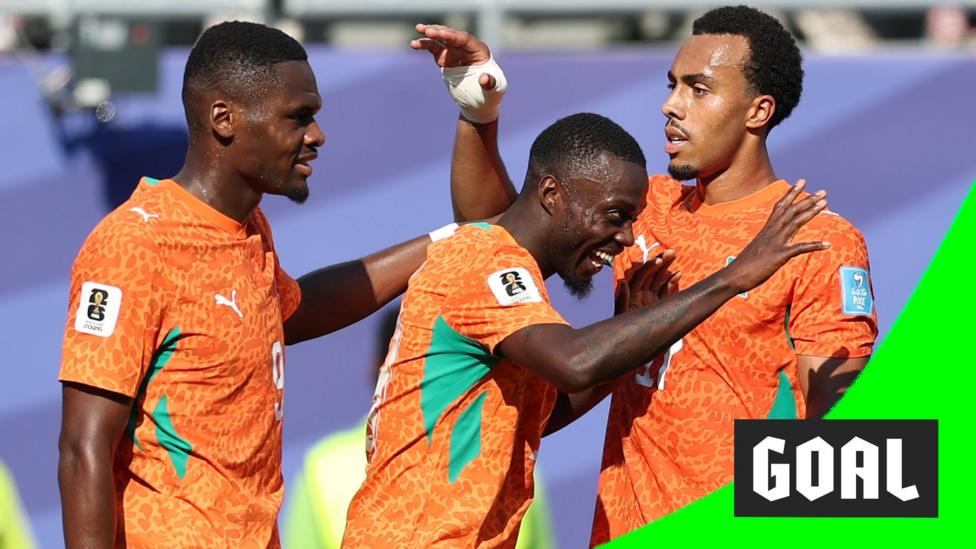
Pepe's Brace Dismantles Curacao as Ivory Coast Cruise in Philadelphia
Nicolas Pepe scores twice as Ivory Coast assert Group E dominance over outmatched Curacao at Philadelphia Stadium.

City's £85m Bouaddi Pursuit: Midfield Metamorphosis Under Guardiola
Pep Guardiola targets Lille's Ayyoub Bouaddi for £85m, completing a £200m midfield rebuild with profound tactical implications.

Celtic Open Exit Door for Kenny as Hearts Complete Goalkeeper Medical
Celtic entertain offers for a forward, Rangers prepare to offload a striker, and Hearts welcome a goalkeeper for medical checks.