Spain Conquer the World Cup of Superstars With System Over Stardust
Spain's tournament of structure over_individual brilliance proves collective football can still win the biggest prizes.
The Moment the Ball Sat Still
Emi Martínez had swallowed everything. Crosses, long-range thunderballs, headers redirected toward the corners. Shot after shot. Body after body. He kept standing.
For what felt like an eternity in the dying minutes, Argentina flooded forward. They pressed, wanting one moment of magic. But Spain refused to crack. Refused to bend.
Then, the kind of sequence every final hides until the very end. No buildup of tactical poetry, just raw will finding an unexpected delivery.
Pedro Porro swung a deep cross toward the far post. Nico Williams rose, headed the ball back across goal. It dropped somewhere deep inside the Argentina penalty area, bounced once on the turf, and just sat there. Waiting. Willing a savior to arrive.
Someone did.
A System That Swallowed Superstars
Spain were crowned champions. Not with a moment of individual genius from a Ballon d'Or contender. Not through the kind of theatrical solo run that defines highlight reels. Through a system.
That word matters. That word explains everything.
Spain arrived at this tournament carrying the weight of a European Championship trophy and the burden of a philosophy some still question. Can collectives actually defeat modern super-squads? Can structure stand tall against teams built around singular, match-defining talents?
This tournament gave us the definitive answer.
One goal conceded across the entire competition.
That's not luck. That's not variance. That's a coaching blueprint executing with ruthless precision.
The Tournament of Unmatched Individual Brilliance
Look around the field. Spain faced tournament opponents stacked with the kind of attackers managers dream about week after week.
Argentina alone could field Lionel Messi, Lautaro Martínez, Ángel Di María, and Julián Álvarez. Every one of them proven at the absolute elite level. Every single one capable of turning a final in a single touch.
Other opponents brought their own constellations. This wasn't a depleted or experimental summer competition. Fixed rosters with the world's best players, each fighting for his country.
Only one team held every opponent to almost nothing.
The football world loves the idea of solo sorcerers bending matches to their will. Madrid tell you Mbappé decides matches. Bayern tell you Kane finishes what others start. City tell you Haaland redefines what a striker even is.
Spain showed the alternative: a collective so synchronized that isolating any single player becomes impossible.
Breaking Down the Numbers Behind the Wall
Let's talk about what actually wins football matches at the absolute highest level. Not aesthetics. Not sentiment. Outcomes.
- One goal conceded across the entire tournament
- Zero defeats in regulation across the competition
- A backline unit that functioned as one breathing organism
- Goalkeeper and defense operating in perfect frequency
Individual defenders didn't win this. The defensive record came from how the entire squad collapsed and expanded as a single unit. Wingers dropped. Midfielders filed back automatically. Pressing triggers synchronized.
The Tactical Blueprint Nobody Wanted to Face
Spain's passing isn't the point anymore. That debate died years ago.
What matters now is how Luis de la Fuente engineered a side capable of winning ugly and beautiful. Worse, from the opponent's perspective, capable of winning multiple ways.
This Spanish team can control the ball for long stretches, drain the life from a match, and force the game into corridors where their structural discipline becomes decisive. They can also transition quickly and break in clusters, lethal in the final third.
But here's the true tactical innovation: their defensive shape when they don't have the ball operates on a level few international teams reach.
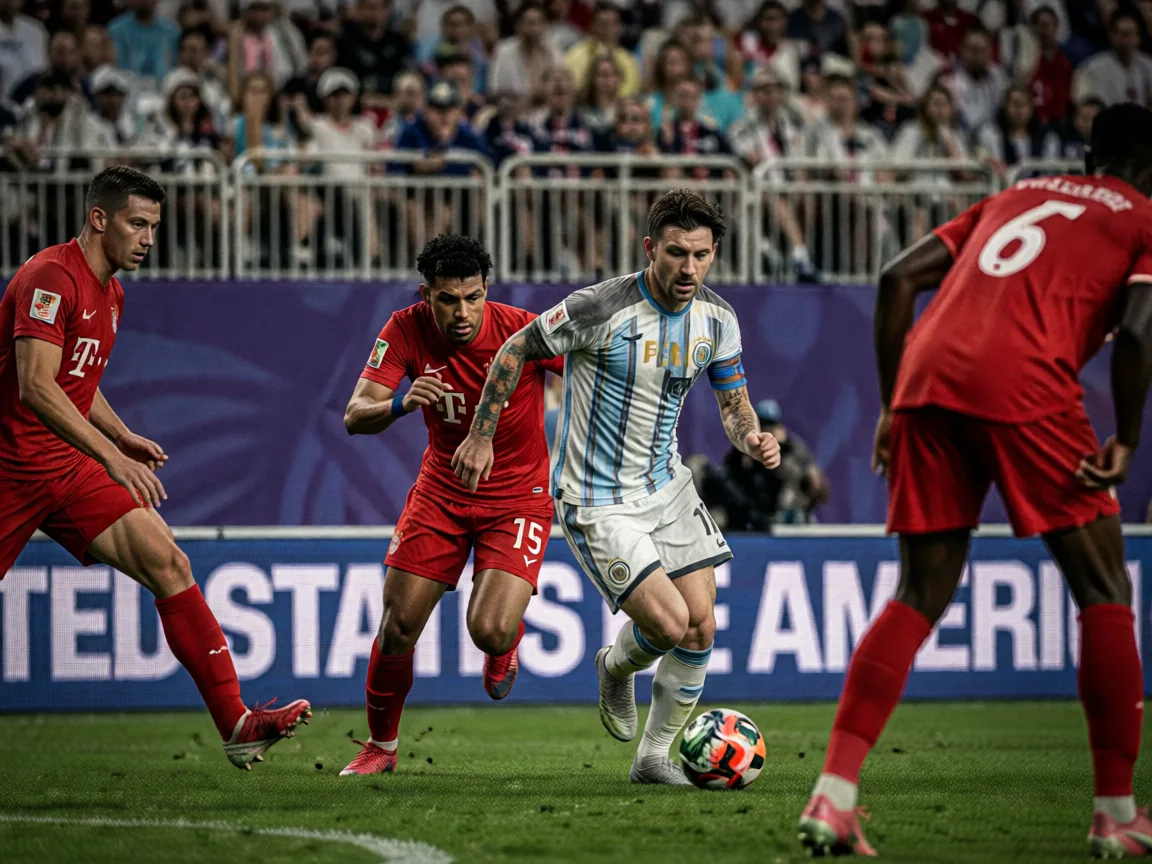
Messi drops deep to find a pocket of space. Three Spanish players collapse around that zone before he can turn. Di María tries to isolate on the flank. The entire back four slides toward him with midfield cover arriving two seconds later.
No room. No time. No individual moments where magic becomes possible.
Why This Changes Everything We Thought We Knew
The last decade of elite football has been obsessed with acquiring singular talents capable of match-defining interventions.
Mbappé at Madrid. Neymar at PSG. Haaland at City. Bellingham, Vini Jr, Salah, Saka. The logic is simple: sign the exceptional attacker, let them transform your ceiling.
Spain just delivered a tournament counter-narrative that will echo through boardrooms and coaching courses for years.
Building a team where the collective is the system is worth more than acquiring three difference-makers.
This argument doesn't dismiss the value of breathtaking attacking talent. Williams didn't just assist the deciding moment. The individual players all performed. The contrast lies in how those individuals were deployed within frameworks that made them more dangerous, not less.
The Champions League era taught us acumulations of superstars usually win. This Spanish squad suggests that era's grip on football truth is loosening.
What Happened in Those Dying Minutes
Argentina kept coming because Argentina always keeps coming. Especially when Messi is on the field and time is running out.
Each attack bore a different face. Another run, another cross, another low shot toward Emi Martínez's near post. The Aston Villa goalkeeper whose name we've shortened out of familiarity. He'd already proven himself in finals and crucial moments.
Spain stood anyway.
That resilience defines this tournament victory. The substitutions and their tactical understanding all reinforced each other.
Rodri organizes everything. Williams stretches defenses by his mere presence. Lamine Yamal stretches them with the ball. Every role defined.
When the final chance came, when that ball sat there inside the penalty area waiting for someone to decide history, the system produced the answer.
The Spanish celebration that followed spoke less about joy and more about fulfillment. Years of training ground repetition and tactical briefings and system reinforcement.
The Message That Echoes Forward
Spain won this trophy with one goal conceded. Let that reality settle.
National team managers across the globe will study this tournament run like archaeologists examining a newly discovered civilization. Not because Spain played the most aesthetically perfect football. Because they married control with stamina and produced a defensive record that defies modern logic.
The super-squads aren't going anywhere. Individual brilliance will still win matches, still decide league titles, still produce moments that define Champions League nights and elevate Ballon d'Or races.
But Spain just demonstrated system over stardust can still claim the biggest prizes. In an era obsessed with singular greatness, that message carries revolution.
Watching them lift that trophy, you saw something rare in modern football.
Not a team of stars reaching for individual glory, but a constellation of players who understood the group was always greater than any of them. They let the system succeed where individual heroics had repeatedly failed.
That's not just a trophy. That's a philosophy.
That's the future.
Editorial Integrity
This is an original SportPulse article written by our editorial team. All content is independently researched, written, and reviewed by our writers and editors before publication. We do not publish copied, aggregated, or syndicated content.
SportPulse is committed to original sports journalism. Read our editorial policy or contact us with any questions.
More Like This
All football
Celtic Admit They Cannot Outbid English Championship Clubs Anymore
Celtic CEO Michael Nicholson concedes the club is losing transfer battles to second-tier English sides unable to match their financial muscle.

From Nagrig to Anfield: How Mo Salah Rewrote His Own Script
Mo Salah's rise from rural Egypt to Liverpool legend is the most improbable story in modern football.
Messi's Sprint Speed Still Terrorises England at 39
At 39, Lionel Messi ambles then explodes. England's defenders face a sprint-speed nightmare in their World Cup semi-final.