Spain's Possession Suffocates Argentina's Tactical Bankruptcy in World Cup Final
Spain's positional play dismantled Argentina's cynical anti-football in a final that exposed the limits of chaos against coherent structure.
The image of Rodri, standing with the composed patience of a man who understands that structure always outlasts spectacle, waiting for a bewildered politician to vacate the podium, might be the defining photograph of this tournament. Spain did not merely win a trophy. They confirmed a philosophical thesis that has been gathering weight since Luis de la Fuente took the reins: that organised possession, when married to vertical intent, renders opposition cynicism not just ineffective but visibly pathetic.
Argentina arrived at the final carrying the residue of a semi-final performance against England that had already bordered on the unconscionable. Their strategy in the showpiece was not an aberration but an escalation. What unfolded over 120 minutes was not a football match in any definable tactical sense. It was an exercise in sabotage.
The Anatomy of Tactical Surrender
Argentina's setup screamed caution from the first whistle. Lionel Scaloni, who had built his reputation on pragmatic flexibility, opted for a 4-4-2 defensive block that collapsed into a 6-3-1 without the ball. The frontline of Messi and a partner dropped to the halfway line, creating a bank of four midfielders who retreated into a low block. Behind them sat two banks of defenders.
The statistical consequences were damning. Argentina managed zero shots in regulation time. Across the entire 120 minutes, they failed to register a single shot on target. This was not a case of a deep block being unlocked through patient passing sequences or set-piece brilliance. This was a team that never attempted to unlock anything at all.
The contrast with Spain's approach could not have been starker. De la Fuente's side operated in their familiar 4-3-3 that morphed into a 3-2-5 or 2-3-5 in possession. The full-backs inverted to create numerical superiorities in midfield. Rodri anchored the build-up, screening against any transition while the front three rotated positions with fluid intelligence.
- 0 shots in regulation time for Argentina
- 0 shots on target across 120 minutes
- 1 red card for Enzo Fernández in extra time
- 104 total matches in the expanded tournament format
Spain's dominance was not explosive. It was suffocating. They did not rip Argentina apart with vertical counters. They strangled them with positional play, pulling the deep block apart through patient circulation and intelligent off-ball movement.
When Structure Meets Sabotage
The final exposed something profound about the modern game. Cynicism as a tactical strategy can frustrate superior opponents. We have seen it work. We saw variants of it in this very tournament. But there is a threshold beyond which negative intent becomes self-defeating. Argentina crossed that threshold with abandon.
Enzo Fernández's dismissal in extra time was the logical conclusion of a performance built on aggression rather than intelligence. When a team commits to disruption without any counterbalancing attacking ambition, the physical and emotional toll compounds. Legs tire because the ball is never retained. Minds fray because there is no creative outlet to channel frustration.
Even Messi, the player who has built a career on manufacturing moments of genius from improbable situations, was reduced to pleading with referee Slavko Vincic to brandish a red card after Marc Cucurella's gesture. This was not the Messi of Cape Verde's worst nightmares. This was a player who had internalised his team's collapse into nihilism.
Leandro Paredes's role in the post-match chaos belonged to a different sport entirely. The scenes that followed full-time made Argentina's roughhouse semi-final tactics against England look measured by comparison.
"We build the shape that creates the moment. The structure is the strategy. Everything else is noise." The ethos de la Fuente has instilled was validated on the grandest stage.
Tactical Shift: Why Argentina's Block Failed
The standard justification for a deep block is that it denies space, forces opponents into wide areas, and creates opportunities to counterattack. The strategy collapses when a team possesses neither the pressing structure to regain possession efficiently nor the attacking intent to exploit transitions.
Argentina's problem was not defensive. Their backline held firm for long stretches. The issue was upstream. With no pressing trigger and no transitional outlet, the block became a static cage. Spain's attackers could circulate possession with impunity, knowing that no counter-press would follow.
De la Fuente's adjustment was subtle but decisive. As the match wore on, Spain's wide attackers began tucking inside, occupying the half-spaces. This pulled Argentina's midfield bank narrower, creating overloads on the flanks. When the full-backs pushed up, Spain generated 3v2 situations out wide that the Argentinian block could not address.
The goal, when it came, was the inevitable product of a team that had monopolised territory without ever being threatened.
A Tournament of Contrasting Philosophies
This World Cup will not be remembered as a classic. Donald Trump's proclamation that it was "one of the greatest events of any kind ever held" was characteristically detached from reality. The expansion to 48 teams, 104 matches, and multiple host nations produced moments of genuine wonder alongside interminable slogs.
Cape Verde emerged as the tournament's conscience. The only side to face Spain and emerge unscathed, their near-miss against Argentina in the last 32 will be recalled as one of the great what-ifs. Their pressing structure and vertical passing offered a template for how smaller nations can compete without resorting to cynicism.
Belgium's late comeback against Senegal delivered genuine narrative cinema. England's 6-4 victory over France in the third-place playoff was a grotesque, entertaining spectacle that will outlive its sporting significance.
But the final crystallised the tournament's central tension. Spain's victory was a triumph of system over chaos, of positional coherence over destructive pragmatism. Anti-football did not merely lose. It exposed itself.
"Football 1-0 shithousery. Thank god anti-football failed." The sentiment from one reader captured the mood with brutal precision.
What Comes Next
For Spain, the triumph vindicates a developmental pathway that has been refined over a decade. The generation of Pedri, Gavi, and Lamine Yamal is not merely talented. It is schooled in a coherent tactical ideology that runs from the youth ranks to the senior team. The challenge now is sustaining that hunger. History suggests that teams winning major international silverware often suffer emotional hangovers in subsequent tournaments.
For Argentina, the reckoning will be uncomfortable. Scaloni's pragmatic framework delivered a World Cup in 2022. This final raised questions about whether that pragmatism has calcified into something darker. The tactical regression from a side capable of breathtaking counter-attacks to one that managed zero shots on target in 120 minutes demands forensic examination.
The road to 2030 begins with these questions unanswered. Spain have demonstrated that possession football, stripped of the sterile tiki-taka of a decade ago and rebuilt with vertical intent, remains the sport's most reliable winning strategy. Argentina have demonstrated that without the ball, there is no philosophy, only survival, and survival is not a plan.
Editorial Integrity
This is an original SportPulse article written by our editorial team. All content is independently researched, written, and reviewed by our writers and editors before publication. We do not publish copied, aggregated, or syndicated content.
SportPulse is committed to original sports journalism. Read our editorial policy or contact us with any questions.
More Like This
All football
O'Neill Secures Backroom Continuity as Celtic Bet on Tactical Cohesion
Celtic retain O'Neill's trusted trio to safeguard their tactical philosophy and drive domestic dominance into the new season.

How Stoke City Can Keep Spending Under Championship Squad Cost Rules
Football finance expert Kieran Maguire breaks down how Stoke City can navigate Championship Squad Cost Rules and still spend big this summer.
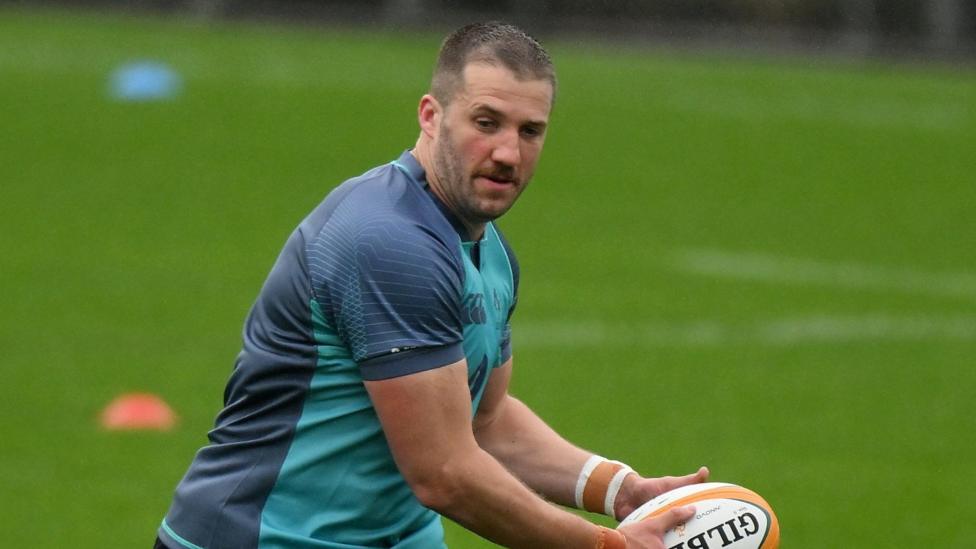
Ireland's Clean Bill of Health Changes the Sydney Equation
Paul O'Connell confirms a fully fit Irish roster ahead of the Nations Championship opener, handing Andy Farrell a rare luxury Down Under.